




What Are Auto Electric Alternators and How Do They Work?
alternators&type=products">Auto electric alternators are sophisticated electromechanical devices that transform the mechanical energy from your engine into electrical power, charging the battery and supplying consistent voltage to all onboard electrical systems. Unlike older generators, modern alternators produce alternating current (AC) that is rectified into direct current (DC), delivering superior efficiency even at low engine speeds. Inside, the rotor spins within the stationary stator, generating AC voltage that passes through a rectifier and voltage regulator to maintain stable output between 13.5 and 14.5 volts, ensuring reliable power for everything from headlights to advanced driver-assistance systems.
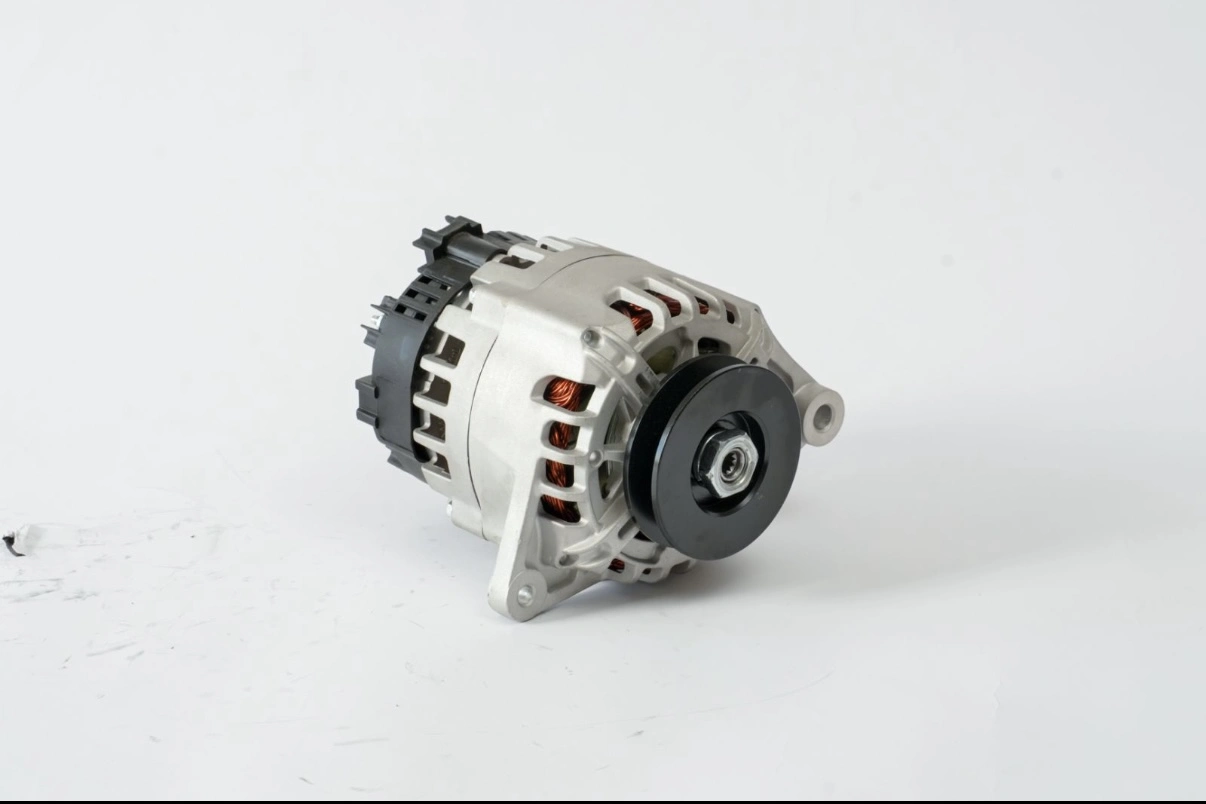
Understanding Auto Electric Alternators: Function and Basics
These days' cars need a steady flow of electricity. The alternator is the major power source when the engine is going. When procurement managers, fleet operators, and engineers know how these parts work, they can make better decisions about where to get them.
Core Components and Their Roles
There are several important parts that work together in every generator. The rotor, which is connected to the drive shaft, has windings that are charged with electricity. This makes a magnetic field that spins. The changing magnetic field is picked up by the coils of copper wire that make up the stator. This makes AC power. When the AC output is sent to the rectifier, it changes the AC current into direct current that can power loads and charge the battery. The rectifier is made up of a bridge of diodes.
It changes the strength of the magnetic field by changing the current going to the rotor. The output voltage stays in the narrow range of 13.5 to 14.5 volts. Without this control, too much voltage could damage fragile electronics, and not enough voltage would leave the battery too low on power. A lot of the time, heavy-duty industrial cars need auto electric alternators with a high output of 150 to 300 amps so they can power extra equipment, refrigeration units, and better lighting systems.
Alternators vs. Generators: Why It Matters
DC engines were used in older cars, but they weren't very good at low speeds and couldn't handle a lot of power. These problems were fixed by alternators, which make more power at low speeds, weigh less because they are made of metal, and last longer because they have fewer moving parts. The switch to alternators changed how vehicles were wired electrically. This made it possible for the systems that buses, trucks, and other specialized equipment have today, which use a lot of power.
It's important that the alternators you choose for commercial uses work with the mounting brackets and belt drive systems that are already in place. These include those for the DAF 95 series, KASSBOHRER Setra, Scania buses (BK112, K114, K124, L94), Mercedes-Benz truck and bus series (O series), and MAN bus series (RH352, RH402). It's easier to add new units to a wide range of teams and fix old ones when units can be placed horizontally or vertically.
Identifying and Troubleshooting Auto Alternator Issues
If you catch problems with your auto electric alternators early, you won't have to fix them on the side of the road, which can cost a lot. Repair teams go down less often and parts last longer when fleet managers teach them how to spot danger signs.
Common Warning Signs
The warning lights on the panel for the battery are the most obvious sign that something is wrong with the charging system. If the headlights are dim, even when the car is not moving, it means the engine is not putting out enough power. When something grinds, whines, or squeals, it's probably because the bearings are old or a diode in the rectifier circuit is failing. If the lights on the gauges flash or the numbers change all the time, there is a problem with the voltage control that needs to be fixed right away.
A simple test with a voltmeter can help you figure out what's wrong. You can check the voltage between the battery and the engine while it's running. It shows 13.5 to 14.5 volts when the machine is not in use and a little more when it is. If the voltage number is less than 13 volts, the battery isn't getting charged enough. If it's more than 15 volts, the voltage regulator isn't working right, which could lead to the battery overcharging and the water boiling.
Preventive Maintenance Best Practices
Regularly checking to see if the drive belts are tight keeps them from moving, which makes the generator less efficient. Cleaning electrical lines can get rid of corrosion that leads to resistance and power drops. The bearings stay in place and don't wear out from motion when the fixing nuts are checked.
When parts are replaced based on working hours instead of waiting for them to break down, fleet efficiency goes up. Trucks that work on dusty construction sites need auto electric alternators that are sealed, don't let dust or water in, and keep the inside parts clean. Thermal shock testing is done on XITU alternators between -40°C and +125°C to make them work like they would in a tough engine environment before they are sent out. They will last a long time because of this.
Comparing Auto Electric Alternators: Making the Right Choice
You need to think about price, quality, suitability, and long-term stability when you decide what to buy. People can make sure that the things they buy help them reach their business goals if they know the differences between OEM, aftermarket, and restored options.
OEM vs. Aftermarket Considerations
Genuine OEM auto electric alternators are made to fit and work the same way every time because they are made to the exact specifications of the factory. Most of the time, they cost more, but they give you peace of mind through guarantee programs and track records that have been around for a while. When you buy aftermarket alternatives from reputable companies that are IATF 16949 certified, they can save you money and often give you the same level of quality.
Remanufactured units are a good middle ground because they have both used and fixed wear parts and cores. There is a wide range of quality based on how the remanufacturer runs the process and checks the finished goods. People who want to buy refurbished alternators should make sure that they are fully taken apart, inspected, and tested for performance, not just given a quick clean on the outside.
High Output vs. Standard Capacity
For most cars, the standard alternator makes 60 to 100 amps, which is enough for most electrical systems. For business use, types that put out 150 to 300 amps or more are needed to power things like refrigerator fans, auxiliary power inverters, and hydraulic lift pumps. Better cooling fans in high-output alternators get rid of more heat. They also have bigger rectifier diodes that can handle more current flow and better stator windings with a bigger copper cross-section.
High-output alternators that are made to charge at low RPM work better with diesel engines that run at low speeds. You can choose alternators for DAF, Mercedes-Benz, Scania, or MAN platforms as long as they work with Bosch OEM numbers such as 0120689530, 0120689535, CA1236IR, CA1624IR, CA1667IR, 1-3128-25W, 12377N, and others. This way, you can install them right away without having to make any changes.
Trusted Industry Brands
Bosch, Valeo, Denso, and Remy are all well-known brands that got that way through years of great engineering and strict quality control. It's easier to find goods and get service from these companies because they keep huge libraries with cross-references, expert help tools, and repair networks. If new companies say they can make things that are IATF 16949-certified and back up their claims with clear test records and performance promises, they may be able to compete.
Things have been made by XITU for 28 years. The company is ISO 9001 approved and does its own research and development. Every year, our 20,000-square-meter factory makes more than 500,000 units. The metal housings and precise copper windings are made to let heat escape as quickly as possible. Every unit is dynamically balanced and tested in the lab to make sure it works as well and lasts as long as OEM equipment.
Procurement Guide: Buying Auto Electric Alternators for Your Fleet or Business
When shopping for electrical parts for commercial fleets, it's important to think about the supplier's skills, the product details, and the overall cost of ownership. This road map gives buyers peace of mind as they go through the buying process.
Selecting Reliable Wholesale Suppliers
You should look at more than just the starting price. You should also see how stable the supplier is, how much they can make, and how they make sure the quality of auto electric alternators. When a supplier gets IATF 16949 approval, it means they are committed to process controls and tracking for the car business. If you want proof that the tests were done the right way, such as checking the voltage control, the rectifier diode's lifetime, and the heat performance.
Being honest with a provider about wait times, minimum order quantities, and customization choices will help you figure out if they can meet your business needs. Don't buy from people who can't give you technical data sheets, quality certifications, or checks that you can look at from real business customers.
Pricing Insights and Cost-Benefit Analysis
Auto electric alternators cost between $80 and $300 each when you buy a lot of them. The price depends on the power setup, current rate, and order number. OEM-branded parts are the most expensive. Aftermarket parts are the next most expensive, and remanufactured units are the least expensive. To find the total cost of ownership, add up the costs of the warranty, the expected service life, and any downtime that happens because the product breaks down early.
There are big savings when you buy more than 100 units. If you make long-term deals with skilled manufacturers, you can get better prices and be sure that the quality will not change from one run to the next. XITU offers ODM/OEM options that are adaptable and meet the needs of each market. You can change the voltage, amperage, fastening arrangement, and safety features to suit your needs.
Custom Orders and Value-Added Services
Many business settings find it useful to have alternators that can be changed based on task cycles or the weather. It's possible to make custom changes like better sealing for marine environments, longer mounting brackets for installations that were not made at the factory, or wiring harnesses that work with certain electrical systems. When it comes to the specification step, suppliers with their own tech teams can help make plans better and give expert advice.
Some services that add value, like pre-delivery review, custom labels, and combined shipping, make it easier for sellers to handle complicated supply chains. Some providers offer help with installation and technical training that is specific to the area. This makes it faster to combine fleets and lessens the number of mistakes that happen during service.
Wait times at XITU are kept between 30 and 60 days, and the company acts quickly when customer needs change. So that shipping around the world is safe and reliable, we work with shipping companies that are known all over the world. There is no charge for our six-month professional help and promise program. It comes from 30 years of work in the same field.
Conclusion
Auto electric alternators are an important part of the running of modern business vehicles because they convert mechanical energy into stable electricity that powers the batteries and other systems. Fleet managers and procurement workers can cut down on costs and downtime by knowing how their suppliers work, spotting signs of failure, and getting things in the right way.
To pick the best alternator, you should find a mix between OEM quality and aftermarket value. You should also make sure that the output capacity matches the electrical loads and only buy from approved makers whose quality processes are clear. XITU has alternators that are IATF 16949-certified and can be used with most heavy-duty systems in Europe. These alternators have been through a lot of tests and can be changed in a number of ways to fit the needs of different areas around the world.
FAQ
How often should commercial vehicle alternators be replaced?
If you take good care of your alternator, it should last between 150,000 and 250,000 miles. When to replace it depends on how it is being used. Vehicles that are used in places with a lot of vibrations, hot or low temperatures, or processes that start and stop a lot may need to be changed more often. If you check the voltage and current output of the charging system with predictive repair tools, you can find problems before they break down completely.
Can a faulty alternator damage the vehicle battery?
Because the voltage regulator is broken, the battery gets too hot when it overcharges. This drains the liquid and breaks the plates inside. Batteries constantly lose power when they are not fully charged. This is called sulfation, and it lowers their capacity and shortens their life. Both of these things speed up the rate at which batteries lose power, so keeping an eye on voltage control is important to protect electrical system investments.
What warranty coverage should I expect from quality alternator suppliers?
These are the warranties that professional-grade auto electric alternators usually have. They cover problems with how they were made and how well they work in normal situations for six months to two years. There should be a list of things that aren't covered by the guarantee, such as damage from a bad fit, air pollution, or electricity problems. Suppliers you can trust make it easy to file claims and offer technical support to fix issues quickly. This means that your fleet doesn't have to be shut down as much for warranty service.
Partner With XITU: Your Trusted Auto Electric Alternators Manufacturer
If you run a business fleet or sell parts, you probably have problems with inconsistent quality from sources that are too small, extremely high minimum order amounts, and not being able to get both starters and auto electric alternators from a single approved partner. More than 500,000 units are made every year in our IATF 16949-certified factory. All of our goods are of the highest grade and have stable lead times of 30 to 60 days.
They work just as well on DAF, Scania, Mercedes-Benz, and MAN systems as OEM parts. To do this, they use precise copper windings, strict thermal testing, and routines for dynamic balance. Send an email to arisa@xitu-auto.com right away to talk to one of our buying experts about bulk prices, custom specs, and technical help for your fleet. Check out how our 28 years of experience making great goods have helped us make charging systems that you can depend on to keep your business going.
References
1. Larminie, James and Lowry, John. Electric Vehicle Technology Explained, Second Edition. John Wiley & Sons, 2012.
2. Denton, Tom. Automobile Electrical and Electronic Systems, Fifth Edition. Routledge, 2017.
3. Ribbens, William B. Understanding Automotive Electronics: An Engineering Perspective, Eighth Edition. Butterworth-Heinemann, 2012.
4. Society of Automotive Engineers. SAE J56: Service Performance Requirements for Alternating Current Generator Systems. SAE International, 2018.
5. International Organization for Standardization. ISO 8854: Road Vehicles – Alternators with Regulators – Test Methods and General Requirements. ISO, 2019.
6. Bosch GmbH. Automotive Electrics and Automotive Electronics: Systems and Components, Networking and Hybrid Drive, Sixth Edition. Springer Vieweg, 2014.