




How Do You Choose an Alternator for a Tractor?
Choosing the right alternator for your tractor starts with matching voltage, output amperage, and environmental protection ratings to your machine's actual working conditions. For heavy-duty farm equipment like CASE 688P, John Deere MARINE series, or Komatsu PC450, a 24V 50A unit with IP66/IP67 sealing handles dust, fertilizer spray, and vibration far better than a standard automotive unit. products">agricultural alternators built to OEM specifications—and cross-referenced against part numbers like AR187916, RE525690, or TY24322—eliminate guesswork and keep your fleet running through every harvest window.
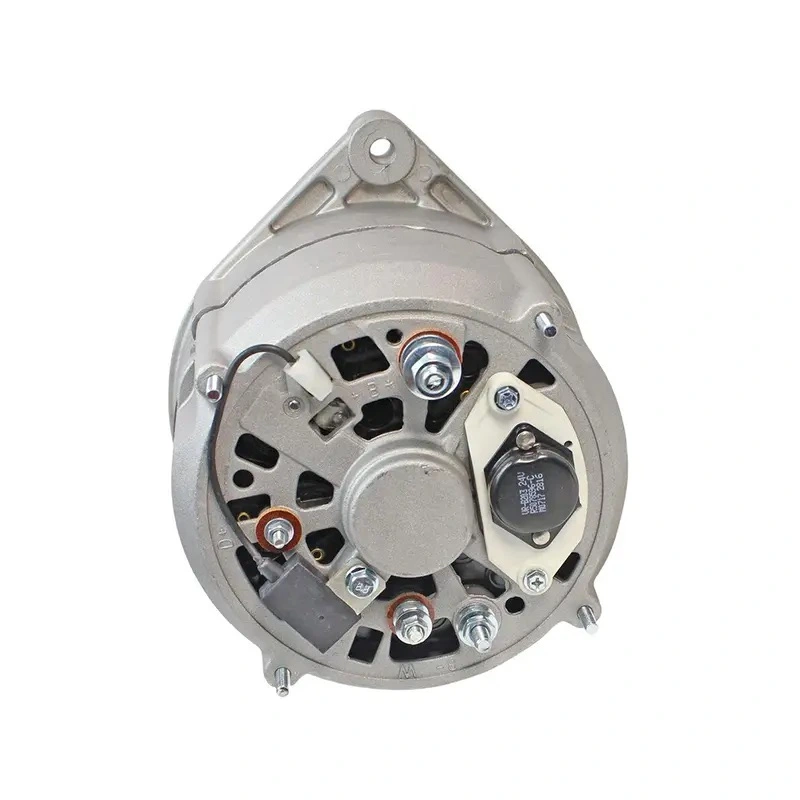
Understanding Agricultural Alternators and Their Role
What Sets Farm Alternators Apart from Automotive Units
A tractor alternator is not just a car alternator that is attached to bigger machinery. Engineers who work on cars never had to deal with grain chaff, anhydrous ammonia mist, chemical fertilizer dust, and steady low-speed high-load cycles on farm tools. Under those conditions, a normal 12V car unit will break after one season. Farm charging systems are custom-made and have sealed housings, rectifier diodes that are too big, and Class H insulation that can handle temperatures up to 180°C.
Brushed vs. Brushless Designs
There are carbon contacts in brushed alternators that wear out over time. They cost less up front, but they need to be inspected on a regular basis. In a dusty field, every 500 to 800 hours of operation is a good service interval. Brushless designs don't have that wear point at all, which is important during dry harvest when arcing near chaff can start a fire. Most mid-sized tractors and combines are safer in the long run with brushless motors.
Why Stable Output Matters for Precision Farming
Modern controls that work with ISOBUS, GPS auto-steer systems, and variable-rate application computers are sensitive to voltage. A small change in the DC output can cause sensor faults or application maps to become faulty. Every electronic module further down the line is protected by a well-specified tractor charging unit with low voltage ripple. This saves a lot more money than the price difference between a cheap unit and a certified one.
Key Criteria to Consider When Choosing a Tractor Alternator
Voltage System and Output Amperage
Most big tractors and combine harvesters use 24V electricity, while most small utility tractors use 12V. Check the voltage of your system before you order. Output amperage needs to be enough to handle your biggest electrical needs, like lights, cooling systems, hydraulic fans, and all of your internal electronics put together. Medium- to large-sized machines should have at least a 50A output, but machines with extra LED light bars or telemetry modules may need higher ratings.
| Specification | Light-Duty Tractor | Heavy-Duty / Combine |
|---|---|---|
| Voltage | 12V | 24V |
| Output Amperage | 65–95A | 50–150A |
| Insulation Class | Class F (155°C) | Class H (180°C) |
| IP Rating | IP54 | IP66/IP67 |
If you match these numbers to the model of your equipment for agricultural alternators, it won't break down early and won't need expensive replacements in the field during peak season.
Environmental Protection and Sealing Standards
The IP66 and IP67 ratings mean that the housing can withstand high-pressure dust jets and short-term immersion in water, respectively. During grain harvest, fine dust gets into every crack. Over the course of a season, bearings that aren't covered can get enough grit to stop working altogether. Equipment that works in corn, wheat, or soybean areas must have sealed bearings and dust-proof shaft entry places.
OEM Cross-Reference and Compatibility
Always compare the OEM part number of your replacement unit to the part number that came with your machine. Having a single SKU that covers multiple cross-references—such as Bosch 0120488206, 0120488294, 0120488319, 0120488323, 0120489481, 9120060045, 9120080137, 9120080187, plus John Deere references AR187916, AT161324, AT185696, RE525690, RE540413, TY24322, TY6774, and CASE references AL12148, E156163, P941518—makes it easier to keep track of everything you need and keeps you from making mistakes when you're rushing to place an order.
Comparing Popular Alternator Types and Brands for Tractors
Brushless vs. Brushed: Practical Trade-offs
Brushless units cost more to buy at first, but they need less regular upkeep. Within one or two seasons, the lower number of service calls and guarantee claims more than made up for the price difference for sellers who keep replacement parts on hand for a big fleet. Brushed units are still a good deal for utility tractors with low hours because they don't need to be replaced as often as bearings and brushes.
Leading Brands and What They Offer
Bosch has long supplied OEM electrical components to CASE and John Deere, establishing a strong cross-reference library. People in North America like Delco Remy because it has a large dealer network and easy access to parts. Valeo has a lot of market share in both Europe and South America. Genuine units from each brand come with strong warranties, but OEM-equivalent suppliers that are ISO 9000 and IATF 16949 approved can match that performance for 40–60% less than the original maker price.
High-Output vs. Standard Models
| Model Category | Best For | Typical Output | Key Feature |
|---|---|---|---|
| Standard (50A) | CASE 688P, 788P | 24V / 50A | Cost-effective, direct fit |
| High-Output (80A+) | Combines, large sprayers | 24V / 80–150A | Supports added electronics |
| Compact (12V/65A) | Utility tractors | 12V / 65A | Lightweight, easy mounting |
High-output models work well with machines that got precision farming electronics after they were built in the factory. Standard 50A units work well for machines that are running within the electrical limits that came with them.
Maintaining and Troubleshooting Agricultural Alternators
Recognizing Early Warning Signs
Most of the time, a voltmeter reading below 13.5V on a 12V system or below 27V on a 24V system, a battery warning light on the instrument panel, and work lights that dim when the tractor is at low idle are signs that the charging unit is failing. If you notice these signs early, you can keep the power from going out in the middle of a gathering run.
On-Site Diagnostic Steps
Your first tool should be a simple voltmeter for agricultural alternators. You can check the voltage at the battery terminals while the engine is running at 1,500 RPM. Then do a load test by turning on all of the electrical devices and seeing if the power stays the same. A drop of more than 1.5V at full load means that the rectifier diode has failed or the windings are getting worse. It doesn't take long to check the alignment of the pulleys and the tightness of the belt before pulling the unit. This will rule out any technical problems.
Preventive Maintenance Schedule
Every 250 hours of use, check the condition of the pulleys and the tension of the belt. During harvest time, when there is a lot of chaff, clean the air intake screens every 100 hours. Every season, make sure the links are tight again and check the B+ line for corrosion. These steps might take an extra 30 minutes per inspection, but they consistently add one to two seasons to the service life, which saves a lot of money for a large dealer fleet.
Where and How to Purchase Agricultural Alternators for Your Business
Evaluating Supplier Credibility
As a basic quality sign, look for ISO 9000 or IATF 16949 approval when buying a lot of replacement charging units. Ask for salt spray test records (at least 500 hours should be enough) and find out if the provider does dynamic rotor balancing at 15,000 RPM or more. There are clear differences between purpose-built farm units and reboxed automotive stock that can be checked.
Wholesale and OEM Procurement Options
When regional dealers buy in bulk from a licensed agricultural alternators provider, they can keep a lot of different OEM cross-references in stock under one SKU. This makes the warehouse easier to manage. Aftermarket brands can use custom labels and still get the same approved parts with OEM/ODM choices. For buyers who only buy during certain times of the year, making test orders of 50 to 200 units during the off-season—6 to 10 weeks before peak demand—avoids shipping delays and makes sure that farms have stock when they need it most.
XITU sends all over the world through logistics partners that are known and trusted around the world. The wait time for production and delivery is 30 to 60 days. There is a six-month warranty on every unit that covers defects that were not caused by humans. There is also quick technical support from an in-house engineering team with 28 years of experience making things.
Conclusion
There are four practical things you should look for in agricultural alternators: the right voltage and amperage for your machine, enough environmental protection for the conditions where you work, confirmed OEM cross-reference compatibility, and a supplier whose quality certifications you can actually check. Automobiles don't work well in farming conditions because they weren't made for them. If you get a 24V 50A unit that has the right specs, like IP66/IP67 sealing, Class H insulation, and low noise output, it will protect both your tools and the precise electronics that modern farming depends on. Choose a provider who can back up their claims with test results and place your order before the busy season.
FAQ
1. Why can't I use a standard car alternator on my tractor?
Automobile units are made to work on paved roads, where there is some dust, the temperature stays stable, and the electricity loads are reliable. Charging units in tractors are exposed to grain chaff, chemical corrosion, high-amplitude shaking, and long rounds of low speed and high load. In those kinds of situations, an automobile unit usually breaks down within one season. Farm-specific designs have IP66/IP67 sealing, diodes that are too big, and coatings that resist corrosion that automotive units don't have.
2. How often should a farm alternator be serviced?
Every 250 hours of use, check the belt tension and terminal connections. Every 100 hours, clean the air intake screens while the harvest is going on. A load tester should be used to do a full electricity output test once a season, before high demand starts.
3. What warranty should I expect from a quality supplier?
For approved aftermarket units, the standard guarantee is six months that covers problems with the way the unit was made. If you ask, a reputable supplier will also give you salt spray test reports and rotor balance certifications.
Ready to Stock the Right Alternator Before the Season Opens? Contact XITU Today
XITU makes certified agricultural alternators that are sold all over the world by dealers, cooperatives, and OEM brands. We have been making 24V 50A 8PK units for CASE, John Deere, and Komatsu applications for 28 years, are ISO 9000 and IATF 16949 certified, and can make more than 500,000 units a year. All of our products come with a six-month warranty and full technical support. Please send your fleet list or part number to arisa@xitu-auto.com or go to xitu-auto.com to get a price right away.
References
1. Bosch Automotive Handbook, 10th Edition – Robert Bosch GmbH, 2018.
2. SAE International, "SAE J1171: External Ignition Protection of Marine Electrical Devices" – SAE International, 2020.
3. ISO 16750-3: "Road Vehicles – Environmental Conditions and Testing for Electrical and Electronic Equipment – Part 3: Mechanical Loads" – ISO, 2023.
4. ASABE Standards, "Agricultural Machinery Management Data" – American Society of Agricultural and Biological Engineers, 2021.
5. John Deere Technical Manual Series: Electrical Systems Diagnosis – John Deere & Company, 2019.
6. Remy International, "Heavy-Duty Alternator Application and Installation Guide" – Remy International, 2017.