




New Auto Alternator: A Complete Guide to Choosing the Right One
Choosing the rightproducts"> new auto alternator for a commercial vehicle is not a minor decision. Whether you manage a Volvo truck fleet, distribute aftermarket parts across Europe, or source OEM-grade components for your brand, the charging unit you select directly affects uptime, operating cost, and customer satisfaction. This guide walks through everything procurement professionals need to know — from how alternators work and what separates new units from rebuilt ones, to technical specs, trusted brands, and smart sourcing strategies — so you can make a confident, well-informed purchase.
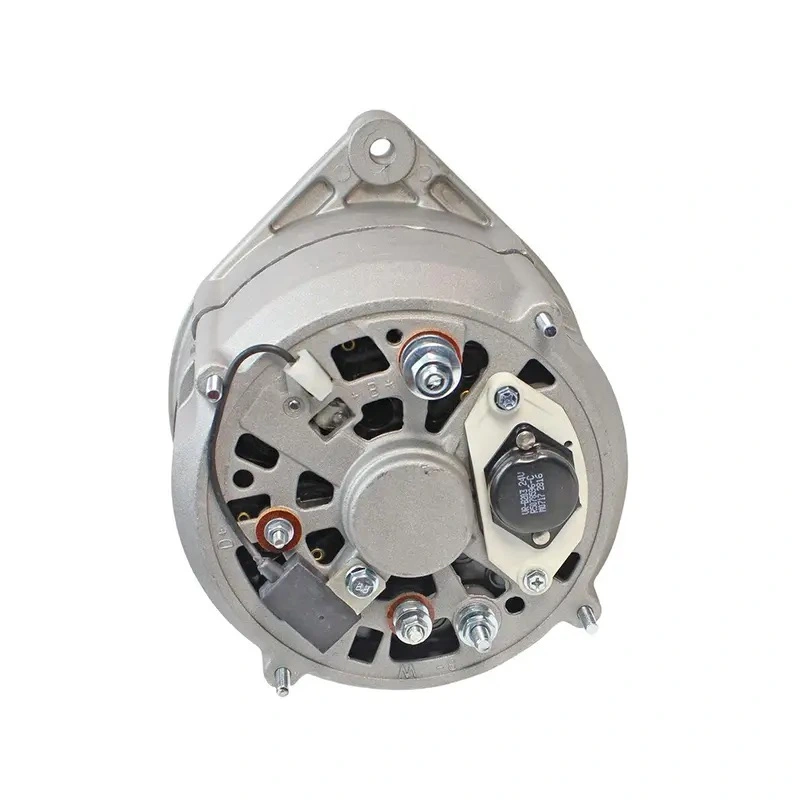
Understanding Auto Alternators: Function and Significance
How an Alternator Powers Your Vehicle
The crankshaft of the engine turns mechanically into alternating current (AC), which is then changed into direct current (DC) by a converter bridge. The vehicle's lighting, ECUs, telematics, HVAC controls, and even the battery itself all get their power from that DC. Without a charging tool that works right, even a brand-new battery dies in just a few hours.
Voltage Regulation and Why It Matters
For 12V systems, the output stays between 14.2V and 14.8V thanks to precise voltage control. If it's too low, the battery will never fully charge. If the voltage is too high, sensitive circuits can get permanently damaged. This is especially true in cars with ADAS or Start-Stop technology. This window stays tight across the whole RPM range, from low idle to highway cruise if the alternator is well-built.
Warning Signs That Your Alternator Needs Replacement
These are the signs that fleet managers and garage workers should look out for:
- Dashboard battery warning light activating under normal load
- Dimming headlights or flickering instrument panels during idle
- Battery repeatedly draining overnight despite a healthy battery cell
- Audible whining from the belt drive area, often caused by bearing fatigue or diode failure
If you notice these signs early, you can stop electricity problems from getting worse and avoid unnecessary downtime.
New vs. Rebuilt Auto Alternators: Making the Right Choice
The True Cost of Rebuilt Units
The price tag on a remanufactured generator is cheaper, but that price rarely shows the true cost of ownership. The original housing, rotor shaft, and stator core are used in rebuilt units. Metal wear and old insulation materials shorten service life even after they have been cleaned and rewound. Studies on the aftermarket quality show that field return rates for refurbished units are usually 15–25% higher than for new units.
Why New Units Deliver Better Long-Term Value
Every part inside a real new auto alternator is new: the rotor, the stator, the rectifier, the voltage regulator, the bearings, and the case. This gets rid of the "core return" logistics requirement that remanufactured supply chains put on wholesalers and gets rid of secret failure modes. For fleet owners who run Volvo FH or DAF 55FA trucks around the clock, that difference in reliability means fewer hours spent in the shop and less money spent on maintenance overall.
Key Selection Criteria at a Glance
| Selection Factor | New Alternator | Rebuilt Alternator |
|---|---|---|
| Component condition | 100% new | Mixed new/used |
| Warranty coverage | Up to 6 months | Typically 3 months |
| Core return required | No | Yes |
| Batch consistency | High | Variable |
| Certification availability | IATF 16949 / ISO 9001 | Rarely documented |
| Parts to choose from: New Alternator | Rebuilt Alternator |
Top New Auto Alternator Brands and Industry Reputation in 2024
Bosch, Denso, and Valeo — The OEM Tier
Bosch has the biggest share of the engine alternator OEM market in Europe. These part numbers, like 0120468093, 0120468135, 0120468144, and 0986039260, can be found on Volvo B12, FH, FM, NH, and DAF 45FA/55FA cars from more than one model year. Denso and Valeo both play similar roles in Asian and French car systems. When it comes to performance, these brands are the gold standard that all aftermarket suppliers are held to.
XITU — Premium Aftermarket Alternative
New alternators made by XITU (Wuxi XITU Auto Parts) can be linked to more than 20 Bosch OEM numbers. These numbers are 1986A00160, 1986A00163, 6033GB3021, CA907IR, 1-2709-00BO, 12596N, 10967575, 21048174, 21048179, 21727734, 221034, 1516407R, and 1516644R. XITU serves business-to-business customers in Russia, North America, Europe, and the 20,000-square-meter production plant it owns. Each year, it makes 500,000 units. The IATF 16949 and ISO 9001 approval paperwork that comes with every unit meets the needs of European dealers for compliance.
Verifying Supplier Credibility Before Committing
Before you place a large order with any alternator supplier, make sure you get the following paperwork:
- Current IATF 16949 and ISO 9001 certificates with valid issue dates
- Full-curve performance test report specific to the OEM number you are sourcing
- Ripple voltage analysis confirming the rectifier bridge meets the < 0.5V AC threshold
- Salt spray test report per ASTM B117 standard
Installation and Maintenance of New Auto Alternators
Pre-Installation Checks
Technicians should check the belt tension and pulley alignment before putting in a new charging unit. If the serpentine belt isn't lined up right, it puts horizontal load on the front bearing. This shortens the life of the bearing no matter how good the other parts are. If you find any corrosion or heat damage in the wiring harness connector, you may need to replace the terminals.
Step-by-Step Installation Protocol
- Disconnect the negative battery terminal and allow 60 seconds for capacitors to discharge.
- Release belt tension and remove the old unit.
- Confirm the new auto alternator replacement unit matches the OEM mounting bracket configuration and terminal layout.
- Torque the mounting bolts to the manufacturer's specification — under-torquing causes vibration-induced connector wear.
- Reconnect all terminals before reconnecting the battery.
- Start the engine and verify output voltage with a calibrated multimeter.
Routine Maintenance Schedule for Commercial Fleets
| Maintenance Task | Interval | Purpose |
|---|---|---|
| Visual inspection of connections | Every 10,000 km | Catch corrosion early |
| Belt tension check | Every 20,000 km | Prevent bearing overload |
| Output voltage test | Every 40,000 km | Confirm charging system health |
| Full alternator replacement review | 4–5 years or per OEM guide | Proactive fleet management |
Following this plan lowers the chance of failure while in use and helps the guarantee be honored.
Purchasing New Auto Alternators: Pricing, Deals, and Procurement Strategies
Understanding Pricing Variables
Alternators with the OEM brand for Volvo FH and DAF trucks cost between €300 and €600 each. Premium aftermarket new units from certified manufacturers like XITU usually cost 30–50% less than those prices while still meeting or beating the original factory specs. Price difference is for regaining profit margins, not for lowering quality. Certified new alternators come with paperwork that explains why they cost more than rebuilt stock that hasn't been certified.
Sourcing Best Practices for B2B Buyers
When buying in bulk, distributors and fleet procurement teams should give more weight to suppliers who give full technical documentation up front and let factory audits happen. Platforms like TecDoc let you cross-reference OEM numbers to make sure the parts will fit before you buy them. For purchases of more than 500 units a year, going directly to the maker and setting up a fixed-price agreement and specialized account management is a better deal than buying on the spot through middlemen.
OEM/ODM Options and Bulk Purchase Benefits
Aftermarket brand owners can use XITU for OEM and ODM production. Customers can choose their own voltage control rates, output amperage, and mounting options. Standard lead times are 30 to 60 days, but they can be shortened for contracted yearly projects. For large orders, organized pricing is available, and XITU arranges freight through well-known shipping companies around the world to make sure the safety of shipments on all major trade routes.
Conclusion
There are three things that are important when choosing the right charging part for European industrial vehicles: quality that has been checked, compliance that has been recorded, and the reliability of the supply chain. A new auto alternator is safer than rebuilt ones, and if you buy them from a company that is IATF 16949 and ISO 9001 certified, they will always work the way that fleet operators and distributors need them to. XITU's product line includes all the necessary Bosch OEM reference numbers for Volvo B12, FH, FM, NH, and DAF 45FA/55FA uses, and these numbers can be fully tracked. The money spent on buying new instead of rebuilt pays off because there are fewer returns and calls to the workshop.
FAQ
1. How often should commercial vehicle alternators be replaced?
While being used normally, most heavy-duty truck alternators are made to last 4 to 5 years, or about 400,000 to 600,000 km. High-power vehicles, like refrigerated trailers and fleets with a lot of telematics equipment, may need to be replaced more quickly. It is cheaper to replace something before it breaks during planned repair than to replace it after it has already broken.
2. How do I test a new alternator before installation?
A measured oscilloscope or bench tester can confirm the total current at the cut-in speed, which is around 1,200 RPM, and at the rated speed, which is over 6,000 RPM. Another thing to look for is ripple voltage on the DC output line. Values above 0.5V AC point to a broken rectifier diode that will eventually hurt battery management systems.
3. Are remanufactured alternators suitable for large fleet operations?
Remanufactured units have problems with batch consistency that make planning fleet maintenance harder. The variable return rate of repaired stock makes it harder to manage businesses with 20 or more cars. New units that have been certified can be counted on to last longer, which works better with planned repair programs.
Partner with XITU for Your New Auto Alternator Supply
After 28 years of manufacturing experience, XITU offers certified new auto alternator solutions for Volvo and DAF commercial vehicles. Each unit comes with a 6-month warranty and is certified by both IATF 16949 and ISO 9001. As a reliable company that makes new car alternators, we offer OEM/ODM customization, stable lead times of 30–60 days, and direct expert support. You can email us at arisa@xitu-auto.com or go to xitu-auto.com right now to get samples, prices, or a full set of detailed documentation.
References
1. Bosch Automotive Handbook — Robert Bosch GmbH, 2023.
2. Fundamentals of Vehicle Electrical Systems — Society of Automotive Engineers (SAE International), 2021.
3. Aftermarket Parts Quality and Warranty Performance Study — Frost & Sullivan, 2022.
4. IATF 16949:2016 — Quality Management System Requirements for Automotive Production and Relevant Service Parts Organizations — International Automotive Task Force, 2016.
5. European Commercial Vehicle Aftermarket Report — Roland Berger Strategy Consultants, 2023.
6. Alternator Reliability and Failure Mode Analysis in Heavy-Duty Trucking Applications — SAE Technical Paper Series, SAE International, 2020.