




24 Volt Alternator 80 Amp: Complete Guide to Features and Applications
Aalternator%2080%20amp&type=products"> 24 volt alternator 80 amp is an industrial-grade electromechanical device that converts engine mechanical energy into 1.92 kW of direct current, sustaining battery charge and powering auxiliary systems across heavy-duty platforms. Built for 24V electrical architectures, this unit delivers a continuous 80-ampere output—enough to run GPS, telematics, hydraulic controls, and lighting simultaneously without overloading the drive belt system. For procurement managers, OEM engineers, and parts distributors sourcing for Doosan, Daewoo, or similar equipment fleets, understanding this component's specifications and sourcing criteria is the difference between costly downtime and smooth operations.
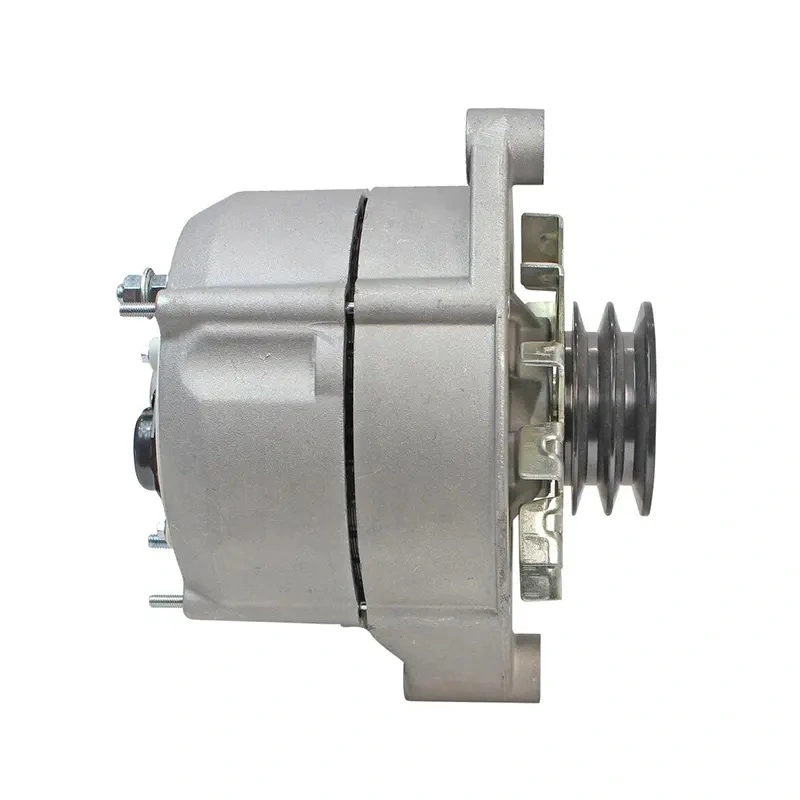
Understanding the 24 Volt Alternator 80 Amp – Basics and Specifications
Before you choose an alternator for heavy-duty use, you need to know exactly what it does, how it does it, and whether its size and shape are right for your needs.
How a 24V Alternator Works
Three-phase AC power is made when the alternator spins a rotor inside a stator wire. This is changed to DC by a silicon bridge rectifier, and an automatic voltage regulator (AVR) keeps the output steady between 27.8V and 28.6V at 25°C. This is the right range for lead-acid and AGM battery health in 24V systems.
Key Technical Specifications
| Parameter | Specification |
|---|---|
| Voltage Output | 24V DC |
| Current Output | 80A continuous / 2.2 kW peak |
| Pulley | 8PK serpentine belt |
| Mounting | SAE J180 standard bracket |
| Regulator | Integrated electronic AVR with temperature compensation |
| Protection | IP54 (dust and moisture resistant) |
| Winding Class | Class H copper (180°C tolerance) |
| Housing | Die-cast aluminum alloy |
| Weight | ~8–10 kg |
24V vs. 12V: Why the Difference Matters
A 24V system sends the same amount of power but only half as much energy as a 12V system. Lower power means less heat loss through the cables and thinner wiring lines, which is a big plus for big tractors and generator sets. The 12V 80A unit only makes 960W, but the 24V version makes 1,920W. This difference is important for Doosan 500LC-V excavators or Daewoo industrial equipment that uses a lot of electricity.
Troubleshooting, Testing, and Maintenance of 24 Volt Alternator 80 Amp
Alternators, no matter how well they are made, will finally show signs of wear. If you know what to look for and when to act, you can keep your fleet going and know how much it will cost to buy things.
Recognizing Common Failure Symptoms
You should keep an eye out for these early danger signs in your 24 volt alternator 80 amp charging circuit:
- Battery not reaching full charge: If the battery doesn't fully charge, it's likely because a diode or brush is worn out, lowering the output below the 80A limit.
- Voltage fluctuation above or below the 27.8–28.6V band: This means that the AVR is breaking down or that the temperature is causing it to lose power, which can happen in dusty or wet places.
- Unusual noise from the alternator housing: Sealed bearings that are worn out from axial or radial load stress make a grinding sound before they break.
These signs aren't just annoying for the mechanics; if you don't fix them, they could lead to damage to the ECU or problems with the hydraulic controls.
Step-by-Step Bench Testing Protocol
Put in a calibrated load bank and turn the unit on at its full RPM. Check to see that the output can handle 80A without the voltage dropping across the full load curve. Check for AC flicker with a digital analyzer. This shows that the diode is leaking. Every 2,000 to 3,000 hours of use or during major engine overhauls, check the length of the brush on brushed models.
Maintenance vs. Replacement Cost Analysis
It is much cheaper to fix worn-out brushes or a broken regulator module than to buy a whole new machine. XITU's alternators use modular AVR parts, which makes it possible to service them in the field. But if there is corrosion in the housing or wear on the rotor windings, it is cheaper to replace the whole thing than to fix it. This is especially true since the prices of OEM-compatible units from trusted suppliers stay stable.
Choosing the Right 24 Volt Alternator 80 Amp: Comparative Insights
There are both approved aftermarket options and name-brand choices on the market. Which one to pick relies on how much load you need, how much it will cost you overall, and how reliable your supply chain is.
Brand Comparison Overview
| Brand | Key Strength | Best Use Case |
|---|---|---|
| Delco Remy | Proven OEM lineage, wide fitment | Fleet replacement, NAM markets |
| Bosch | German engineering, tight tolerances | European OEM lines |
| Leece Neville | High-cycle durability | Emergency and municipal vehicles |
| XITU (ALD3329) | OEM-grade quality, IATF 16949 certified, flexible MOQ | Aftermarket, OEM branding, export |
80A vs. 100A: Matching Capacity to Load
Most excavators and industrial generators with moderate auxiliary loads can use an 80A unit. A 100A model might be needed if your equipment has more hydraulic cooling fans, high-lumen LED arrays, or more telematics hardware. But the gear ratio and drive belt need to be upgraded at the same time to keep them from slipping during peak demand.
Integrated vs. External Regulator
The 24 volt alternator 80 amp from XITU has an automatic AVR built in that can adjust for temperature. This setup simplifies the wires on the outside, lowers the number of places where something could go wrong, and keeps the power stable even when the temperature outside changes. External regulators make field swapping easier, but they also add a possible failure node. When businesses decide what to buy, integrated AVR units usually have lower lifecycle risk.
Procurement Guide: Buying and Sourcing 24 Volt Alternator 80 Amp
It takes more than just getting the cheapest unit price to find a 24 volt alternator 80 amp provider for business-to-business use. Stability in the supply chain, the quality of the documentation, and support after the sale all affect the final price.
What to Verify Before Placing an Order
Here are the main things that procurement teams should check about a supplier before they sign a contract with them:
- IATF 16949 certification: This standard for car quality management covers more than just product specs. It also covers process control. Suppliers who don't have it pose a higher risk of quality uniformity.
- OEM cross-reference coverage: For Doosan and Daewoo equipment, that includes DOOSAN 30090100025, 30090100033, 30090100034, 30090100207, A000028, K1010702, K1010703, and DAEWOO 219088, RK390115, and DELCO REMY 390115. Make sure the unit has the part numbers you need.
- Minimum order quantity flexibility: High MOQs from big companies make market testing impossible. XITU can handle smaller sample numbers for brand-new products.
These criteria tell the difference between suppliers who can work with you for a long time and those who can only fill one order.
Pricing Transparency and Lead Times
XITU has a standard lead time of 30 to 60 days and can make 500,000 units a year on more than 50 precision machines in a 20,000 m² facility that is IATF 16949 certified. All of the of the units come with full technical paperwork and a guarantee that lasts for six months. As part of the after-sales support, fitting help can be provided on-site if needed.
OEM vs. Aftermarket Sourcing
Due to dealer network margins, OEM channels have higher prices and longer lead times. Official replacement providers like XITU make parts that are the same or better than the originals—the XITU ALD3329 meets or beats the specs set by DOOSAN and DAEWOO—at a price that lets distributors make good profits without lowering the quality.
Applications and Future Trends of 24 Volt Alternator 80 Amp
The charge base for 24 volt alternator 80 amp is not fixed. The range of applications and the direction of technology are both changing.
Current Heavy-Duty Applications
It can be used as a direct drop-in replacement for Doosan 500LC-V excavators, Daewoo industrial equipment, and matching generator sets. It can work in places like quarries, ships, and building sites where regular units break down too soon because it has an IP54 grade and Class H winding.
Integration with Hybrid and Electric Platforms
New hybrid building equipment uses 24V alternators in addition to battery management systems as an extra way to charge the batteries. The temperature adjustment for the AVR in XITU's design already works with these systems. But people who use LiFePO4 battery banks should know that they need a DC-to-DC charger or a lithium-profile regulator because lithium cells can draw 80A continuously, which can damage normal units through heat stress.
Environmental and Regulatory Direction
Tougher rules on emissions are speeding up the use of electric auxiliary systems. Alternators with less parasitic engine load—achieved by designing an efficient rectifier and keeping the cut-in RPM low (below 1,200 rotor RPM on XITU's unit)—help meet fuel economy goals while keeping power delivery.
Conclusion
A 24 volt alternator 80 amp that works well is not just a matter of buying a generator; it's a system-level choice that affects how well your fleet charges, how stable the backup power is, and how often it needs to be serviced. The ALD3329 line from XITU includes the important OEM cross-references for Doosan and Daewoo equipment. It goes through five stages of quality control, including thermal stress and ASTM B117 salt spray tests, and comes from a plant that is IATF 16949-certified with a consistent 30–60 day lead time. If you are making a private-label brand, looking for alternators to sell aftermarket, or putting them into new generator sets, the specs and sourcing factors listed here will help you make a confident purchase.
FAQ
1. Can a 24 volt alternator 80 amp safely take the place of a 55A unit?
Yes, the 80A unit can be installed directly as long as the mounting footprint matches the SAE J180 bracket specification. It will not push more current than it needs; output only goes up when load demand calls for it. Still, the sizes of the battery and wires should be checked.
2. What is the correct charging voltage for this unit?
At 25°C, a 24 volt alternator 80 amp that is working properly should be able to maintain a voltage between 27.8V and 28.6V. Voltages outside of this range mean that the AVR isn't working as well or that there is a problem with the wires that needs to be fixed right away.
3. Why does output drop when the engine runs hot?
Thermal derating means that the AVR lowers the voltage on purpose to protect its internal parts when the temperature outside is high. This drop is less noticeable in units like XITU's that have Class H copper windings and enough house airflow.
Partner with XITU for Your 24 Volt Alternator 80 Amp Supply
Every order comes from XITU, which has been making things for 28 years, is IATF 16949 certified, and can make up to 500,000 units a year. As a provider of the ALD3329 series 24 volt alternator 80 amp, we offer OEM branding, variable MOQs, and a six-month guarantee with direct technical support. You can email our team at arisa@xitu-auto.com or go to xitu-auto.com to ask for specs, cross-reference confirmation, or a plant check. We answer in one business day.
References
1. Society of Automotive Engineers. SAE J180: Alternator Mounting Bracket Standards for Commercial Vehicles. SAE International, 2019.
2. Bosch Automotive Handbook. Electrical Systems and Components: Alternators and Voltage Regulators. 10th ed. Robert Bosch GmbH, 2022.
3. ASTM International. ASTM B117: Standard Practice for Operating Salt Spray (Fog) Apparatus. ASTM International, 2019.
4. Denton, Tom. Automobile Electrical and Electronic Systems. 5th ed. Routledge, 2017.
5. International Automotive Task Force. IATF 16949:2016 – Quality Management System Requirements for Automotive Production. IATF, 2016.
6. Larminie, James, and John Lowry. Electric Vehicle Technology Explained. 2nd ed. Wiley, 2012.