




24V 100 Amp Alternator Buying Guide: Output, Compatibility, and Performance
If you're sourcing a replacement charging unit for John Deere construction or mining equipment, getting the specifications right the first time saves serious money. This guide covers everything a procurement professional needs to know about thealternator%20100%20amp&type=products"> 24v alternator 100 amp—from core output parameters and machine compatibility to installation best practices and supplier selection. Whether you're stocking a regional distribution warehouse or managing a fleet of 903K excavators in a desert mine, the decisions you make here directly affect your return rate, your margins, and your reputation with end customers.
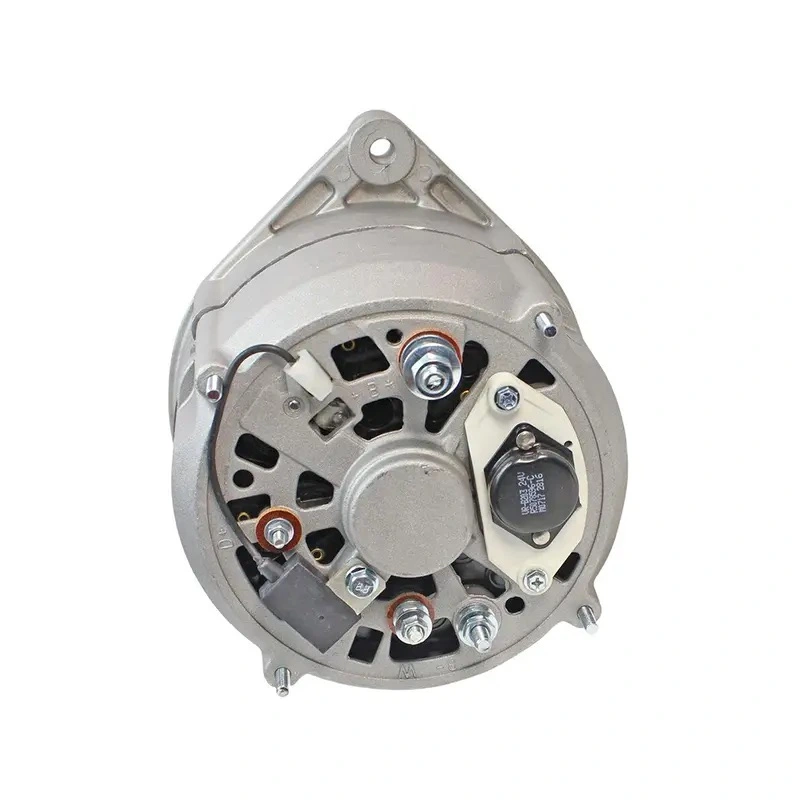
Understanding the Basics of a 24V 100 Amp Alternator
How It Converts Mechanical Energy Into Charging Power
An alternator spins a rotor inside a stator wire to make alternating current. A rectifier bridge then changes this current into a voltage that can be used. In a 24-volt setup, the output voltage is kept between 27.6V and 28.4V so that a bank of batteries in series can be charged properly. At 100 amperes constant, that's 2.4 to 2.8 kW of steady electricity—enough to power the telematics controllers, hydraulic cooling fans, and cab temperature systems all at the same time without using the starting batteries.
Key Parameters That Define Performance
The continuous amperage rating, the cut-in speed, and the thermal class all tell you if a 24V charging unit is right for your needs. For big machinery that sits still a lot, the cut-in speed (the lowest rotor RPM at which charging starts) should be between 1,200 and 1,500 RPM. The thermal class tells you how long the insulation in the windings will last in the hot engine bay. For tools that work in temperatures above 50°C, the minimum required insulation is Class H, which is set to 180°C.
| Parameter | Specification |
|---|---|
| Voltage Output | 24V DC |
| Continuous Current | 100A |
| Cut-In Speed | 1,200–1,500 Rotor RPM |
| Full Output Speed | 5,000–6,000 RPM |
| Winding Insulation Class | Class H (180°C) |
| Bearing Type | Double-sealed 6305 series |
| Pulley Configuration | 8PK, 62mm shaft |
Early Warning Signs Your Alternator Is Failing
When purchasing teams keep an eye on warranty claims, they always notice three failure patterns that happen before the whole unit breaks: instrument panel lights that dim when the engine is running at low speeds, ECU fault codes that come and go because of voltage drops, and bearing noise coming from the front case. If you catch these signs early, you can stop a chain reaction of other electrical damage. Bearing failure from silica dust getting into the system is the main reason for early returns in mining environments, so double-sealed bearings are a must-have.
Output Performance and Compatibility Considerations
Voltage Regulation and Output Stability
A machine with modern electronic control modules must have a clean, stable DC output. It's not a nice-to-have. When voltage ripple goes beyond what is allowed, it can cause John Deere's machine health tracking systems to send out false problem codes. This can lead to expensive diagnostic visits by the dealer, which hurts customer trust. The built-in Electronic Voltage Regulator (EVR) with temperature adjustment changes the charging curve when the temperature in the engine bay goes up. This keeps the battery plates from being overcharged, which damages them.
12V vs. 24V: Choosing the Right Architecture
A 12V system is not the same as a 24v alternator 100 amp unit just because the power is doubled. A 24V 100A unit gives off 2,400W, while a 12V equivalent only gives off 1,200W. It also uses thinner cables to carry the same amount of power, which makes long cable runs in big excavators and wheel loaders lighter and less likely to lose heat. The 24-volt design is the standard for big earthmoving equipment and Class 7 and 8 commercial vehicles for this reason.
Battery Compatibility for 24V Systems
The alternator doesn't work by itself. Matching it to the right battery bank standard stops the battery from being chronically undercharged or failing too soon. If you need a 24V 100A battery, the table below shows the different types and what they're best used for.
| Battery Type | Chemistry | Recommended Use Case |
|---|---|---|
| AGM (Absorbed Glass Mat) | Lead-Acid | Standard OEM replacement, cold climates |
| Flooded Lead-Acid | Lead-Acid | Low-cost fleet applications |
| LiFePO4 | Lithium Iron Phosphate | Off-grid, marine, weight-sensitive systems |
For lithium battery banks, connect the generator to an outside DC-DC charger to control the voltage curve and keep the regulators from fighting with each other.
Installation, Maintenance, and Troubleshooting Guidelines
Step-by-Step Installation Best Practices
Whether a quality unit lasts as long as it's supposed to or breaks down within weeks depends on how well it was installed. Always check the OEM part number cross-reference before mounting. Bosch OEM numbers 0124655081, 0124655189, and 0124655190 can be used with XITU's 24-volt 100-amp unit. So can John Deere codes RE538241, RE558676, SE502563, and 11909N. Make sure the belt is lined up with the groove on the 8PK pulley, tighten the mounting bracket screws to the specs shown on the wiring diagram, and use a calibrated torque wrench to make sure the B+ terminal is connected properly. Loose terminal connections are a main reason why diode bridges fail early.
Preventive Maintenance Schedule
In harsh field situations, these are the main care tasks that keep a 24V charging unit safe:
- Check belt tension every 500 operating hours. When the drive belt is too tight, it puts too much rotational load on the front bearing. This speeds up race wear and the contamination that comes after. When the belt isn't tight enough, it slips, gets hot, and produces less at low RPM.
- Inspect cooling vent paths every 250 hours in dusty environments. Check the cooling vent paths every 250 hours in dirty places. If airflow through the rear case is blocked, the temperature inside rises, which shortens the life of the diode and windings. It takes less than two minutes to do a compressed-air purge, which can add months to the time between service visits.
- Test output voltage at the B+ terminal every 1,000 hours. Use an inductive clamp meter that has been set at 5,000 RPM with the engine's full electrical load on it. It should say 27.6–28.4V on the output. Anything outside of this range means that the regulator is drifting or the diode is breaking down.
Most of the longer service life gains seen in well-kept mining and building fleets come from following these three habits.
Troubleshooting Common Charging Faults
If the battery warning light comes on while the machine is running, the ground strap should be checked first, not the generator. A chassis ground that is corroded or loose gives the same sign as a broken unit and is the cause of a lot of useless guarantee returns. Use a carbon pile load tester to check the full amp-curve after making sure the ground is solid. A unit that only puts out 60–70A at its stated RPM probably has one or more rectifier diodes that have failed, not a fault with the windings.
Comparing 24V 100 Amp Alternator Options for Informed Procurement
Brand Landscape: Bosch, Delco, and Aftermarket Alternatives
There is a strong OEM place for Bosch in the John Deere supply chain. Part numbers 0124655081 to 0124655190 are used on both the G-series and K-series machine lines. Delco Remy, which is now part of BorgWarner, has a long history in Class 8 truck uses in North America and has a 28SI series available in 24V versions. Leece-Neville focuses on specific applications with a high output. Factory-direct aftermarket sources with IATF 16949 certification and documented test protocols are a good option for procurement teams that want OEM-equivalent performance at a lower cost, as long as the supplier can back up every batch with performance curve data and salt spray test reports.
100A vs. 150A: Matching Output to Load
The 24v alternator 100 amp rate is enough to power all of the basic John Deere 470G LC through 959K machines when they are running normally. When extra loads like nite lighting, extra hydraulic cooling fans, or cold cab systems cause the total draw to go above 90A continuous, it's time to upgrade to a 150A unit. Oversizing just because you think it will make the service last longer doesn't work and adds extra cost to every SKU in your inventory.
Purchasing Tips for Wholesale Distributors
Three things determine if a 24v alternator 100 amp supplier can support a large-scale regional distribution operation: batch consistency that can be shown (ask for power curve printouts, not just a sample); a minimum order quantity that matches the actual turn rates of 50–150 units per batch; and packaging that can withstand 6–8 weeks of ocean freight without terminal damage. XITU has a production lead time of 30 to 60 days and can make more than 500,000 units a year. Our export packaging has been tested to make sure it works well with container loads.
Ensuring Long-Term Satisfaction: Making the Smart Choice
Selection Criteria That Protect Your Margins
Finding the right 24v alternator 100 amp supplier comes down to three things that can be checked: a warranty policy that covers hidden defects as well as damage that can be seen when the product arrives; part number coverage across the range of machines you want to buy; and test compliance (ASTM B117 salt spray at 96–240 hours and SAE J1455 vibration). With a single SKU, XITU's units can be used with more than 15 different models of John Deere equipment. They are certified by ISO 9000 and IATF 16949, and they come with a six-month warranty that covers failures that aren't caused by people.
Customization for Specific Industrial Applications
People who run fleets of tools in subzero northern temperatures are under different kinds of stress than people who work in mines in West Africa. In cold weather, performance depends on how fast the regulator responds when the battery temperature is low. In the desert, operations require that the housing let go of heat above 105°C atmospheric. The in-house R&D team at XITU handles application-specific setup requests, such as custom voltage set points, anti-corrosion coating grades, and bracket configurations. The MOQ structures are good for project-scale buying.
Long-Term Value and Dealer Support
Once the first batch passes field verification, the connection with a seller either gets better or breaks down over and over again. XITU has worked with OEM and aftermarket clients in North America, South America, Europe, and Russia. They built their processes around making sure that each batch performs the same way instead of just approving a sample once. Technical support, help with installation, and coordination after the sale are all handled directly, without going through a third party.
Conclusion
It takes more than just matching a part number to find the right 24v alternator 100 amp for John Deere construction and mining equipment. Your return rate stays below the 3% mark, which is the line between profitable distribution and margin erosion, depends on how stable your output is, how well your bearings are protected, how well they can handle high temperatures, and how consistent your batches are. The heavy-duty charging unit from XITU works with more than 15 John Deere models, is tested to meet ASTM B117 and SAE J1455 standards, and is backed by OEM-grade making. The fastest way to build a long-term relationship with a supplier is to get the specs right on the first order.
FAQ
1. Why choose a 24V 100A alternator over a 12V 100A unit for heavy equipment?
A 24V 100A unit gives off 2,400W, while a 12V unit with the same current level only gives off 1,200W. For big excavators and wheel loaders with long cable runs, the higher voltage architecture lowers the conductor cross-section needed, lowers resistive heat loss, and lets more electronics work on board without making the circuit more complicated.
2. What causes premature alternator failure in dusty mining environments?
In open-pit and quarry settings, bearing damage from fine silica dust is the main reason why things break down early. Double-sealed 6305-series bearings physically stop particles from getting in. If this safety isn't there, abrasive bits will get into the bearing race, heat it up, and break the structure in a very short time.
3. Can a 24V alternator charge LiFePO4 batteries directly?
The built-in EVR is set up to work with charge rates for lead-acid batteries. For lithium iron phosphate battery banks, connect the generator to an external DC-DC charger or battery management system to use the right charge curve and keep cells from getting damaged by voltage spikes.
Partner with XITU for Your Next 24V Alternator Order
Direct 24v alternator 100 amp maker XITU has been in business for 28 years, is ISO 9000 and IATF 16949 certified, and makes more than 500,000 units a year. We have 30–60 day lead times, flexible ODM/OEM configurations, and a warranty that is backed by real technical support for six months. Send a list of your machine models and the amount of work you do each year to arisa@xitu-auto.com or go to xitu-auto.com to get a performance curve package and batch pricing right away.
References
1. Society of Automotive Engineers. SAE J1455: Joint SAE/TMC Recommended Environmental Practices for Electronic Equipment Design in Heavy-Duty Truck Applications. SAE International, 2018.
2. ASTM International. ASTM B117: Standard Practice for Operating Salt Spray (Fog) Apparatus. ASTM International, 2019.
3. Bosch Automotive Electrics and Automotive Electronics. Bosch Automotive Handbook, 10th ed. Robert Bosch GmbH, 2022.
4. Denton, Tom. Automobile Electrical and Electronic Systems, 5th ed. Routledge, 2017.
5. Society of Automotive Engineers. SAE J180: Alternators and Regulators — Specifications and Test Methods. SAE International, 2016.
6. Heavy Duty Trucking. Electrical System Maintenance Guide for Class 7 and 8 Vehicles. Randall-Reilly Publishing, 2021.