




24 Volt Truck Alternator Guide: Types, Applications, and Benefits
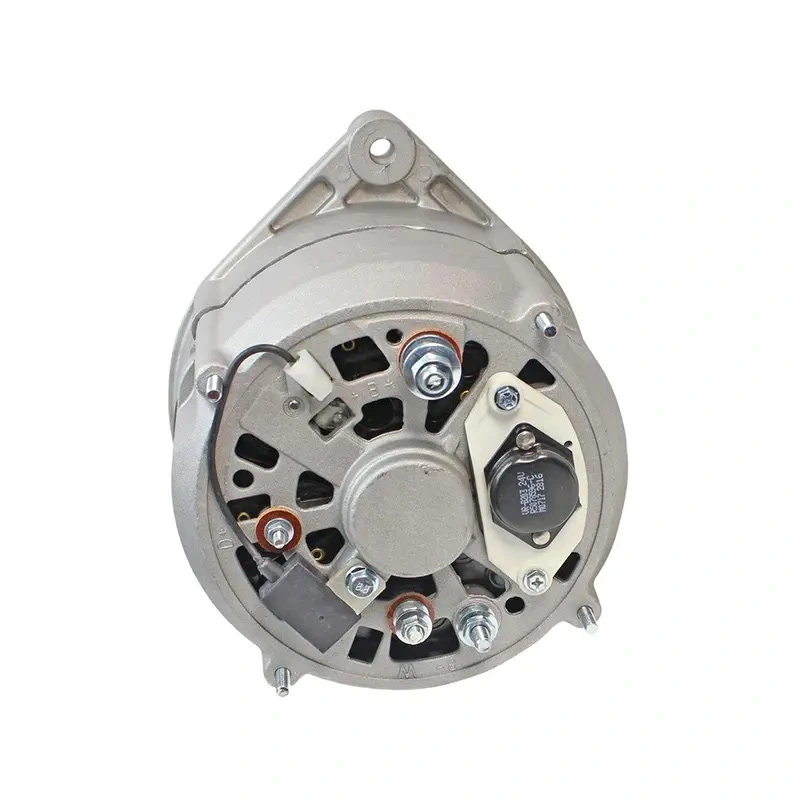
Understanding 24 Volt Truck Alternators: Types and Technology
Figuring out what kind oalternator%20&type=products">f 24 volt truck alternator you need can save you money and keep it from breaking down too soon. There are a number of different styles on the market, and each one has pros and cons when it comes to cost, performance, and service life.
Brushed vs. Brushless Designs
Carbon brushes in brushed alternators move electricity to the motor. The brushes are easy to find and don't cost much, but they wear out over time and need to be replaced every so often. Brushless types don't have this touch point at all, which cuts down on radio frequency interference and makes service times longer. For fleets that run more than 100,000 miles a year, brushless designs pay for themselves in lower maintenance costs over time.
OEM vs. Aftermarket Alternators
OEM units are made to fit a specific vehicle and come with the warranty from the original brand. When bought from a certified manufacturer, aftermarket replacements are the same size and shape as OEM parts but cost less. The quality management system of the supplier is what sets them apart. An IATF 16949-certified plant has detailed process controls that most small workshops don't have. This makes OEM and aftermarket choices of the same quality.
High-Output and Lightweight Options
High-output alternators in the 100A–180A range suit trucks that have heavy extra loads like refrigeration units, hydraulic systems, and high-tech electronics that help the driver. Lightweight versions have aluminum housings and improved winding design to lose weight without lowering amperage. This helps vehicles use a little less gas over their lifetime.
How 24 Volt Truck Alternators Work and Common Problems
The engine's drive belt gives the generator mechanical energy, which it turns into alternating current. The rectifier bridge then changes this current to direct current. A voltage regulator keeps the output steady at about 28–28.5V so that current can flow smoothly into the 24V battery bank.
Warning Signs of Alternator Failure
These signs should be looked out for by drivers and fleet technicians:
- Voltage drop below 27V at rest or under load points to a rectifier that is failing or a rotor winding that is worn out.
- Audible whining or grinding means that a diode is shorted out or a bearing is getting close to the end of its useful life.
- Dashboard battery warning light and dimming headlights are signs that the unit isn't supplying enough electricity to the truck.
If you catch these signs early, you can avoid a breakdown on the side of the road, which, according to the American Trucking Associations, costs a company $448 per hour in lost time.
Common Technical Faults
| Fault | Likely Cause | Diagnostic Step |
|---|---|---|
| Low output voltage | Worn brushes or shorted diode | Oscilloscope ripple test |
| Overcharging above 29V | Faulty voltage regulator | Regulator bench test |
| Bearing noise | Contamination or fatigue | Physical inspection and replacement |
| Excessive heat | Blocked ventilation or overload | Check duty cycle and airflow |
There are also a lot of wiring problems. When terminals rust, resistance goes up and voltage drops before any current can reach the battery. As part of any regular maintenance plan, checking the terminal links every 50,000 miles is a good habit to get into.
Troubleshooting Tips for Maintenance Teams
While the engine is running at 1,500 RPM, use a digital multimeter that has been set up correctly to check the output voltage at the battery terminals. If the reading is not between 27.5V and 28.5V, it needs to be looked into further. If the ripple voltage is more than 50mV AC, it's likely that one or more rectifier diodes have broken.
Benefits and Applications of 24 Volt Truck Alternators in Heavy-Duty Trucks
Heavy commercial trucks have a lot of electrical loads that a 12V system can't handle well over long wiring runs in the chassis. Running at 24 volt truck alternator cuts the current needed by half for the same watts. This lets smaller wires be used and lowers the amount of heat lost through resistance in the circuit.
XITU 24V 70A Alternator for Mitsubishi Fuso
The 24V 70A 2PK alternator from XITU is designed to work with Mitsubishi Fuso 8.5T and 11T trucks with 6D16 and 6D22 engines, as well as Mitsubishi cars with AC149 engines. Hyundai 3730093000, 3730093501, 3730093C00, AC270542, MANDO TA000A31001, TA000A53401, Mitsubishi A6T75586, MOTORHERZ ALA0239WA, ALA3505WA, ALM0239WA, and VALEO 600253, 600297, 600817, and 600851 are all OEM reference numbers that it works with. Each unit is brand new when it ships and has been tested to meet or beat OEM standards.
Here are the main ways this alternator improves performance in the field:
- Stable 28V charging output at full load keeps dual-battery systems consistently charged, which stops dead-battery events in sleeper cabs with a lot of ELD and telematics hardware.
-
Heat and vibration resistance from the small, durable housing of the 24 volt truck alternator lets it work continuously in diesel engine chambers where temperature cycles and mechanical shock usually kill off less durable parts.
- Efficient AC-to-DC conversion with low ripple voltage keeps Engine Control Units and CAN bus units safe from electrical noise that could cause false trouble codes.
These benefits directly address the three most common electrical problems that fleet repair managers hear about in long-haul, cold chain, and construction uses.
Real-World Application Sectors
| Sector | Key Requirement | How 24V Alternator Helps |
|---|---|---|
| Long-haul logistics | Continuous load over 100,000 miles per year | Stable voltage for telematics, ELD, and comfort systems |
| Cold chain transport | Stable voltage for refrigeration compressors | Keeps compressors from breaking down in extreme temperatures |
| Construction & mining | Vibration and dust resistance | IP-rated housing survives high-shock environments |
Expected Service Life
If you follow the manufacturer's maintenance instructions and run your car normally, a good 24 volt truck alternator should last between 150,000 and 200,000 miles. Shorter intervals will be seen in units that are subject to extreme heat without enough airflow or that are used at more than their maximum amperage.
How to Choose the Best 24 Volt Truck Alternator for Your Fleet
To choose the right unit, you must first know how much electricity your truck uses overall. To find the minimum amperage need, add up the estimated wattage of all the active circuits, such as lights, HVAC, telematics, and refrigeration. Then, divide the result by 24. Add a 20% spare so that the 24 volt truck alternator doesn't have to run at full power for long periods of time.
Compatibility and OEM Cross-Reference
Always check the alternator against the OEM part number that corresponds to your engine and chassis. When used on a Mitsubishi Fuso, checking against Hyundai, MANDO, MOTORHERZ, and VALEO numbers makes sure that the part fits perfectly without any modifications.
Supplier Assessment Criteria
These are the most important things to look for in a 24 volt truck alternator supplier:
- IATF 16949 certification makes sure that production processes are written down, checked, and can be used again and again without relying on the judgment of each worker.
-
Annual production volume of more than 300,000 units of the 24 volt truck alternator means that the tools and raw materials are stable. In a 20,000 m² building, XITU makes more than 500,000 pieces every year.
- Flexible MOQ is important for distributors who are trying out new markets. A lot of the time, big companies set MOQs that make it expensive to test new products.
- Warranty and technical support for at least six months, along with the ability to provide service on-site, reduces the buyer's risk.
These factors help procurement teams stay away from the problems with inconsistent quality and failed audits that have happened in the past when they bought from workshops that weren't approved.
Maximizing Performance and Maintenance of 24 Volt Truck Alternators
Installation Best Practices
Place the generator so that the belt line is within 0.5° of the centerline of the pulley. Misalignment speeds up the wear on bearings and belts. To keep moisture out, tighten all the mounting bolts to the recommended level and grease all the electrical contacts with dielectric grease.
Routine Maintenance Schedule
Every 25,000 miles for the 24 volt truck alternator, check the condition and tension of the drive belt. Check the main links for corrosion and make sure the battery's output voltage is correct. Instead of waiting for them to break down, dual-sealed bearings should be replaced at the manufacturer's suggested time.
Emerging Technology Trends
Newer brushless alternators can now connect to IoT systems and send real-time output data. This lets repair plans be made ahead of time, before a unit breaks down on the road. Some designs have smart voltage regulators that change output based on data sent over the vehicle's CAN bus about the battery's state of charge. This keeps the engine from having to work too hard and saves fuel.
Conclusion
It takes more than just matching a part number to find the right charging unit for a heavy-duty truck. The total cost of ownership is affected by things like the electrical load, the working environment, the supplier's certification, and the assistance provided after the sale. If you choose and take care of your 24 volt truck alternator correctly, it will protect your fleet's downtime and lower the cost of repairs over time. Because XITU can manufacture, has quality certifications, and offers flexible purchasing terms, we are a good partner for fleet operators, brand owners, and wholesalers who want consistent performance at scale.
FAQ
1. Why does my 24V alternator read 28V?
The value of 28–28.5V is right. To get a full charge into the cells of a 24V battery bank, that voltage level is needed to beat the resistance inside the bank. A reading much higher than 29V means there is a problem with the regulator.
2. Can a brushless alternator replace my existing brushed unit?
Yes, as long as the output limit and mounting measurements are the same. Brushless versions are better for companies that drive a lot because they don't wear out brushes and make less electrical noise.
3. What amperage do I need for a heavy truck?
Find the total amount of electricity you use in watts, divide it by 24, and then add 20%. Most Class 8 trucks with normal equipment can get by with a 70A–120A unit.
Get a Quote on XITU's 24 Volt Truck Alternator Supplier Solutions
XITU gives you a direct way to get factory-certified quality without having to worry about sources that you can't trust. We offer an IATF 16949-certified 24 volt truck alternator for Mitsubishi Fuso platforms with a six-month warranty. It ships through trusted international logistics partners in 30 to 60 days. We can handle a wide range of order sizes, whether you need OEM-matched units or ODM-branded goods. Visit xitu-auto.com or email us at arisa@xitu-auto.com to get a price or a sample of our products right away.
References
1. Society of Automotive Engineers. SAE J180: Vehicular Alternator Test Procedures. SAE International, 2021.
2. International Organization for Standardization. ISO 8854: Road Vehicles — Alternators with Regulators — Test Methods and General Requirements. ISO, 2012.
3. American Trucking Associations. ATA Technology & Maintenance Council Fleet Maintenance Benchmarking Report. ATA, 2022.
4. Bosch Automotive Handbook. Electrical Systems in Commercial Vehicles, 10th Edition. Robert Bosch GmbH, 2022.
5. ASTM International. ASTM B117: Standard Practice for Operating Salt Spray (Fog) Apparatus. ASTM, 2019.
6. Delphi Technologies. Heavy-Duty Charging System Design and Diagnostics Reference Guide. Delphi Technologies, 2020.