




How Does an Alternator Work?
An alternator is the backbone of any vehicle's electrical system. It converts mechanical energy from a spinning engine into electrical energy through electromagnetic induction, delivering direct current (DC) to recharge the battery and power onboard electronics. In commercial vehicles facing heavier electrical demands than ever before,products"> auto electric alternators do far more than keep the lights on — they sustain GPS systems, HVAC units, advanced driver assistance, and refrigeration loads simultaneously. Without a properly functioning charging unit, even a fully charged battery drains within minutes of engine-off idling.
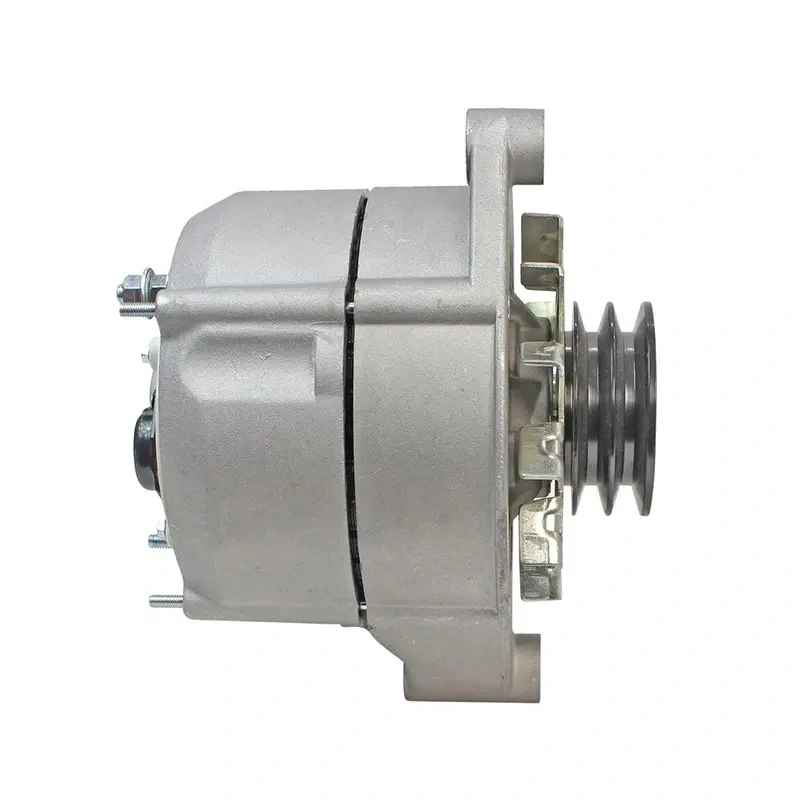
Understanding the Fundamentals of Auto Electric Alternators
The Core Conversion Principle
Inside every alternator, a rotor that is driven by a belt spins inside a stator that is wound. Alternating current is created when the magnetic field of the rotor passes across the windings of the stator. The AC is then changed into DC by a diode converter bridge. Michael Faraday first wrote about this process in 1831. It is called electromagnetic induction, and it is still the basis of all modern charging units that are made today.
Key Internal Components
The output of an alternator is determined by four parts:
- Rotor: Carries the excitation winding and creates the rotating magnetic field. High-quality iron cores cut down on flux leakage and raise the output efficiency.
- Stator: Three-phase wound coils that receive the magnetic field and make electricity. Copper windings with a high conductivity keep resistance low and heat output low.
- Voltage Regulator: Checks the voltage of the battery and changes the rotor field current to keep the output between 13.8V and 14.8V (12V systems) or 27.6V and 28.8V (24V systems).
- Diode Rectifier: Converts AC power to DC and blocks reverse current from draining the battery.
Voltage Output Standards by Vehicle Type
Most passenger cars use 12V systems and alternators that put out 80A to 120A. Heavy-duty industrial trucks and buses, like the DAF 95 series and the Scania bus lines, need 24V systems that can often handle more than 150A. Voltage spikes and drops can damage sensitive electronics like ECUs, ABS modules, and telematics hardware. To keep the voltage stable within these ranges, choose the type of vehicle and the typical output range.
| Vehicle Type | System Voltage | Typical Output Range |
|---|---|---|
| Passenger Car | 12V | 80A – 120A |
| Light Commercial Van | 12V / 24V | 100A – 150A |
| Heavy-Duty Bus / Truck | 24V | 150A – 200A+ |
Diagnosing and Troubleshooting Common Alternator Problems
Recognizing Early Warning Signs
There are three signs that something is wrong with the charging before it fails completely: a charge warning light on the dashboard, headlights that dim noticeably when the car is not moving, and a strange whining or grinding sound coming from the belt area. Ignoring these signs in a fleet setting leads to roadside breakdowns that cost a lot more than a new unit.
Common Mechanical and Electrical Faults
A lot of early failures in auto electric alternators are caused by worn bearings, especially in vehicles that are subject to a lot of vibration, like long-haul trucks that drive on rough roads. When a diode fails in the rectifier bridge, it causes an AC wave on the DC output line. This can damage sensitive electronics and mess up ECU data. Voltage regulator problems, on the other hand, lead to either undercharging (which drains the battery) or overcharging (which damages the battery and could cause a wire fire).
Step-by-Step Testing Procedure
A digital voltmeter and, ideally, a carbon pile load tester are needed for testing. Follow this sequence:
- Check the charge of the battery while the car is off. The reading on a good battery should be 12.6V, or 25.2V on 24V systems.
- Turn the engine over to 2,000 RPM. The output of the alternator should show 13.8V to 14.8V for 12V systems or 27.6V to 28.8V for 24V systems.
- Apply a load (headlights, blower motor, or rear defroster). The voltage should always be more than 13.5V. If it drops below this level when the load is on it, it means that the diode set is weak or the regulator is failing.
- Check for AC ripple with a monitor. If the DC output line shows more than 50mV AC, it means that the diode rectifier has failed.
Maintenance Tips to Maximize Alternator Lifespan
Routine Inspection Schedule
A slipping or broken drive belt is the most common cause of alternator damage. A 30,000-mile check of the belt's condition and tension can stop this from happening. When belts are too loose, they slow down charging and heat up the rotor windings too much. At the same time, check all the wiring connections between the B+ terminal and the regulator plug for corrosion.
Protecting Against Environmental Stress
Heat and vibration are the two main things that speed up the wear of parts. By putting heat covers around the alternator in tight engine bays, the temperature around it drops by up to 15°C–20°C, which makes the brushes and bearings last longer. In places like building sites that are dusty or wet, sealed units with IP-rated housings stop abrasive entry that wears down slip rings and brushes in months.
Extending Service Intervals Through Smart Load Management
Do not leave the maximum electrical load on idle for long periods of time. At low RPM, the output of the alternator goes down, but the thermal load stays high. This makes the insulation on the windings break down faster. When you use accessories that use a lot of power (like the liftgate or refrigeration pre-cooling) when the engine is running at higher RPMs, the thermal load is spread out more evenly, and the service interval is greatly increased.
How to Choose the Right Auto Electric Alternator for Your Fleet or Production Line
Matching Output to Actual Electrical Demand
First, add up how much power all of your electrical systems use all the time. This includes lights, HVAC, telematics, and any other specialized equipment. When you choose the output amperage, add 20–25% to that number as a safety margin. Under-specifying leads to constant undercharging, while over-specifying adds cost and weight that aren't needed. Because it works with the factory wiring of the vehicle, a 24V/150A+ unit is required for Scania BK112, K114, K124, and L94 bus applications.
New vs. Rebuilt Units: A Practical Comparison
| Criteria | New OEM-Grade Unit | Rebuilt / Remanufactured Unit |
|---|---|---|
| Initial Cost | Higher | Lower |
| Expected Service Life | 150,000 – 250,000 miles | 80,000 – 120,000 miles |
| Warranty Coverage | 6–12 months typical | 3–6 months typical |
| Component Condition | 100% new | Mixed new and reconditioned |
| Risk of Early Failure | Low | Moderate |
Key Procurement Criteria for B2B Buyers
Before you place a large order, make sure that any seller of auto electric alternators can do the following:
- IATF 16949 certification for the whole process of making the product, not just the finished item
- Written test records for every production batch, with current-versus-RPM curves
- Verified to work with OEM numbers like Bosch 0120689530, 0120689535, CA1236IR, CA1624IR, and others in the same line
- Written notice of the lead time (30–60 days is a good range for medium-volume orders)
- Unambiguous warranty terms that spell out how to get a replacement or technical help
Industry-Leading Brands and Solutions in Auto Electric Alternators
Established Global Manufacturers
Bosch and Denso have been the leaders in charging system parts for a long time. Bosch's alternator line is known for its high output accuracy and full OEM integration across all European commercial vehicle platforms. Denso works on small thermal design and is used by many Asian OEM lines. Remy International and Mitsubishi Electric both have strong places in the aftermarket. Remy is especially involved in the heavy-duty segment in North America.
What to Evaluate Beyond Brand Name
A brand's image by itself doesn't mean that a purchase will go well. It's just as important to have a reliable supply chain, flexible minimum orders, be ready for audits, and offer expert help after the sale. A lot of factories that make big brands have high MOQs, which makes it expensive to test new products or enter new markets. B2B buyers who manage a wide range of vehicles often get better deals from mid-sized makers with verified IATF 16949 certification, in-house testing tools, and specialized account support.
XITU's Position in the Market
The auto electric alternators that Wuxi Xitu Industry and Trade Co., Ltd. makes are used in the DAF 95, KASSBOHRER Setra, Scania (BK112, K114, K124, L94), Mercedes-Benz O-series, and MAN (RH352, RH402) systems. Copper windings, aluminum housings, and sealed diode assemblies are all brand-new parts that go into each unit. Each unit is then put through a strict bench performance protocol that includes thermal shock cycling between -40°C and +125°C and dynamic rotor balance proof. XITU has been making things for 28 years, is ISO 9001 certified, and can make 500,000 units a year in a 20,000 m² factory.
Conclusion
A charging unit for a car only does one thing, but it has to do it while being under constant electrical, mechanical, and thermal stress. When buying teams look at sources and choose replacements for auto electric alternators, they can really benefit from knowing how it works and what goes wrong with it. Whether you're in charge of a long-haul trucking fleet, a public bus service, or a business that sells parts for commercial vehicles, making sure you get the right charging part from a company with proven process control and written quality standards will protect your investment and keep your business running. XITU's product line, which is made to match Bosch OEM references and tested to meet standards in the car industry, lets you go straight from the design stage to delivery without sacrificing quality.
FAQ
1. Why does my alternator produce a whining noise?
The sound of whining usually means that a diode inside the rectifier bridge is failing or that the bearings are worn out. An oscilloscope test that measures AC noise on the DC output line can prove that a diode is broken. If the noise level is higher than 50mV AC, the rectifier assembly needs replacement.
2. Can I install a higher-amperage unit without changing my wiring?
No. To raise the output amperage, the main charge cable and ground cable, which are often called the "Big 3" wires, need to be upgraded to a gauge that can handle the higher current. Not doing so leads to localized burning and could cause a fire.
3. What causes premature failure in off-road and construction vehicles?
Ingress of dust, mud, or water through unsealed housings damages brushes and slip rings quickly. This can be easily fixed by choosing a unit with an IP-rated, fully sealed case, like those in XITU's sealed design line.
Partner with XITU — Your Trusted Auto Electric Alternators Manufacturer
XITU offers OEM-grade charging parts and has been making them for 28 years. They use quality processes that are in line with IATF 16949 and back up every unit with a 6-month guarantee. We are a trusted maker of auto electric alternators that works with fleet operators and wholesalers all over North America and beyond. Our MOQs are flexible, our lead times are stable at 30–60 days, and we offer full ODM/OEM customization. Contact our team directly at arisa@xitu-auto.com or visit xitu-auto.com to request specifications, samples, or a volume quotation today.
References
1. Bosch Automotive Handbook, Robert Bosch GmbH, 2023.
2. Fundamentals of Automotive Technology, Jones & Bartlett Learning, 2021.
3. SAE International, SAE J56: Alternator Test Procedure for Automotive Applications, SAE International, 2020.
4. Motor Age, "Diagnosing Charging System Faults in Commercial Vehicles," Endeavor Business Media, 2022.
5. ISO, ISO 8854: Road Vehicles — Alternators with Regulators — Test Methods and General Requirements, International Organization for Standardization, 2012.
6. Heavy Duty Trucking, "Fleet Electrical System Maintenance and Alternator Replacement Strategies," HWT Media, 2023.