




All About Alternators for Vehicles
Vehicle charging systems are often overlooked until something fails. At the center of every reliable charging system sits the alternator—a component that converts mechanical energy from the engine into electrical power for the battery and onboard electronics. Modernproducts"> auto electric alternators outperform older generator designs by delivering consistent output even at low RPMs. For fleet operators, OEM brand owners, and procurement professionals sourcing heavy-duty components, understanding how alternators work, what separates good units from poor ones, and where to find a dependable supplier makes a measurable difference in operating costs and vehicle uptime.
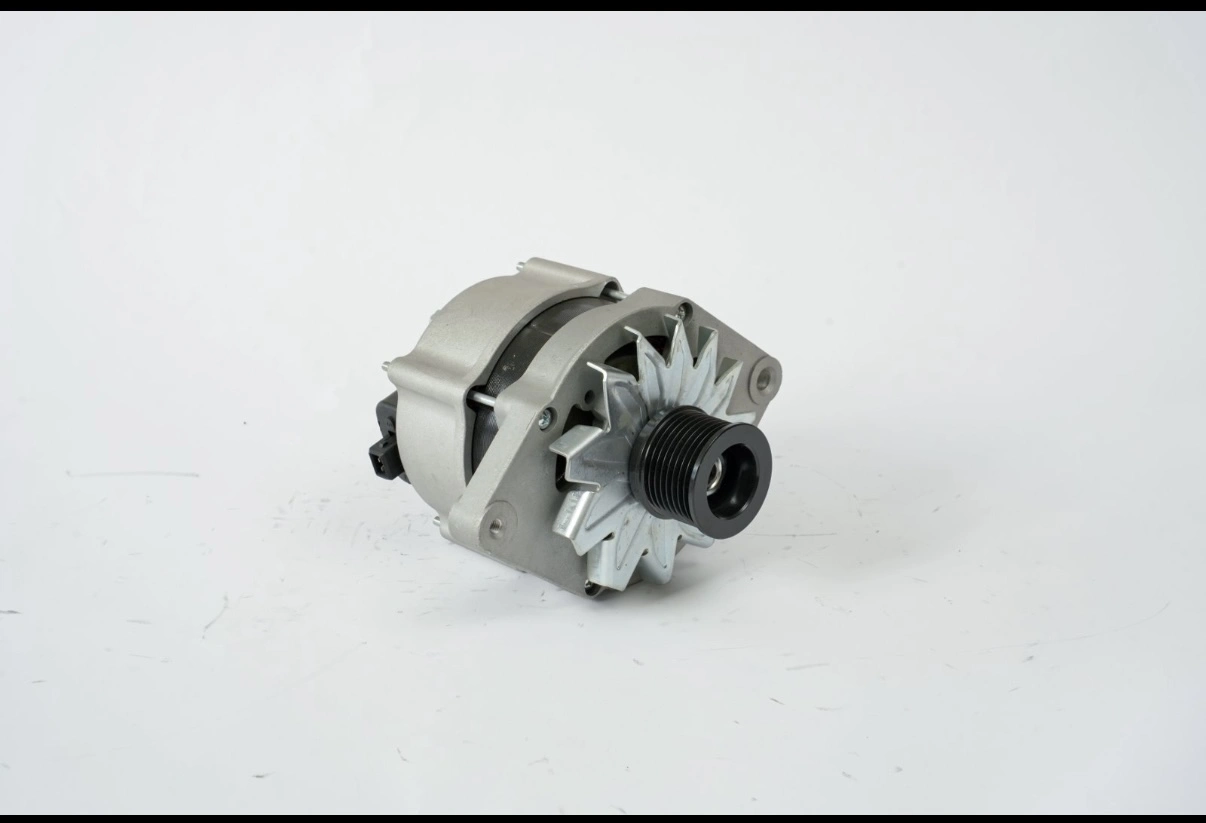
Understanding Auto Electric Alternators: How They Work and Why They Matter
The AC-to-DC Conversion Mechanism
A generator turns a magnetic wheel inside a copper-wound stator, which makes the power go on and off. A rectifier bridge made of diodes changes that AC output into steady DC power. All of the car's electronics are powered by this direct current (DC) while the battery is being charged. The voltage regulator checks the output and changes the field current to keep the voltage steady at 13.8V to 14.8V for 12V systems or 27V to 28.5V for 24V industrial uses.
12V vs. 24V Systems in Commercial Vehicles
Power from 12V can be used to charge most cars and light trucks. Heavy-duty trucks, city busses, and long-distance trains based on the DAF 95, Scania, and MAN platforms all use 24V systems for heavier loads. If you pick the wrong voltage grade, the part could break or become forever undercharged. By law, the power of the alternator has to match the design of the car's system.
Common Failure Signs and Fleet Maintenance Tips
If there is a problem with the charging system, the battery warning light might come on, the headlights might dim when the car is not moving, or the engine bay might buzz. An oscilloscope can show that AC ripple, which is caused by a diode that isn't working right, hurts electronics that are easily damaged. Every three months, maintenance teams for fleets should check the rust on the terminals and make sure the belts are tight every 30,000 miles. Fleets of more than one vehicle can avoid costly unplanned downtime by replacing worn brushes before they break completely.
Comparing Alternator Types and Solutions for Different Vehicle Needs
What kind of alternator you need depends on the car, the load, and the place where you work. Here is a table with some of the most important things to help you decide.
| Criteria | Standard Alternator | High-Output Alternator |
|---|---|---|
| Output Range | 60A–120A | 150A–300A+ |
| Typical Application | Passenger cars, light vans | Heavy trucks, buses, emergency vehicles |
| Voltage Options | 12V | 12V / 24V |
| Cost | Lower upfront | Higher upfront, lower downtime cost |
OEM vs. Aftermarket Alternators
OEM auto electric alternators are made to the exact specs of the car's maker and come with full insurance from that brand. There is a wide range in the quality of aftermarket units. Follow IATF 16949 production standards to get premium aftermarket parts that work just as well as OEM parts but cost less. This makes them appealing to wholesalers and fleet owners who need to keep track of a lot of stock. It is very important that the aftermarket provider compares each unit to the listed output rates before sending it out.
High-Output Units for Commercial and Specialty Vehicles
City busses and cold delivery trucks all use constant current for GPS systems, HVAC units, liftgates, and passenger information screens. These kinds of alternators can't handle this much power. Powerful chargers that can handle 150A to 200A grades make sure that the voltage stays stable over long service lines. This protects sensitive electronics from voltage sag. In order for things like Scania BK112 or Mercedes-Benz O-series busses to work, they need this power reserve.
Alternator vs. Starter Motor: Distinct Roles
People often buy these two parts together, but they do very different things. The starter motor takes a lot of power from the battery to turn on the engine. The generator will then charge the battery and power any systems that are still up and running. When procurement teams buy both parts from the same IATF 16949-certified seller, the quality levels are the same and it's easy to keep track of the sellers. For buyers from other countries, this is a big organizational plus.
Procurement Considerations: How to Source Auto Electric Alternators Effectively
Certification Verification, Compatibility, and Production Transparency
It's not enough to just compare unit prices to find a lot of good charging parts. Before making a deal with a seller, buying teams should make sure of these things:
- Certification verification: Make sure the ISO 9001 and IATF 16949 certificates are up-to-date and cover the production lines that your order needs. You can be sure that these skills are real; they are not just self-statements.
- OEM cross-reference compatibility: If you buy auto electric alternators from a trustworthy business, they will show you how to cross-reference OEM numbers. When you want to buy a lot of Bosch units with the numbers 0120689530, 0120689535, CA1236IR, and CA1624IR, you should compare them to lists of cars that they can work with.
- Lead time transparency: For clear lead times, stable lead times of 30 to 60 days and written production plans protect your inventory planning. During the audit stage, any promises of vague delivery are a red flag.
- MOQ flexibility: If a big factory sets a MOQ that is too high, it will be too expensive to test the market. It's possible for medium-sized qualified makers to take on smaller test orders without giving up control over the process.
Once you're sure these conditions are met, ask for a test batch to be made and put on a bench before committing to full production. Taking this step gets rid of most of the quality problems that might come up later.
Troubleshooting and Testing Auto Electric Alternators: A Practical Guide
Voltage Output and Load Testing
Connect a digital multimeter across the battery jacks while the engine is running at 1,500 RPM. For a 12V system, it reads 13.8V to 14.8V. For a 24V system, it reads 27V to 28.5V. To get the number below the threshold, turn on all the extras, such as the headlights, air conditioning, and back defroster. It means that the generator is either too small or broken if the voltage goes below 13.2V (12V load).
Diode and Rectifier Inspection
It's possible for AC noise to get into the DC circuit and harm the car's electronics if the rectifier diode in auto electric alternators is off. In the morning, this can drain the battery. While the engine is running, connect an oscilloscope to the battery's positive end. On a clean DC line, the wave from peak to peak is less than 0.5V. That's when you know the rectifier is broken and the unit needs to be changed right away instead of being fixed.
When to Replace vs. Repair
The following table helps technicians figure out what to do to save the most money:
| Condition | Recommended Action |
|---|---|
| Worn brushes only | Replace brushes |
| Failed rectifier diode | Replace unit |
| Bearing seizes | Replace unit |
| Damaged stator winding | Replace unit |
| Belt wear and tension loss | Replace belt and check pulley |
If the inside of the unit is clean and less than three years old, the brushes can be changed. It is cheaper to fix the whole thing than to fix just one part that breaks. When you own a fleet, this is especially important because lost work time costs more than the part itself.
Leading Auto Electric Alternator Brands and Supplier Insights
Some of the best alternators on the market are made by Bosch, Denso, Valeo, Hitachi, Delphi, AC Delco, and Mitsubishi Electric. In Europe, Bosch is the market leader for industrial vehicles. In Japan, Denso is the market leader for OEM platforms, and Valeo has a lot of upgrade programs for own cars. There are different guaranty terms and ways to get help for each brand. Usually, the guaranty lasts between 12 and 24 months. When buying teams are putting together product lines with more than one brand, specs don't get mixed up if they know what each brand's main application strengths are.
The Growing Role of Remanufactured Units
A big part of the aftermarket in North America now is made up of alternators that have been fixed up. The Automotive Parts Remanufacturers Association (APRA) says that making a used unit uses more than 80% less energy than making a new one. Businesses that care about the environment should buy high-quality core units from businesses that only use new internal parts and not recovered subassemblies. This is good for the environment and gives OEM-level performance.
Building Long-Term Supplier Relationships
When you work with a single supplier who is a certified manufacturer, you can get lower prices for larger orders and cut down on the number of audits that need to be done. Starter parts and alternators from XITU both come from the same plant that is IATF 16949 approved. This gets rid of the risk of parts not working together that comes with mixing parts from different sources. One of the most common problems that global sellers of car parts have when they try to buy parts is directly fixed by this method.
Conclusion
Every car's auto electric alternators are parts of the electrical system that can handle a lot of weight. It saves money for both the car and the fleet operations as a whole to choose the right unit based on voltage, power level, and application compatibility. As much as the price per unit, B2B buyers care about the supplier's credentials, how they test their products, and how reliable their delivery is. In one building, XITU makes alternators and starters that meet OEM standards. You can be sure that every unit is certified by IATF 16949 and comes with a 6-month guarantee. If your business needs consistent quality on a big scale, that mix cuts risk all the way through the supply chain.
FAQ
1. Why does my alternator produce a whining noise?
Most of the time, a whining sound means that either the rectifier diode is broken or the bearings are worn out. If the AC wave is higher than 0.5V, which can be seen on an oscilloscope, the diode has failed. Most of the time, electrical stress makes bearing noise worse and load changes it.
2. Can I install a higher-amperage alternator without rewiring?
No, you can't raise the output current unless the battery cable, the ground cable, and the main charging wire are all updated. This is the "Big 3" update. The wires will get hot, which could start a fire, if you don't do this step.
3. What causes premature alternator failure in off-road or construction vehicles?
Slip bands and brushes can get broken by water, mud, and dust. Because they are fully sealed and don't let dust or water in, XITU's units are great for building and specialty vehicles that work in rough conditions.
Partner With XITU — Your Trusted Auto Electric Alternators Manufacturer
XITU makes heavy-duty auto electric alternators charge units for platforms from DAF, Scania, Mercedes-Benz, and MAN. The wait time for these units is 30 to 60 days, and OEM or ODM can make them to order. They are IATF 16949 approved. There is full expert help for all of them, and the warranties last for 6 months. Visit xitu-auto.com or email arisa@xitu-auto.com right away to ask for a sample or talk about your sourcing needs.
References
1. Bosch Automotive Handbook, Robert Bosch GmbH, 2022.
2. Automotive Electrical and Electronic Systems, James D. Halderman, Pearson Education, 2020.
3. Automotive Parts Remanufacturers Association (APRA), Industry Annual Report, 2023.
4. SAE International, SAE J56: Alternator Output Test Procedure, SAE International, 2021.
5. Vehicle Electrical and Electronic Systems, Tom Denton, Routledge, 2021.
6. International Automotive Task Force, IATF 16949:2016 — Quality Management System Requirements for Automotive Production, IATF, 2016.