




How Does a Small 12 Volt Alternator Work? A Complete Guide
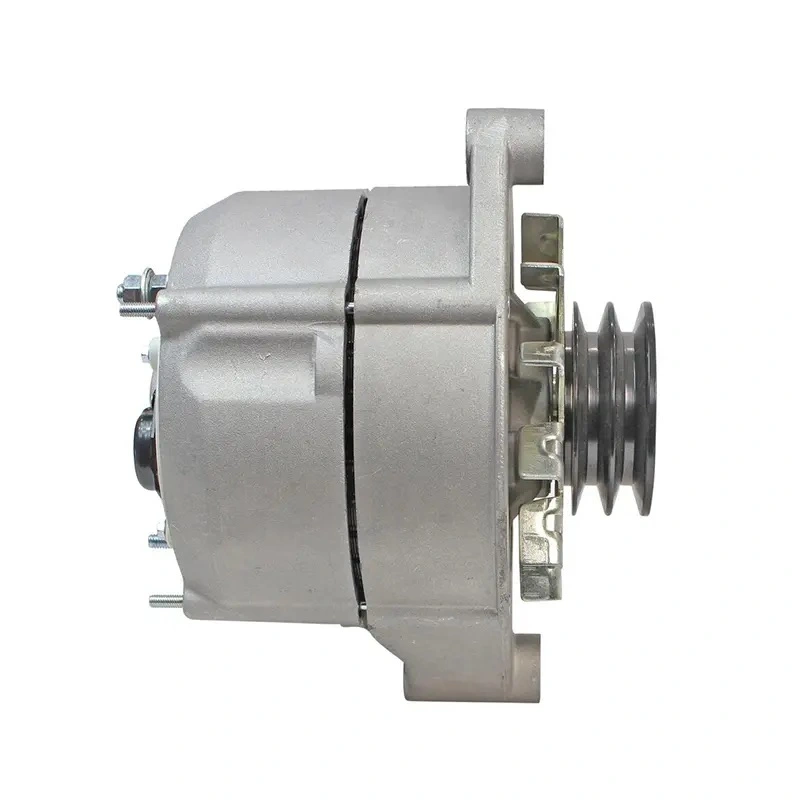
Aalternator&type=products"> small 12 volt alternator converts mechanical energy from an engine into DC electrical power through electromagnetic induction. Inside the unit, a spinning rotor creates a rotating magnetic field around a fixed stator winding, generating alternating current (AC). That AC passes through a rectifier bridge — typically six diodes — and becomes smooth DC output. A solid-state voltage regulator then holds the output between 14.2V and 14.8V, protecting batteries and ECUs from overcharge. In tight engine bays where a standard-size unit simply won't fit, this compact charging solution keeps equipment running without sacrificing output.
Understanding the Basics of Small 12 Volt Alternators
The Core Components
All small 12V alternators are made up of four key parts that work together. It is an electromagnet that spins, and the engine belt moves it. The piece of metal that holds it in place is called the "stator." The rectifier turns the AC power into usable DC power. There it is! The voltage regulator finally keeps the output steady, no matter how fast the engine is running or how much load is on it. Every part needs to work with the others. One example is a weak rectifier diode that lowers the total current flow. This means that the battery is being used up even when the engine is working.
Electromagnetic Induction in Practice
Faraday's Law of Electromagnetic Induction says that voltage is made when the rotor spins and its magnetic field quickly moves across the wires in the stator. At its top speed of 18,000 RPM, the XITU 72mm unit makes three-phase AC, which is changed to DC by the converter. Charges can begin even when the motor is not moving because the cut-in speed is between 1,200 and 1,500 rotor RPM. Many times, the engines of CLAAS combine harvesters and IVECO light trucks don't do anything. This is important for them.
Voltage Output and Amperage Ratings
| Parameter | XITU Compact Unit | Typical Full-Size Unit |
|---|---|---|
| Rated Voltage | 12V DC | 12V or 24V DC |
| Continuous Output | 55A | 80–120A |
| Housing Diameter | 72mm | 100–130mm |
| Max Rotor Speed | 18,000 RPM | 14,000 RPM |
| Operating Temperature | −40°C to +90°C | −20°C to +80°C |
This is a list of the specs for an XITU small unit and a regular full-size unit. The following are the parameters: 12V DC is the rated voltage, and 24V DC is an option. The continuous output is 55A, 80–120A, and 14,000A. The housing diameter is 72mm, 100–130mm, and 18,000 RPM for the max rotor speed. The operating temperature range is -40°C to +90°C and -20°C to +80°C.
Key Applications and Benefits of Small 12 Volt Alternators
Where Compact Charging Units Fit Best
People want a small 12V charging unit in real life for three main reasons:- Engines for ships and boats: Normal units break down in one season of salt mist. This item is fully sealed and meets the ASTM B117 salt-spray test, so it can be used right away on ships and sailboats that don't have a lot of mounting space.
Mini-excavators and small cars work long shifts in rough, dusty circumstances. The bearings have been tested for noise and vibration (NVH) and the case is made of aluminum metal.Cutting down on the front end weight of powersports and UTV builds makes them easier to control. The EFI electronics stay stable with this generator, which doesn't take up much space. It weighs about 30–50% less than a full-size machine.
- Marine and inboard engines: Salt mist corrodes standard units within one season. The XITU unit carries a fully sealed housing and passes ASTM B117 salt-spray testing, making it a direct fit for yachts and sailboats with tight bilge-area mounting.
- Agricultural and construction equipment: Mini-excavators and compact tractors run long shifts in dusty, high-vibration conditions. The aluminum alloy housing and NVH-validated bearings absorb vibration without bearing failure.
- Powersports and UTV builds: Reducing front-end weight improves handling. At roughly 30–50% lighter than a full-size unit, this small 12 volt alternator keeps EFI electronics stable without adding bulk.
These three groups are the best fits for the 72mm compact unit, and all of them would rather buy from someone who can cross-reference part numbers correctly than someone who just sells general stock.
Compatibility and Wiring Considerations
This part can be used instead of Bosch OEM codes 0120400369, 0120400639, 0120400645, 0120400679, 0120400680, 0120400789, 0120400798, 0120489022, 0120489294, 0120489694, 0120489710, 0986031270, CA339IR, 1-3246-25W, 14390N, 004154262626, 0061541602, and 0101541602. There is one SKU that can be used for more than 15 part numbers. This includes the CLAAS series 48, 76, 86, 96, 105, 3028, and 3030, the IVECO MK series, and the Mercedes-Benz U 100, U 110, and U 1100. Because of this, it's much easier for wholesalers to keep track of their stock.
Efficiency Advantage Over Generators
Having separate engines makes them heavier, uses more fuel, and takes longer to maintain. A small alternator that is driven by a belt collects energy from the engine's rotation. When the engine is running at normal loads, it doesn't use much more fuel than it needs to. Fleet owners who use IVECO MK 90-13 trucks every day will save a lot of money on fuel over the course of a season because of this difference.
How to Select the Right Small 12 Volt Alternator for Your Needs
Amperage, Size, and Design Type
The carbon brushes and slip bands are what brushed alternators are made of. These break down over time, but they're easier to fix. Brushless types don't have that point of wear, so they last longer from service to service. When used on boats, where it's hard to get to the engine bay, a brushless design is more efficient. To find the right amperage, just take the continuous electrical load of your equipment and add 20% to it. A tractor with GPS, moving lights, and hydraulic solenoids needs at least 45A of power all the time. 55A has plenty of power to handle that load.
Environmental and Certification Requirements
| Application | Key Requirement | Relevant Standard |
|---|---|---|
| Gasoline engine bays | Spark protection | SAE J1171 |
| Marine environments | Corrosion resistance | ASTM B117 salt spray |
| Agricultural/off-road | Vibration tolerance | NVH analysis |
| ECU-equipped vehicles | Voltage precision ±0.3V | ISO 8854 |
With the XITU 72mm unit, all four groups can use it. This is useful for distributors who need to sell a product that can work with users who buy farm, marine, and commercial cars.
Matching the Unit to Your Battery Chemistry
It doesn't bother lead-acid batteries that the usual charge window is 14.2 to 14.8V. To keep cells from getting stressed, LiFePO4 packs need either better voltage control or a different stage for charging from DC to DC. When boat owners move from lead-acid batteries to lithium batteries, they will still have customers who use the old batteries. Check the set-point adjustment range of the regulator or plan to add an extra charger to the wire harness to make sure your customers are happy.
Maintenance, Troubleshooting, and Testing of Small 12 Volt Alternators
Routine Inspection Steps
Because they are well taken care of, most alternators don't break down. Every 500 hours of use, make sure the drive belt is still tight. If the belt is too loose, it will slip under heavy loads, which means that the load is not charged enough. It's important to check the lead connections for rust because even a 0.1-ohm resistance at the B+ contact makes the charging voltage drop a lot when the circuit is full. Clean any housing vents that you find and check the fixing clamp torque to make sure the bearing load is correct.
Common Fault Symptoms
Number 3: If the voltage of a small 12 volt alternator goes below 13.5V at 1,500 RPM, it's likely that a diode in the rectifier bridge is broken. When the engine RPM goes up, the whining sound gets louder. This is likely caused by a worn bearing and not an electrical problem. When the engine is warm, charge that comes and goes is often caused by a voltage regulator that is too busy because of the heat. As each sign is added, it gets easier to understand what is going on.
On-Site Testing Procedure
Connect a digital voltmeter that has been set to the battery to the wires. When the device is not being used, the reading should be between 13.8V and 14.4V. Run the engine at 2,000 RPM and turn on everything that needs electricity, like the lights, fan, and other parts. More than 13.5V should always be present. You should do an AC ripple test if it drops below that level. The rectifier diode is broken if there is more than 50mV AC riding on the DC output. This three-step process can fix 80% of problems in the field without taking the unit out of service.
Procurement and Supplier Insights for B2B Buyers
Supplier Qualification, Small-Batch Flexibility, and Technical Support
Finding a small 12V charging unit for an old or rare machine model can be hard. You need to find a source that stocks cross-referenced part numbers and can handle small-batch orders. The most common mistake people make when they are shopping is getting the right width for the housing without checking the design of the mounting holes. This makes a unit that fits the belt but can't connect to the bracket with bolts.
This XITU plant is 20,000 m² and makes more than 500,000 pieces a year. It is IATF 16949 approved. Most of the time, the lead time is thirty to sixty days. Each unit is fully tested on a bench before it is sent out. The load performance graphs, ripple voltage, and regulator response time are all checked. Because they can handle mixed small-batch sales, smaller wholesalers don't have to work as hard. There is less chance of losing money on first trial sales with the 6-month guarantee and skilled repair help.
It's important to make sure that (1) their cross-reference database has the exact part numbers you need, (2) they can send you sample units within two to three weeks, and (3) they offer technical support in case you have questions about how to install the product in your situation. In these three ways, a short-term fill-in provider is not the same as a long-term buying partner.
Conclusion
Asmall 12 volt alternator uses electromagnetic induction, rectification, and solid-state voltage control to turn the engine's spin into controlled DC power. You should make sure that the unit's output amps, housing diameter, mounting pattern, and part number all work with the other gear you already have before you buy it. Some of the Bosch cross-reference numbers for the XITU 72mm unit are in a single SKU. This makes inventory easier and speeds up buying for resellers who work with old Mercedes-Benz, CLAAS, IVECO, or CASE fleets. By doing things like checking the power, tightening the belt, and cleaning the connections, you can keep things going smoothly and avoid sudden breakdowns.
FAQ
1. What is the cut-in speed for this compact 12V alternator?
The XITU unit begins charging at 1,200 to 1,500 rotor RPM, so it produces usable output even at low engine idle. This is important for tractors and utility vehicles that spend significant time at reduced throttle.
2. Can this unit charge LiFePO4 lithium batteries?
The internal regulator holds output between 14.2V and 14.8V, which is compatible with many LiFePO4 packs. For sensitive lithium systems, adding an external DC-DC charger between the alternator and battery provides finer voltage control.
3. Is a one-wire or three-wire connection better for agricultural equipment?
Three-wire setups sense voltage at the battery rather than at the alternator terminal, compensating for cable voltage drop. On tractors with long wiring runs, three-wire connections produce more accurate charging and better battery protection.
Partner with XITU for Your Small 12 Volt Alternator Supply
XITU makes small 12 volt alternators that are made to fit in small spaces and work well in industrial cars, boats, and farms. Wholesalers and OEM buyers can rely on us to be a reliable source for discontinued and niche part numbers. We are IATF 16949 certified, can handle small orders, and offer a 6-month guaranty. They've worked together for 28 years, and all of our work is checked. Contact our team right away at arisa@xitu-auto.com or go to xitu-auto.com to get a sample or talk to a dependable small 12 volt alternator supplier about your needs.
References
1. Bosch Automotive Handbook — Bosch, 2022.
2. IEEE Transactions on Industry Applications: "Efficiency Analysis of Claw-Pole Alternators in Mobile Equipment" — IEEE, 2021.
3. SAE International Technical Paper: "External Ignition Protection for Marine and Agricultural Electrical Systems (SAE J1171)" — SAE International, 2020.
4. ASTM B117 Standard Practice for Operating Salt Spray (Fog) Apparatus — ASTM International, 2019.
5. ISO 8854: Road Vehicles — Alternators with Regulators — International Organization for Standardization, 2012.
6. Machinery's Handbook: A Reference Book for the Mechanical Engineer — Industrial Press, 2020.