




How to Choose the Right Small 12 Volt Alternator for Your Vehicle
Choosing the rightalternator%20&type=products"> small 12 volt alternator comes down to three things: matching the part number, confirming the physical dimensions, and verifying the output voltage range. For equipment like CLAAS agricultural machinery, IVECO light trucks, or CASE construction units, a compact 72mm alternator rated at 55A with a regulated output of 14.2–14.8V is often the precise solution. Getting these specifications wrong leads to fitment failures, battery damage, or costly downtime. This guide walks you through every decision point so you source with confidence.
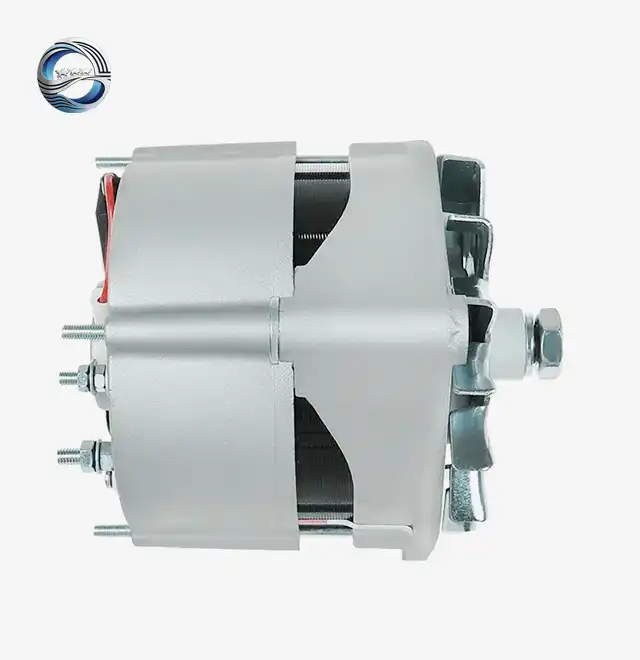
Understanding Small 12 Volt Alternators: Basics and Applications
How a Compact Alternator Works
There is electromagnetic induction and an internal rectifier bridge in a small 12 volt alternator that turn the kinetic energy from the engine belt into direct current. The rotor spins inside the stator winding, making AC power. The diode trio then changes this power into a stable DC output. When working in small engine bays, a housing width of 72mm or less is the smallest difference between a unit that fits and one that doesn't.
Where These Units Are Deployed
Small 12 volt alternators are in high demand for three main reasons:
- Agricultural and construction equipment: CASE 956 XL tractors, CLAAS combines (series 105, 48, 76, 86, 96, 3028, 3030), and mini-excavators all work in dirty, high-vibration places where sealed housings and proven NVH scores are just as important as output numbers.
- Commercial light vehicles: The IVECO MK series trucks (MK 75-9 through MK 130-16) and the Mercedes-Benz U 100, U 110, and U 1100 utility vehicles use OEM-equivalent replacements when factory parts are no longer made or are too expensive to buy.
- Marine and powersports: Inboard engines, UTVs, and performance vehicles need to be able to handle salt mist and keep producing power at 18,000 RPM rotor speeds without shutting down due to heat.
There is only so much space for all three of these segments. When the engine bay only gives you 72mm, each millimeter of housing width is a choice between going and not going.
Part Number Cross-Reference Matters
The fastest way to check for errors on older machine types is to use the original Bosch part numbers. More than 15 OEM numbers can be matched by a single 55A 72mm unit. These include Bosch 0120400369, 0120400639, 0120400645, 0120400679, 0120400680, 0120400789, 0120400798, 0120489022, 0120489294, 0120489694, 0120489710, 0986031270, CA339IR, 1-3246-25W, and 14390N. The most common reason for returns can be avoided by making sure of at least two numbers before placing an order.
Key Factors to Consider When Choosing a Small 12 Volt Alternator
Amperage Output and Voltage Regulation
Most light commercial and agricultural machines can handle an output of 55A continuously. The voltage range of 14.2V to 14.8V is just right to charge regular lead-acid batteries while also being narrow enough to keep modern ECUs and LiFePO4 lithium packs safe. Some units with poorly calibrated regulators move out of this band when they get hot, which shortens the battery life and can mess up the data on the electronic control module.
| Specification | Value |
|---|---|
| Voltage Output | 12V DC |
| Continuous Current | 55A |
| Regulated Voltage Band | 14.2–14.8V |
| Housing Diameter | 72mm |
| Operating Temperature | -40°C to +90°C |
| Rotor Max Speed | 18,000 RPM |
| Cut-In Speed | 1,200–1,500 RPM |
Physical Dimensions and Mounting
The 72mm case width of a small 12 volt alternator makes it impossible to use CASE, CLAAS, or IVECO. Check the bracket mounting pattern and pulley type in addition to the diameter. All machines that are suitable come with a single-groove roller that works with 1V. With a standard clamp, units that can be mounted both horizontally and vertically cut down on installation time and the need for custom construction.
Material and Durability Standards
High-grade copper windings keep their ability to carry electricity even when the temperature changes. A housing made of a lightweight aluminum metal gets rid of heat faster than one made of cast iron, which lowers the engine's parasitic load. For naval uses, the bare minimum requirement is a protection grade that is fully sealed and resistant to water and dust. The SAE J1171 approval shows that the unit won't spark in gasoline engine rooms where fuel fumes might be present.
Comparing Alternatives: Small 12 Volt Alternator vs Other Power Sources
Compact Alternator vs. Standard Automotive Alternator
A standard small 12 volt alternator for cars has a housing width of 130 mm or more and weighs 40 to 60% more than a small unit. That difference in size makes installation physically impossible in engine bays that aren't very big. The 72mm class of compact 12V alternators have the same controlled output and a shape that lets them fit where normal units can't.
OEM vs. Aftermarket vs. Remanufactured
One thing that parts distributors often don't know how to decide is whether to buy OEM, aftermarket, or remanufactured units. This is a straight comparison:
| Category | Quality Consistency | Price Range | Lead Time | Part number coverage |
|---|---|---|---|---|
| OEM Original | Highest | Highest | Long / Discontinued | Single machine model |
| Remanufactured | Variable | Mid | Moderate | Limited |
| Aftermarket (IATF 16949) | OEM-equivalent | Competitive | Short | 15+ cross-reference numbers |
OEM parts are often not available for models that have been taken off the market, like the Mercedes-Benz U 100 or CLAAS 3028. The best standard substitute is a brand-new aftermarket unit that is made to IATF 16949 standards and tested against the original Bosch specs.
Compact Alternator vs. External Generator
As the engine belt is already there, an onboard small 12 volt alternator doesn't use any extra fuel and doesn't need any extra wires. A portable generator adds weight, noise, upkeep needs, and the need for a separate fuel source. The onboard alternator is the right design for any vehicle that already has a charging circuit.
Procurement and Sourcing Strategies for Small 12 Volt Alternators
Verifying Supplier Credentials
Ask for proof of ISO 9000 and IATF 16949 certifications from any compact alternator supplier before you place an order. These two standards prove that the company runs a controlled production environment with quality records that can be found. Suppliers that make more than 500,000 pieces a year from a single certified factory offer more uniform batch quality than smaller businesses that use a lot of different subcontractors.
Balancing MOQ Against Inventory Risk
MOQ pressure is common for specialty repair traders and people who sell small parts like the small 12 volt alternator. Ask for mixed-batch ordering across linked SKUs and work out sample orders of one to three units before committing to a trial batch of twenty to fifty pieces. A supplier who is ready to back this phased method knows how long-tail parts distribution works from a business point of view. The supply chain is less uncertain when there is a standard lead time of 30 to 60 days and confirmed logistics partnerships that cover North America, Europe, and Southeast Asia.
Warranty and Technical Support Terms
For serious business-to-business purchases, a six-month warranty that covers manufacturing flaws as well as cosmetic issues is the norm. In addition to the warranty document, check to see if the supplier's technical team can help with regulator tuning for lithium battery systems, confirm wiring configurations for three-wire remote sensing setups, and answer questions about specific applications within one business day.
Installation, Testing, and Maintenance Best Practices
Pre-Installation Checks
Before putting in a compact charging unit, take the negative battery terminal off and look at the state of the mounting bracket, the alignment of the belt, and the wire cable. Make sure the type of pulley fits the drive belt that is already there. All of the CASE, CLAAS, IVECO, and Mercedes-Benz uses that are suitable with the 1V configuration have a single V-belt groove as normal.
Wiring and Bench Testing
A one-wire link to the positive terminal of the battery is enough for simple refills. A three-wire setup gives more accurate charge regulation over longer cable runs for devices that sense voltage remotely or watch a whole fleet. Once everything is set up, test the output on a bench at idle (1,200–1,500 RPM) and at mid-range RPM. At both points, the regulated output should show a value between 14.2V and 14.8V. If the ripple voltage is more than 50mV, it means that the rectifier is broken and needs to be replaced before the machine can be used again.
Maintenance Schedule
Every 500 hours of use, check the tension of the belt and look for cracks or corrosion in the alternator housing. For naval use, check the sealed case every so often for salt crust that has formed around the terminal connections. Units that have passed 500 hours of high-temperature endurance testing at 90°C ambient will usually not need an internal inspection during normal service life. However, the integrity of the external connections should be checked once a year.
Conclusion
To choose the right small 12 volt alternator, you need to match the part number, make sure the 72mm housing fits the mounting space, check that the 14.2–14.8V controlled output protects your batteries, and buy from a seller whose products are approved and whose service terms are clear. For old machines made by CASE, CLAAS, IVECO, and Mercedes-Benz, a single 55A unit covering 15 or more Bosch cross-reference numbers resolves the long-tail inventory problem that drives most replacement demand. If you get the specifications right the first time, the buying process will be easy.
FAQ
1. What is the lowest RPM that a small 12 volt alternator needs to charge?
Most units in this class that are made for professionals start charging between 1,200 and 1,500 rotor RPM. That means charging starts when the engine is running at a low speed, which is important for farm equipment that is running at low speeds for long periods of time.
2. Can a lithium LiFePO4 battery pack be charged by a 55A small alternator?
Yes, as long as the goal voltage is set on the internal regulator at the factory or an external DC-DC charger is connected between the alternator output and the battery bank. When set up correctly, this unit's 14.2–14.8V output band works with most lithium systems.
3. How do I make sure that a cross-referenced part number is correct before I order?
Check at least two Bosch OEM numbers against the housing label of the unit you already have. Take pictures of the unit's dimensions and mounting pattern on the bracket if the numbers are worn or missing. Then, send these pictures to the supplier to make sure they are correct before you place your order.
Source Your Next Compact Alternator Through XITU
XITU manufactures the 12V 55A 72mm compact alternator described throughout this guide at a 20,000 m² IATF 16949-certified facility producing over 500,000 units annually. Each unit ships 100% new, tested against all 15+ Bosch cross-reference numbers, and backed by a six-month warranty with full technical support. As a trusted small 12 volt alternator supplier for distributors across North America, Europe, and Southeast Asia, we support small-batch trial orders and mixed-SKU sourcing to match the economics of specialty parts distribution.
Contact our team directly at arisa@xitu-auto.com or visit xitu-auto.com to request a quote, confirm part number compatibility, or discuss OEM/ODM packaging options.
References
1. Society of Automotive Engineers. SAE J1171: External Ignition Protection of Marine Electrical Devices. SAE International, 2012.
2. Bosch Automotive Handbook. Electrical Systems and Components, 9th Edition. Robert Bosch GmbH, 2014.
3. ASTM International. ASTM B117: Standard Practice for Operating Salt Spray (Fog) Apparatus. ASTM International, 2019.
4. International Automotive Task Force. IATF 16949:2016 – Quality Management System Requirements for Automotive Production and Relevant Service Parts Organizations. IATF, 2016.
5. Stone, R. Introduction to Internal Combustion Engines, 4th Edition. Palgrave Macmillan, 2012.
6. Denton, T. Automobile Electrical and Electronic Systems, 5th Edition. Routledge, 2017.