




How Your Heavy-Duty Alternator Works
A alternator&type=products">heavy duty truck alternator is the electrical backbone of any Class 7 or Class 8 commercial vehicle. It converts mechanical energy from the engine into the direct current needed to charge the battery and power onboard systems. Unlike a passenger car unit, a commercial-grade alternator must handle continuous high-amperage output, extreme heat cycles, and 24/7 operating demands. Understanding how this component works—and what separates a long-lasting unit from a short-lived one—helps fleet buyers and parts distributors make smarter procurement decisions that protect both uptime and profit margins.
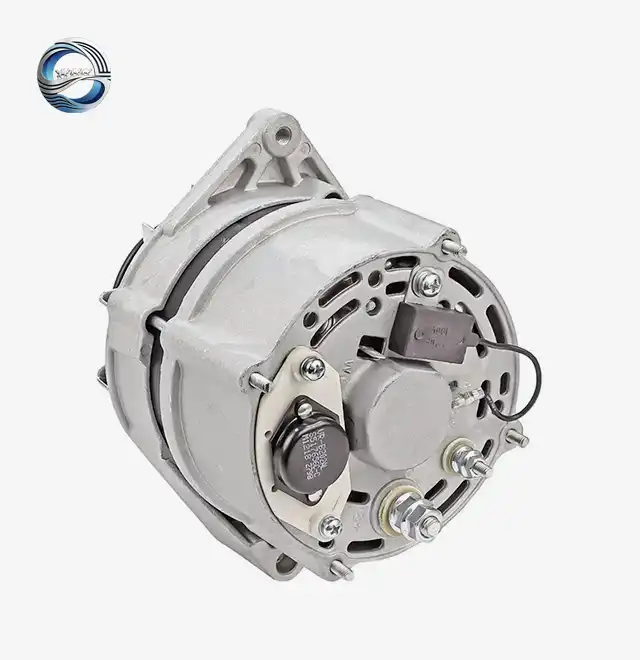
Understanding the Heavy-Duty Truck Alternator: How It Works
Core Components and Their Roles
The rotor, the stator, the rectifier bridge, and the voltage regulator are the four main parts of an industrial generator. A spinning magnetic field is made when the rotor spins inside the stator. This makes the stator windings carry alternating current (AC). The rectifier bridge, which is made up of diodes, changes AC into DC that can be used. The voltage regulator checks the voltage of the battery and changes the field current to keep the output steady, which for a 12V system is usually between 13.8V and 14.4V.
Brushless Design: Why It Changes Everything
In a normal generator, the rotor slip rings get current from the carbon brushes. Brushes break down over time, making carbon dust and power drops. In a brushless design, the excitation current flows through an outside exciter winding, so there is no physical contact point. Even after long-term tests in the field, XITU's brushless units don't show any measurable brush wear. They can last more than 1,000,000 miles under heavy loads, which is backed up by IATF 16949-certified production and multi-stage output proof.
Voltage, Amperage, and Electrical Load Matching
Both the alternator and the battery bank are protected when output ratings are matched to actual load demand. A sleeper cab with HVAC, refrigeration control, and video systems can use 80 to 120A when it's not in use. 12V 95 from XITUThe 160A–350A range is for high-demand platforms, while the A unit handles normal auxiliary loads. By choosing the right grade, you can avoid constant undercharging, which is one of the main reasons why long-haul fleet batteries fail early.
Common Issues and Troubleshooting of Heavy-Duty Truck Alternators
Early Warning Signs to Watch
The first signs of alternator stress are dimmed headlights, slow battery charging, and warning lights on the dashboard. When transporting cold items, an unsteady charging voltage can also cause cold-chain tracking systems to go off when they shouldn't. If you see these signs right away, you can keep a small electrical problem from turning into a full breakdown on the side of the road.
Diagnostic Steps Using Standard Tools
When the load is on and the digital multimeter is put across the battery terminals, it should show 13.8V to 14.5V at 1,500 RPM. A voltage below 13.5V means the alternator is weak, and a voltage above 14.8V means the regulator is broken. A carbon pile load tester puts a controlled load on the unit to see if it can keep its maximum current when it's under stress. Together, these two tests take less than 15 minutes and can tell you if a unit needs to be replaced.
Maintenance Practices That Extend Service Life
Checking the heavy duty truck alternator on a regular basis can make a difference in how long it lasts. Every so often, fleet technicians should do the following maintenance steps:
- Inspect belt tension and pulley alignment every 25,000 miles. A misaligned 8PK belt introduces lateral bearing load that accelerates wear on the front bearing race, even in a sealed unit.
- Clean the rectifier heat sink area at every major service interval. Grease and dust accumulation raise operating temperature, which reduces diode efficiency and shortens regulator life.
- Check terminal connections for corrosion every oil change. A 0.5-ohm resistance increase at the B+ terminal can drop effective output by 8–10A under load.
Just following these three steps can give any business charging system years of reliable service and cut down on unnecessary shop visits by a large amount.
Upgrading and Comparing Heavy-Duty Truck Alternators for Optimal Performance
Alternator vs. Generator: Practical Differences
A lot of buyers still use the two words equally, but they mean different things. An alternator creates AC on the inside and then rectifies it to DC. This makes it more efficient at low RPM, which is useful for cars that sit still for a long time. A generator directly makes DC, but it needs more RPM to reach its rated output. These days, commercial trucks usually have alternators because they charge batteries faster when the truck is not moving.
Market Overview: Leading Brands in 2024
There are well-known brands with different positions in the industrial generator market. According to the table below, major suppliers are ranked by brand, output range, design, SAE J180 compliance, and price tier. The Bosch range covers 80A to 150A and is brushed, which is considered mid-range. The Leece-Neville range covers 165A to 300A and is brushed, which is considered premium. The Delco Remy range covers 145A to 270A and is brushed, which is considered mid-premium. The XITU range covers 95A to 350A and is brushless or brushed, which is compared to other major suppliers.
| Brand | Output Range | Design | SAE J180 Compliant | Price Tier |
|---|---|---|---|---|
| Bosch | 80A–150A | Brushed | Yes | Mid |
| Leece-Neville | 165A–300A | Brushed | Yes | Premium |
| Delco Remy | 145A–270A | Brushed | Yes | Mid-Premium |
| XITU | 95A–350A | Brushless / Brushed | Yes | Competitive |
The main thing that makes XITU stand out is its brushless choice. Even high-end brushed units need to have their brushes replaced every so often, which adds to the cost of maintenance over the life of a fleet. That variable is taken away completely by XITU's brushless architecture.
OEM vs. Aftermarket: How to Evaluate the Trade-Off
OEM units from CASE IH, John Deere, and Scania usually cost $400 to $800 each. Aftermarket units that meet the same fit, form, and function requirements—which can be checked with cross-reference numbers—can do the same job for a lot less money. It is important to make sure that the new unit has traceable certifications (IATF 16949, ISO 9000) and that its OEM cross-references are real, not guesses.
Procurement Considerations for Heavy-Duty Truck Alternators
Cross-Reference Coverage and SKU Efficiency
One of the most important things for wholesalers who manage mixed teams to do when buying something like a heavy duty truck alternator is to choose a unit that works with more than one platform under a single SKU. The 12V 95A 8PK 60mm alternator from XITU can be used instead of Bosch parts 0120484011, 0120484018, 0120484026, 0120484050, 0120484205, 0120484218, and 0986040280. It also includes John Deere numbers AT175194, AT229394, RE36267, RE53563, and TY244485, as well as CASE IH numbers A187623, AH137883. This one SKU works with the following models: CASE IH 450, 455, 480CK, 580, 850 D/G, 1150 E/G, 110, 120, 135, 1594, 155E; Maxxum 5120–5150; John Deere 4.5L engines; and Scania G460.
Pricing, Lead Times, and Sourcing Reliability
The following table shows typical buying conditions for large-scale buyers:
| Parameter | Specification |
|---|---|
| Unit Price Range | $110–$260 per unit (volume-dependent) |
| MOQ | 100–300 units (first order) |
| Standard Lead Time | 30–60 days production + shipping |
| Annual Capacity | 500,000+ units |
| Warranty | 6 months against manufacturing defects |
| Certifications | IATF 16949, ISO 9000 |
XITU exports through logistics partners that are known all over the world. These partners offer solid transit times and the paperwork needed to clear customs in most major import markets.
Installation Compatibility and After-Sales Support
Because all XITU units follow SAE J180 mounting standards, they can be put together directly with no need to change the brackets. The 8PK, 60mm pulley configuration is the same as the OEM belt routing on all platforms that are covered. When needed, XITU can help with localized installation and offer technical support. For fleet accounts, a 6-month warranty covers problems with the way the product was made, and the XITU team has clear steps for handling warranty claims.
Conclusion
A commercial heavy duty truck alternator does a lot more than just charge the battery. It powers all of the electrical systems that keep a truck moving and a company making money. Your total cost of ownership is directly affected by how well you understand how the part works, what goes wrong with it, and how to choose a replacement unit with the right output rating and cross-reference coverage. With XITU's brushless charging units, wide OEM compatibility, and IATF 16949-certified production, you can be sure that your repair costs will go down and your machines will stop working less often.
FAQ
1. How often should a commercial alternator be inspected?
Most fleet maintenance programs check the alternator every 50,000 miles or once a year, whichever comes first. At the same time, you should check the output voltage, the state of the terminals, and the tightness of the belt.
2. Is a brushless alternator worth the price difference?
Yes. By getting rid of the brush-and-slip-ring contact, the most common place where conventional units wear out is also gone. A brushless unit saves two to three times as much work and brush replacement over its 500,000-mile service life, so the higher unit price is well worth it.
3. Can I upgrade from a 95A unit to a 160A or higher output model?
Yes, as long as the wiring harness is big enough to handle the extra current. The SAE J180 mounting size must match, and the B+ wire gage must be checked. On the same base, XITU's product line goes from 95A to 350A, which makes it easy to switch to a similar model.
Connect with XITU for Bulk Alternator Supply
Over the past 28 years, XITU has built a name as a company that makes OEM-grade commercial alternators and sells them to distributors and fleet owners all over the world. Our line of heavy duty truck alternator brushless units works with farming, long-haul, and building platforms all under one verified SKU. This means you can cut down on inventory costs without sacrificing quality. Send a list of your part numbers or fleet requirements to arisa@xitu-auto.com. You can also go to xitu-auto.com right now to get a quote and a sample program.
References
1. Society of Automotive Engineers. SAE J180: Alternator and Regulator Testing . SAE International, 2019.
2. Denton, T. Automobile Electrical and Electronic Systems. Routledge, 2021.
3. Reimpell, J., Stoll, H., & Betzler, J. The Automotive Chassis: Engineering Principles. Butterworth-Heinemann, 2001.
4. American Trucking Associations. Technology & Maintenance Council Recommended Practice RP109A: Charging System Maintenance. ATA/TMC, 2020.
5. ISO. ISO 8854: Road Vehicles — Alternators with Regulators — Test Methods and General Requirements. International Organization for Standardization, 2012.
6. Bosch Automotive Handbook. Bosch Automotive Electrics and Automotive Electronics, 6th ed. Robert Bosch GmbH, 2021.