




How Does a Super Duty Alternator Improve Your Truck's Electrical System?
Aalternator&type=products"> super duty alternator improves your truck's electrical system by delivering sustained, high-amperage output that standard units simply cannot match. Where a factory alternator may top out at 130–157A, a heavy-duty charging unit maintains stable voltage across every accessory — from hydraulic lift gates to LED light bars — without triggering voltage sag. For Ford F-Series commercial trucks and similar vocational platforms, upgrading to a purpose-built high-output alternator means consistent battery health, protected electronics, and fewer unplanned maintenance stops on demanding job sites.
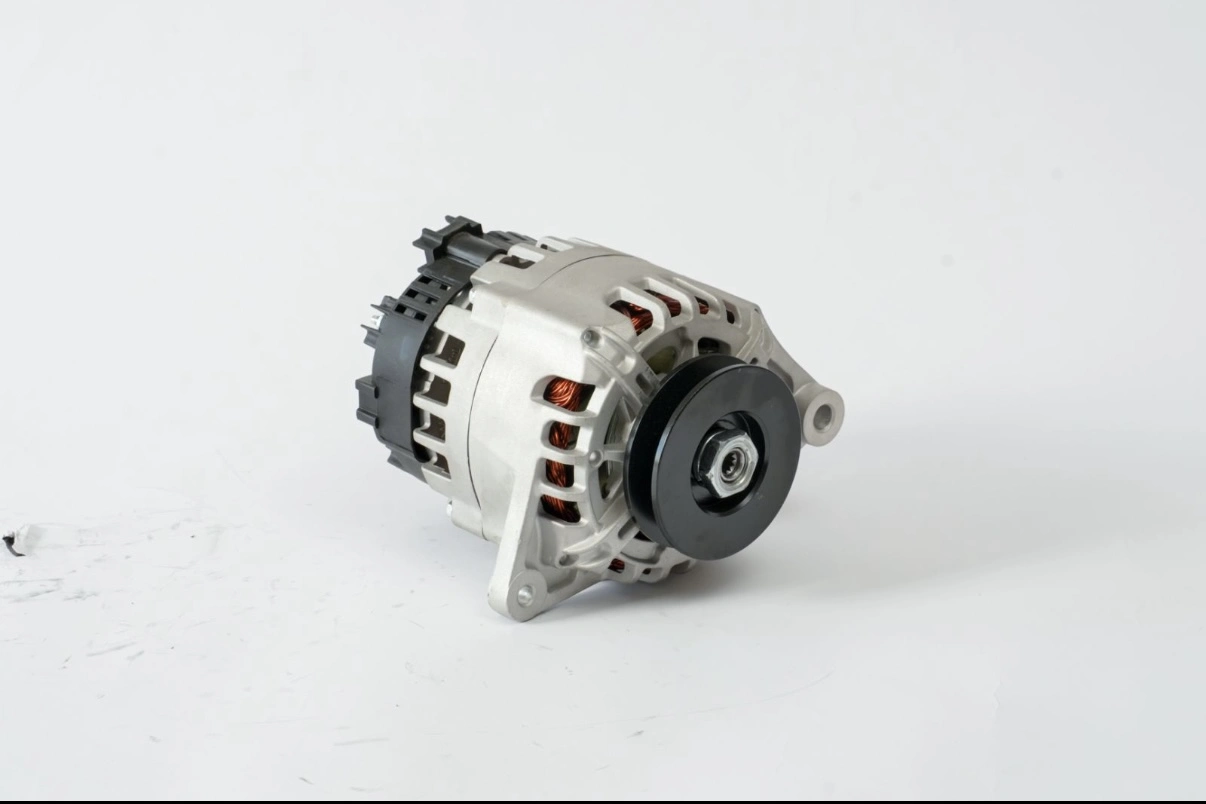
Understanding the Super Duty Alternator and Its Role in Truck Electrical Systems
What Sets It Apart from a Standard Unit
An alternator for a heavy-duty truck is not just a bigger form of one for a passenger car. It has a precision-wound rotor and a higher-density stator winding, which is usually made of 100% copper wire. This makes more magnetic flux at lower engine speeds. This "low turn-on RPM" design means that charging starts as soon as the engine starts. This protects the battery voltage during the long periods of idle time that are common in work.
Core Internal Components and Their Functions
| Component | Function |
|---|---|
| Rotor | Generates rotating magnetic field |
| Stator | Converts magnetic flux into AC current |
| Rectifier / Diodes | Converts AC to usable DC current |
| Voltage Regulator | Holds output between 13.8V–14.8V |
| Bearings (oversized) | Absorb diesel engine vibration |
Each part works after the others. Alternating current is made when the rotor spins inside the stator. The rectifier diodes then change the AC to DC, and the voltage regulator controls the output to keep it from going too high. High-quality silicon diodes in XITU's units sit on heavy-duty heat sinks. This lowers the temperature stress that breaks diodes too soon in stock alternators.
Lifespan Benchmarks and Early Warning Signs
In business fleet use, a well-made high-output alternator will usually last between 150,000 and 200,000 miles. The cab lights flashing, the battery warning lamp turning on, voltage readings below 13V or above 15V at cruising RPM, and a strange whining sound coming from the belt drive are all signs that the battery is failing. If you notice these signs early, you can stop electricity problems from spreading to other CAN bus units in the truck.
How a Super Duty Alternator Enhances Electrical Performance and Reliability
Higher Output for Heavy Accessory Loads
The modern Ford F-Series Super Duty trucks use a lot of electricity. A snow plow truck by itself has flashing lights, warm mirrors, hydraulic pump motors, and a forward camera system all working at the same time. A 90A continuous-output alternator, like the XITU 12V 90A 8PK58 unit, can handle that load without dropping the system voltage below the 13.5V level that electronics need.
Stable Voltage Regulation Protects Downstream Components
When the voltage goes above 14.8V, it hurts the engine control modules and the transmission solenoids, especially in a super duty alternator. On the other hand, drops below 12.6V cause hard starts and shorten the battery's life. All the electronics on board stay within their design range thanks to a precise internal governor that keeps the voltage level stable. SAE International says that one of the main ways to make 12V AGM batteries last longer in commercial vehicles is to charge them at the same voltage every time.
Reduced Electrical Noise for System Stability
AC ripple, which shows up as electrical noise on the truck's data lines, is caused by bad correction. This noise can cause ABS and transmission systems to show false trouble codes. Good alternators keep ripple voltage below 50mV, which is the level most OEM specs say should be there. This keeps the CAN bus clean and module transmission correct.
Choosing the Right Super Duty Alternator for Your Fleet Needs
OEM vs. Aftermarket: A Practical Comparison
Brands like Bosch, Delco Remy, and Denso make OEM alternators that are guarantyd to fit, but they cost more. Quality aftermarket manufacturers, especially those with IATF 16949 certification, can make units that meet the same electrical and size standards for less money per unit. The XITU alternator works with Bosch OEM numbers 0124325109 and 3C4510300AA, showing that it is a straight replacement that doesn't need any bracket changes.
Compatibility Considerations for Diesel vs. Gas Engines
Diesel engines have higher rates of shaking than gasoline engines. This difference speeds up the wear on bearings in alternators that aren't made for diesel service. When used in diesel applications, reinforced mounting ears and oversized bearings are not options; they are necessary. When looking for an alternator for a fleet of both gas and diesel engines, make sure that it meets the XITU Super duty alternator standard.
| Specification | XITU Super Duty Alternator |
|---|---|
| Voltage | 12V (24V compatible) |
| Continuous Output | 90A |
| Pulley Type | 8PK58 |
| Housing | Aluminum alloy |
| Winding | 100% copper |
| OEM Cross-Reference | Bosch 0124325109 / 3C4510300AA |
| Certification | ISO 9001, IATF 16949 |
| Warranty | 6 months |
Evaluating Supplier Reliability Before Committing
In addition to checking the product specs, procurement managers should also check the supplier's annual production capacity, licensing paperwork, and the ability to support low-MOQ sample orders. XITU's 20,000-square-meter plant makes more than 500,000 units a year and has more than 50 precision testing stations, which makes workplace audit clearance easy. When you buy from a new supplier, the risk is higher, but a 6-month warranty backed by written quality control records can help.
Installation, Testing, and Troubleshooting of Super Duty Alternators
Step-by-Step Installation Protocol
When installed correctly, the alternator keeps its rated output and lasts as long as it should. For fleet techs, these are the most important steps:
- Disconnect the negative battery cable before any work begins to prevent short-circuit damage to the PCM.
- Remove the serpentine belt using a breaker bar on the tensioner pulley; inspect belt condition and replace if glazed or cracked.
- Unbolt the original unit from its mounting bracket; note the orientation of electrical connectors before removal.
- Mount the replacement unit, torque fasteners to OEM specification (typically 30–40 ft-lb for F-Series applications), and reconnect all electrical terminals firmly.
- Reinstall the serpentine belt and verify correct routing against the underhood diagram.
- Reconnect the battery and run a voltage check at idle and 2,000 RPM to confirm 13.8–14.8V output.
Run the engine for 15 minutes with all of its accessories on after installing the super duty alternator. This makes sure that the alternator works properly under real load before the truck is put back into service.
Diagnostic Testing and Troubleshooting
To check output, use a digital multimeter or an alternator load tester. At idle, voltage should read no lower than 13.5V. It shouldn't drop below 13.2V when the accessory load is full. If the reading is not in this range, it means that the regulator is drifting, the diode is failing, or the B+ link is open. If an oscilloscope's ripple voltage goes over 50mV, one or more rectifier diodes are breaking down, and the machine needs to be replaced instead of fixed.
Repair vs. Replacement Decision
If you use high-quality replacement diodes and bearings when rebuilding a high-output alternator, it will work again. For business fleets where downtime costs money, it's usually cheaper to find a replacement unit that has already been tested than to do a bench rebuild. Because all of the parts inside an XITU unit are brand new when it ships, it meets all of its rating requirements from the very first starting cycle.
Procurement Insights: Where and How to Buy Super Duty Alternators
Supplier Evaluation Criteria
When purchasing from foreign companies, teams should make sure that the companies are IATF 16949 certified, that they can produce enough, and that they can provide paperwork for customs and quality checks. A supplier's history of stable lead times—for example, XITU keeps its lead time between 30 and 60 days with transportation partners around the world—lowers the risk of stock-outs that mess up fleet repair plans.
Balancing Cost, Quality, and Warranty Terms
It is known that buying at the lowest unit price without checking process controls can lead to poor quality in the sourcing of replacement car parts. Instead of cost per unit, the more useful evaluation looks at cost per reliable operating hour. A 6-month warranty and production documents that are IATF 16949-certified give procurement managers solid proof to show internal stakeholders why they chose a certain supplier.
Conclusion
When it comes to heavy-duty charging systems, you should never leave anything out. Whether you run a snow removal service for the city, a building company, or an ambulance service, the electrical systems in your trucks have to handle loads that regular alternators were not made to handle. The XITU 12V 90A high-output super duty alternator for Ford F-Series platforms works with Bosch OEM numbers 0124325109 and 3C4510300AA and has a track record of performance and quality control for every unit. With IATF 16949 certification, the ability to make more than 500,000 units per year, and 28 years of experience, XITU is a provider that fleet buying teams can check out, audit, and trust.
FAQ
1. How often should a high-output alternator be inspected on a commercial truck?
Inspect the alternator every 50,000 miles or annually, whichever comes first. Check the output voltage, belt tension, and all terminal connections. In vocational applications with frequent idle cycles — such as utility or emergency vehicles — shorten this interval to every 30,000 miles.
2. What symptoms indicate alternator failure rather than a dead battery?
If the battery repeatedly discharges despite being load-tested as healthy, the alternator is the likely source. Other indicators include voltage below 13V at running RPM, a battery warning light that stays on, flickering headlights, and fault codes in transmission or ABS modules with no other mechanical cause.
3. Can I upgrade to a higher-amperage unit without rewiring the entire truck?
Upgrading from a stock 157A unit to a 90A–200A unit typically requires inspecting the B+ cable size and chassis ground connections. The "Big 3" wiring upgrade — alternator-to-battery, battery-to-chassis, and engine-to-chassis cables — is recommended when increasing output by more than 50A to prevent heat buildup at connectors.
Source Your Next High-Output Alternator from XITU — A Trusted Manufacturer
XITU makes IATF 16949-certified alternators for Ford F-Series Super Duty trucks and other heavy-duty platforms. They can make more than 500,000 super duty alternator units a year and have a steady wait time of 30 to 60 days. We can handle OEM, ODM, and low-MOQ trial orders because we are a verified super duty alternator manufacturer. Visit xitu-auto.com or email our team at arisa@xitu-auto.com to get product details, bulk pricing, and factory paperwork.
References
1. SAE International. SAE J180: Alternator Testing Standard for Automotive Applications. SAE International, 2019.
2. Ford Motor Company. Ford F-Series Super Duty Owner's Manual: Electrical System Specifications. Ford Motor Company, 2022.
3. Bosch Automotive Handbook. Bosch Automotive Handbook, 10th ed. Robert Bosch GmbH, 2018.
4. Automotive Engineering International. "High-Output Charging Systems for Commercial Fleet Applications." SAE Media, 2021.
5. National Institute for Automotive Service Excellence (ASE). Electrical/Electronic Systems (A6) Study Guide. ASE, 2020.
6. Fleet Maintenance Magazine. "Alternator Reliability in Vocational Truck Fleets: Failure Modes and Prevention." Endeavor Business Media, 2023.