




High Output Alternator: What It Is, Who Needs One, and What to Buy
If your vehicle's electrical system struggles under heavy load — especially at idle — aalternator&type=products"> high power output alternator is likely the fix you need. Standard OEM alternators are built for average electrical demand. Once you add emergency lighting, refrigeration units, communication radios, or life-support equipment, they simply fall short. This article breaks down what high-output charging systems are, which industries depend on them, and what to look for when purchasing one for fleet, agricultural, or emergency service applications.
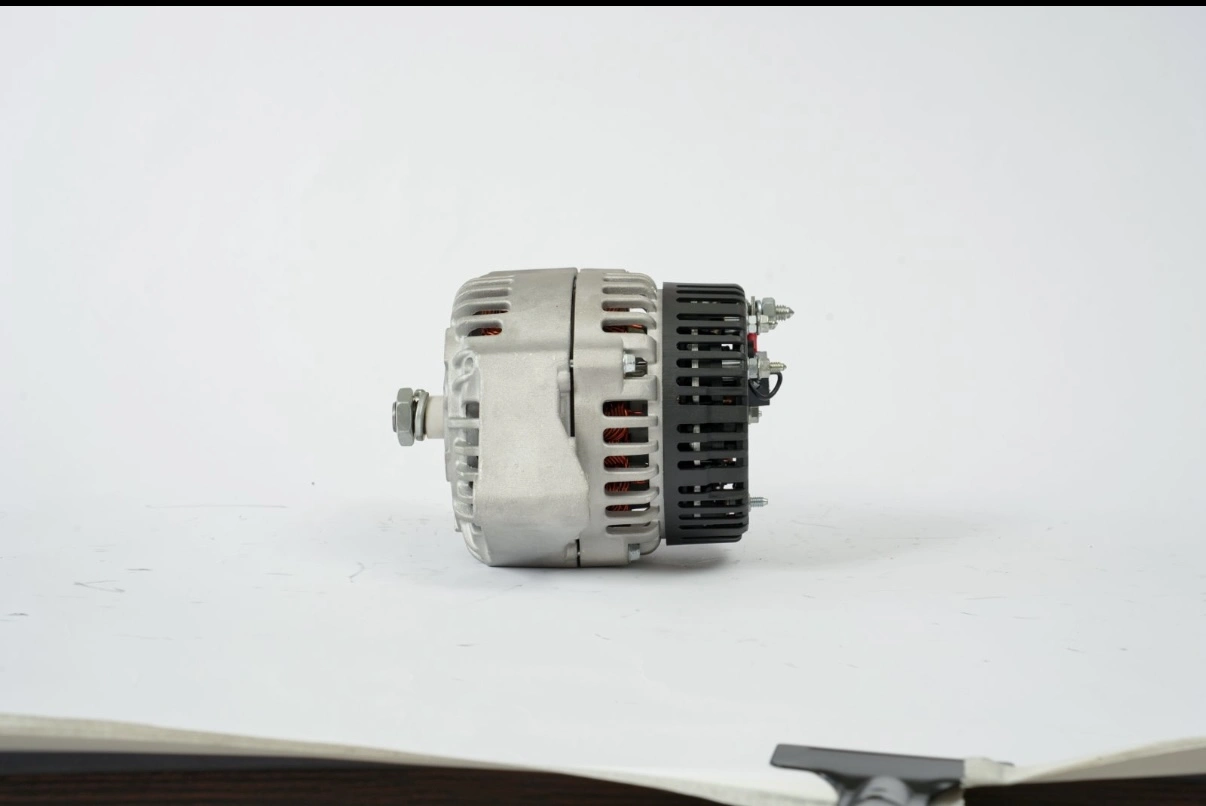
Understanding High Output Alternators: Definition and Core Concepts
What Makes an Alternator "High Output"?
A high power output alternator is an electric charging device designed to provide steady current, usually between 110A and over 400A, which is much higher than what units installed by the factory produce. Another important difference is how much power the unit gives off when the engine is running slowly. A good unit should be able to produce 60–70% of its rated amperage at 800 engine RPM, which is the range where most working vehicles spend most of their time.
Core Construction Differences
The difference in performance between standard and high-output units is due to how they are built on the inside. Here are the three main changes in building that affect how well it works in the real world:
- High-density copper windings: The stator's internal resistance goes down when the copper wire is thicker and purer. This lets more current flow without the wire getting too hot. This directly raises power at low RPM, which is when car electrical systems are put through the most stress.
- Reinforced rectifier bridges: When changing from AC to DC, heavy-duty press-fit diodes can handle higher current loads. In situations where there is constant high demand, the most common place for a standard alternator to fail is at the diode level.
- Oversized heat dissipation fins with sealed housing: With bigger aluminum fins and a completely sealed, dust- and water-proof case, the unit can keep its output stable in engine bays that are hotter than 80°C without losing its insulation integrity.
Together, these three changes to the design fix the main issue that makes regular alternators break down in high-demand situations.
Key Technical Specifications to Evaluate
The specification lists two types of alternators: standard and high-output (XITU 110A). The rated outputs are 60–90A and 110A (scalable to 400A), and the idle output ratios are ~40% of rated and ~65% of rated. The thermal protection levels are basic and fully sealed, and the temperature rating is 80°C or higher. The winding material is either high-purity copper or a mix of copper and aluminum. The protection rating is either open or semi-sealed or fully sealed, and the unit is resistant to dust and water.
Having this information helps procurement engineers make accurate load budgets before they choose a new unit.
Who Needs a High Output Alternator? Applications and Market Demand
Emergency and Public Safety Fleets
Fire trucks, ambulances, and police cars sit still for long periods of time while powering life-support monitors, scene lighting, sirens, and encrypted communication radios at the same time. This much current can't be handled by a normal 90A alternator. The XITU 12V 110A unit, which works with the CASE IH 7000 and 8000 series and has the same part numbers as Bosch OEM numbers 120468028, 0120468055, and 0986043480, provides stable power without needing the engine to be running at high speeds. When there is an emergency, power drop is not a bother, it is a failure of operation that directly affects safety.
Agricultural and Construction Equipment
Tractors and harvesters made by CASE IH use telematics, GPS guidance, hydraulic valve controls, and cab climate systems all at the same time. Field factors include shaking, dust, and changes in temperature that make normal parts wear out faster. XITU's high power output alternator units are tried in climate rooms above 80°C and proven to work at any RPM between 1,500 and 6,000. This makes sure that they keep producing power even during long harvest shifts.
Cold Chain Logistics and Mobile Service Vehicles
When the loading dock is not in use, refrigeration shipping depends on extra power. If there isn't enough charging power, the secondary battery banks die, which makes the temperature of the goods rise. Lift gates, diagnostic tools, and power inverters are all things that mobile service units can't do because they constantly need power. In many of these situations, a high-amperage charging unit can be used instead of a backup engine.
Marine and Offshore Systems
Alternators that don't rust from salt spray and keep the output stable are needed on ships with navigation grids, communication equipment, and desalination systems. Both needs are directly met by the XITU sealed housing design.
Comparison Guide: Choosing the Right Unit for Your Application
To choose the right unit, you need to match the output capacity to the real electricity load, not just make sure it fits OEM standards. When buying something, people often make the mistake of choosing the amperage based on the original unit instead of the actual installed load budget.
| Selection Factor | What to Check |
|---|---|
| Idle amperage output | Must be 60–70% of rated at 800 RPM |
| Pulley ratio | A smaller pulley means the alternator will spin faster at idle |
| Regulator compatibility | LiFePO4 batteries need a calibrated regulator |
| Certifications | ISO 9000 and IATF 16949 are needed for public procurement |
| Customization options | 200A–400A scalability for fleet standardization |
IATF 16949 certification for automotive quality and ISO 9000 management system compliance are both standard requirements for government and public safety RFQs. XITU alternators meet both of these standards. Each unit also goes through an oscilloscope ripple analysis to make sure it has a clean DC output. This keeps it from interfering with the CAN bus communication systems that are used in current fleet cars.
Being able to get custom pulley ratios, regulator voltage settings, and amperage ratings for a high power output alternator from a single supplier makes sourcing a lot easier for aftermarket distributors and shops that do special vehicle conversions. With a normal lead time of 30–60 days, XITU can make custom configurations starting from batch amounts that fit the needs of a conversion shop.
Procurement Process: How to Source a High Output Alternator for B2B Applications
Supplier Qualification Criteria
Before sending out an RFQ, make sure the seller can quickly provide ISO/IATF certification records, third-party dynamometer test results, and batch consistency data from production runs. XITU has a 20,000-square-meter facility with more than 50 precision tools that can make 500,000 units a year. This helps with both sample evaluation plans and bulk buying schedules.
Cost and Warranty Considerations
For fleet purchases, the bare minimum is a 6-month warranty that covers quality problems that don't happen with normal wear and tear. Not only should you think about the cost of the unit itself, but also how quickly the supplier can ship a replacement unit if a warranty claim comes up during deployment? The expert team at XITU helps with installation, fixing, and quick replacements so that the fleet has as little downtime as possible.
Ordering and Delivery
XITU ships through transportation partners that are known all over the world. These partners can handle both small orders for procurement qualification and large orders under framework deals. When purchasing teams are in charge of fleet programs that last more than one year, working with a single, vertically integrated maker is very helpful because they can lock in specs and keep batch stability across yearly supply cycles.
Conclusion
A high power output alternator is not just an upgrade for people who are building fast cars. It is the right standard for any machine or car that needs to handle big electrical loads while it is idle. Emergency fleets, farm equipment, cold chain logistics, and marine systems all need the same basic thing: a stable voltage output that doesn't change with engine speed. This need is met by XITU's 12V 110A alternator, which can be upgraded to 400A upon request. It has certified manufacturing quality, application-specific testing, and flexible procurement support. To start the technical review process, email XITU at xitu-auto.com.
FAQ
1. Why does a high-output alternator need a smaller pulley?
The alternator-to-crankshaft speed ratio goes up when the pulley size goes down. This lets the generator spin faster compared to the engine RPM, which means it can make more amperage at low idle speeds, which is where most high-demand cars are when they're not being used.
2. Is a "Big 3" wiring upgrade required?
Yes, original wiring is not designed to handle the extra power that a high-output unit makes. For safe, full-capacity function, the battery-to-alternator wire, chassis ground, and engine-to-chassis ground must all be upgraded.
3. Can this alternator work with a LiFePO4 battery?
Yes, as long as the internal or external voltage regulator is set up to work with the lithium battery's charging profile. Standard settings for a lead-acid regulator won't get the most out of charging a lithium battery, and they may even cause long-term cell imbalance.
Get a Custom Quote from XITU — High Power Output Alternator Supplier
Every 12V 110A alternator that XITU makes is backed by 28 years of experience in the business. In response to RFQs, our engineering team sends technical specifications and certification documents. This is true whether you need a direct OEM replacement for CASE IH equipment or a custom high power output alternator solution scaled to 200A–400A for a specific fleet application. You can email arisa@xitu-auto.com or go to xitu-auto.com to ask for a sample or begin your purchase review.
References
1. Society of Automotive Engineers. SAE J56: Alternator Testing Procedures for Heavy-Duty Vehicles. SAE International, 2019.
2. Bosch Automotive Handbook. Electrical Systems and Components, 10th Edition. Robert Bosch GmbH, 2022.
3. International Organization for Standardization. ISO 8854: Road Vehicles — Alternators with Regulators. ISO, 2021.
4. National Fire Protection Association. NFPA 1901: Standard for Automotive Fire Apparatus. NFPA, 2022.
5. Fleet Equipment Magazine. Electrical Load Management in Emergency Service Vehicles. Cygnus Business Media, 2023.
6. Agricultural Equipment Technology Foundation. Electrical Power Demand in Modern Precision Agriculture Machinery. AETF Technical Report, 2021.