




How Does a Heavy Duty Alternator Work?
Aalternator&type=products"> heavy duty alternator converts mechanical energy into electrical energy through electromagnetic induction. The engine drives the rotor via a belt and pulley. As the rotor spins inside the stator windings, it generates alternating current (AC). The rectifier then converts AC into direct current (DC) to charge the battery and power onboard systems. A voltage regulator maintains output between 13.8V and 14.8V (12V systems) or 27.2V to 28.4V (24V systems). Unlike standard units, high-capacity alternators sustain this process under extreme thermal and mechanical stress, delivering 160A to 450A continuously.
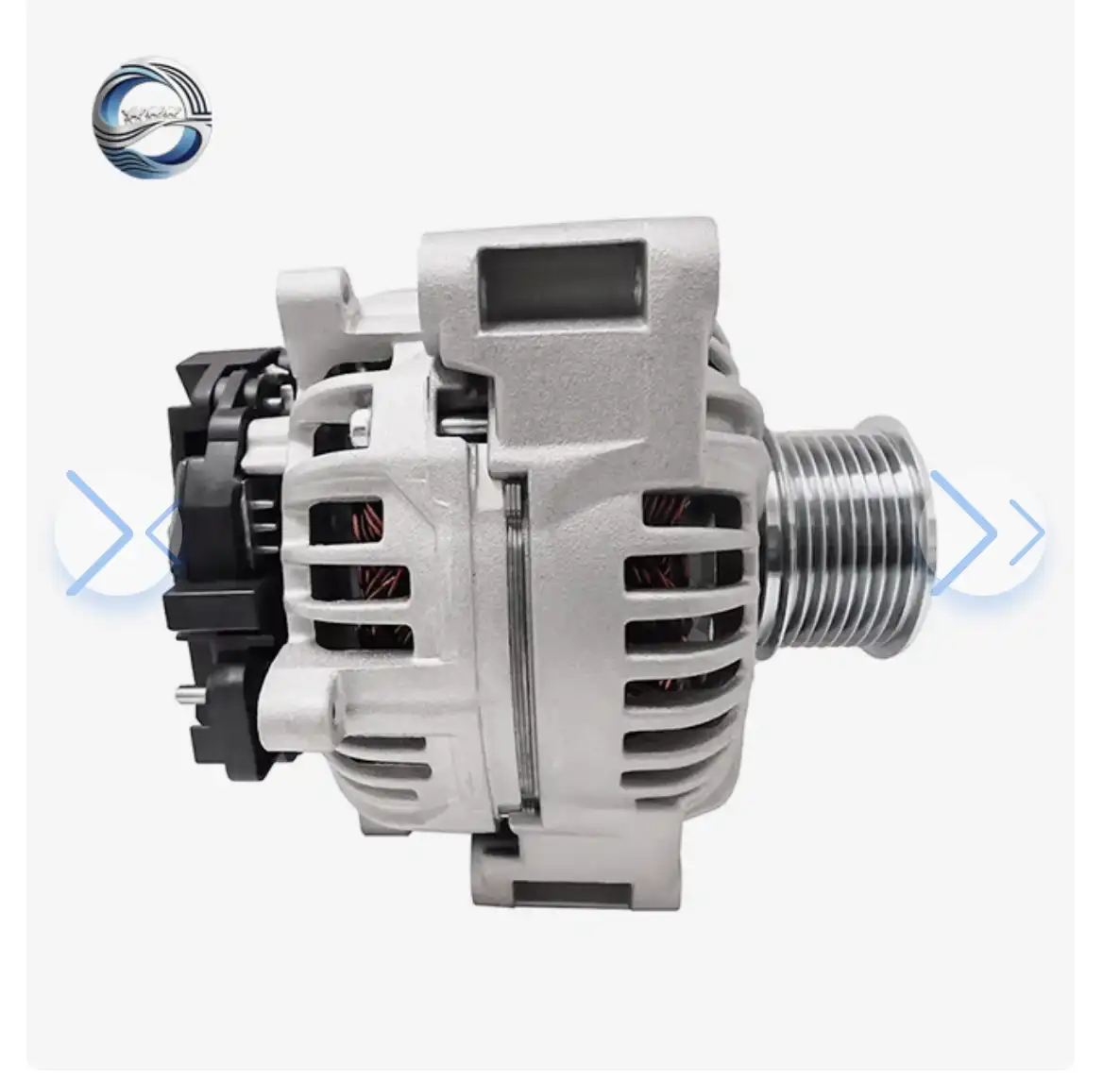
Understanding Heavy Duty Alternators: Function and Components
The Rotor and Stator: The Power Pair
A bit of DC current flows through a field wound on the rotor. When it spins very quickly inside the stator, it makes a magnetic field that spins. By going through the copper windings in the rotor, this field creates an AC voltage. In heavy-duty models with a lot of power, these windings use Class H insulation that can handle temperatures above 180°C. This means that the unit can run at full power all the time without the insulation wearing out.
Voltage Regulator and Rectifier
The press-fit diodes are used to make the rectifier bridge in a heavy duty alternator, which changes the power from AC to DC. The voltage regulator checks the demand of the system and changes the field current of the rotor to keep the output steady on the same time. These days, ECUs and telematics are very sensitive to voltage ripple. This is why building and farming tools need clean DC output. If you buy a good rectifier, the noise will be less than 100mV. This will protect sensitive equipment.
Bearings, Brushes, and the Pulley System
Dual-sealed ball bearings from NSK and SKF are used in high-end units to handle the stress of a belt being used for thousands of hours. These don't get worn down by touch, so they last longer between service visits. The pulley connects the generator to the engine's serpentine belt. When the engine slows down quickly, over-running alternator pulleys (OAPs) loosen up the belt. In places with a lot of vibration, like mines or farms, this is where belts often break.
Common Problems and Maintenance Tips for Heavy Duty Alternators
Recognizing Early Warning Signs
If there is a problem with the charging system, the headlights will be dim, the gages will read differently, the battery will drain quickly, and there will be a whining sound coming from under the hood. What the Battery Council International says is that more than 40% of breaks on the side of the road are due to issues with the electricity system. A lot of these issues are with the charging unit. If you catch these signs early, you can plan fixes ahead of time and avoid having to deal with extra time lost on the job site or highway.
Routine Inspection Checklist
Making sure your charging system is well-kept will make it work even when the weather is bad. Every repair crew should check these key things:
- Belt tension and condition: A loose or glazed belt reduces output by 15–20%; inspect every 500 operating hours.
- Terminal connections: Corrosion at B+ and ground terminals increases resistance and causes voltage drop; clean with a wire brush and apply dielectric grease.
- Bearing noise check: Spin the unit by hand during a cold inspection; any roughness or grinding indicates bearing wear.
- Output voltage test: Use a digital multimeter at idle and 2,000 RPM; readings outside 13.8–14.8V (12V systems) signal regulator or diode issues.
Overheating and Voltage Fluctuation Fixes
The heavy duty alternator usually gets too hot when cooling vents are blocked, an internal fan stops working, or it is used for a long time at a higher amperage. Most of the time, the voltage changes because the voltage regulator or a diode in the rectifier bridge is broken. When problems arise, they can be fixed by switching the unit for one that is graded correctly. All gardening tools that are used in dirty areas must have housings that are completely sealed. There are no other options.
How to Choose the Right Heavy Duty Alternator for Your Needs
Matching Amperage and Voltage to Your Application
Find out how much power each of your tools needs first. Make a list of all the current users, such as those who use lights, hydraulic controls, HVAC, and telematics. Then, add 1.25 to that list to account for surge loads.
| Application | Typical Voltage | Recommended Output Range |
|---|---|---|
| Class 8 trucks | 12V | 160A – 270A |
| Agricultural tractors | 24V | 100A – 150A |
| Construction excavators | 24V | 120A – 180A |
| Generator sets | 12V / 24V | 180A – 450A |
OEM Compatibility and Cross-Reference Verification
Check the OEM part number every time before you buy. XITU's generator can be used with John Deere types 6130M, 6130R, 6140M, 6140R, 6150R, 6190R, 6210R, 7430, and 7530, to name a few. Cross-references to Bosch 0124625029, 0124625084, 0124625108, 0124625171, 0124625172, 1986A00955, F00E100154, and John Deere AT384632, RE210793, RE554472, RE555751, and SE501834 parts are direct. When these numbers match, there is no longer any chance of a bad fit.
Comparing Brand Options in the Market
Delco Remy is the best Class 8 truck company in North America. In Europe, Bosch has a big share of the market for business vehicles. OEM lines in Japan like Denso more. Farm equipment often comes from brands like Prestolite and Leece-Neville. With an IATF 16949 license and a 20,000 m² factory that can make about 500,000 pieces per year, XITU gives OEM-level quality at aftermarket prices. This size lets supply chains stay stable without having to deal with the high MOQs that come with bigger companies.
Installation and Integration Guide for Heavy Duty Alternators
Pre-Installation Checks and Tools
Cut the negative battery cable before putting the new unit in place. Also, make sure that the new unit has the same voltage rating, rotation direction, and mounting bracket dimensions as the old one. You will also need a screw wrench and a digital voltmeter. The wiring harness should not be chafed, and the battery should be in good shape. A weak battery can put too much stress on a brand-new alternator as soon as it is set up.
Mounting, Wiring, and Post-Installation Testing
Before mounting, disconnect the negative battery terminal. Tighten the mounting nuts to the 35–50 Nm range recommended by the OEM. Make sure all of the ground connections are safe and that the B+ cable is run with the right gage wire (4 AWG at the very least for most 160A+ units). After setting everything up, start the engine and check the voltage at both 2,000 RPM and idle. To make sure the unit can handle its estimated power, turn on all of its accessories and load test it. Write down the numbers so that you can plan how to care for them in the future.
Dual Alternator Systems for High-Demand Machinery
A lot of the time, emergency response vehicles, mine haul trucks, and big farm combines need a heavy duty alternator that has two sets of lines. One unit takes care of the main electrical needs, and another unit powers the extra systems. For two units, you need a split-charge switch or battery separation manager so that one unit doesn't feed power back to the other. Standard clamps can be used to place XITU units either horizontally or vertically. They can be used with most dual-mount systems out there because of this.
Procurement Insights: Where and How to Buy Heavy Duty Alternators
Evaluating Supplier Credibility
If you want to find a new service, make sure that they are approved by IATF 16949. This is the quality standard for making cars. It covers controlling the process, keeping track of it, and stopping mistakes from happening. If a supplier doesn't have this approval, they probably don't have written procedures in place to make sure that every lot is the same. Get test results, audit records, and the names of customers who were happy with the service. To make sure the quality of their work, certified facilities with more than 50 tests and production tools from a supplier are better than small workshops.
Bulk Purchasing Considerations
| Order Volume | Typical Lead Time | Recommended Action |
|---|---|---|
| Trial order (50–200 pcs) | 30–45 days | Verify quality before full commitment |
| Mid-volume (200–2,000 pcs) | 45–60 days | Negotiate pricing tiers and packaging |
| High-volume (2,000+ pcs) | 30–60 days | Lock in annual agreements for price stability |
Warranty Terms and After-Sales Support
A guaranty of at least six months is fine for industrial-grade units. The warranty should cover both problems with the way it was made and damage that happened during shipping. Find out if the seller gives technical details like assembly guides and wire plans. You can get direct professional support from XITU for six months, and if you need it, they can help you set up the equipment on-site. This is very helpful for buyers who are in charge of setting up more than one system in different countries.
Conclusion
Understanding how a heavy duty alternator works — and what separates a durable industrial model from a standard automotive part — directly affects your equipment uptime and procurement decisions. From electromagnetic induction through to voltage regulation and rectification, each internal component plays a specific role in delivering clean, stable power under load. Pairing that technical knowledge with sound supplier evaluation practices allows procurement teams to source units that perform reliably in the field without repeated replacement costs. XITU's alternators for John Deere equipment represent a tested, certified option for buyers who prioritize OEM-level fit, verified quality, and dependable delivery.
FAQ
1. What voltage range is correct for truck alternators?
For 12V systems, the correct charging voltage range is 13.8V to 14.8V. For 24V systems, it is 27.2V to 28.4V. Readings outside these ranges indicate a problem with the voltage regulator or diode pack. These ranges apply whether the vehicle is a Class 8 truck, agricultural tractor, or industrial machine.
2. How often should I service a high-output alternator?
Inspect the alternator every 500 operating hours or once a year, whichever comes first. Replace bearings or brushes every 1,500 to 2,000 hours of use. In dusty or high-vibration environments such as mines or farms, shorten these intervals accordingly. Regular checks include belt tension, terminal corrosion, bearing noise, and output voltage.
3. Can I retrofit a higher-amperage unit into my existing equipment?
Yes, provided the wiring system can handle the extra current and the battery bank is properly sized. Always verify OEM cross-reference numbers before purchase. If the new unit's rating is more than 30A higher than the old one, upgrade the B+ cable to prevent resistance heat and voltage drop. Mounting brackets and pulley alignment must also match.
4. Does the XITU alternator fit John Deere 7430 and 7530?
Yes, as long as the wire system can handle the extra power and the battery bank is the right size. All of these things must be true. Before you buy, you should always check the OEM cross-reference numbers. If the new unit's rating is more than 30A higher than the old one, you should replace the B+ cable.
Source Your Heavy Duty Alternator Supplier with Confidence — Contact XITU Today
XITU makes alternators that are made to fit the needs of your equipment. A heavy-duty alternator that works with John Deere is for sale here. A facility that is 20,000 square meters and IATF 16949-certified ships it. The lead time is 30 to 60 days. We also offer full help with technology. It's easy to test out new product lines before going big because we offer open OEM/ODM choices, a six-month guaranty, and low MOQ needs. To get a quote, please email arisa@xitu-auto.com or visit xitu-auto.com with your needs.
References
1. Battery Council International. Battery and Electrical System Failure Statistics in Commercial Vehicles. BCI Annual Report, 2022.
2. SAE International. SAE J180: Alternator Test Procedures for Heavy-Duty Vehicles. SAE Standards, 2019.
3. Robert Bosch GmbH. Automotive Electrics and Electronics, 5th Edition. Bosch Automotive Handbook, 2021.
4. IATF. IATF 16949:2016 – Quality Management System Requirements for Automotive Production. International Automotive Task Force, 2016.
5. Delphi Technologies. Charging System Diagnostics and Service Manual for Commercial Vehicle Applications. Delphi Technical Publications, 2020.
6. John Deere. Electrical Systems Service Manual: 6R and 7R Series Tractors. Deere & Company Technical Documentation, 2023.