




Best High Output Alternator: Reviews & Buying Guide 2026
If your vehicle idles for hours powering life-support systems, refrigeration units, or communication radios, a standard alternator simply cannot keep up. The bestproducts"> high power output alternator delivers sustained amperage at low RPM — preventing battery drain before it becomes a crisis. This guide reviews top-rated models for 2026, covering specifications, real-world applications, procurement advice, and why XITU's 12V 110A alternator stands out for CASE IH 7000/8000 series operators and fleet managers who cannot afford a single moment of power loss.
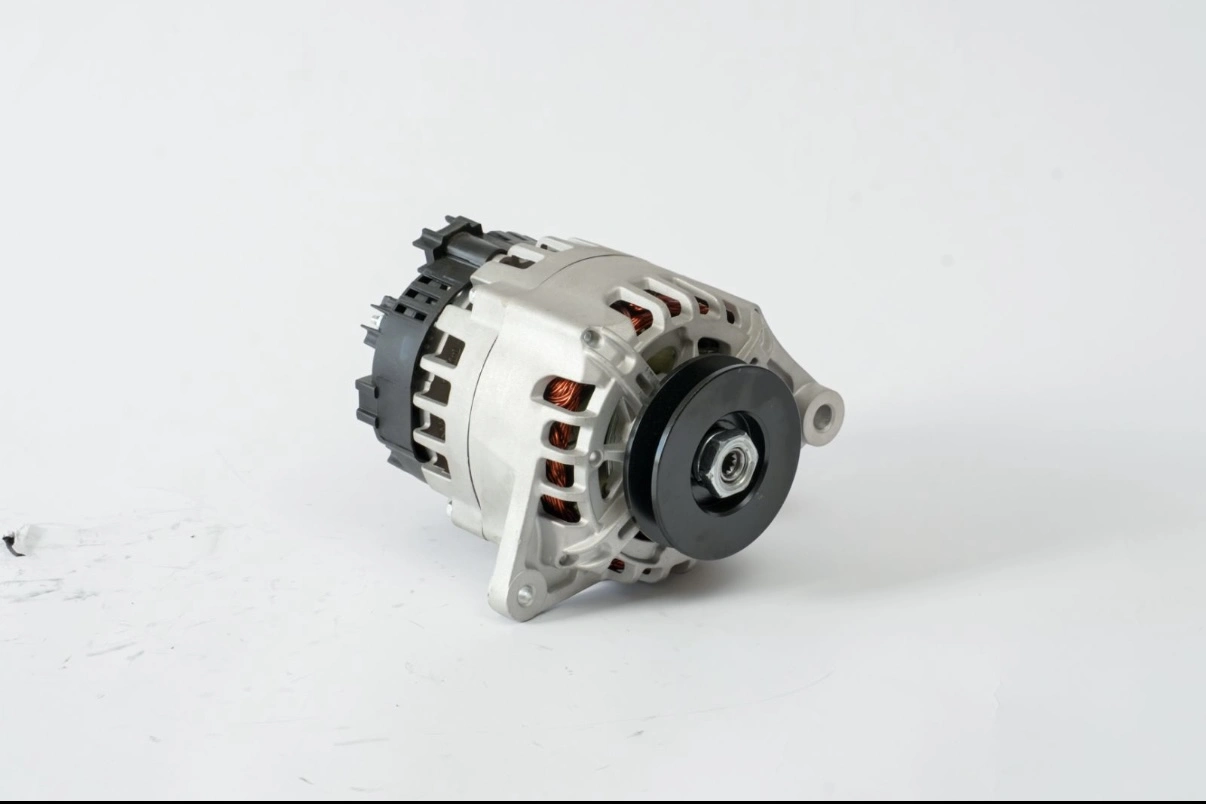
Understanding High Output Alternators
How They Work Differently From Standard Units
A heavy-duty alternator isn't just a factory unit that's bigger. A high power output alternator makes a lot more current at lower engine speeds by using high-density copper windings, stronger rectifier bridges, and better rotor geometry. A regular OEM alternator might only deliver 40–70% of its rated amperage when the engine is not running. A purpose-built high-amperage alternator, on the other hand, will usually deliver 60–70% of its rated output at just 800 engine RPM. This is a crucial difference for vehicles that sit idle for long periods of time in the field or at an emergency scene.
Key Signs of Alternator Failure in Heavy-Duty Applications
If you catch a failed generator early, you can avoid dangerous power outages and save thousands of dollars on repairs. Keep an eye out for these signs of trouble:
- Voltage sag under load: Dashboard voltage drops below 13.5V when multiple systems activate simultaneously, signaling inadequate charging capacity.
- Repeated battery replacement cycles: If batteries deplete faster than their rated lifespan, the charging system is likely underperforming, not the battery itself.
- Abnormal heat near the alternator housing: Excessive thermal buildup points to internal rectifier stress or insufficient heat dissipation — both signs the unit is working beyond its actual capacity.
These symptoms happen a lot in ambulances, police cars, and cold-chain trucks because they use a lot more electricity than their factory-made parts were made to handle.
Maintenance Practices That Extend Service Life
Regular checks keep your money safe. Every 500 hours of use, check the tightness of the belt and the position of the pulleys. Keep the housing of the alternator clean, especially if you work in a construction or farming environment. For protected units like XITU's fully dust- and water-resistant design, internal contamination is not a problem. However, connection points and ground wires on the outside should still be checked every three months to keep resistance from building up.
Comparing Alternator Types: Choosing the Right Model
High-Output Alternator vs. Standard Alternator vs. Generator
|
Feature |
High-Output Alternator |
Standard Alternator |
Auxiliary Generator |
|
Idle amperage output |
60–70% of rated |
40–70% of rated |
Constant (engine-dependent) |
|
Installation complexity |
Bolt-in replacement |
Bolt-in replacement |
High (separate unit) |
|
Maintenance frequency |
Low |
Low |
High |
|
Weight & space |
Compact |
Compact |
Bulky |
|
Cost (initial) |
$150–$350 |
$80–$150 |
$1,000+ |
Evaluating Brand Durability and Warranty Terms
The standard of the build on all high-output alternators is not the same. The guarantee terms a company gives show how confident they are in the product's durability. XITU backs its quality assurance warranty with ISO 9000 and IATF 16949 certifications, which are the same quality management standards used by top auto suppliers. The warranty covers defects that aren't caused by wear and tear for 6 months. Some brands that only offer 90-day guarantees or unclear "limited" warranties usually mean that the quality of their products isn't as good.
Total Cost of Ownership for B2B Buyers
The price isn't the only thing that matters with a high power output alternator. Think about the costs of downtime, replacements, and labor. If a generator breaks after one season, it costs a lot more than if it lasts three years and costs $280. Fleet managers who are in charge of 20 to 100 cars should use cost-per-operating-hour instead of unit price alone when figuring out costs. XITU can make 500,000 units a year, which allows for batch pricing that lowers the cost per unit by a large amount for both wholesale and OEM buyers.
Installation and Procurement Guide for B2B Clients
Best Practices for Safe Installation
Whether a high-amperage generator works as it should or causes new electrical problems depends on how well it was installed. If you want to raise the alternator-to-crank ratio and get the maximum power at low speeds, you may need a smaller pulley. When output goes over 100A, you have to upgrade the "Big 3" wiring: the battery-to-alternator, chassis ground, and engine-to-chassis cables. Standard stock wiring can't handle the extra current safely, and cables that are too small create a risk of resistance heat and fire.
Evaluating Suppliers and Negotiating Custom Orders
When looking for a high-amperage alternator source for fleet or OEM uses, make sure you check the following things before making a decision:
- Certifications on file: Request ISO 9000 and IATF 16949 documentation, plus third-party test reports. These are non-negotiable for government and public-sector procurement.
- Custom specification capability: Can the supplier adjust amperage ratings, pulley configurations, and voltage regulator settings for your specific load profile? XITU's in-house R&D team handles custom specifications from 110A up to 400A.
- Batch consistency and lead time: XITU maintains a standard production lead time of 30–60 days with stable batch-to-batch consistency — critical for tender contracts requiring inspection sampling.
These checkpoints tell the difference between transactional sellers who can't handle long-term partnerships and trusted long-term partners.
OEM and Wholesale Purchasing Options
XITU has ODM/OEM options with custom labels and specification sheets for people who own OEM brands and sell in bulk. Minimum order quantities are set up to allow for small-batch custom orders. This directly addresses the common problem of MOQ barriers for unique configurations. International logistics are taken care of by trusted global freight partners, who also help with paperwork to make sure that customs rules are followed in North America, Europe, and the Middle East.
Top-Rated Alternator Models for 2026
XITU 12V 110A for CASE IH 7000/8000 Series
This unit was specifically made for use with CASE IH farm and big equipment. It stands in for Bosch OEM numbers 120468028, 0120468055, and 0986043480. It also works with CA1381IR, 12162N, 125849A1, 202360T91, and 91448C2. The fully sealed metal body keeps out dust and water, so it can be used in the field, where regular units break down too soon. Before leaving the factory, each unit is put through a dynamometer load test at speeds between 1,500 and 6,000 RPM and a thermal screening process above 80°C.
| Specification | Detail |
|---|---|
| Voltage | 12V |
| Rated Output | 110A |
| Scalable To | 200A–400A (custom order) |
| Compatibility | CASE IH 7000/8000, Bosch cross-reference |
| Protection | Fully sealed, dust & water resistant |
| Certifications | ISO 9000, IATF 16949 |
| Warranty | 6 months |
Performance at Idle: Why It Matters for Emergency Fleets
An ambulance that sits at a scene for 45 minutes with a defibrillator, temperature control, and a contact radio turned on uses a lot of current. If the alternator can't keep producing power when the engine isn't running, the vehicle's battery fills in the gap. However, the battery dying during a medical emergency is not an acceptable outcome. In these low-RPM, high-demand situations, XITU's copper-wound stator design keeps the voltage output stable.
Customization Options for Fleet and OEM Buyers
XITU's high power output alternator platform can be expanded from the basic 110A unit to 200A, 300A, and 400A custom designs. You can get voltage regulator calibration for LiFePO4 battery charging profiles if you ask for it. The measurements of the pulleys, the shapes of the mounting brackets, and the locations of the terminals can all be changed to fit the design of an existing car. This cuts down on installation time and gets rid of the need for custom brackets in retrofit situations.
Maximizing Long-Term Performance
Avoiding Common Selection and Installation Errors
The most common mistake in buying is to match only the actual measurements without checking the ratio of idle output to output. If a unit is rated at 200A but only gives out that much current at 3,000 RPM, it is really only a 90A alternator for a car that idles at 800 RPM. Not just a peak rating, but always ask for an amperage curve chart.
Integrating Into Broader Power Management Systems
When used with the right size battery bank, smart charge controls, and load-shedding systems, high-amperage alternators work best. When cold-chain vehicles connect the alternator output to an extra battery management system, the refrigeration unit doesn't lose power when there is a lot of traffic in the city. When used on the water, pairing with a voltage-sensitive relay keeps critical guidance systems safe from short-term spikes.
Forward-Looking Trends in Heavy-Duty Charging
Lithium iron phosphate batteries are being used more and more in industrial and emergency cars. The voltage needs to be controlled more closely with these batteries than with lead-acid batteries. Alternators with internal regulators that can be adjusted are becoming the standard for new fleet builds. XITU provides this feature on special orders. Today, procurement teams that are looking at multi-year supply deals should make regulator programmability a part of their technical needs.
Conclusion
Three things are necessary to choose the best high power output alternator heavy-duty charging solution: tested idle-output performance, clear quality standards, and a supplier that can work with your specific setup. All three of these requirements are met by XITU's 12V 110A alternator for the CASE IH 7000/8000 series: a platform that can be expanded, manufacturing methods that are approved, and quick technical support. This unit gives your operations the stable, long-lasting power they need, whether you're in charge of an emergency response fleet, cold-chain logistics, or building special-purpose vehicles.
FAQ
1. What is the most important spec to check for diesel engine applications?
Watch out for the idle amperage output instead of the peak rating. For diesel equipment that usually runs at low idle, a unit that only produces its full power at high RPM is not enough. Before you buy, ask for the full voltage range from 800 to 6,000 RPM.
2. How often should a high-output alternator be inspected?
Check the tightness of the belt, the alignment of the pulleys, and the links between the cables every 500 hours of use or every six months, whichever comes first. Fully protected XITU units don't need to be cleaned on the inside, but the electrical lines on the outside should be checked often.
3. Can XITU produce custom amperage ratings and regulator settings?
Yes, XITU's own engineering team can handle custom requirements ranging from 110A to 400A. This includes calibrating the voltage regulator for LiFePO4 battery profiles and making sure that the pulleys are the right size. Lead time for custom configurations ranges from 30 to 60 days, depending on how complicated the specifications are.
4. Is a "Big 3" wiring upgrade always required?
Yes, for any alternator that puts out more than 100A. Most cars have factory wiring that is rated for the original OEM output. By improving the three main current lines, resistance heat is eliminated, voltage drop is lowered, and wiring damage is avoided during long-term high-current operation.
5. Does XITU provide documentation for government procurement?
Yes, XITU provides ISO 9000 and IATF 16949 certificates, third-party test reports, and batch quality records to help with bids and government procurement needs.
Get a Custom Quote From XITU — High Power Output Alternator Supplier
XITU makes high power output alternators that are custom made to meet needs that standard parts can't. We help bulk buyers, fleet operators, and OEM clients all over North America and the world. We have been in business for 28 years, are ISO 9000 certified, and can provide custom output choices from 110A to 400A. You can visit xitu-auto.com or email our team at arisa@xitu-auto.com right now to get specs, samples, or a price quote for buying in bulk.
References
1. SAE International. SAE J56: Alternator and Regulator Testing Procedures for Automotive Applications. SAE International, 2019.
2. IEEE Transactions on Vehicular Technology. "Electrical Load Management in Emergency Response Vehicles." IEEE, 2021.
3. International Organization for Standardization. ISO 9001:2015 Quality Management Systems — Requirements. ISO, 2015.
4. IATF. IATF 16949:2016 — Quality Management System Requirements for Automotive Production. IATF, 2016.
5. Fleet Equipment Magazine. "High-Amperage Charging Systems for Commercial and Emergency Fleets." Cygnus Business Media, 2023.
6. Diesel Progress. "Charging System Upgrades for Heavy-Duty Agricultural and Construction Equipment." Diesel Progress, 2022.