




Alternator 12V 120A for Fleet Vehicles: Cost Guide
If you manage a commercial fleet, you already know that electrical reliability is not optional—it is the foundation of daily operations. A quality alternator%2012v%20120a&type=products">alternator 12v 120a delivers 120 amperes of continuous current at 12 volts, which is enough to power telematics, refrigeration units, lighting systems, and communication equipment simultaneously. Compared to standard 80–90A units, this higher-output generator prevents voltage sag and protects battery life across long service cycles. This guide walks through selection criteria, cost benchmarks, maintenance strategy, and procurement advice so fleet operators can make decisions backed by real data.
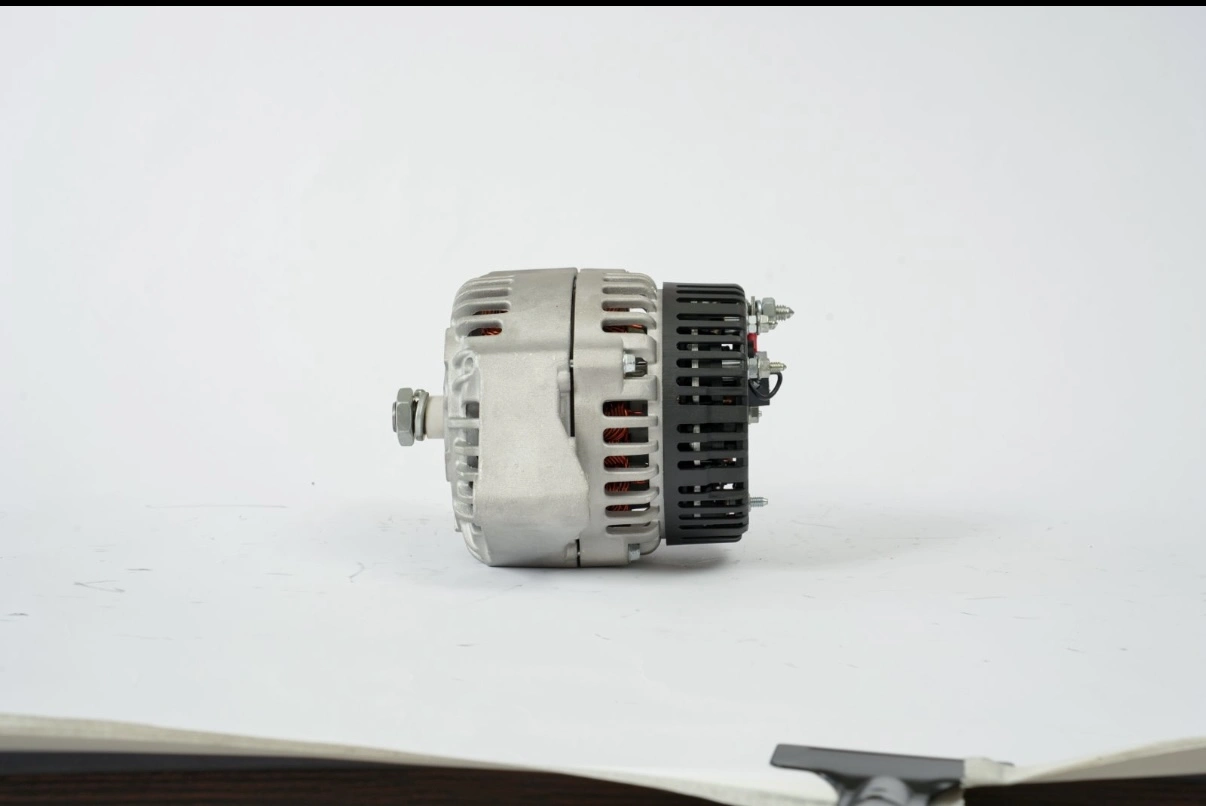
Understanding the 12V 120A Alternator for Fleet Vehicles
What the 120A Rating Actually Means
In terms of amperage, the number tells you how much power the alternator can send without getting too hot. At 12 volts, an alternator 12V 120A unit can make up to 1,440 watts of power, which is enough to run heavy truck accessories. Standard units for personal cars only put out 65 to 90A, which is not enough for businesses that need to power GPS, dash cams, extra lights, and HVAC all at the same time.
How a 12V Alternator Works
Kinetic energy is sent from the motor's rotor to the generator, where it is changed into alternating current. That is then changed to direct current by an internal converter. When it's not being used, a voltage regulator keeps the output between 13.8V and 14.4V. There is a healthy range for charging in this area. The voltage drops below 13.5V when the car is loaded. This makes the battery drain faster and causes problems with the electricity all over the network.
Common Signs of Alternator Failure
Fleet managers should keep an eye out for these early warning signs to make sure their vehicles don't break down without warning:
- Voltage warning light activation on the panel comes on, even if it only does so sometimes, indicating the regulator or diode has failed.
- Dimming headlights at idle means that the alternator can't keep up its power at low RPM. This is a common sign of an old brushed unit.
- Battery failure within 12 months of replacement is generally because the charger isn't charging it enough.
- Burning rubber or electrical smell near the engine suggests either the tension on the belt is not being held tight enough or the windings are getting too hot. We need to fix both of these issues right away.
Repair costs are cut by a lot when these signs are found early. The American Trucking Associations says that unexpected power problems are the cause of about 18% of roadside breakdowns in Class 3–6 industrial trucks.
Comparing 12V 120A Alternators: Selecting the Best Fit for Your Fleet
Amperage Ratings: 100A vs. 120A vs. 150A
| Amperage | Best Application | Approximate Unit Cost (USD) |
|---|---|---|
| 100A | Light-duty passenger vans, low-accessory fleets | $80–$130 |
| 120A | Mid-duty delivery trucks, ambulances, utility vehicles | $110–$190 |
| 150A | Heavy-duty buses, construction vehicles, high-draw systems | $160–$260 |
Most mixed-use business fleets should choose the alternator 12V 120A unit. The extra power it has can handle heavy loads, but it's not too heavy or expensive like a 150A unit. The 120A buffer is very useful for fleet managers who use new telematics and vehicles that need to start and stop a lot.
OEM vs. Aftermarket Alternatives
OEM-spec alternators are made to match the original equipment's specs to the letter. This makes sure they fit properly and have steady power curves. There is a wide range in the quality of aftermarket units. There are cheaper ones that work just as well, but they use cheaper rectifier diodes that break easily when they get hot. Find an aftermarket source that tests to OEM standards and shows proof of quality approval. This is the most important thing.
Compatibility With Fleet Models
XITU's 12V 120A alternator has been shown to work with Hyundai and Kia cars like the Grandeur, i30, Sonata, Carens, Cee'd, Magentis, and Pro Cee'd. It compares DELCO REMY, HC-PARTS, HYUNDAI, KIA, and POONG SUNG OEM numbers to each other. The unit has a 6PK belt loop and a standard bracket that lets you mount it either horizontally or vertically. This means that it can be used for a lot of different business and mixed fleet needs.
Maintenance and Troubleshooting for 12V 120A Alternators in Fleet Vehicles
Preventative Maintenance Schedule
Before something breaks, it's better to do maintenance on it. This saves money and makes the service last longer. A planned program pays for itself very quickly when there are ten or more cars or trucks in a group.
- Every 30,000 miles: Look for cracks, wear, or a lack of force in the drive belt. An alternator 12V 120A with a belt that is too loose causes output to drop sharply at idle.
- Every 60,000 miles: Check the output voltage and amperage when the load is full. When the load is on a new sign, it gives out less than 13.8V.
- Annually: Dust off the terminals and check the B+ output stud for rust once a year. Resistance at this link slows down charging and makes things warmer.
These steps help maintenance teams keep each unit in great shape by planning replacements for regular service calls instead of emergencies.
Diagnostic Procedures
A clamp-on DC ammeter can be used to measure the real output current when there is a load on it. As long as the tester shows a number between 13.8V and 14.4V, the regulator is good. Before you blame the alternator, check the wiring harness if the output doesn't meet the standards. Many alternator replacements go wrong because the grounds aren't tight enough.
Repair vs. Replacement Decision
| Condition | Recommended Action | Estimated Cost (USD) |
|---|---|---|
| Worn brushes only | Repair | $20–$50 parts |
| Failed rectifier diode | Repair or replace | $30–$80 parts |
| Seized bearing or burned windings | Replace unit | $110–$190 unit cost |
| Multiple concurrent failures | Replace unit | More cost-effective in the long run |
When fleet owners who are in charge of remanufacturing programs buy high-quality core units from a certified source, they get better rebuild yields and can be more sure of how the repaired units will work.
Procurement Strategies and Cost Factors for Fleet Managers
Where to Source 12V 120A Alternators
Business-to-business (B2B) websites help fleet buyers find reputable makers and get big savings that they can't get from local distributors. When people buy from a factory like XITU, they skip the markups that come from middlemen and get products that are made just the way they want them. Local distributors can still help with last-minute stock, but for long-term supply, you should go with a maker that can guarantee quality for an alternator 12V 120A across large orders.
Bulk Purchasing and Cost Reduction
The cost per unit goes down with bulk sales because production is more efficient and freight costs are split. At XITU, the minimum order number can change, which is great for mid-sized fleet owners who can't commit to the big minimums that tier-one sellers need. If the wait time stays between 30 and 60 days, buying teams can plan their stock well without having to keep too much on hand as a safety stock.
Key Procurement Checklist
Before ordering for a whole fleet, buyers should make sure of the following to protect their money and make sure delivery goes smoothly:
- Quality certification: Factory-made goods that are ISO9001-certified and come with paperwork that can be used for audits.
- Warranty terms: For professional-grade supplies, the standard guaranty lasts for 6 months and covers flaws that weren't caused by people.
- Shipping reliability: Working with well-known logistics companies in other countries lowers the risk of damage during transit and delays at customs.
- Customization capacity: It's possible to make changes to the specs and labels for different areas with ODM/OEM functionality.
Confirming each of these points before finalized a supplier relationship prevents the quality inconsistencies and delivery failures that cost fleet operators far more than the price difference.
Strategic Decision-Making: Making the Right Alternator Choice for Your Fleet
Defining Your Fleet's Core Requirements
To begin, add up how much electricity each car uses. Count how much electricity all the extras, like safety systems, lights, telematics, and temperature control, use at the same time. This means you need an alternator 12V 120A if the amount is more than 80A when the engine is normal. Think about the area where the device will be used. For example, XITU's design with its aluminum housing and copper windings helps handle heat better on shipping routes where temperatures are high.
Balancing Cost, Quality, and Lifecycle Value
A less expensive unit that breaks down after 40,000 miles costs more than a more expensive unit that lasts 100,000 miles when you add up the costs of repair, downtime, and new parts. There are no remanufactured cores in XITU alternators; they only use brand-new parts. The copper windings in the aluminum housing protect it from heat, vibration, and wear during heavy duty cycles. For 28 years, XITU has been making things and is a trusted OEM supplier to many foreign automakers.
Performance Parameters at a Glance
One good alternator has a brushed or brushless AC output, the ability to work with both 12V and 24V voltages, a fully sealed, dust- and water-resistant housing, an aluminum construction with copper windings, ISO9001 certification, and full functional testing before shipping. The XITU 12V 120A has all of these qualities. Because of these things, the product can be used by cars, trucks, busses, and work vehicles in a variety of scenarios.
Conclusion
Taking care of a fleet's electricity systems means making choices based on real cost information and tried-and-true product performance. A properly specified alternator 12V 120A keeps the power fixed, extends the life of the battery, and keeps accessory systems going without stopping. The way something is bought is just as important as the quality of it. If you don't want to take risks when you buy things that could affect how your fleet works, pick a certified maker with flexible volumes, proven quality, and reliable shipping. For 28 years, XITU has been making things. They are ISO9001 certified and supply OEMs.
FAQ
1. Will a 120A alternator damage my existing battery?
No, the voltage regulator inside the battery only lets out as much power as the load and battery need. However, the alternator 12V 120A number only shows the highest current that can be used. It does not show the steady current. It's safe for your battery to be charged because it only gets the power it needs at any given time.
2. Can this alternator support lithium LiFePO4 battery systems?
Yes, but lithium batteries last longer than lead-acid batteries even when they are being charged quickly. Make sure there is enough air flow in the engine bay to deal with the heat during long charging sessions with a lot of power.
3. What wiring gauge is required for a 120A alternator upgrade?
For the B+ output circuit to be able to handle the higher current potential without lost resistance or wires getting too hot, the cable should be at least 4 diameter.
4. How do I confirm the alternator is functioning correctly?
If you plug in a tester and read between 13.8V and 14.4V when the power is fully on, that means the device is working normally. With a clamp-on DC ammeter, you can get a more accurate reading of the current.
5. What is XITU's minimum order quantity for fleet procurement?
When it comes to MOQ, XITU gives distributors and fleet owners with medium-sized fleets a lot of options. Talk to the team about big discounts and how you can make things your own.
Partner With XITU for Your Fleet's 12V 120A Alternator Supply
Your fleet deserves a dependable alternator 12v 120a supplier, not a gamble on unknown quality. XITU brings 28 years of manufacturing expertise, ISO9001 certification, a 6-month product warranty, and proven OEM supply experience to every order. Whether you need standard configurations or custom ODM solutions, we accommodate your program without excessive volume commitments. Reach out today at arisa@xitu-auto.com or visit xitu-auto.com to request pricing and technical specifications.
References
1. American Trucking Associations. Technology & Maintenance Council Recommended Practice RP 128A: Electrical Systems Guidelines. 2022.
2. SAE International. SAE J56: Alternator Testing Procedures for Commercial Vehicles. 2021.
3. Fleet Maintenance Magazine. Electrical System Failures and Fleet Downtime Analysis. 2023.
4. Bosch Automotive Handbook, 10th Edition. Robert Bosch GmbH. 2022.
5. National Institute for Automotive Service Excellence (ASE). Electrical/Electronic Systems Study Guide. 2023.
6. Commercial Carrier Journal. Fleet Electrical Component Procurement and Total Cost of Ownership Report. 2024.