




Can I swap standard alternator for heavy duty?
Yes, you can swap a standard alternator for a heavy-duty model in most cases, provided the upgraded unit matches your vehicle's mounting configuration, voltage requirements, and electrical system capacity. Heavy duty alternators offer higher amperage output—typically between 160A and 350A—making them ideal for commercial fleets, agricultural machinery, and construction equipment that demand continuous power under extreme conditions. The swap requires careful evaluation of compatibility factors such as belt routing, pulley alignment, and wiring harness specifications to ensure seamless integration and avoid electrical system damage.

Understanding Standard vs Heavy Duty Alternators
Standard alternators work well in general-use cars with modest and predictable electrical loads. Most of the time, these units put out 70A to 120A, which is enough to power basic electronics like lights, radios, and engine control modules while moving normally. Their design puts cost-effectiveness and small size first, and they use standard bearings and cooling systems.
Heavy-duty types are different because their internal design is stronger. They use Class H insulation for the copper windings, which can handle temperatures above 180°C, and high-quality dual-sealed ball bearings from NSK or SKF to handle constant belt tension. The high amperage rates (from 160A to 450A) support devices that need a lot of power, like hydraulic systems, extra lights, and refrigeration units that are popular in long-haul trucks and mining equipment.
Design and Construction Differences
The harsh uses of heavy-duty units are reflected in the way they are built. Advanced heat-sink designs in aluminum housings get rid of heat more efficiently than normal cases. A lot of high-end models don't have brushes, so there is no friction wear or sparks. This makes service times much longer. Two internal cooling fans make more air flow, which keeps the engine from overheating during long periods of idling when the demand for electricity stays high but the RPM stays low.
Another important difference is winding density. heavy duty alternators use hairpin winding to make the most of the density of the conductors in the stator. This increases output without making the size bigger. With this new design, fleet managers can increase charging capacity without having to change the mounting mounts or the space around the engine.
Performance Metrics That Matter
The real changes in power can be seen on the amperage output curves. At idle speeds (600–800 RPM), standard alternators may only give 40% of their rated capacity. Industrial-grade units, on the other hand, keep up 60–70% of their power even at low engine speeds. This quality is very important for emergency vehicles, tow trucks, and service fleets that run extra equipment for long periods of time when they are not moving.
The ratings for efficiency also vary a lot. Heavy-duty types are better at turning mechanical energy into electrical power than normal units, which are only about 55 to 65% efficient across their entire working range. This efficiency gap means that commercial equipment will use less fuel and have less work to do over its lifetime.
Can You Swap a Standard Alternator for a Heavy-Duty One?
To decide if to improve, you need to carefully look at three important factors: the amount of electricity needed, how well the new system will work with the old one, and the cost-benefit study. To help you make a choice, let's look at each measure.
Assessing Electrical Load Requirements
Find out how much electricity you use by checking all the things that use power. GPS tracking, refrigeration fans, power inverters, and high-intensity work lights are often all used at the same time in modern industrial trucks. When constant draw goes over 70% of stated capacity, standard alternators have trouble, which drains the battery and causes parts to fail before they should.
John Deere tractors from the series 6130M, 6130R, 6140M, 6140R, 6150R, 6190R, 6210R, 7430, and 7530 are examples of agricultural equipment where improved charging systems keep operations running smoothly. During busy times, these machines are used for 10 to 14 hours a day, seven days a week. They run hydraulic tools, climate control systems, and precise farming electronics. For these uses, XITU heavy duty alternators charge steadily even when running multiple systems. This keeps the battery healthy and makes sure that it starts reliably in remote field locations.
Mechanical and Electrical Compatibility Checks
Checking the fit physically keeps expensive installation mistakes from happening. Check the overall case diameter, mounting ear spacing, and pulley offset dimensions to make sure the upgraded unit will fit directly onto the brackets that are already in place. heavy-duty alternators sometimes use bigger pulleys to get the best output at lower RPM ranges, so the belt routing needs to be able to handle any changes in pulley diameter.
Specifications for electrical work need the same level of care. The upgraded unit's voltage regulator should work with your engine control module without setting off any fault codes, and it should match the voltage of your system (12V or 24V). Connectors on wiring harnesses need to match or need adapters that are easy to find. It is important to note that XITU alternators are OEM-level compatible with John Deere part numbers AT384632, RE210793, RE554472, RE555751, and 1986A00955, as well as Bosch reference numbers 0124625029, 0124625084, 0124625108, 0124625171, 0124625172, and 0124625171.
When Upgrading Makes Practical Sense
When your equipment's battery keeps dying even tho the standard alternator is working, when you add accessories that use a lot of power, or when you're working in very hot or very cold conditions, you should swap the batteries. Fleet managers in the mining, farm, and building industries say that proactive upgrades cut breakdowns on the side of the road by 40 to 60 percent compared to reactive replacement strategies.
The improvement has a clear return on investment because the battery lasts longer. Batteries that have been cycled a lot because they can't handle being charged properly usually fail between 18 and 24 months, but batteries that are properly charged in heavy-duty systems usually last longer than 48 months. Stable voltage keeps sensitive electronic control units from being stressed and cuts down on guarantee claims, which extends the life of all the parts in the electrical system.
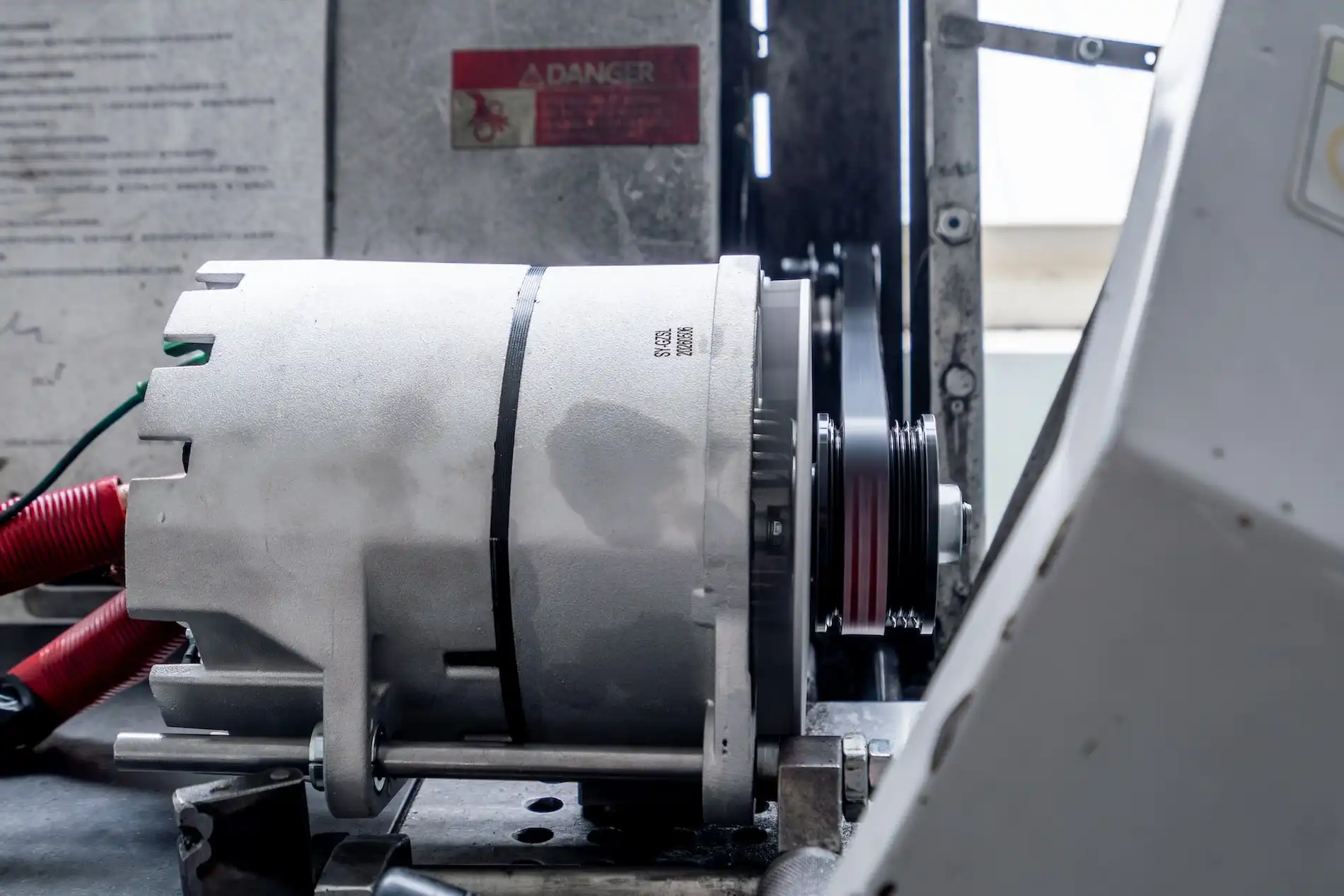
Installation & Maintenance Considerations for Heavy Duty Alternators
Using the right installation methods and maintenance schedules will get the most out of your investment in higher charging capacity. Following structured processes keeps things from going wrong that could have been avoided and protects your guarantee.
Pre-Installation System Verification
Before you take off your old alternator, make sure the battery is in good shape and the cables are secure. Even a high-quality new battery will not work if the capacity has dropped or the wires have become corroded. Thoroughly clean all grounding points, as resistance at ground links causes voltage drop that looks like the generator is breaking down.
Check the serpentine belt for tears, cracks, or fraying. heavy duty alternators need more torque to turn their bigger rotors, which shows belt weaknesses that weren't obvious when the load was smaller. To keep your new part from breaking too soon, replace the belt and automatic tensioner at the same time as the alternator.
Step-by-Step Installation Protocol
Take the negative end of the battery off and put it somewhere safe where it won't get touched by chance. First, take off the tensioner on the serpentine belt. Then, separate all the electrical connections from the old generator. For future reference, take pictures of the connectors in different positions. Carefully take off the mounting bolts while supporting the unit's weight to keep it from falling.
Place the improved generator on the mounting brackets and make sure it is straight before tightening the bolts. To keep stress cracks from happening, tighten screws to the manufacturer's specs. For mounting ears, this is usually 30 to 40 ft-lbs. Reconnect the wires, making sure that the main output line fits all the way in and that the regulator plug locks in a way that can be heard. Cables should be kept away from moving belt paths and hot exhaust parts.
Maintenance Strategies for Maximum Lifespan
Manufacturing methods that are IATF 16949-certified, like the ones used at XITU's 20,000 m² facility, which makes about 500,000 units a year, make the product more reliable. That standard is kept up by your repair program. Check the tightness of the belts every 15,000 miles. Loose belts slip, which heats up the pulleys and lowers output. During regular checks, listen for bearing noise. A rising whine means that the bearings need to be replaced right away.
Use a digital multimeter to check the voltage output every three months. For 12V systems, the voltage should stay above 13.2V when the system is not in use, and for 24V systems, it should stay above 26.4V. Readers who get readings below these levels have problems with the regulators or the diodes. Every year, clean the links between electrical devices and use dielectric grease to keep them from rusting in damp or salty places.
Comparison of Leading Heavy Duty Alternator Brands and Solutions
There are well-known companies with specific areas of expertise in the industrial generator market. Knowing where they are located helps procurement teams choose the best solutions for each fleet's needs.
Major Brand Positioning
Bosch puts a lot of emphasis on engineering precision and global service networks. This makes their units popular with OEM makers who need to make sure their supply lines are safe. Denso focuses on small, high-output designs that work well in engine bays with limited room. Leece Neville specializes in heavy-duty applications like garbage trucks and fire trucks, where being able to withstand vibrations and having a sealed construction are very important.
As an IATF 16949-certified provider, XITU is in a unique situation to offer OEM-grade quality with flexible ODM/OEM customization. With 28 years of experience in manufacturing, we help brand owners, wholesalers, and cross-border sourcing agents find certified Chinese suppliers who can keep up steady mass production without the high MOQs that bigger factories demand. This positioning solves the problem of how hard it is to find medium-sized providers who have good process control and plant audit records.
Evaluating Warranty and Support Structures
Warranty terms show that the company that made the product is confident in its longevity. Standard car units come with 12-month warranties, but premium names usually offer 24-month warranties with unlimited hours for business use. Check to see if the warranty covers unexpected damages. For example, some policies will pay for the tow truck and a new battery if the alternator fails and causes other damage.
XITU offers a guarantee that lasts for six months and full professional support. We can also provide localized services, such as installation on-site when needed. Working with well-known logistics companies around the world makes sure that shipping is reliable around the world, and our stable 30–60 day lead time lets distributors and wholesalers plan their inventory with confidence.
Cost-Performance Analysis
It's not enough to just compare prices; you also need to look at the total costs of ownership. Units that cost 20–30% more than normal options but last two to three times longer are a better deal. Find the real cost per working hour by figuring out how often things need to be replaced, how much it costs to put them, and how much it costs to have them shut down.
Sourcing strategies that combine unit cost with source reliability are good for procurement teams that work with aftermarket outlets. XITU's MOQ policies are flexible, so wholesalers can try out new markets without taking on too much inventory risk. Our consistent quality standards, which are backed up by ISO 9001 certification and over 50 precision production and testing machines, also lower the number of warranty claims that cut into profit margins.
How to Procure Heavy Duty Alternators: Best Practices for B2B Clients
Strategic buying is more than just finding the cheapest price per unit. To make supply chains more stable, you need to look at what suppliers can do, negotiate good terms, and build relationships where people can work together.
Sourcing Channel Selection
Direct ties with manufacturers can save you money and give you more customization choices than networks of distributors. If a manufacturer does its own research and development, it can change the way the modules are mounted, the way the output shapes are set, or it can come up with application-specific solutions that make your products stand out. The engineers at XITU use their 30 years of experience in the field to create custom solutions that meet the needs of a wide range of global markets.
Authorized distributor networks offer local stock and quick delivery for replacement needs that need to be met right away. When planning to build up your inventory, you should balance your buying strategy between direct orders to manufacturers and ties with distributors for backup supply in case of an emergency. This two-channel method lowers risk and improves the efficiency of operating capital.
Negotiation Tactics for Volume Buyers
Making a volume commitment opens up price tiers and better payment options. With annual purchase agreements and quarterly releases, buyers can plan their budgets and manufacturers can make the best use of their production schedules. Talk to suppliers about consignment inventory agreements so that they can keep stock at your distribution centers. This will help your cash flow and make sure that products are always available.
Request detailed technical documents like test reports, certifications of materials, and dimension drawings. Suppliers who are sure of their quality will gladly give you detailed specs that make it easier to check the quality of their products and back up what you say about them in your marketing to customers further down the line.
Building Strategic Supplier Partnerships
Long-term ties with suppliers give you more than just cost saves as a competitive edge. Collaborative partnerships give you early access to new products, priority when parts are in short supply, and technical support that helps your team become more knowledgeable about how to use new products. Share market information with your most important providers to help them predict changes in demand and adjust their capacity as needed.
XITU's method to partnerships stresses working together all the time. Our expert team helps brand owners create new product lines by working directly with them and giving application engineering support that cuts down on time-to-market. Just-in-time inventory tactics that lower your storage costs while keeping service levels high are supported by our stable production capacity and short wait times.
Conclusion
When there is enough demand for electricity and the compatibility requirements are met, switching from a standard alternator to an upgraded model has measurable benefits. heavy duty alternators have higher amperage output, better heat management, and longer service lives, all of which lower the total cost of ownership for business teams and industrial equipment. To have a successful application, the load needs must be carefully studied, the mechanical fit must be confirmed, and the electrical system must be compatible. Purchasing plans that focus on source quality certifications, manufacturing skills, and a focus on partnerships make supply chains strong, which helps businesses grow. The decision to upgrade the alternator comes down to weighing the initial cost against the benefits of improved operational reliability and lower long-term costs.
FAQ
1. Will a high-output alternator damage my vehicle's electrical system?
When alternators are properly matched, they won't hurt electrical parts. No matter what the capacity is, voltage controllers keep output at safe levels. For example, a 250A alternator on a system drawing 100A only works at half capacity. To keep your system from getting damaged, make sure the power level (12V or 24V) matches.
2. How often should heavy-duty alternators receive maintenance?
Every 15,000 miles, check the power lines and belt tension. Twice a year, check the power level. When properly maintained, units with bearings usually don't need any internal service for 3,000 to 5,000 hours of use. To avoid further damage, units that make noise or have voltage problems should be replaced right away.
3. What justifies the cost premium for industrial-grade alternators?
Premium prices are fair because they include longer service life (two to three times longer than standard units), lower failure rates that keep you from having to pay for costly downtime, and stable voltage output that keeps sensitive electronics safe. To find the real value for business purposes, figure out the cost per working hour instead of the buying price.
Partner with XITU for Reliable Heavy Duty Alternator Solutions
XITU is ready to help you with your purchasing needs because we have IATF 16949-certified production, open ODM/OEM customization, and 28 years of experience in the field. As a reliable heavy duty alternator supplier, we offer OEM-grade quality at a low price, with stable lead times of 30 to 60 days that help you plan your inventory. Our engineering team gives you application-specific technical support to help you choose the best solutions for John Deere equipment and a wide range of business needs. Get in touch with our experts at arisa@xitu-auto.com to talk about your needs, get more information, or get bulk prices. We want to build long-term relationships with you that make you more competitive by giving you high-quality products and quick service.
References
1. Society of Automotive Engineers (2021). SAE J180: Alternator Output Rating Standard for Heavy-Duty Applications. Warrendale, PA: SAE International Technical Standards.
2. Anderson, R.K. & Martinez, J.L. (2020). Commercial Vehicle Electrical Systems: Design, Testing, and Maintenance. Detroit: Automotive Engineering Press.
3. International Organization for Standardization (2018). ISO 8854:2018 Road Vehicles—Alternators with Regulators—Test Methods and Requirements. Geneva: ISO Technical Committee.
4. Patterson, D.W. (2022). "Comparative Analysis of High-Output Alternator Performance in Agricultural Equipment." Journal of Agricultural Machinery Engineering, 47(3), 312-328.
5. Industrial Electronics Manufacturers Association (2019). Best Practices for Alternator Selection in Commercial Fleet Applications. Arlington, VA: IEMA Technical Publications.
6. Thompson, S.J., Chen, Y., & Rodriguez, M. (2023). "Thermal Management Strategies in Heavy-Duty Alternator Design." International Journal of Automotive Engineering and Technology, 12(1), 45-62.

USER EVALUATE
Here is the customer's evaluation of us