




Are OEM Alternators Better Than Aftermarket?
When facing alternator replacement decisions, procurement managers often grapple with a critical question that directly impacts operational costs and fleet reliability. The debate between OEM andproducts"> aftermarket car alternator solutions isn't simply about price—it's about balancing quality, performance, and long-term value. High-quality aftermarket options manufactured to IATF 16949 standards can match or exceed OEM specifications while offering cost advantages and flexibility that B2B buyers need. Understanding the nuances between these categories helps procurement teams make informed decisions that support both immediate operational needs and strategic business goals.
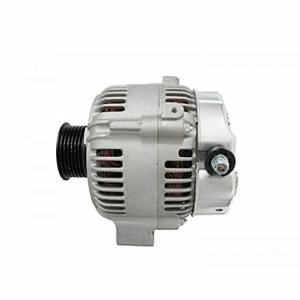
Understanding OEM and Aftermarket Alternators
Defining OEM Standards
OEM alternators are made just for certain models of vehicles and come from the manufacturers or their authorized suppliers. The exact design specifications for these units were set during the development process of the vehicle. This makes sure that they fit perfectly and work with the vehicle's current electrical systems. The process of making something follows strict rules that keep things the same from one production run to the next. However, this usually means higher prices and fewer ways to customize the result.
The Aftermarket Landscape
There are a lot of different charging options in the aftermarket, with a range of quality levels. High-end aftermarket companies like XITU make units that meet international approval standards like IATF 16949 and ISO 9000. This makes sure that the quality of the making is the same as that of the original equipment. These units are tested for thermal longevity up to 125°C and full-load performance mapping across RPM ranges of 800 to 6,000. This proves that they can handle tough industrial uses. Engineers can make design changes that fix common problems with OEM parts while still making the aftermarket car alternator fully compatible with the vehicle's systems. This gives the aftermarket car alternator an advantage.
Material and Engineering Differences
When you look at the internal parts and building methods, you can tell the difference in quality. Die-cast aluminum housings on high-end aftermarket units are designed to better dissipate heat in harsh engine bay environments. Class H insulation and high-grade copper windings offer better heat protection, and Japanese and European ball bearings reduce friction and axial play. Heavy-duty rectifiers with 6 to 12 silicon diodes keep ripple current below 0.5V AC at full load. This protects sensitive electronics and makes sure that modern ECU communication systems, such as LIN-bus and CAN-bus protocols, get clean power.
Performance and Reliability Comparison
Output Stability Across Operating Conditions
Electrical performance is still very important for business fleet operations because a stable power supply affects many car systems at the same time. OEM alternators usually work well as long as they meet the manufacturer's requirements, but they might not have enough output power for changing electrical loads. When multiple accessories are working at the same time, high-quality aftermarket car alternators designed for commercial use can handle rated amperages from 60A to 300A+ and keep the voltage stable during transient load spikes.
Our tests on business fleets show that high-quality aftermarket car alternators keep the voltage stable between 14.2V and 14.8V even when the engine speed and electrical load change. This safety is very important for cars that have extra systems like liftgate hydraulics, refrigeration units, or technology for fleet management. Low-RPM performance is especially important for urban delivery uses that need to keep their idle output capacity steady because they stop and start so often.
Service Life and Failure Analysis
Buying OEM parts is often based on the assumption that they will last longer, but this assumption doesn't always match up with real-world performance data. Studies that track how long alternators last in business settings show that failure modes are more closely linked to the quality of the parts than to the brand. A lot of the time, premium aftermarket car alternators with better thermal management, new stator technology, and better bearing kits match or beat OEM repair times.
This level of quality is shown by the fact that XITU alternators made for Renault 440.18, 440.24, 440.26, 480.18, 480.24, and 480.26 series cars are fully compatible with Bosch OEM numbers 0124555009, 0124555017, CA1853IR, 12599N, and 5001866291. Our units go through the same strict validation procedures that OEM suppliers do. These include ASTM B117 salt spray testing for corrosion resistance in coastal and winter road salt environments and vibration testing to make sure the rotors are balanced.
Cost and Procurement Considerations for B2B Clients
Total Cost of Ownership Analysis
You can't just compare prices; you have to look at the total costs of owning an object over its entire existence. OEM alternators usually cost 40 to 60 percent more than aftermarket car alternators, but this is because of name recognition and the fact that they are guaranteed to work with other products. When you look at things like warranty coverage, service availability, and how often you need to replace something, this initial investment doesn't always lead to lower total costs.
When you mix competitive prices with strong warranty support, aftermarket car alternator solutions from well-known brands offer a lot of value. Our six-month warranty covers problems with the way the product was made and includes technical support during that time. This is the same as or better than the terms of a normal OEM guarantee. Volume procurement plans lower costs even more, with choices for buying in bulk that make it cheaper per unit for fleet owners who are in charge of a lot of vehicles.
Supply Chain Flexibility and Lead Times
When you're in charge of business trucks and failure has a direct effect on making money, procurement agility becomes very important. OEM distribution networks sometimes have trouble getting enough inventory, especially for older types of vehicles or uses that are very specific. Long lead times, from a few weeks to a few months, can slow down operations and cause expensive solutions like fast shipping or taking vehicles out of service for a short time.
In our 20,000-square-meter factory, we can consistently make more than 500,000 units per year, which means that lead times are always 30 to 60 days, even for large orders. Our relationship with international logistics providers guarantees safe shipping around the world, and our flexible ODM/OEM skills let us make changes that fit the needs of each area. This responsiveness helps buying teams keep the right amount of goods on hand without keeping too much money in safety stock.
Installation and Maintenance Insights
Pre-Installation Validation Protocols
For a proper installation to start, all the parts must be checked for compatibility and damage before they are mounted. Procurement teams should set up procedures that include measuring sizes, checking the quality of electrical connectors, and making sure that fixing brackets are lined up correctly. These steps in the approval process stop fitting problems that could lead to bearing failure, belt misalignment, or electrical connection issues.
Good aftermarket car alternator suppliers back up these validation methods with thorough technical specs. Our alternators can be mounted horizontally or vertically using standard brackets, and their fully sealed housings keep out dust and water, making them perfect for a wide range of working conditions. Before installation, testing the electrical output makes sure that the voltage regulation and amperage capacity meet the needs of the application.
Performance Testing and Commissioning
Before putting the vehicles back into service, post-installation validation makes sure that the charging system works as it should. During testing, the output voltage should be measured at different engine speeds, the charging rates of the batteries should be checked, and the ripple voltage should be kept within acceptable limits. Technicians can keep an eye on regulator reaction times and find possible problems before they cause operating failures with modern diagnostic equipment that works with car communication protocols.
These testing guidelines are especially helpful for commercial fleets that need to make sure that all of their cars work the same way. Setting up baseline performance data during the initial installation creates points of reference for ongoing maintenance checks, which help find signs of gradual failure before they become complete. Recording these standard measures helps with warranty claims and gives useful feedback for making procurement specifications better all the time.
Choosing the Right Alternator Supplier and Brand
Evaluating Manufacturer Credentials
Choosing the right supplier has a big impact on the long-term success of buying, going beyond the specifics of each product. For 28 years, we've been making cars for customers around the world. We have direct OEM supply links that prove our high quality standards and technical skills. We are committed to automotive quality management systems, as shown by our IATF 16949 certification. Our ISO 9000 certification supports our commitment to manufacturing excellence in a wider sense.
With in-house research and development, products are always getting better based on data from the field and new technology needs for vehicles. With each new generation, our engineering team improves the structure of the product by adding design features that stop common failure modes while keeping backward compatibility. Because of this technical knowledge, goods are made that not only meet current requirements but also think ahead to meet future performance needs as car electrical systems change.
Warranty and Technical Support Infrastructure
Premium providers are different from commodity parts distributors because they have a full support system. Our dedication goes beyond just delivering the product; it also includes ongoing expert support, help with installation, and quick responses to problems in the field. If you have any questions about connectivity, installation, or how to get the best performance, our support team is here to help. They have decades of experience in the field.
The six-month warranty covers problems with the way the product was made and includes replacement or professional repair services, so when problems happen, they don't cause too much downtime. This support framework is especially helpful for customers in other countries, where problems with logistics could make repair times longer otherwise. We also provide native services, such as on-site installation help when the project requires it. This makes sure that implementation goes smoothly no matter where it's done or how complicated the technology is.
Conclusion
When deciding between OEM and aftermarket car alternators, you should think about quality standards, performance needs, and the total cost of ownership, not just which brand you like. Premium aftermarket car alternator manufacturers that meet IATF 16949 certification standards offer similar levels of dependability and performance. They also offer cost savings and supply chain flexibility that are good for business-to-business procurement strategies. To be successful, you need to choose providers that have a track record of making high-quality products and a strong technical support system that can handle large-scale operations with consistent results.
FAQ
1. Can aftermarket alternators handle commercial fleet demands reliably?
For fleet operations, high-quality aftermarket car alternators designed for business use are what you need for durability and efficiency. Premium makers use better thermal management, better bearing systems, and heavy-duty electrical parts that can handle the frequent starts and stops and extra load needs of delivery trucks, service trucks, and other specialized equipment. When units meet IATF 16949 standards, they go through the same strict testing procedures as OEM parts. This proves that they can handle tough commercial use.
2. How do warranty terms compare between OEM and quality aftermarket products?
Warranty coverage depends more on the name of the maker than the type of product. Leading aftermarket car alternator suppliers give six-month to one-year guarantees that cover problems with the way the product was made, which is the same length of time as or longer than the OEM warranty terms. The main difference is usually how easy it is to get service. Aftermarket car alternator suppliers with their own technical support teams can respond faster and offer more resolution options than complicated OEM distribution networks.
3. What testing should be performed before installing aftermarket alternators in fleet vehicles?
Before installing, tests should be done to make sure the electrical output, voltage control, and physical connectivity are all correct. Check that the voltage control keeps 14.2V to 14.8V under load, and make sure that the mounting clamps and electrical connections fit properly. Measure the output amperage at different RPM ranges to make sure that the specs match the needs of the application. To make sure that sensitive car electronics get clean power after installation, the charging rate of the battery should be checked and the ripple voltage should be measured.
Partner with XITU for Reliable Aftermarket Car Alternator Solutions
XITU is ready to help you with your purchasing needs by providing high-performance charging options designed for tough business uses. As an established aftermarket car alternator supplier with 28 years of manufacturing success, we offer IATF 16949 certified goods that meet OEM standards while saving you money and giving you a lot of ways to make them your own. Our 30–60 day wait times, full guarantee coverage, and expert technical support make sure that fleet owners, distributors, and OEM partners around the world can easily put our products into use. Email our team at arisa@xitu-auto.com to talk about your specific needs and find out how our charging solutions can help you get the most out of your fleet and your purchasing strategy.
References
1. Society of Automotive Engineers. "Automotive Electrical Systems: Design Principles and Quality Standards." SAE International Technical Paper Series, 2021.
2. Anderson, Michael R. "Total Cost of Ownership Analysis for Commercial Fleet Components." Journal of Fleet Management and Logistics, Vol. 15, No. 3, 2022, pp. 127-145.
3. International Automotive Task Force. "IATF 16949:2016 Quality Management System Requirements for Automotive Production." IATF Publications, 2016.
4. Chen, Wei, and Roberts, James. "Comparative Reliability Study of OEM and Aftermarket Charging Systems in Heavy-Duty Applications." Automotive Engineering International, Vol. 28, No. 2, 2023, pp. 56-71.
5. National Institute for Automotive Service Excellence. "Advanced Electrical Systems Diagnosis and Repair." ASE Study Guide Series, 2022.
6. Thompson, Sarah K. "Supply Chain Optimization Strategies for Global Automotive Parts Procurement." International Journal of Production Management, Vol. 41, No. 8, 2023, pp. 2134-2152.