




How Does a 12 Volt Car Alternator Work? A Complete Guide
A alternator&type=knowledge">12 volt car alternator is a sophisticated electromechanical device that transforms mechanical energy from the engine's crankshaft into electrical power, keeping your vehicle's battery charged and powering all onboard electronics while the engine runs. This rotating generator produces alternating current through electromagnetic induction, which is then converted to direct current through a rectifier, maintaining a stable output typically between 13.8V and 14.4V. Understanding how this critical component functions helps procurement professionals, fleet managers, and OEM partners make informed decisions about sourcing, replacement, and performance optimization in commercial applications.
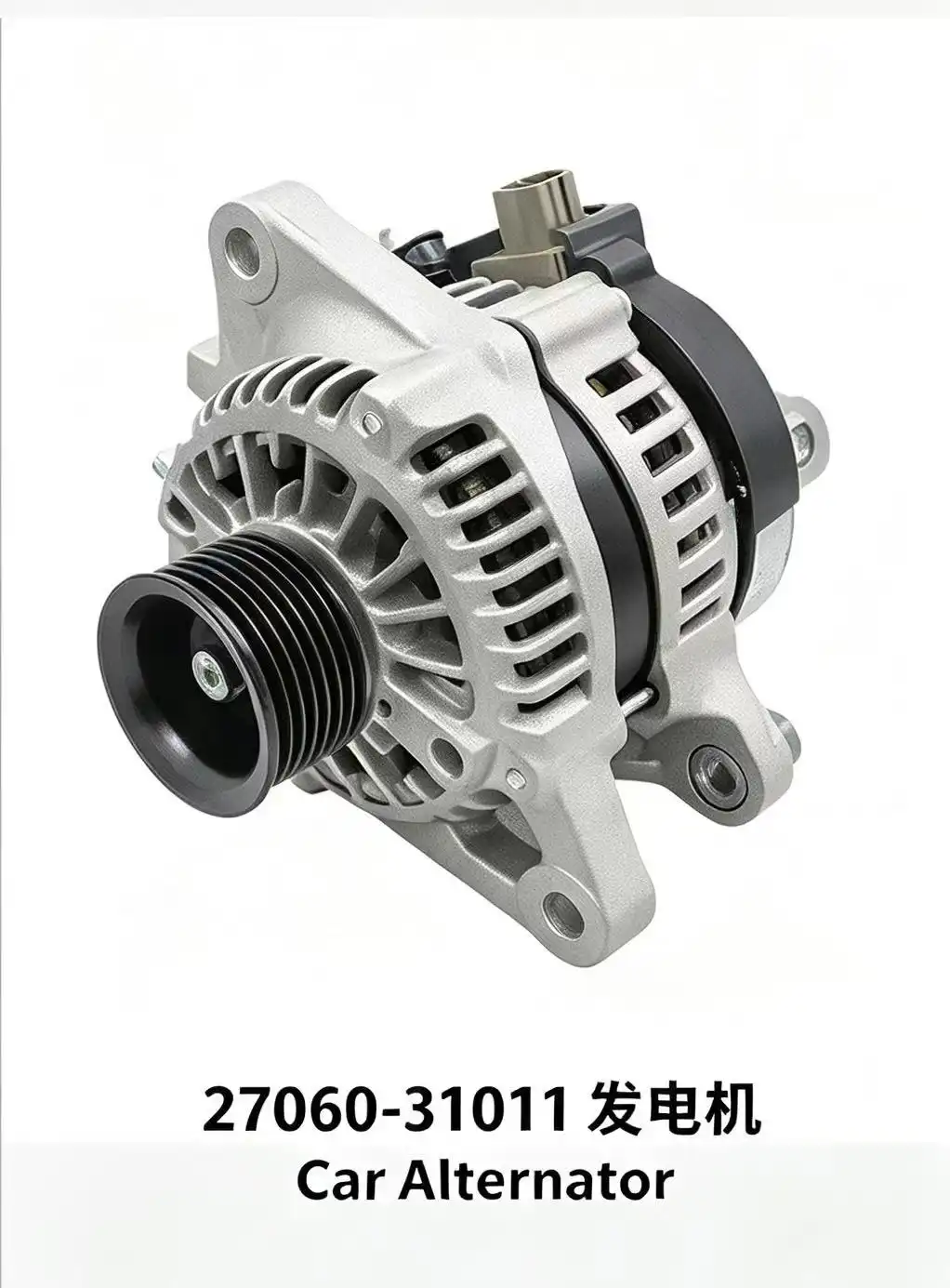
Understanding the Basics of a 12 Volt Car Alternator
Every modern car needs a reliable charging device to keep its electrical functions up and running. When your engine starts, the alternator takes over from the battery right away. It powers everything from your headlights to your navigation system while also charging the battery again.
The Core Working Principle
There is a simple but clever way that the alternator works. The crankshaft of the engine turns a pulley that is linked to the rotor of the generator by a serpentine belt. A rotating magnetic field is made when the rotor spins inside the stator assembly. Through electromagnetic induction, this changing magnetic field causes alternating current in the stator windings. This is the same idea that Michael Faraday found in 1831. Because the engine speed changes the AC voltage that is made, voltage regulation is very important.
Key Components and Their Functions
Copper wires are wrapped around an iron core in the rotor of a 12 volt car alternator, which makes an electromagnet when electricity runs through it through slip rings and brushes. The stator is made up of three different copper wire coils grouped in a cylinder-shaped housing. It goes around the rotor. As the magnetic field moves past these coils, they make three-phase alternating current. The rectifier unit has six diodes set up in a bridge shape that change the three-phase AC power into useable DC power. The voltage regulator checks the system voltage all the time and changes the strength of the rotor's magnetic field by controlling the flow of current to the rotor's windings. This keeps the output constant, even if the engine speed or electrical load changes.
Voltage Regulation Process
A question we often get from buying teams is why the generator doesn't output exactly 12 volts but instead 13.8 to 14.4 volts. To get past chemical hurdles while charging, the battery's internal resistance needs more power. The battery would slowly die even if the engine was running without this voltage difference. These days' alternators can adjust their output voltage based on the temperature of the environment. This makes sure that batteries last longer and don't get too charged in hot places or too drained in cold places.
Identifying and Troubleshooting 12 Volt Car Alternator Issues
Finding alternator problems early keeps them from breaking down at odd times, which can leave cars stranded and activities slowed down. If fleet managers who are in charge of many cars know what these warning signs mean, they can cut down on downtime and repair costs.
Common Failure Symptoms
When the engine is idling, dimmed headlights mean that the battery isn't charging properly at low RPM. The charging system isn't keeping the right voltage, as shown by the dashboard warning lights, especially the battery icon. Strange noises like grinding or whining could mean that a bearing is worn out or an internal part is failing. Voltage instability is indicated by electrical accessories acting erratically, such as power windows moving slowly and the radio going off. If you smell sulfur or see that the alternator housing is very hot, it means that the motor is overheating because of too much load or internal short circuits.
Practical Testing Methods
A digital voltmeter can be used to check the voltage across the battery connections while the engine is running. Readings below 13.5V or above 15V mean there is a problem with the limiter. During load testing, heavy-duty accessories like air conditioning and headlights are turned on while the voltage drop is watched. When the power is fully used, a charging system that is working well should keep at least 13.2V. If you check the serpentine belt for proper tightness and condition, you can avoid charging problems that are caused by the belt slipping.
Preventive Maintenance Indicators
The amount of time between regular inspections depends on the application. For example, building equipment that works in dusty places needs to be checked more often than passenger cars. Our fully sealed alternator design keeps the internal parts clean, which increases its useful life in harsh conditions. XITU alternators made for CASE series 1155 E, 1845 C, 760, 560, and CATERPILLAR T50E 426B 428 tools are better at resisting dust and water because these machines are constantly exposed to them.
Choosing the Right 12 Volt Alternator for Your Business Needs
To choose the right charging capacity, you have to weigh the amount of current you need against the cost and space you have available. Undersized alternators keep running at full power all the time, which makes them too hot and causes them to break down early. Oversized units give you room for future power improvements, but they cost more up front.
Amperage Rating Considerations
Most standard passenger cars have a 12 volt car alternator that puts out 60A to 90A, which is enough for basic things like lights, the engine, and entertainment systems. Delivery vans with lift gates, refrigerators, or a lot of telematics gear need 120A to 160A of power. A lot of construction and farming tools need 180A to 250A output to power hydraulic controls, LED work lights, and other power systems. XITU makes 12V 65A alternators that are small enough for light-duty business use but have enough power for the job. These alternators are compatible with Bosch OEM numbers 0120188290, 0120488205, CA1197IR, 12161N, and A186125.
OEM Versus Aftermarket Options
Original equipment manufacturer (OEM) parts are more expensive but guaranty that they will fit and work. Aftermarket options can save you money, but the quality changes a lot from one maker to the next. Purchasing managers who want OEM-level quality at low prices should look for suppliers with IATF 16949 certification, which requires strict process control and systems for ongoing growth. Our 20,000-square-meter facility keeps this certification up to date by testing each alternator thoroughly to make sure it meets or exceeds the original specifications.
Voltage Regulator Configuration
Built-in controls make installation easier and wiring less complicated, which is why they are standard in new cars. When the regulation circuitry fails, external regulators make it easier to replace parts without having to replace the whole alternator. This lowers the cost of fixing expensive, specialized equipment. The decision relies on how the maintenance is done. Fleet operations that like to change modules at the module level may choose integrated designs, while operations with skilled techs may choose external regulators that are easy to service.
By knowing these selection factors, purchasing agents can find the right alternators for a wide range of uses, while also keeping performance needs and price limits in mind. The right alternator pick protects the health of the electrical system and lowers the total cost of ownership by reducing the number of failures and extending the time between service visits.
Procurement Considerations for 12 Volt Car Alternators
Decisions about where to get things affect both short-term prices and long-term dependability. When considering alternator suppliers, procurement teams should look at more than just unit price. They should also look at the suppliers' manufacturing skills, quality standards, and support infrastructure.
Manufacturing Quality and Certification
IATF 16949 certification sets serious manufacturers apart from small-scale operations that don't have a system for quality control. This standard for the car industry calls for processes to be written down, statistical process control, and methods for ongoing growth. As an example, XITU makes more than 500,000 units a year using more than 50 pieces of precision equipment, so the quality is the same for large orders without having to wait longer for parts.
Using high-quality products has a direct effect on how long they last. Pure copper windings are better at conducting electricity than copper-clad metal ones, which means they produce less resistance and heat. Aluminum aluminum housings have the best ratio of strength to weight and are good at getting rid of heat. Fully sealed construction keeps out outside contaminants, which is especially important for off-road and building equipment that has to deal with a lot of dust and water.
Lead Time and Delivery Reliability
Supply planning is hampered by unclear production schedules, and there is a chance of running out of stock during times of high demand. Stable 30- to 60-day lead times for manufacturers help with planning and reduce the need for safety stock. Our long-term logistics partnerships with well-known shipping companies around the world ensure safe delivery all over the world. This takes away the worries that small sellers who don't have professional freight management have about product damage during travel.
Warranty and Technical Support
A standard six-month guarantee covers problems with the way the product was made and materials that don't work right. However, the terms range when it comes to covering mistakes in installation versus problems with the parts themselves. Suppliers who give expert support throughout the lifetime of a product—from helping with specifications to installing the product and fixing problems—lower the total cost of ownership by reducing downtime and stopping the wrong use. When needed, localized service that includes on-site installation support shows that you care about your customer's success after the sale.
Customization Capabilities
Standard designs often need to be changed by fleet operators and OEM manufacturers who need different mounting brackets, specialized electrical connectors, or better protection against the environment. When suppliers have their own research and development teams, they can make a 12 volt car alternator fit specific needs without the delays and minimum order quantities that come with manufacturers using outside engineering resources. Over the past 28 years, our focused research and development (R&D) staff has improved alternator designs by making them stronger and better at what they do, while also meeting the unique needs of each market.
The Benefits and Future Prospects of Upgrading to a 12 Volt Alternator
Modern alternator technology makes charging systems that are too old or not big enough work better. Figuring out how much these benefits are worth helps to support spending money on fleet repair programs and new equipment specs.
Operational Performance Improvements
In fleet operations, high-efficiency alternators cut down on parasitic load on the engine, which means that measured fuel saves are made. A 5% increase in alternator efficiency can cut fuel use by 0.1 to 0.2 liters per 100 kilometers. This is a small amount of fuel savings per vehicle, but it adds up when you look at big companies that drive millions of kilometers every year. Better low-speed power keeps the battery charged during long periods of idling, which happens a lot on delivery routes and building sites. This keeps the battery from wearing out from repeated deep discharge cycles.
Improving reliability cuts down on unplanned repair and breakdowns on the side of the road. Premium construction with high-temperature insulation materials and protected bearing kits increases the average distance traveled before failure from 100,000 kilometers to 150,000 kilometers or more. For business owners, each breakdown that doesn't happen saves money on repair costs and lost opportunities because the car isn't available and the plan has to be changed.
Emerging Technology Integration
Smart alternators with digital control algorithms make the best charging patterns based on how the car is being driven and the condition of the battery. These systems lower charging activity when the engine is speeding up, which is when it is most sensitive to load. This saves fuel without affecting the stability of the electrical system. When you slow down, regenerative charging catches energy that would have been wasted to friction braking. This is especially helpful in cities where you have to stop and go a lot.
As materials science progresses, it keeps making things more efficient and lighter. Magnetic losses in the stator core are cut down by silicon steel laminations with the right grain orientation. Rectification losses are kept to a minimum by high-performance diodes with low forward voltage drop. As technology gets better and more of them are made, these small changes add up to big gains in performance. This happens because manufacturing costs go down as more are made.
Sustainability and Regulatory Alignment
Cutting down on vehicle fuel use is in line with corporate sustainability efforts and stricter rules on emissions. Alternator efficiency affects a vehicle's total efficiency rating, which could have an effect on following the rules in places where fuel economy guidelines are in place. Integrating electric vehicles comes with both problems and chances. For example, hybrid systems need alternators that can quickly switch between charging modes and regenerative braking recovery, which means they need more complex control systems than regular applications.
Fleet managers and equipment makers who are willing to think ahead will be able to meet changing performance standards while lowering running costs by making systems more reliable and efficient. Because of these benefits, replacing an alternator is not just a matter of doing it when it breaks.
Conclusion
Learning about how car charging systems work helps you make better buying decisions and run your fleet more efficiently. The 12 volt car alternator does more than just charge the batteries; it is a key part of the vehicle's reliability, which affects its uptime, maintenance costs, and operational efficiency. Choosing high-quality parts from companies that have consistent process control, the right certifications, and quick expert help will protect your investment and keep the total cost of ownership as low as possible. When buying alternators for new equipment or to replace old ones in existing fleets, it's better to look at suppliers based on their ability to make the parts, the quality of the materials they use, and their support infrastructure than just looking at price.
FAQ
1. What causes voltage output to exceed 12 volts?
To get around the battery's internal resistance and chemical hurdles during the charging process, the charging system needs to put out 13.8V to 14.4V. Because voltage difference controls current flow, a flat 12V output would cause the battery to drain slowly. Temperature adjustment changes the output voltage based on the temperature and humidity. In cold weather, when batteries don't want to charge, the voltage goes up, and in hot weather, it goes down to keep the batteries from overcharging and losing liquid.
2. Can I replace a lower-amperage alternator with a higher-output unit?
It's usually fine to upgrade to a higher amperage as long as the mounting clamps, belt drive, and wire gage can handle it. Higher-output alternators give you more room for electrical accessories and don't force the unit to run at full output all the time, which keeps it cooler and longer. To avoid voltage drops and possible fire risks, make sure that the current flow can be handled by the current wires.
3. How do construction equipment alternators differ from automotive applications?
When equipment works in dusty, high-vibration areas, it needs better environmental safety and structural support. Fully sealed housings keep out contaminants that would wear out bearings and break down wound insulation too quickly. Heavy-duty mounting brackets can handle constant shaking without getting stress cracks. These features are built into XITU alternators for CASE and CATERPILLAR tools, which makes them reliable in tough situations where regular car units would break down quickly.
Partner with a Trusted 12 Volt Car Alternator Supplier
XITU has been making alternators for commercial vehicles, building equipment, and industry uses for 28 years and uses IATF 16949-certified production methods to make OEM-grade alternators. Our pure-copper-winding alternators with aluminum housings provide reliable 12V 65A output in a wide range of operating conditions and come with a full six-month warranty. Over 500,000 units can be made every year, which guaranties a steady supply for fleet owners and distributors who need regular access.
We know the problems that foreign buyers face when they try to buy things: unpredictable quality from small workshops, huge minimum order quantities from big makers that make it impossible to buy just a few items, and worries about how reliable delivery is. Our mid-sized business solves these problems by letting you choose the amount of items you want to order, keeping lead times stable at 30 to 60 days, and working with professional logistics partners to make sure safe shipping around the world. With in-house research and development, you can make changes for specific uses without having to wait for longer development processes.
Get in touch with XITU at arisa@xitu-auto.com to talk about your unique alternator needs. Our technical team helps you choose the best product by giving you application advice, checking for compatibility, and providing specification support. Visit xitu-auto.com to see all of our products and learn how working with a qualified, experienced maker can make your supply chain run more smoothly while still giving your business the quality and dependability it needs.
References
1. Bosch Automotive Handbook, 10th Edition, Robert Bosch GmbH, 2018
2 Society of Automotive Engineers Standard J56: "Alternators — Test Procedures and Performance Specifications," SAE International, 2020
3. ISO 8854:2012 Road Vehicles — Alternators with Regulators — Test Methods and General Requirements, International Organization for Standardization
4. Denton, Tom, "Automobile Electrical and Electronic Systems," 5th Edition, Routledge, 2017
5. IATF 16949:2016 Quality Management System Requirements for Automotive Production and Relevant Service Parts Organizations, International Automotive Task Force
6. Larminie, James and Lowry, John, "Electric Vehicle Technology Explained," 2nd Edition, Wiley, 2012