




24v alternator 150 amp: Complete Buying Guide for Heavy-Duty Vehicles
When your Volvo heavy-duty truck fleet demands reliable power under punishing conditions, selecting the right charging system becomes mission-critical. A high-output alternator%20150%20amp&type=products">24v alternator 150 amp within a 24-volt architecture provides the robust electrical foundation your operations require. This guide walks you through everything you need to know about specifying, sourcing, and maintaining these essential components for long-haul logistics, mining operations, and construction fleets where downtime translates directly to revenue loss.
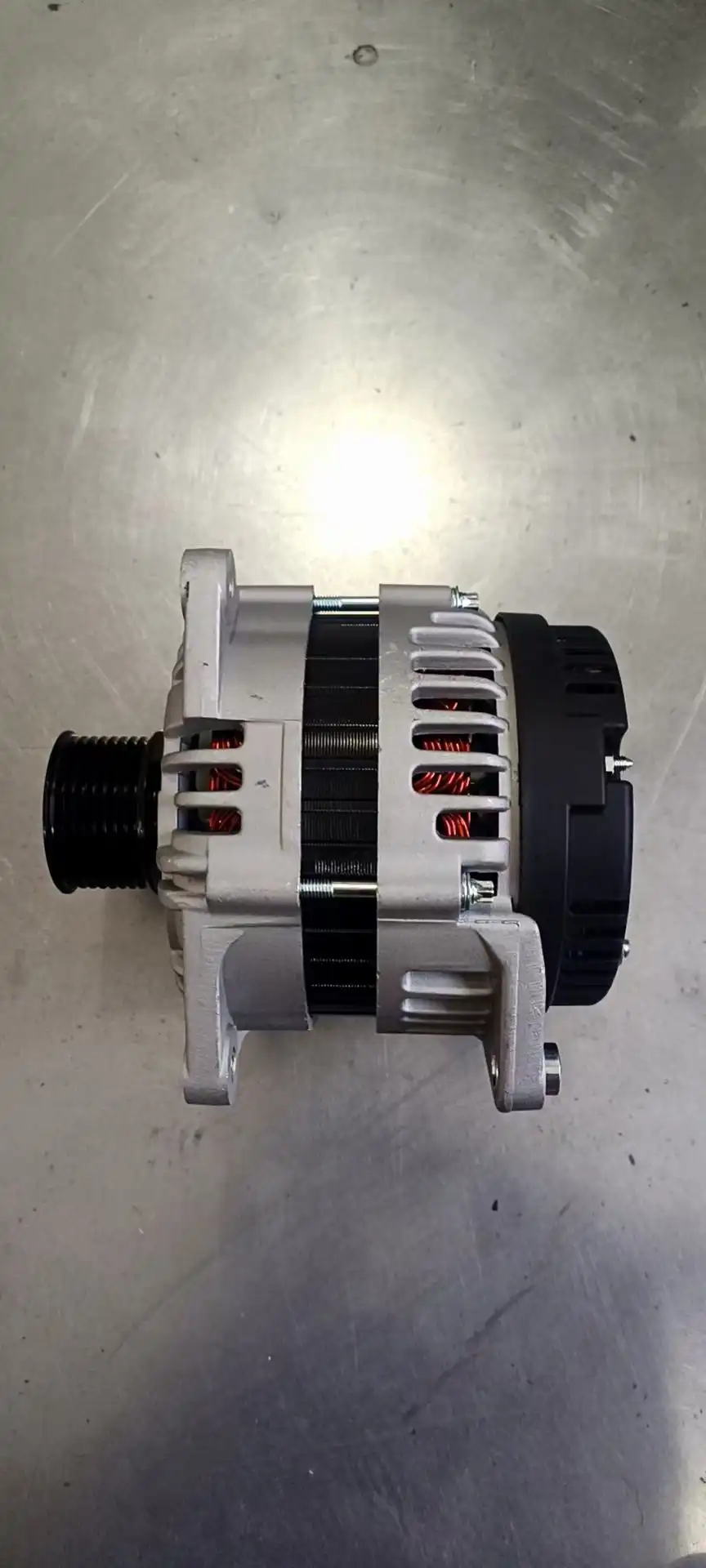
Understanding 24V Alternator 150 Amp – Key Specifications and Functionality
Commercial cars have a high-capacity charging unit that turns mechanical energy from the engine into electrical power that keeps systems running and recharges the batteries. The number "24V" refers to the nominal voltage level that works with Class 7 and Class 8 cars that have two batteries. The "150 amp" rating means the highest current that can be delivered, which equals about 3.6 kilowatts of continuous power for extra loads.
How This Component Solves Industry Pain Points
"Power starvation" is a problem that heavy machine workers constantly face when auxiliary needs are higher than the alternator's capacity. At the same time, refrigeration trucks, hydraulic lift gates, temperature control in the sleeper cab, and modern telematics systems all draw power. When the charging system isn't big enough, the batteries have to make up for it by going through deep discharge cycles, which cut their life by 40–60%. High-output units get rid of this problem by sending extra power even when the engine is not running for a long time or when it is in city traffic where the RPM stays low.
Critical Electrical Parameters You Must Verify
When looking at technical datasheets for a 24v alternator 150 amp, three criteria show if they are useful in the real world. For diesel engines, the cut-in speed, or lowest RPM at which charging starts, should be between 1,200 and 1,500 RPM. Idle output is just as important as peak output. Premium units give 80–100 amps at normal engine idle speeds of 600–800 RPM, which keeps the battery charged during transports in the city or work on the job site. Maximum working speed sets limits on how long something will last. Good alternators can work continuously at up to 12,000 RPM without bearing damage.
Pulley Configuration and Mechanical Integration
A pulley with the standard 8PK63 has an eight-groove serpentine belt interface and a pitch width of 63mm. This arrangement works with Volvo FM, FMX, B9, and FH16 series fixing points, so it can be installed without making any special mounts. At high power levels, the right tension on the belt is very important. If the tension is too low, the belt can slip and get too hot, and if the tension is too high, the bearings will wear out faster. For mounting bolts, the torque range is usually between 45 and 55 Nm.
Comparing 24V Alternator 150 Amp with Other Alternators – Making the Right Choice
When ordering new parts, fleet managers often have trouble deciding what size to get. Mismatches that cost a lot of money can be avoided by knowing the trade-offs between different voltage platforms and amperage ratings.
Voltage Architecture: 12V vs 24V Systems
Heavy-duty uses need 24-volt dual-battery banks, while light commercial cars and passenger trucks use 12-volt single-battery systems. For the same amount of power, the higher voltage cuts the flow of current in half, which lets smaller gage wiring be used and lowers resistive losses. A 12V system that delivers 3.6kW needs 300 amps of current, which is too much for long-term use. The 24V design produces the same amount of power at 150 amps, which is more efficient and better at controlling temperature.
Amperage Ratings: 100A, 150A, or 200A Options
A 100-amp unit is usually 15-20% less expensive than higher-capacity options and works well for base-spec cars with light extra loads. But fleet owners who add refrigeration trailers, extra lighting, or auxiliary power units quickly go over this limit. A 24v alternator 150 amp has enough power to handle moderate auxiliary loads without constantly running at full output. This keeps the alternator in good shape by lowering thermal stress and increasing service life. Units with 200 amp ratings are used in specific situations where the electricity needs are very high, but they are heavier and cost more to buy at first.
OEM versus Aftermarket Sourcing Strategy
Original equipment maker (OEM) parts from Bosch are more expensive (usually $400 to $800 per unit), but they guaranty exact engineering standards. Instead of buying the original Bosch parts, you can find cheaper replacements that work with the OEM numbers 0124655084, 0124655101, 21561402, and 85023732. Through reverse engineering and careful production, good aftermarket providers can get performance that is the same as OEM. IATF 16949 certification proves that production processes meet quality standards for the car industry, and ISO 9001 certification proves that quality management is done in a planned way.
Procurement Guide – How to Buy the Best 24V Alternator 150 Amp for Your Fleet
When you strategically source important powertrain parts, you have to weigh the benefits of short-term cost savings against long-term dependability. Logistics, guarantee enforcement, and technical support can be extra hard for procurement teams that are in charge of foreign supply chains.
Essential Selection Criteria for Heavy-Duty Applications
Premium units are different from cheaper ones because they last longer in harsh circumstances. Internal parts have to be able to handle a wide range of temperatures, from starting up in the cold of -40°C in the north to running continuously in 50°C deserts. When it comes to off-road vehicles, vibration resistance is very important. For example, mine haul trucks and construction tractors put G-forces on electrical systems that break inferior solder joints and loosen internal connections. Look for specs that prove IP66 ingress protection against getting dust and water in.
The ability to maintain output is determined by thermal management. The more expensive models have two cooling fans inside, and the airflow through the stator windings is maximized. Copper windings with a high density can carry more current than aluminum windings, but they cost more to make. Multi-stage voltage regulators that can adjust for temperature stop batteries from overcharging in hot climates and undercharging in cold climates, which are both failure modes that shorten the life of the battery.
Understanding Market Pricing and Value Assessment
Prices for good heavy-duty alternators around the world range from $120 to $300 per unit, depending on how many are ordered, their certifications, and the length of the warranty that comes with them. Single-unit sales are usually at the higher end of this range. However, when you buy 100 to 300 units in a container, you can get savings of 25 to 35 percent. Managers in charge of buying things should ask for detailed cost breakdowns that show how the base unit price is different from extra costs like certification fees, packaging, and shipping.
Total cost of ownership estimates need to take into account how often parts are replaced and how long the guarantee lasts. A $250 high-end unit with a reported 500,000-mile service life is a better deal than a $150 option that needs to be replaced after 200,000 miles. Commercial car parts usually come with a six-month guarantee, but some of the best providers offer longer warranties for fleet accounts.
Supplier Evaluation and Risk Mitigation
Checking the ability to manufacture guards against inconsistent quality. A production capacity of more than 500,000 units per year shows that process controls are in place and that the source of components is stable. Ask for proof of quality management certifications. IATF 16949 goes beyond general ISO 9001 standards to meet particular needs in the automotive supply chain. In the quality control paperwork from the supplier, there should be information about computerized load tests, protocols for thermal endurance, vibration tests, and salt spray exposure.
Logistics skills have a direct effect on managing goods. For large orders of the 24v alternator 150 amp, manufacturing lead times usually last between 30 and 60 days, so you need to plan ahead to make sure you don't run out of stock. Established sellers keep in touch with foreign freight forwarders who know how to handle car parts, making sure that the right packaging and paperwork are sent for customs clearing. Smaller buyers can get better shipping deals with the help of container merging services.
Optimizing Performance and Maintenance of Your 24V Alternator 150 Amp
To get the most out of your service and keep it from breaking down on the side of the road, you need to follow set cleaning procedures and pay close attention to early danger signs. Using common diagnostic tools, fleet maintenance teams can set up simple testing procedures.
Routine Inspection Protocols
Once a month, the state and tightness of the belt should be checked visually. If you see glazing, cracks, or rib separation on a serpentine belt, you need to replace it right away so it doesn't slip when it's under load. Checking tools for belt tension make sure that the right amount of load is being applied. Not enough tension leads to squealing and incomplete charging, while too much tension speeds up bearing wear. Electrical connections need to be carefully made. If the battery terminals and alternator output studs are corroded or loose, resistance forms. This resistance makes heat and lowers the charging efficiency.
Using a digital voltmeter to test the voltage output lets you find problems early on. Check the voltage at the battery connections while the engine is running normally and electrical loads are connected. Values below 27 volts mean the regulator is broken or there are problems with the internal windings. Readings between 27.5-28.5 volts mean the regulation is working right. If the voltage goes above 29 volts, the battery could get damaged from being overcharged.
Diagnosing Common Failure Modes
Bearing noise sounds like grinding or whining and gets worse as the engine speed goes up. Premium units have sealed NMB or SKF bearings that are made to last 8,000 hours with high belt strain. To change a bearing, you need special pullers and installation tools, but it's much cheaper than replacing the whole unit if you do it right away.
When a diode bridge fails, the output usually goes down or there is AC voltage ripple in the DC output. This situation makes lights flicker and electrical systems not work right. The main cause of failure is thermal stress from long-term high-output operation. An oscilloscope is needed for testing to find AC ripple levels higher than 0.5 volts, which means diodes have failed and alternating current can enter the DC charging system.
When to Repair versus Replace
The decision of whether to repair or replace is based on economic analysis. When done by experienced technicians, replacing a bearing costs between $80 and $120 for the parts and the work. It costs $100 to $150 to fix a diode bridge. But units that are failing more than once at the same time or that are getting close to 300,000 miles should be completely replaced so that they don't need to be serviced over and over again. Keeping spare units on hand cuts down on downtime, which is very important for businesses where vehicles not being available can mess up important transports or production plans.
Conclusion
When picking out the right charging system parts for heavy-duty car companies, you have to balance technical requirements with operational needs and total cost. High-output alternators like the 24v alternator 150 amp meet the power needs of current auxiliary systems and are reliable even when they are under a lot of mechanical and environmental stress. The risks that come with global sourcing can be reduced by focusing on strategic purchase that looks at confirmed OEM compatibility, detailed quality certifications, and established source capability. Systematic maintenance plans protect fleet uptime and operational efficiency by extending service life and preventing costly breakdowns on the side of the road.
FAQ
1. Can I upgrade from a lower-amperage alternator to a 150-amp unit?
It is possible to upgrade when the mounting footprints match and the existing wiring can handle the extra current flow. Make sure that the alternator bracket fits your engine type. The Volvo FM and FMX models usually have standard mounting points. Electrical equipment needs to be able to handle 150 amps without dropping the voltage too much. The length of the line from the generator to the battery can be used to figure out the wire gage needs. For runs shorter than three meters, circuits with 4 AWG or bigger wire usually work fine.
2. What distinguishes brushless designs from traditional alternators?
In brushless configurations, the carbon brush and slip ring assembly that turns on the rotor winding is not used. They use fixed field coils or solid magnets instead. This design cuts down on upkeep needs and increases service life in dusty places like mines, where carbon brushes wear out faster. Brushless models, on the other hand, usually cost 10-15% more and may appear bigger.
3. How do temperature extremes affect charging performance?
When it's cold outside, the internal resistance of the battery goes up, so it needs a higher charging power to stay in the right state of charge. Good voltage regulators have temperature compensation circuits that change the output voltage based on how hot the alternator case is. In hot areas, the opposite problems happen: too much power damages battery plates and drains the electrolyte. Temperature-compensated controllers usually change the voltage by 0.03 volts for every degree Celsius that the temperature is above or below 25°C.
Partner with XITU for Reliable Heavy-Duty Alternator Solutions
Through our production capacity of more than 500,000 units per year, XITU offers engineered charging solutions that work with Volvo FM, FMX, B9, and FH16 heavy truck platforms. Our 150-amp alternators have precise copper windings, better heat control, and can work with more than 25 Bosch OEM reference numbers, such as 0124655084 and 21561402. Our quality systems are backed up by IATF 16949 and ISO 9001 certifications, and strict testing methods make sure that all of our production runs work the same way. Our experienced team is here to help you with all aspects of the buying process, whether you need a lot of containers for a delivery network or custom ODM solutions for a specific use. Get in touch with our experts at arisa@xitu-auto.com to talk about your fleet needs and get full specifications. Visit xitu-auto.com to see all of our heavy-duty alternator choices. We offer a six-month guarantee and help with shipping around the world.
References
1. Society of Automotive Engineers. "J1171 Standard: External Ignition Protection of Marine Electrical Devices." SAE International Ground Vehicle Standards, 2018.
2. International Automotive Task Force. "IATF 16949:2016 Quality Management System Requirements for Automotive Production." Automotive Industry Action Group Publications, 2016.
3. Bosch Automotive Aftermarket. "Heavy-Duty Alternator Technical Service Manual: Installation, Testing, and Maintenance Procedures." Robert Bosch GmbH Technical Documentation, 2020.
4. National Institute for Automotive Service Excellence. "Advanced Engine Performance Specialist Certification Guide: Charging System Diagnosis." ASE Test Preparation Series, 2019.
5. Volvo Trucks North America. "FM/FMX Series Electrical System Service Manual: Charging System Specifications and Troubleshooting." Volvo Group Technical Publications, 2021.
6. Marine Equipment Trade Association. "ISO 8846 Electrical Devices: Protection Against Ignition of Surrounding Flammable Gases." International Organization for Standardization Marine Standards, 2017.