




12 Volt Alternator: How It Works and What You Need to Know
When you're running a commercial fleet or managing heavy-duty equipment, one component powers everything from your headlights to your GPS navigation. That's your alternator%20150%20amp&type=products">alternator 12 volt. This electromechanical device transforms your engine's mechanical rotation into electrical current that charges batteries and supplies power to onboard electronics. Without a properly functioning 12-volt charging system, even the newest truck becomes unreliable. Every minute of downtime eats into your bottom line, especially when delivery schedules and customer commitments depend on vehicle uptime. Understanding how this critical component works helps you make smarter procurement decisions and keep your fleet moving.
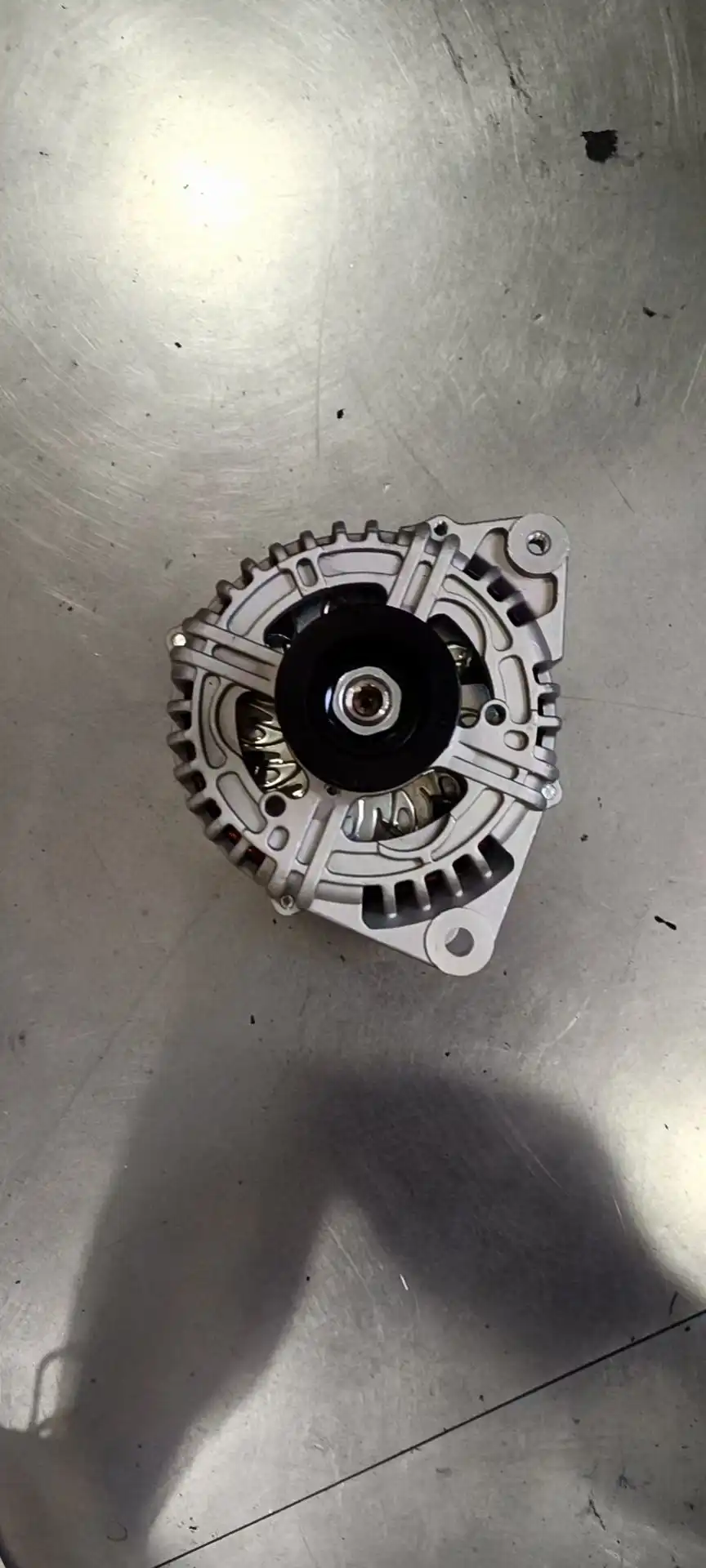
Understanding the Basics of a 12 Volt Alternator
Even though your 12V alternator looks like a simple metal box, it is full of complex engineering that keeps businesses running smoothly.
How Electromagnetic Induction Converts Motion Into Power
An idea that was discovered almost two hundred years ago is at the heart of every alternator in a car. An electric current is made when a magnetic field moves past a conductor, which is usually copper wire. A rotor with electromagnets inside your engine spins at a speed of thousands of turns per minute. A stator that doesn't move is wrapped in three sets of copper windings and sits around the rotor. Three-phase alternating current is made when magnetic fields move across these windings. Then, that AC power goes through diodes, which change it into direct current that can power 12-volt circuits and charge batteries.
Key Components That Determine Reliability
The rotor unit of an alternator 12 volt is made up of slip rings, brushes, and an electromagnet that gets its power from the battery. Heavy-gauge copper windings that don't break down at high temperatures are used in higher-quality units. Precision-wound coils on the stator surround the rotor and catch the magnetic flux. These parts are separated by bearings, which have to withstand huge spinning forces. Cheap bearings break down quickly, which means expensive repairs. Diodes change AC current to DC current, and heat sinks get rid of the heat that is made when the output is large. The voltage regulator checks the system voltage and changes the strength of the rotor field to keep the output between 13.8V and 14.8V no matter how fast the engine is running or how much electricity is being used.
Comparing 12V Systems With 24V Architectures
Drivers of commercial vehicles sometimes argue about voltage platforms. Standard light business cars use 12-volt systems because the parts are easier to find and the cost of installation is cheaper. Large trucks and heavy building equipment often use 24-volt systems to lower the amount of power that flows through wiring harnesses, which lets smaller wire gages be used. 12V systems, on the other hand, are the best choice for medium-duty vehicles like the HYUNDAI Porter 2.5 CRDi or H100 trucks. Parts are still easy to find all over the world, replacement costs are still reasonable, and performance meets operational needs. When your business has different types of fleets in different areas, standardizing on 12 volts makes it easier to keep track of spare parts and train mechanics.
Identifying and Troubleshooting Common 12 Volt Alternator Issues
By spotting early warning signs, you can avoid crashes on the side of the road that mess up delivery plans and hurt relationships with customers.
Symptoms That Signal Charging System Problems
The most obvious sign is the battery warning light on the dashboard. When the engine is at rest, dim headlights mean that the power isn't high enough. When several electrical accessories make lights flicker, it's hard for your charging system to keep up. When you smell something strange, like burning rubber or metal, it's usually because the belt is slipping or an internal part is breaking. When voltage goes below safe levels, modern cars with computerized engine control may set off more than one fault code. These signs usually show up slowly, which gives careful fleet managers time to plan fixes before the whole thing breaks down.
Practical Diagnostic Methods for Fleet Environments
A simple voltmeter is put across the battery wires to start the test. You should get 13.8V to 14.8V with the engine at 1500 RPM and no other accessories plugged in. Readings below 13V mean that there isn't enough charge ability. When you turn on high-draw devices like air conditioning and extra lights, the power should stay stable. Drops that are too big show that the unit is overworked or broken. A physical check is also important. Check the serpentine belt for cracks, glazing, or too much wear. Use the right gage tools to check the tightness of the belts. Loose belts slip and stop the wheel from turning fast enough. Check the alternator's electrical connections for corrosion or looseness that can cause resistance and lower output.
Reducing Downtime Through Early Detection
Commercial owners need set rules for inspections. Visual checks done once a month find clear problems like wiring that is broken or mountings that aren't tight on the alternator 12 volt. Voltage tests with a load done every three months show that performance is getting worse before it fails completely. Keeping detailed service records helps you find patterns. For example, if units always break down around 80,000 kilometers, you can plan to replace them before they break down. Smart fleet managers keep parts that are often needed on hand. This cuts the time that a vehicle isn't running from days to hours when it needs to be replaced.
Selecting the Right 12 Volt Alternator for Your Business Needs
Picking the right charging capacity affects both the initial prices and the efficiency of the system in the long run.
Matching Output Capacity to Electrical Demands
Most standard passenger cars have alternators that range from 70A to 90A. For business purposes, more is needed. The XITU 12V 110A unit has enough reserve power for current business trucks that have air conditioners, multiple communication devices, and extra lights. Undersized alternators keep running at full power all the time, which makes too much heat that speeds up the wear and tear on the parts. Oversized units cost more and add weight that isn't needed without providing any real benefits. Find out how much electricity your car needs by adding up all of its gadgets that might be using power at the same time and then adding an extra 30% for charging the battery and adding more devices in the future.
OEM Versus Aftermarket Component Considerations
Original equipment manufacturer (OEM) parts usually cost fifty to one hundred percent more than good aftermarket alternatives. However, price alone shouldn't be what makes you decide. Compatibility and quality consistency become the most important questions. XITU makes alternators that work with a number of OEM numbers, including BOSCH 0986080640, DELCO REMY DRA0074/DRA0075, HYUNDAI 373004A000–373004A203, KIA 373004A001–373004A003, and VALEO 600046–600868. These units meet or go beyond the original requirements and save a lot of money at the same time. Quality control that meets OEM standards is guarantyd in factories that are IATF 16949-certified. The six-month guarantee gives you peace of mind about the reliability of the parts and lowers your total purchasing costs by a large amount compared to expensive original parts.
Smart procurement managers look at more than just the purchase price when deciding what to buy. A unit that lasts 30% longer and costs a little more has a lower cost per hour of operation. Parts made with Class H insulation and precisely tuned wheels are better at withstanding thermal stress and vibration than cheaper options. When cars work 10 to 14 hours a day in tough situations, durability is very important.
Heavy-Duty Construction for Challenging Environments
Not every 12-volt charger can handle rough business situations the same way. When dust gets into bearings, it destroys them and causes electrical shorts. Windings and links rust when moisture gets into them. Both hot and cold temperatures put too much stress on parts beyond what they were designed to handle. XITU solves these problems with fully sealed housings that keep out dirt and dust, aluminum construction that quickly gets rid of heat, and Class H copper windings that can withstand temperatures up to 180°C. These features of the design make service times longer and cut down on sudden breakdowns in places like the desert, the tropics, and dusty building sites where a lot of commercial vehicles work.
Procurement Guide: Buying 12 Volt Alternators for Industrial and Automotive Use
Decisions about strategic sources affect both short-term costs and the reliability of the fleet in the long run.
Evaluating Suppliers and Manufacturing Credentials
In the aftermarket for cars, there are a huge number of suppliers with very different quality standards. IATF 16949 certification shows that a company has quality systems that meet the needs of the global automotive industry. This certification needs documented methods, regular checks, and rules for ongoing growth that low-cost component providers can't meet. When looking at possible providers, you should ask for proof of their certifications and check claims with independent audit reports. The ability to make things is also important. When factories make more than 500,000 units a year, they can take advantage of economies of scale to get better prices without lowering the quality of their products. They also keep enough stock on hand to handle large orders without having to wait for long lead times.
Navigating Price, Warranty, and Logistics Considerations
The purchase price is only one part of the total cost of buying. How you ship, how you get paid, and what your insurance covers all have a big impact on your bottom line. When shipping car parts internationally, they need to be properly packed to keep them from getting damaged during transport and handling. Trustworthy suppliers work with well-known logistics companies that know how to ship automotive parts. Standard delivery windows of 30 to 60 days let you plan production and check quality without having to rush the making process. The warranty terms should make it clear how long the coverage lasts (six months is the standard for business uses) and how to file a claim, including how to get in touch with expert support.
Building Long-Term Supplier Relationships
Instead of always looking for the lowest price, fleet owners get the most value from suppliers they work with regularly. Reliable suppliers keep their prices stable, give priority to long-term customers when supplies are low, and offer technical support for installation or application questions, including advice on alternator 12 volt compatibility. When your fleet uses the same models of vehicles, like HYUNDAI Porter or H100 trucks with D4CB engines, buying from a specialized supplier who knows how to work with these models reduces concerns about compatibility and speeds up the buying process. Over time, reliable suppliers will learn how you usually place your orders and can let you know about any problems or new products that might affect your business.
Maintenance Tips and Maximizing the Lifespan of Your 12 Volt Alternator
When you maintain things properly, they last longer, which means you get a better return on your investment.
Routine Inspection Protocols for Commercial Fleets
Visual inspections once a month don't take long and find problems quickly. Check the state and tension of the belts. When pressed hard at the longest distance between the pulleys, the belts should bend about 13 mm. Check electrical lines for rust, especially near the coast where salt air speeds up the breakdown process. Keep an ear out for strange sounds, like grinding or whining, that mean the bearings are wearing out. To make the cooling work better, clean the alternator housing of any dirt and oil that has built up. These easy checks keep small problems from turning into costly failures during key operating times.
Common Mistakes That Accelerate Component Wear
Jump-starting cars with the voltage switched around breaks diodes right away. Always make sure the voltage is right before joining jumper wires. Voltage spikes that damage regulators and electronics happen when cars are driven with battery wires that are loose or disconnected. When alternators are run without batteries that work properly, they have to power the whole electrical system directly, which puts too much heat stress on them. Using the wrong types of belts or the wrong amount of tension can lead to slippage at idle and too much load on the bearings at high speed. It's also important not to ignore the condition of the batteries. Weak batteries that can't take a charge make the alternators work harder all the time, which shortens their life.
Knowing When Replacement Beats Repair
It may be cheaper to rebuild alternators sometimes, but for businesses, it's usually better to buy new ones. Rebuilt units don't usually come with full warranties, and it's still not clear how reliable they are. When cars are used for important delivery routes or tasks that need to be done quickly, the small cost savings from rebuilding instead of buying new, high-quality aftermarket parts doesn't make up for the risk of downtime. Modern alternators have a lot of wear parts, like brushes, bearings, diodes, and controllers. If you only replace the broken parts and leave the older ones alone, the alternator will break down again soon. Quality new units from companies like XITU are known to be reliable and come with full guarantees and a service life that can be predicted. This helps with planning and spending for the fleet.
Conclusion
The alternator 12 volt in your commercial vehicle is a key part that determines whether your fleet makes money or loses money due to costly downtime. Knowing how electromagnetic induction works, how to spot early signs of failure, and how to choose the right output size for your needs can help you make smart purchasing choices. When you buy quality replacement parts that are the same as the OEM parts, you save a lot of money without sacrificing durability. Regular maintenance makes the service last longer, and strategic relationships with suppliers make sure that you can get parts when you need them. When your business depends on vehicles being available, working with experienced manufacturers who know how to use their products in business settings is the best way to protect your operational efficiency and bottom line.
FAQ
1. Why does my alternator overheat during normal operation?
When your charging system gets too hot, it usually means it's working harder than it should. When electricity loads are higher than the alternator's output, the unit runs at full power all the time to try to meet the demand. This makes heat, which speeds up the wear on the gears, windings, and diodes. Make sure that all of the tools work properly. Parameterized draws can be caused by stuck switches. Check the state and tightness of the belts because slipping belts make it harder for cool air to flow through the unit. If electrical loads actually do exceed capacity, upgrading to a model with higher output stops it from failing too soon.
2. Can I install a higher amperage alternator on my existing vehicle?
Usually, upgrading to a higher capacity works well as long as the mounting dimensions and electrical connections stay the same. The gage of the wire becomes important—original wiring made for a 70A unit might not be able to safely handle a 110A constant output. The battery also needs to be able to handle more power without getting too hot. Most modern commercial vehicles can accept capacity upgrades without any changes, but before ordering parts, make sure you know what the charging system specifications are.
3. How do I verify OEM number compatibility?
Check the maker compatibility charts for your current alternator against the OEM number that is written on it. XITU units that work with BOSCH 0986080640, DELCO REMY DRA0074, HYUNDAI 373004A000, KIA 373004A001, and VALEO 600046 can be used in a variety of situations, such as the HYUNDAI Porter 2.5 CRDi and H100. When there are several OEM numbers for the same purpose, the ones that fit depend on the mounting measurements and the type of electrical plug used. For sure that the part will work, call technical support with your vehicle's VIN and the part number you already have.
Your Reliable Alternator 12 Volt Supplier: XITU
Are you looking for reliable charging options that strike a good mix between quality and cost? XITU makes enterprise-grade 12V alternators that are designed to meet the needs of business vehicles. When compared to OEM parts, our 110A 7PK units for HYUNDAI Porter and H100 trucks perform just as well and cost a lot less. We help fleet operators who can't afford downtime because we've been making things for 28 years, are IATF 16949 certified, and can make more than 500,000 units a year.
Before it is shipped, every alternator goes through a full load test at a number of different RPM levels. Our six-month warranty covers problems with the way the product was made, and our technical support can help you with any problems you're having with installation or use. We have a flexible minimum order quantity (MOQ) and reliable 30–60 day delivery through established foreign shipping partners, whether you run a delivery fleet of 10 vehicles or just need to get parts for distribution. Get in touch with our team at arisa@xitu-auto.com to talk about your fleet needs and get specifics. Visit xitu-auto.com to see our full selection of electrical parts for commercial vehicles. We are an experienced manufacturer of alternator 12 volts.
References
1. Larminie, J., & Lowry, J. (2012). Electric Vehicle Technology Explained. John Wiley & Sons.
2. Denton, T. (2016). Automobile Electrical and Electronic Systems. Routledge.
3. SAE International. (2019). Surface Vehicle Standard J180: Alternator Test Procedure. Society of Automotive Engineers.
4. Bosch GmbH. (2018). Automotive Electrics and Electronics: System Architecture and Networking. Springer Vieweg.
5. Ribbens, W. B. (2017). Understanding Automotive Electronics. Butterworth-Heinemann.
6. International Automotive Task Force. (2016). IATF 16949:2016 Quality Management System Requirements for Automotive Production.