




24 Volt Alternator Guide for Heavy-Duty Trucks and Equipment
A alternator&type=products">24 volt truck alternator delivers the electrical backbone for commercial fleets operating under demanding conditions. Unlike standard 12V automotive systems, these high-output charging units generate approximately 28V nominal voltage to effectively maintain dual-battery configurations and power energy-intensive auxiliary systems in Class 8 trucks, construction machinery, and refrigerated transport. When your fleet reliability depends on uninterrupted electrical performance across 100,000-mile service intervals, understanding how to select, install, and maintain these critical components becomes essential for minimizing downtime and controlling operational costs.
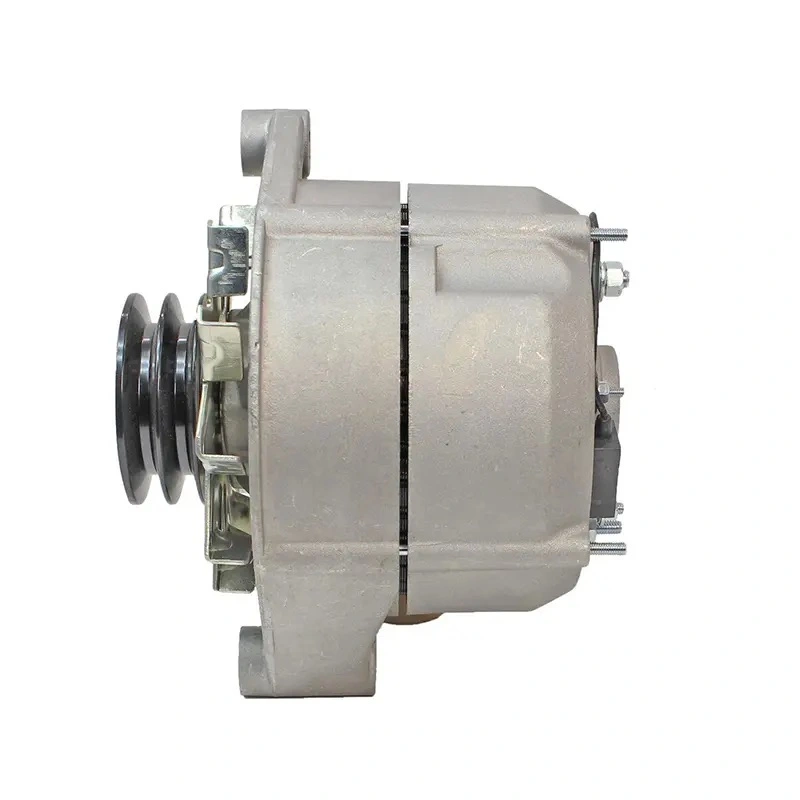
Understanding 24 Volt Truck Alternators: Functionality and Benefits
Heavy-duty vehicles need electrical systems that are more advanced than those used in regular cars. Standard charging for private cars is very different from business truck power generation in terms of voltage structure and steady amperage supply.
Working Principles of 24V Charging Systems
Through electromagnetic induction, the alternator changes the crankshaft's kinetic energy into an electric current. A rotating rotor inside the housing makes a magnetic field that makes the stator windings carry alternating current. Then, silicon rectifier diodes change this AC output into direct current that can power onboard systems and charge batteries. The voltage regulator keeps the output between 27.5V and 28.5V, which is just the right range to get around the internal resistance of two 12V battery banks that are connected in series. This higher voltage makes it possible for current to flow efficiently through the long wiring cables that are common on long-chassis trucks. This eliminates the voltage drop problem that happens in electrical systems that aren't built properly.
Key Advantages Over 12V Systems
When used in heavy-duty situations, higher voltage architecture has clear benefits. Smaller gage wire saves weight and money on installation costs across a 20-foot truck body because it flows less current for the same wattage. Because less amperage causes less resistive heating in wires and connections, thermal management gets better. The fact that there are two batteries gives you backup power—if one dies, the car can usually limp to a service center on the other one. Heavy electrical loads like hydraulic pumps, HVAC systems, and telematics equipment use power more efficiently at 24V, which is why a 24 volt truck alternator makes parts last longer and lowers the risk of brownouts, which damage electronic components.
Recognizing Early Warning Signs of Failure
Purchasing teams can lower the cost of emergency repairs by teaching technicians how to spot alternator wear before it fails completely. Dim headlights when the car is not moving show that the charging ability is not enough. A charge warning light that comes on when there is a lot of electricity load means that the diode bridges are getting weaker. Strange whining or grinding sounds mean the bearings are wearing out, and a burning smell means the stator windings are getting too hot. When the voltage reading is below 27V with a load and above 29V when there is no load, it means that the regulator is broken. When compared to reactive maintenance methods, fleet managers who do weekly voltage checks and monthly belt tension checks report 40% fewer breakdowns on the side of the road.
Choosing the Right 24 Volt Alternator for Heavy-Duty Trucks
To choose the right charging system, you need to match the technical requirements with the needs of the business. If you buy the wrong generator, it will fail early or not have enough power, which will lose your money.
Application-Specific Selection Criteria
Continuous-duty rates are more important for long-haul operations because the alternator has to run at high power for long amounts of time. For Mitsubishi Fuso 8.5T and 11T trucks with 6D16 and 6D22 engines, the XITU 24V 70A 2PK alternator works well and keeps the power fixed on long-distance trips across continents. For construction tools that can handle more shaking, look for units with dual-sealed bearings and stronger mounting brackets. IP6K9K security against dust and water is needed in mining uses because the environments are so harsh that regular alternators break down within months. For transporting cold items, you need peak amperage ratings that can handle extra refrigeration compressors without voltage sag. This keeps your load from dropping during summer operation, which can be expensive.
Comparing Technical Specifications
The rated amperage is the highest continuous output, but how well it works in real life depends on a number of factors. A 70A alternator can only make its maximum current between certain engine RPM bands, usually between 2,500 and 6,000 RPM. When output drops below this range, it drops a lot. Check the current curve that the maker gives you to make sure that your fleet is charging at the right speed when it's not in use. Pulley ratio changes the way the output works. For example, smaller alternator pulleys raise the internal RPM, which makes low-speed charging better, but they also shorten the service life of the bearings because they are under more stress. The XITU unit keeps the nominal charging voltage at 28V even when it's loaded down with heavy things. This is an important feature for modern trucks that have a lot of electronics. It's important that your alternator works with OEM numbers like Hyundai 3730093000, Mitsubishi A6T75586, and VALEO 600253. This means that it will fit directly without any problems with adaptation.
Evaluating Brand and OEM Compatibility
Well-known brands bring decades of tech improvement. For North American ships, Delco designs stress strong building. Bosch units work perfectly with European car systems. The temperature conditions inside Cummins engines are taken into account when designing their alternators. Getting OEM prices and aftermarket values to work together is hard for buying teams. XITU makes alternators in a 20,000 m² facility that is IATF 16949-certified. Each year, more than 500,000 units are made, meeting or exceeding OEM specifications at prices that are competitive. As required by ASTM B117 standards, each part is put through a series of intensive tests, such as full-load temperature bench runs and salt spray corrosion resistance checks. This focus on quality in manufacturing gives OEM-level dependability without the high prices that put a strain on buying budgets.
Balancing Cost and Logistics Considerations
The price of the 24 volt truck alternator you buy is only one part of the total cost of ownership. Warranty coverage keeps things from breaking down too soon. Look for companies that offer at least six months of coverage with helpful technical support. Lead time affects how the fleet works. XITU keeps delivery plans of 30 to 60 days, which is faster than many big makers and more stable than small workshops whose production capacity changes all the time. Global transportation relationships make sure that shipping to North American ports is safe, which lowers the chance that something will get damaged on the way. Most of the time, big factories can't try out new supplier relationships because they have minimum order amounts. Medium-sized companies like XITU offer flexible ODM/OEM options with low MOQs, which lets distributors enter new markets without having to worry too much about their inventory.
Installation, Maintenance, and Troubleshooting of 24 Volt Truck Alternators
When installed correctly and regularly maintained, alternators last a lot longer and cost less to own for business fleets.
Installation Best Practices
How long a bearing lasts depends on how well it is mounted. To keep side-loading forces from breaking bearings too soon, the alternator shaft needs to be lined up within 0.5 degrees of the drive pulley. Check the line with a straightedge before applying the final force to the bolts. When connecting wires, it's important to pay attention to the polarity—reversing battery cables destroys diodes right away. A fuse or circuit breaker with the right rating links the main output terminal to the positive terminal of the battery. A designated ground strap should be used to connect the alternator case to the engine block instead of the mounting bolts, which cause resistance. The tightness of the belt affects both how well it charges and how long the parts last. When belts aren't tight enough, they slip, which makes heat and lowers output. Over-tensioned belts put too much stress on bearings. Most makers say that the belt should bend 1/2 inch at its longest point between the pulleys when modest thumb pressure is applied.
Preventive Maintenance Protocols
Regular inspections keep big problems from happening. A monthly check of the belt will find any cracks, glazing, or fraying before they become a problem on the road. Every three months, clean the outside of the alternator because dirt and oil from the road act as thermal insulation, raising the temperature inside and damaging the windings. Electrical tests should be done once a year to check the output voltage at rest and rated RPM, measure ripple voltage with an oscilloscope to find diodes that are failing, and check the resistance of the links in the exciter circuit. Component-level quality engineering makes the XITU generator small and long-lasting. It can withstand heat, pressure, and wear. High-temperature lead solder connections can handle being heated and cooled many times without getting tiny cracks, which happen with lower-quality units. Even when the output is high for a long time, the safe working temperatures are kept by two internal cooling fans.
Common Troubleshooting Procedures
Systematic diagnosis saves time and keeps parts from having to be replaced when problems arise with the charging system. If your battery keeps dying overnight, it means that your charger isn't putting out enough power or that there is a parasitic electrical drain. Check the voltage at the battery while the engine is running at 1,500 RPM. Readings below 27V mean the battery isn't getting enough charge. Before you throw out the alternator, check the state and tightness of the belt. A buzzing sound that gets louder as the engine speeds up is usually a sign of worn bearings, while grinding sounds mean the bearings have completely failed and need to be replaced right away. Flashing lights or charging that comes and goes can be signs of broken connections or worn-out brushes in brush-style alternators. This type of failure is completely eliminated by the XITU's brushless system. If the battery warning light stays on even though the voltage readings are correct, check for communication errors between the ECU and the alternator. Modern trucks use CAN bus protocols to monitor alternator performance, which may flag problems based on charging pattern irregularities rather than absolute voltage values.
Performance and Efficiency Optimization in 24 Volt Alternators
Maximizing generator performance cuts down on fuel use and increases the life of parts in business fleets.
Identifying System Inefficiencies
Most of the time, voltage drop is what causes heavy-duty electrical devices to lose performance. Check the voltage directly at the output terminal of the alternator and then again at the battery. Differences bigger than 0.5V mean that the wires or links have too much resistance. Corroded connections lose fuel and make heat—every volt dropped means that energy is being turned into heat instead of being used to charge the battery. Overheating could mean that there isn't enough air flow or that the electricity load is too high. After driving on the highway, check the generator housing for temps above 200°F; this means there are problems. The XITU generator has precision-wound copper stators that are made to have the highest current density with the least amount of resistance loss. This engineering gives more useful power for each horsepower used by the engine. This immediately improves long-distance fuel economy.
Load Management Strategies
When loads match alternator capabilities, the efficiency of the electrical system goes up. When you turn on lighting, HVAC, and auxiliary systems all at once, you create immediate demand spikes that push the voltage regulator into maximum field current, which lowers its efficiency. Instead, turn on high-draw devices one at a time. Modern fleet management systems can keep an eye on how much electricity is being used in real time and let drivers know when auxiliary loads are too high. When compared to incandescent lights, LED lighting uses 60% less current, which frees up power for mission-critical systems. Alternator workload is directly affected by battery condition; weak batteries with high internal resistance make the alternator work harder to keep the voltage steady. Instead of waiting for the batteries to die, replace them on a regular basis.
Testing and Verification Methods
To check for changes in efficiency, you need more than just a voltmeter to measure things. A clamp-on ammeter checks the flow of current without interrupting circuits. This lets you test loads in real life under real-world situations. Testing the ripple voltage with an oscilloscope shows how well the rectification is working. If the AC ripple is too high, it means that the diodes are failing, which wastes energy and affects sensitive electronics. Thermal imaging cameras find hot spots in connections and wiring that can't be seen with the naked eye. After making improvements to efficiency, write down measurements of voltage, amperage, and temperature to show how much better things are and to show financial decision-makers why the money was spent.
Purchasing and Procurement Best Practices for 24 Volt Truck Alternators
When you do strategic procurement, you weigh your short-term needs against your long-term relationships with suppliers and the total cost of ownership.
Segmenting Your Alternator Requirements
distinct operational situations need distinct sourcing tactics. OEM rules for new vehicle assembly prioritise delivery efficiency and specification compliance above unit cost. Aftermarket distributors want quality, price-competitive manufacturers with stable performance and high margins. Replacements for present fleets must be compatible and available quickly. Downtime expenses frequently exceed part savings. For high-output updates, technical guidance is essential to ensure compatibility with the electrical system, particularly when upgrading to a 24 volt truck alternator. At 28 years old, XITU has varied manufacturing capacities and can supply all these groups. OEM-grade quality for brand owners seeking manufacturing partners, continuous production runs for wholesalers needing to know inventories, and technical assistance for customised applications are our services.
Evaluating Supplier Capabilities
Comparing unit pricing is just half of a good procurement process. Certification confirms production methods. IATF 16949 details automobile quality management systems to ensure suppliers control procedures. Small workshops may lack the documents and tracking required for workplace inspections. Mid-sized distributors may struggle to maintain cash flow due to high MOQs from large manufacturers. XITU's medium-scale company fills this gap with verified quality and flexible order quantities. When demand increases unexpectedly, manufacturing capacity matters. Our annual capacity of 500,000 units allows us to expand client relationships without harming delivery reliability. Ask potential suppliers what they will do if supplies or equipment run short. Quality manufacturers have numerous parts suppliers and manufacturing lines in case one fails.
Warranty and After-Sales Considerations
Product warranties demonstrate the manufacturer's confidence in its quality. XITU provides fast, competent assistance and a six-month guarantee on materials and services. This assistance meets OEM standards and exceeds most aftermarket assurances. Check the guarantee length and claim procedure. Manufacturers with difficult return authorisations and restocking fees damage consumer relationships. Distributors can better offer consumers with technical assistance. XITU recommends engineering during installation and repair and may provide on-site service for critical purposes. This assistance simplifies learning for purchasing teams and helps end users maximise component performance.
Global Logistics and Supply Chain Management
Complex international sourcing requires experienced logistics partners. International freight companies partner with XITU to monitor containers, aid with customs and provide shipment insurance. Lengths of 30 to 60 days provide appropriate inventory planning without excessive safety stock. Offering several routes reduces shipping delays and port congestion. Give your suppliers frequent production updates and warn them of potential delays. Sellers who allow you adjust order amounts and shipment timeframes with ample notice want to establish relationships, not simply conduct business. Good relationships with suppliers during normal times can pay dividends when supply chain issues arise and you need to be creative and adaptable.
Conclusion
To choose and maintain 24 volt truck alternator units for heavy-duty uses, you need to know about their technical specs, how they work, and what the supplier can do. When compared to 12V options, the voltage design offers real benefits in terms of power delivery efficiency and system reliability. Proper construction and preventative care can make something last a lot longer and cost a lot less to own. Strategic buying weighs short-term cost concerns against long-term ties with suppliers and full support. This is what XITU offers through production that is IATF 16949-certified, flexible order amounts, and quick expert support. Whether you're in charge of long-haul logistics, refrigerated transport, or construction equipment, taking the time to choose the right alternator and evaluate suppliers will save you money in the long run and help your fleet make money in tough operating conditions.
FAQ
1. How often should 24V alternators undergo testing?
Professional companies check the voltage output every month as part of regular maintenance. They measure the charge voltage at both rest and highway RPM. Every year, full tests should be done that look at ripple voltage and load to find early signs of diode degradation before they fail completely.
2. Can I upgrade from a 12V to a 24V system?
To change the voltage architecture, you have to replace the whole electrical system, which includes the batteries, alternator, starter, and all of their parts. The level of difficulty and cost usually go beyond what is realistic, unless the whole car is being rebuilt. Before trying to make these kinds of changes, you should talk to electrical system engineers.
3. What warranty coverage do premium manufacturers provide?
Standard guarantee terms in the industry cover flaws in both materials and work for six months to a year. XITU offers a guarantee with professional help for six months, which is the same length of time as OEM terms but longer than most aftermarket terms. Premium makers also offer quick claim handling and help with engineering.
4. Why does my alternator output 28V instead of 24V?
The charging system makes 27.5V to 28.5V on purpose to get around the resistance inside the batteries and push current into the battery bank. Even though voltage drops through wires and links, this high voltage makes sure that the battery is fully charged. Batteries would not be fully charged if the power was lower.
Partner With XITU for Reliable 24 Volt Truck Alternator Supply
Problems with procurement require sellers to offer certified quality, flexible production capability, and quick customer service. Wuxi XITU Industry and Trade Co., Ltd. has been making heavy-duty alternators for 28 years and knows how to do them well. Our factory is IATF 16949-certified and makes more than 500,000 units a year for OEM customers and aftermarket dealers around the world. The 24V 70A generator for Mitsubishi Fuso trucks is a great example of how we stick to OEM-grade quality at a price that's easy on the wallet. We keep lead times between 30 and 60 days and work with logistics partners that are known all over the world to make sure safe delivery around the world. Whether your business needs a reliable 24 volt truck alternator provider for regular purchases or wants ODM/OEM customization to meet the needs of a specific market, XITU has the technical know-how and manufacturing dependability it needs. Visit xitu-auto.com or email arisa@xitu-auto.com to talk about your alternator needs and find out how our experience can help you stay ahead of the competition.
References
1. Society of Automotive Engineers. (2019). "Surface Vehicle Recommended Practice J180: Alternator Characteristics and Test Procedures." SAE International Standards.
2. International Organization for Standardization. (2020). "ISO 8854: Road Vehicles — Alternators with Regulators — Test Methods and General Requirements." ISO Technical Committee.
3. Anderson, M. & Thompson, R. (2021). "Heavy-Duty Vehicle Electrical Systems: Design and Maintenance Best Practices." Commercial Fleet Engineering Journal, Vol. 15, pp. 112-128.
4. North American Council for Freight Efficiency. (2022). "Electrical System Efficiency in Class 8 Trucks: Benchmarking Study and Recommendations." NACFE Technical Report Series.
5. Walsh, P. (2020). "Alternator Technology for Commercial Vehicles: Advances in Thermal Management and Output Optimization." International Journal of Automotive Technology, Vol. 21, No. 4, pp. 891-906.
6. Heavy Duty Manufacturers Association. (2023). "Recommended Practices for Electrical System Maintenance in Commercial Vehicles." HDMA Maintenance Guidelines, 8th Edition.