




24 Volt 45 Amp Alternator: Complete Buyer’s Guide
When sourcing electrical charging solutions for commercial fleets or industrial machinery, selecting the right power generation component directly impacts operational reliability and total cost of ownership. A products">24 volt 45 amp alternator serves as a specialized synchronous three-phase generator engineered specifically for heavy-duty vehicular and stationary applications demanding consistent 1.08 kW output. This alternator configuration efficiently converts mechanical energy from an engine's crankshaft into stable direct current through an integrated rectifier bridge and voltage regulator. Understanding the technical specifications, application suitability, maintenance protocols, and supplier evaluation criteria empowers procurement professionals to make informed decisions that enhance fleet uptime and reduce long-term operating expenses.
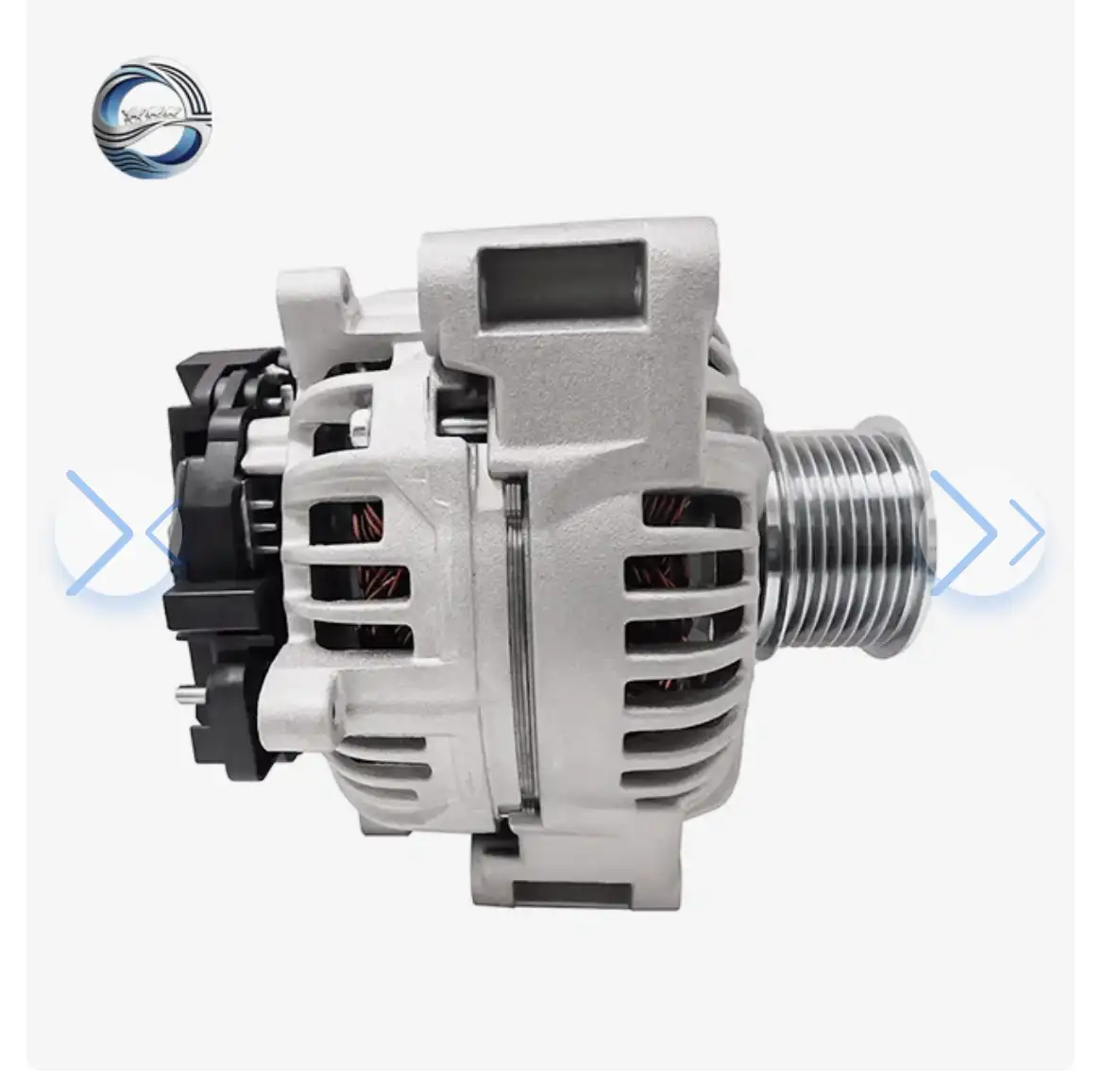
Understanding the 24 Volt 45 Amp Alternator: Specifications & Working Principles
The main idea behind this charging part is electromagnetic induction, which has been used for decades to power business cars and industrial machinery. When the engine turns the 24-volt 45-amp alternator's rotor using a belt-driven pulley system, magnetic fields create alternating current in the copper stator windings that stay still. The built-in rectifier bridge then changes this three-phase AC into a regulated DC output that can power electrical systems on board and charge the batteries.
Core Technical Parameters That Define Performance
The output specs tell you if the alternator works with the electrical system of your tools. The 24-volt setup works well for medium-duty trucks, industrial equipment, and boats, where two 12V batteries linked in series provide power for starting and the system voltage. The 45-amp current capacity provides a steady 1.08 kilowatts, which is enough for lighting systems, communications devices, and other equipment without draining the battery during long times of inactivity.
Both the physical measurements and the fixing standards are important. The SAE J180 and J1171 mounting standards make sure that the new system can be used with current engine frames and additional drive systems. Die-cast aluminum housings that meet ISO 3522 standards keep the structure strong while keeping the weight low. This is very important for mobile equipment because every kilogram affects how much fuel it uses and how much it can carry.
How Voltage Regulation Protects Your Electrical System?
Internal voltage controls keep the output between 26.5 and 28.5 volts even when the engine is running at different speeds and with different loads. This tight regulation stops batteries from being overcharged, which shortens their useful life, and protects sensitive electronic control units from voltage spikes. Modern regulators include temperature adjustment, which changes the output voltage based on the temperature of the environment to get the best charging chemistry for batteries during all four seasons.
Another important performance measure is cut-in speed. Good units start making usable current below 1,200 RPM, which means that batteries will charge even when the engine is idling for a long time, which happens a lot on construction sites, loading docks, and city delivery routes. Bad alternators with faster cut-in speeds can't keep the battery charged when the engine is running at low speeds, which can cause the battery to die early and cause starting problems that were not expected.
Diagnosing & Maintaining Your 24 Volt 45 Amp Alternator
Maintaining your 24-volt 45-amp alternator regularly will make it last longer and keep you from having to pay a lot of money for repairs on the side of the road. When maintenance teams see early warning signs, they can schedule fixes for planned breaks instead of having to deal with emergency breakdowns that cause problems and hurt relationships with customers.
Early Warning Signs That Demand Immediate Attention
Several signs show that the 24 volt 45 amp alternator is losing power before it fails completely. Low-speed output problems are indicated by lights that dim when the engine is not running but brighten when the RPMs rise. When battery warning lamps flash on and off, it means that there are issues with voltage regulation or that worn brushes are making uneven contact with slip rings. Strange noises from bearings, like grinding, screaming, or growling, mean that the lubrication is breaking down or there is contamination, which will soon lead to mechanical failure.
Any changes in voltage found by the internal sensors should be looked into right away. Readings that stay below 26 volts for a long time mean that the charger isn't charging properly, and voltages above 29 volts could damage batteries and electronic parts. Both situations need to be tested right away to find out what's causing them before they cause more damage that makes the fix costs go up.
Systematic Testing Procedures for Accurate Diagnosis
A digital multimeter that can measure DC voltage and current under load is needed for proper troubleshooting tests. Check the voltage across the battery terminals while the engine is running at about 2,000 RPM and none of the accessories are turned on. The readings should stay steady between 27.5 and 27 volts. Turn on the headlights, HVAC fans, and any other electrical loads while keeping an eye on the voltage. Drops of more than 1 volt mean the output capacity isn't high enough.
Testing for ripple voltage shows that the rectifier diode is healthy. Measure the AC voltage in the DC output with an oscilloscope or the AC voltage function on a more complex multimeter. If you see readings above 0.5 volts AC, it means that diodes have failed and alternating current is leaking into the electrical system. This can damage electronic modules and mess up communication systems with electromagnetic interference.
Preventive Maintenance Practices That Extend Service Life
Regular checks find problems as they start to form before they become major problems. Visual checks should be done once a month to find loose mounting bolts that cause too much shaking, old drive belts with cracks or glazing, and corroded electrical connections that make resistance higher and heat buildup. Pay close attention to the tightness of the belts because too-tight belts speed up bearing wear and too-loose belts slip under load and don't send enough mechanical power.
Cleaning procedures get rid of built-up dirt and grime that gets in the way of cool airflow. Compressed air pushed through ventilation holes clears out dust and oil mist that keeps windings warm and increases thermal stress. Do not use high-pressure washing, which pushes water past seals and into internal parts. When used in coastal settings or dusty places, cleaning more often keeps the insulation from breaking down too soon due to warming.
Comparing 24 Volt 45 Amp Alternators with Alternatives: Making the Right Choice
To choose the best charging capacity, you have to balance the need for electricity with the weight limits, mechanical parasitic load, and cost factors. Knowing how different specs affect system performance helps procurement teams choose parts that don't waste resources on too much capacity or not enough capacity to meet electricity needs. The 24-volt 45-amp alternator remains the industry standard for medium-duty reliability.
Voltage Architecture: Why 24V Systems Dominate Medium-Duty Applications
The main things that determine whether to use a 12-volt or 24-volt electrical system are the size and power needs of the vehicle. Diesel engines bigger than 6 liters usually need 24-volt systems to make enough cranking torque for their starter motors. The higher voltage lowers the flow of current needed to give the same amount of power. This lets smaller gauge wire be used, which saves weight and money on installation. Because of these useful benefits, almost all construction equipment, industrial cars, and boats use 24-volt architectures.
To change 12-volt equipment to 24-volt systems, all the electrical parts have to be replaced. This makes updates like this expensive and only possible during full car rebuilds. This fact makes it even more important to mention the right voltage when buying equipment for the first time.
Amperage Considerations: Matching Capacity to Electrical Load
The 24 volt 45 amp alternator number is good for uses that don't need a lot of electricity. Lighting systems use 10 to 15 amps, instrument panels and telematics 3 to 5 amps, and intermittent accessories like power windows and HVAC blowers use an extra 10 to 15 amps during peak usage. This leaves enough spare capacity to charge the battery again after starting it up and to make up for the usual loss of power that happens when batteries discharge.
Higher-output options, such as 24-volt 60-amp or 24-volt 80-amp units, are for devices that need more electricity. These bigger alternators are needed for mobile cranes with hydraulic control systems, refrigerated trucks that run constant cooling loads, and emergency vehicles with lots of lights. The trade-off is more weight, higher cost, and more mechanical stress on the engine. These factors make oversizing unnecessary when the need for electricity doesn't call for it.
Brand Reputation and Aftermarket Availability
Manufacturers like Bosch, Delco Remy, Valeo, and Denso have built a reputation for reliability over many years of service. Their products go through strict testing procedures, and replacement parts are easy to get through their large dealer networks. OEM-equivalent aftermarket options from companies like XITU offer similar dependability at reasonable prices, while still being compatible with the mounting and electrical requirements of the original equipment.
When making purchases, people shouldn't just look at the initial buy price, but also the total cost of ownership. Units from unknown suppliers that seem to be offering good deals often don't have consistent quality control, which means they break down early, don't work with other products, and don't come with warranty support. The small savings are lost when parts need to be replaced in months instead of years.
Procurement Guide: Where and How to Buy 24 Volt 45 Amp Alternators?
When you strategically source charging system parts, you have to look at what the seller can do beyond just meeting basic product requirements. Long-term relationships with dependable makers of the 24-volt 45-amp alternator lower the total cost of acquisition, keep the supply chain running smoothly, and make sure that quality is the same across all platforms of equipment.
Critical Supplier Evaluation Criteria
Quality certifications are concrete proof of the ability to make things and the rules that are in place for the process. IATF 16949 certification is designed to meet the needs of the automotive industry when it comes to preventing defects, improving all the time, and managing the supply chain. ISO 9001 approval shows that a quality management system has been put into place in a wider range of areas. Suppliers with both licenses have put money into infrastructure and training that makes sure their goods always meet the standards.
Both production capacity and stable lead times are important. If an order changes, suppliers with modern facilities that can handle the extra production can handle it without lowering the quality or taking longer to deliver. Larger factories that make more than 500,000 units a year usually have trained workers, specialized tools, and methods that work better than those in smaller workshops.
OEM Compatibility and Cross-Reference Verification
When replacing an alternator, it must meet the original equipment's mounting measurements, electrical links, and performance specs. Cross-reference databases that match OEM part numbers to equivalents in the aftermarket make it easier to find what you need. The alternator fits Volvo B, F, FL, FS, and N series cars without any changes because it works with Bosch numbers 0120400696, CA722IR, and 0120400755.
In addition to making sure they fit, new units should meet or beat the original performance standards. The output current at different RPM levels, the accuracy of the voltage regulation, and the thermal performance should all meet OEM standards. When suppliers give thorough test data and performance curves, it shows that they are honest and follow engineering standards, which boosts procurement trust.
Total Cost Analysis Beyond Purchase Price
Freight, customs duties, and payment terms must be factored into landed cost calculations. When you buy things from other countries, the exchange rate and payment terms can change, which can affect your cash flow. Even though they might charge more per unit, domestic sellers or those with shipping centers in the US offer faster delivery and easier transactions.
Warranty coverage and expert help are examples of hidden value that aren't always taken into account when comparing prices. Standard protection is a six-month warranty against manufacturing defects, but suppliers who offer technical advice, application engineering support, and quick customer service add value throughout the business relationship.
Building Trust: Why Choose XITU 24 Volt 45 Amp Alternators?
Every charging part that Wuxi Xitu Industry and Trade Co., Ltd. makes is based on 30 years of experience working with automotive electrical systems. Our 20,000-square-meter plant in China is certified by IATF 16949 and ISO 9001. This makes sure that every 24 volt 45 amp alternator meets international quality standards before it leaves our factory.
Manufacturing Excellence Backed by Advanced Testing
Through multiple stages of verification, our quality assurance methods go above and beyond what is expected in the business. Performance bench testing confirms the full 45-amp power across the entire RPM range. This makes sure that units work at their full capacity in real-life situations. In thermal stress screening, alternators are run for a long time at full load inside environmental rooms that simulate temperatures as high as 50°C. This checks that the voltage control stays stable and the windings can handle repeated thermal cycling.
Testing for salt spray protection according to ASTM B117 standards shows that the coatings on the housing and the electrical terminals don't corrode in marine settings or when they are exposed to winter road salt. Digital oscilloscope analysis finds diode leaks and high AC ripple, which hurt sensitive electronic control units. This is an important check that protects your whole electrical system, not just the charging circuit. Multi-axis vibration testing proves that mounting points, bearing assemblies, and internal connections can handle the harmonic stress that comes from using construction equipment and off-road vehicles.
Design Features That Solve Real-World Operational Challenges
Our engineering team focuses on the most common ways that cheap alternators fail. High-quality copper windings that can handle constant operation at 200°C protect the insulator from melting when the load is high for a long time. Two internal fans push air through well-designed airflow paths. This keeps the equipment at a safe temperature even when it's working in a small engine area where natural airflow is limited.
Die-cast aluminum housings that meet ISO 3522 standards provide structural strength that protects internal components from damage caused by shaking while still being dust and water resistant up to IP66. Moisture getting into a sealed construction site can cause bearings to fail early and winding insulation to break down. Precision-balanced rotors get rid of harmonic vibration, which damages mounting bolts and speeds up bearing wear and is common in units that don't follow the right dynamic balancing steps.
Flexible Manufacturing and Global Logistics Support
Our yearly production capacity is more than 500,000 units, which means we can meet the needs of both big fleet orders and smaller, more specialized needs. The lead time is usually between 30 and 60 days, but it depends on how many orders there are and how much customization is needed. We work with well-known logistics companies around the world to make sure that our packages get safely to destinations in North America, Europe, and the Asia-Pacific region on time.
With our ODM and OEM skills, we can make solutions that fit the needs of specific applications or brand tastes. Our engineering and production teams work together to provide customized solutions without the large manufacturers' minimum order quantities. This is true whether you need different mounting configurations, specialized electrical connectors, or private label packaging.
Conclusion
To choose the right charging system part, you have to weigh technical specs, quality certifications, source dependability, and the total cost of ownership. Medium-duty commercial vehicles, building equipment, and industry uses that need steady 1.08 kW power output can use the 24 volt 45 amp alternator. Procurement professionals can choose parts that will maximize fleet uptime while lowering lifecycle costs by understanding how things work, how often they need to be maintained, and how well they perform in specific applications. Working with certified manufacturers who have a history of quality control, quick technical support, and flexible production options will ensure that your products always work well and that your supply chain stays stable over time.
FAQ
What is the typical service life of a 24 volt 45 amp alternator?
Quality alternators usually last between 5,000 and 8,000 hours of use under normal conditions and with proper upkeep. After that, they need to be rebuilt or replaced. Heavy-duty uses that involve long periods of high temperature, too much vibration, or a lot of dust exposure may shorten service life by 30 to 40 percent.
Can I replace a 24 volt 45 amp alternator with a higher-capacity unit?
It is usually possible to upgrade to higher amperage rates, like 60-amp or 80-amp units, as long as the mounting measurements and belt drive configurations are the same. But make sure that the extra mechanical load doesn't put too much stress on the engine's accessory drive and that the voltage regulation requirements still work with your electrical system.
How do pricing differences between OEM and aftermarket alternators compare?
Genuine OEM units usually cost between 40 and 60 percent more than high-quality aftermarket units made by approved makers. When aftermarket providers keep their IATF 16949 certification and offer similar guarantee coverage, there aren't many changes in performance and dependability.
Partner with XITU: Your Trusted 24 Volt 45 Amp Alternator Supplier
XITU is ready to help you with your charging system needs with certified manufacturing quality and quick technical support. Our engineering team can help you figure out the best alternator setup for your equipment platform by giving you application advice. Send an email to arisa@xitu-auto.com to get full technical specs, competitive quotes, or to talk about your needs for customization. We offer IATF 16949-certified alternators that are compatible with Bosch OEM standards. These come with full technical help and guarantees that last for six months. Learn why some of the world's largest fleet operators and equipment makers choose XITU as their first choice for reliable power production options.
References
1. Society of Automotive Engineers. (2019). SAE J180: Alternator Mounting and Drive Systems for Automotive Applications. SAE International Standards.
2. International Automotive Task Force. (2016). IATF 16949:2016 Quality Management System Requirements for Automotive Production and Relevant Service Parts Organizations. IATF Publications.
3. American Society for Testing and Materials. (2018). ASTM B117-18: Standard Practice for Operating Salt Spray Apparatus. ASTM International.
4. International Organization for Standardization. (2015). ISO 9001:2015 Quality Management Systems—Requirements. ISO Standards Catalogue.
5. Anderson, Marcus & Torres, Elena. (2021). Heavy-Duty Electrical Systems: Design, Testing and Maintenance Protocols for Commercial Vehicles. Automotive Engineering Press.
6. Technical Committee ISO/TC 22. (2017). ISO 3522:2017 Road Vehicles—Electrical and Electronic Equipment—Alternators with Regulators. International Organization for Standardization.