




OEM Auto Electric Alternators: What Buyers Should Know
When sourcing charging systems for commercial fleets or manufacturing lines, choosing the right OEM alternator can mean the difference between operational continuity and costly downtime.products"> Auto electric alternators are the electromechanical devices that convert your engine's mechanical energy into electrical power, charging batteries and supporting the growing electrical demands of GPS tracking, advanced driver assistance systems, and refrigeration units. Understanding what separates a reliable OEM unit from a substandard aftermarket substitute is crucial for fleet managers, distributors, and remanufacturers who depend on consistent voltage regulation under extreme thermal and mechanical stress.
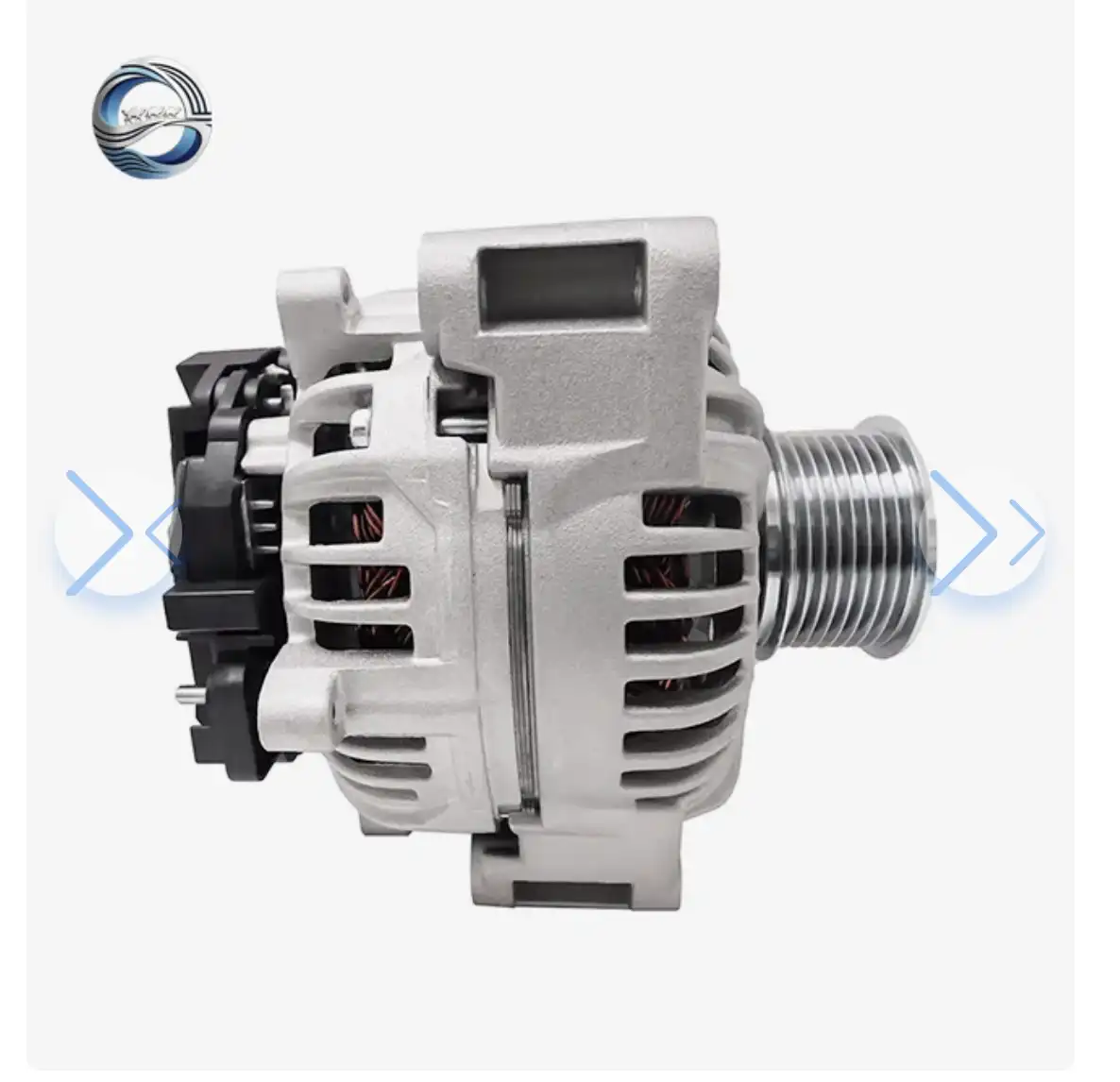
Understanding OEM Auto Electric Alternators
What Makes an Alternator "OEM" Quality?
OEM alternators are made exactly the way the original equipment manufacturer (OEM) wants them to be. OEM-grade charging systems follow strict standards and go through thorough validation procedures, unlike generic aftermarket options that might skimp on materials or testing. The high-conductivity copper windings, precision-balanced rotors, and built-in solid-state voltage regulators in these units make the output stable over a wide RPM range.
Core Components and Their Functions
Three important parts make up a charging system's dependability: the stator (which makes alternating current), the rotor (which makes the magnetic field), and the rectifier bridge (which changes AC to DC). Good makers use aluminum housings to get rid of heat as efficiently as possible and neodymium magnets or high-grade iron blades to get the most magnetic flux. For 12V systems, the voltage regulator must maintain the output steady between 13.8V and 14.4V. This keeps the battery from being undercharged or overcharged, both of which shorten its life.
Types and Applications Across Vehicle Categories
To power extra systems, heavy-duty business cars need high-output units with 150A to 300A of power. Most small alternators for passenger cars work between 60A and 120A. Bus companies that use Scania (K114, K124) or Mercedes-Benz O-series trucks need strong units that can handle vibrations and heat better. Dust and water ingress security ratings of IP54 or higher are good for long-haul trucks that work in harsh areas.
Key Factors When Choosing OEM Auto Electric Alternators
Defining Your Procurement Scenario
Fleet maintenance managers have different needs than buyers of OEM assemblies or distributors of aftermarket parts. A city bus company cares most about durability and warranty support, while a remanufacturing center looks for core units with parts that can be reused. Distributors who work with the aftermarket in Europe or North America need certification paperwork and the ability to work with a number of different car systems. By describing your operational context, you can narrow down your supplier choices and narrow down your specification needs.
It is important to understand how much electricity is needed. To find out how much electricity your car uses, add up how much the lights, air conditioning, video systems, and any extra parts use. Include a 30% safety gap so that the alternator doesn't run at full power all the time, which speeds up bearing wear and thermal degradation.
Critical Evaluation Metrics
Voltage regulation accuracy determines how well your batteries are charged. Look for units that can keep the voltage within ±0.5V even when the engine speed and electrical load change. Amperage output must match your car's peak demand, but going oversize by more than 40% can put stress on the mounting brackets and drive belts.
Durability indicators for auto electric alternators include bearing specs (sealed ball bearings last 150,000 miles vs. 80,000 miles for sleeve bearings) and brush life (carbon-copper hybrid brushes last 50% longer than pure carbon brushes). The terms of a warranty show how confident the maker is in their product. Professional-grade units usually come with six months of coverage, with clear proof of the failure modes that are not covered.
Fuel economy is affected by how well you use energy. Modern charging systems that include an ECU can lower the load on the generator when speeding up, which can cut fuel use by 2 to 4 percent in city drive. This function is especially useful for groups that have to follow strict rules about emissions.
OEM Versus Aftermarket Trade-Offs
OEM units promise that they will fit and work the same as factory-installed equipment. They meet the output standards of ISO 8854 and the fastening standards of SAE J56, which makes fitting easy. Aftermarket options may promise to save money, but procurement managers often find hidden costs, such as the need for more work to be done to make changes, parts breaking down early and needing to be replaced, and problems with how they work with the electronics in the car.
Aftermarket suppliers like Bosch, Denso, and Valeo make products that meet OEM standards. However, many cheaper options use recycled cores and don't use good remanufacturing methods. Not having IATF 16949 approval should make you worry right away about process control and tracking.
Verifying Supplier Credibility
Ask for proof of licensing, such as IATF 16949 and ISO 9001 approval. Ask for test results that include performance data from the bench, preferably the characteristic curve that plots current flow against RPM. Manufacturers you can trust will give you thermal shock test results that show how well their products work in temperatures ranging from -40°C to +125°C.
Check to see if the seller does research and development in-house or just buys parts from other companies. For specific uses, companies with engineering teams can change the output specifications and mounting arrangements. Supplier examples from well-known fleet owners or car makers show that the supplier has been reliable in the past.
Troubleshooting and Maintenance of Auto Electric Alternators
Identifying Common Failure Symptoms
The most obvious sign is the warning light on the dashboard, but voltage problems often show up before the whole thing fails. If your headlights dim when the car is not moving, your dashboard lights blink, or your battery dies after just a few months, it means that the charger is not working properly. Grinding, whining, or squeaking sounds are signs of a broken bearing or a misaligned pulley.
When diodes in the rectifier bridge fail, the electrical system can become unstable. A simple multimeter test measuring the AC voltage on the battery terminals shows diode leakage. Any AC ripple greater than 0.5V AC shows rectifier degradation that needs to be replaced.
Testing Protocols for Verification
While the engine is going at 2000 RPM, check the voltage. 12V systems should keep 13.8V to 14.4V or 27.6V to 28.8V. 24V systems should do the same. Turn on high-load accessories like headlights, HVAC, and other equipment, and keep an eye on the voltage drop. Drops of more than 0.5V mean that the generating capacity is not enough.
It takes special tools to do load testing, but it gives a clear explanation. Professional shops use carbon pile testers to test auto electric alternators while simulating the highest possible demand for electricity. Quality units keep their rated output across the whole RPM range without getting too hot.
Preventive Maintenance Best Practices
Every 15,000 miles, check the tension of the drive belt. Too much belt wear or glazing makes energy transfer less effective. Make sure the mounting bolts are tight enough, and look for rust or weak links in the wiring. Clean the outside of things to stop heat from building up, which speeds up the breakdown of internal parts.
As part of maintaining your charging system, check the health of your batteries. Batteries that are sulfated or broken create too much electrical resistance, which makes the alternator work harder and shortens its life. Batteries that show a capacity below 80% of their stated capacity should be replaced.
Units that have been used for more than 120,000 miles in demanding situations, visible bearing play during manual rotation, or repeated rectifier failures that point to damage to the stator windings are all signs that they need to be replaced. Roadside breakdowns and secondary damage to vehicle electronics can be avoided by replacing parts before they break.
Market Overview: Leading OEM Auto Electric Alternator Brands and Solutions
Comparative Analysis of Global Manufacturers
Bosch stays ahead of the competition in the market thanks to its many OEM partnerships and aftermarket marketing networks. Their charging systems have advanced voltage regulation, temperature compensation, and work well with CAN bus networks in vehicles. For business uses, the warranty lasts for six months and includes full expert help.
Denso focuses on small, light designs that keep the engine's secondary drag to a minimum. Their units have built-in cooling fans with blades that are shaped in a way that makes them better at managing heat in hot places. There are strict process controls at Denso's factories, which is why failure rates in the field are less than 0.3%.
Valeo works on smart generator technology that can handle different loads. Their systems talk to the ECU to lower charging when the vehicle speeds up and raise output when it slows down. This captures kinetic energy that would otherwise be lost as heat. In stop-and-go traffic, this regenerative approach can save up to 5% on gas.
XITU has a strong position in the heavy-duty commercial vehicle market. It makes charging devices for MAN commercial vehicles, the DAF 95 series, and the KASSBOHRER Setra buses. Our units work with a lot of different Bosch OEM numbers, like 0120689530, 0120689535, CA1236IR, and more than a dozen others. This means they can be used in a lot of different situations.
Product Variants for Specific Requirements
Light commercial vehicles and passenger cars with moderate electrical needs can use standard output alternators (80–120A). Trucks that carry refrigerated goods, emergency vehicles, and buses with lots of electronic systems need high-output units (150A to 300A). Brushless types don't have carbon brushes, so they last longer between services and cost less to maintain.
Engine areas that are tight on space can use compact mounting setups, and heavy-duty models have reinforced housings and larger bearings to handle vibrations in off-road situations. Marine-grade units have coatings that prevent rust and stators that are dipped in epoxy for use in high-humidity areas.
Bulk Procurement and Customization Options
Tiered pricing structures and dedicated account management are good for people who buy a lot. When you buy more than 500 units, you can usually change the specifications, such as the output setting, the mounting bracket, and the labels. The length of the lead time depends on how complicated the customization is and how quickly the product needs to be made.
Logistics relationships with well-known companies around the world make sure that shipping around the world is safe and that you can keep track of it. When you combine shipping options, the cost of freight for mixed container loads goes down. Regional warehousing is an option from suppliers with established transport networks in North America and Europe that speeds up the delivery of orders.
Full support after the sale includes technical documents in many languages, help with installation, and services that look into problems with auto electric alternators. Suppliers with localized technical representatives can help with large fleet deployments or fixing problems with complicated electrical systems on-site.
Future Trends and Innovations in OEM Auto Electric Alternators
Limitations of Traditional Technology
Normal charging systems keep the voltage the same no matter what the battery state is or how much power is needed. By keeping the full field current even when the batteries are fully charged, this method wastes fuel. Fixed-output designs can't keep up with the growing electricity needs of current commercial cars because they would have to be much bigger, which would add weight and cost.
Older alternator designs can cause electromagnetic interference that can damage delicate electronics like GPS devices and sensors that help avoid collisions. To keep up with changing electromagnetic compatibility standards, the auto industry needs better EMI shielding and filtering.
Emerging Smart Technologies
Next-generation charging systems use microprocessors to run them and keep an eye on the battery's temperature and state of charge. These smart units change the output voltage based on the type of battery (flooded lead-acid, AGM, or lithium-ion) and how it is being charged. This makes the batteries last 30% longer than with regular regulators.
Charging systems can work with a car's power management system by using communication protocols like LIN bus and CAN bus integration. To make the throttle response better and save fuel, the ECU can ask for more output during regenerative braking or less load on the alternator during acceleration.
Lightweight Materials and Efficiency Improvements
New aluminum alloys and hybrid materials make auto electric alternators 20–25% lighter without lowering their sturdiness. Lighter charging systems lower the curb weight of a vehicle, which helps it get better gas mileage and carry more cargo, both of which are important for commercial operators.
To make the power output higher, high-efficiency designs use low-resistance windings and better magnetic circuit shapes. Newer units are 70–75% efficient, while older ones were only 55–60% efficient. This means that they turn more mechanical energy into electricity while making less waste heat.
Impact on Procurement Strategy
Buyers should look at how much a provider spends on research and development and how they plan to use new technologies. As car electrical designs change, manufacturers with active development programs will release upgrades that work with newer vehicles. As rules get stricter and customer standards rise, long-term relationships with suppliers who focus on new ideas will protect your investment.
Standardizing on standard electrical connections and mounting ports makes upgrades easier in the future. Choose alternators that are made of modules that let you change regulators or rectifiers in the field without having to replace the whole unit. Through repair at the component level, this method lowers lifecycle costs and supports efforts to be more environmentally friendly.
Conclusion
When choosing the right OEM charging system, you have to weigh the short-term cost against the long-term dependability and operating efficiency of auto electric alternators. Quality alternators from approved makers work consistently over long duty cycles. This protects your fleet investment and keeps unexpected repair costs to a minimum. Procurement professionals can make decisions that support operational goals by looking at technical specs, making sure suppliers are legitimate, and learning about new technologies. As smart technologies and better efficiency make the charging systems market change, strategic supply relationships become more valuable.
FAQ
How do I determine the correct amperage for my fleet vehicles?
Add up the amp draws of all the accessories and systems to get the total amount of electricity used. Include any extra power needs, safety lights, and communication tools. To stop continuous maximum-load operation, which shortens the life of parts, add 30 to 40 percent of reserve capacity. Heavy-duty commercial cars usually need 150–200A, while normal delivery trucks can get by with 120–140A.
What distinguishes OEM alternators from aftermarket alternatives?
OEM units exactly match the specs of the original equipment, making sure that they will fit and work the same. They are put through a lot of tests, such as thermal cycles, vibration protection, and load response evaluation. A lot of aftermarket products aren't properly certified and are made with cheap materials that break quickly, especially in commercial settings with a lot of demand.
Can suppliers customize output specifications for specialized applications?
Manufacturers with a good reputation and their own engineering departments can change the output voltage, ampere values, and mounting arrangements. For customization, the minimum order quantity is usually around 500 units, and the wait time is between 45 and 60 days. Customized specifications that address specific operational challenges are helpful for specialized uses like marine environments or operations that take place at very high temperatures.
Partner With XITU for Reliable OEM Charging Solutions
Over the past 30 years, XITU has been making high-quality products for the world car electrical systems market. Our heavy-duty commercial vehicle charging systems work with platforms from DAF, Scania, Mercedes-Benz, and MAN, and offer OEM-level performance. They are backed by IATF 16949 certification and strict quality controls. As a supplier of auto electric alternators with a lot of experience, we make more than 500,000 units a year in a 20,000-square-meter building that has state-of-the-art testing tools and automated processes. We offer stable 30–60 day lead times, flexible ODM/OEM customization, and a warranty with technical support for six months. Our partnerships with logistics companies make sure that shipping around the world is safe, and our R&D team can change specifications to fit the needs of your market. You can talk to our procurement experts about your charging system needs and get specific technical information to help you make sourcing choices by emailing arisa@xitu-auto.com.
References
1. Society of Automotive Engineers (2019). "SAE J56: Mounting and Drive Arrangements for automotive alternators." SAE International Standards Compendium.
2. International Organization for Standardization (2018). "ISO 8854: Road Vehicles - Alternators with Regulators - Test Methods and General Requirements." ISO Technical Committee 22.
3. Mehta, R.K. (2020). "Automotive Electrical Systems: Design, Analysis, and Performance Optimization." Professional Engineering Publishers, London.
4. Chen, W. & Liu, H. (2021). "Smart Alternator Technology and Energy Management in Modern Commercial Vehicles." International Journal of Automotive Technology, Volume 22, Issue 4, pp. 891-903.
5. European Automobile Manufacturers Association (2022). "IATF 16949:2016 Implementation Guide for Automotive Component Suppliers." ACEA Technical Report Series.
6. Zhang, Y., Anderson, P. & Schmidt, K. (2023). "Lifecycle Cost Analysis of OEM versus Aftermarket Alternators in Fleet Operations." Journal of Supply Chain Management in Automotive Industries, Volume 15, Number 2, pp. 134-156.