




Why Does a Heavy Duty Vehicle Require a Special Alternator?
A alternator&type=products">heavy duty truck alternator is not simply a larger version of a passenger car unit. It is a purpose-built power generation component designed to meet electrical loads that would overwhelm any standard alternator within weeks. Commercial vehicles like CASE IH agricultural machines, John Deere 4.5L engine platforms, and Scania G460 long-haul trucks run complex onboard systems around the clock. From sleeper cab climate control to cold-chain monitoring, the power demand never stops. That is exactly why a specialized alternator is not optional — it is a mechanical necessity backed by engineering standards.
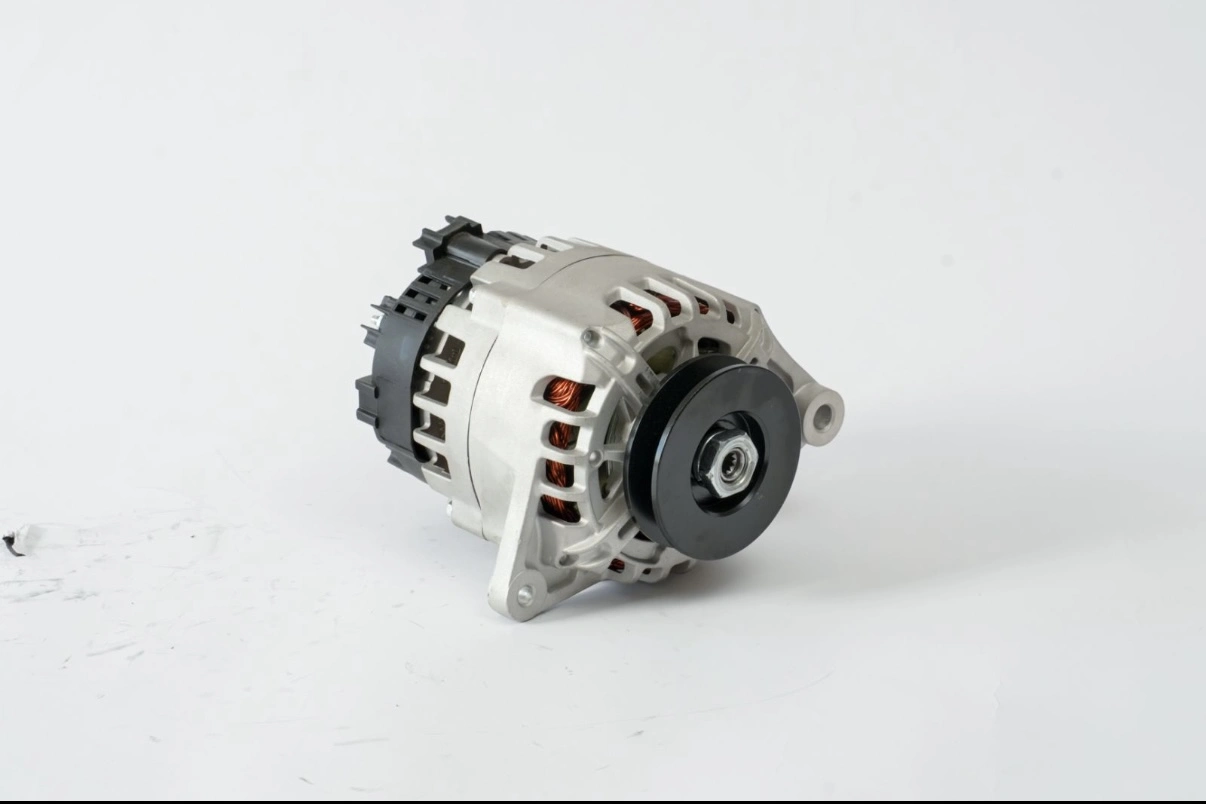
Understanding Heavy Duty Truck Alternators vs. Standard Alternators
What Separates the Two by Design
At full load, a normal generator in a passenger car puts out 65A to 100A. A industrial car alternator, on the other hand, has to keep putting out steady current—often between 160A and 350A—without overheating. Pure copper wires with Class H insulation rating above 180°C are used in the internal winding, while light-duty units use lower-grade materials.
Why Standard Units Fail Under Commercial Loads
When refrigeration tracking systems, hydraulic coolers, and work lighting all draw power continuously from a standard alternator at the same time, the rectifier diodes get too hot. The carbon brushes wear out faster, the voltage output changes, and the battery drains. A 2019 study by the Technology & Maintenance Council (TMC) found that faults in the electrical system are one of the top three reasons why industrial vehicles break down without warning in North America.
The Engineering Response: Purpose-Built Components
These failure spots are directly addressed by industrial alternators that are built for that purpose. Dual-sealed ball bearings can handle loads that are high on the belt. Temperatures in the engine bay often go above 110°C, but large heat sinks remove the heat. Brushless rotor designs get rid of the wear contact point completely, which greatly increases the service life even when used 24 hours a day, seven days a week.
Key Reasons Heavy Duty Vehicles Require Specialized Alternators
Freight cars and farm tools today have a lot more electronics on board than they did twenty years ago. At the same time, GPS tracking, telematics units, electronic brake systems, and HVAC systems all use electricity. There is no light-duty charging method that can keep up.
In commercial settings, you need a special kind of alternator for these main reasons:
- Hotel load management: During mandatory rest periods, sleeper cab systems — including CPAP machines, refrigerators, and climate control — draw 30A to 60A continuously. A standard alternator would cycle into overload within hours of idle operation.
- Low-RPM output demand: Long idling periods mean the engine runs at 600 to 900 RPM. A heavy duty truck alternator is wound to produce near-rated output at those low speeds, preventing battery drain during extended stops.
- Environmental endurance: Dust ingress, water splash, and vibration amplitudes common in construction and agricultural settings demand fully sealed housings and reinforced bearing assemblies that standard units simply do not carry.
All of these things explain why fleet buying teams make decisions about alternator specifications based on missions and not as an afterthought. Choosing a unit that is too small or too big sets off a chain reaction of electrical problems that lead to expensive breaks on the side of the road.
| Application Scenario | Typical Load Demand | Required Output Range |
|---|---|---|
| Long-haul sleeper cab (hotel loads) | 30–60A at idle | 160A+ low-RPM capable |
| Cold-chain refrigerated transport | 40–80A continuous | 200A+ stable output |
| Agricultural field equipment | Variable, high-vibration | 95A–160A, sealed housing |
Common Signs and Causes of Heavy Duty Truck Alternator Failures
Early Warning Signs Fleet Operators Should Watch
Three reliable early warning signs are instrument lights that dim when the engine is not running, a battery that drains overnight for no apparent reason, and a voltage gage reading below 13.5V while the engine is running. If your fleet management software shows that the same vehicle's battery needs to be replaced more than once, you should look into the charging device before the battery.
Root Causes Behind Premature Failure
Most units fail early because they are overloaded beyond their constant amperage limit. Putting a 95A alternator on a car whose total load is always more than 110A shortens the life of the rectifier and damages the voltage regulator. Bearings that aren't sealed properly make the whining sound that means they're about to break, and a belt that snaps at highway speed is a safety issue, not just a replacement part.
Preventive Protocols That Work
Every 40,000 miles, a structured maintenance cycle checks the output voltage, belt tension, and cleanliness of the terminals, as well as the output voltage at both rest and rated RPM. This finds wear and tear before it breaks. The TMC's Recommended Practice RP138 describes a standard alternator inspection checklist that is used as a guide by large North American fleets to plan their maintenance schedules.
Choosing the Right Commercial Alternator for Your Fleet
There are three things that you must check before you buy a unit: the maximum constant amperage, the agreement with mounting standards, and the ability to cross-reference the size against your existing OEM part numbers.
For teams using a mix of platforms, this single heavy duty truck alternator SKU can replace multiple part numbers for different machine types. This cuts down on warehouse stock, makes reordering easier, and lowers the risk of installing the wrong part. That's a real practical benefit for any buying team that's in charge of 200 units or more.
| OEM Cross-Reference | Part Number |
|---|---|
| Bosch | 0120484011 / 0120484018 / 0120484026 / 0120484050 / 0120484205 / 0986040280 |
| CASE IH | A187623 / AH137883 |
| John Deere | AT175194 / AT229394 / RE36267 / RE53563 / TY244485 |
For fleets running mixed platforms, this single SKU replaces multiple part numbers across different machine families — reducing warehouse inventory, simplifying reorder processes, and lowering the risk of misapplication during installation. That is a measurable operational advantage for any procurement team managing 200 units or more.
Procurement and Integration: From Purchase to Installation
Sourcing From Verified Manufacturers
The inconsistent quality that comes with multi-tier marketing is avoided when you buy straight from an IATF 16949-certified manufacturer. XITU has a production area of 20,000 m² that has more than 50 precise CNC machines and automatic testing equipment. The yearly production capacity is more than 500,000 units, which means that annual purchase deals can be met without any supply interruptions.
Installation Standards and Lead Time
The unit's mounting dimensions are SAE J180, so it doesn't need any special brackets or wiring changes to be installed. The swap can be done in less than 30 minutes by a trained technician. For bulk orders, XITU usually needs 30 to 60 days to make them. They also work with well-known logistics partners to make sure that units are safe during ocean freight, which is important when you're sending 200 to 300 units per shipment.
Warranty and After-Sales Support
Every XITU alternator comes with a six-month warranty that covers problems with the way it was made. Technical support is available directly from the sales team, and clients who need it can also get help with installation on-site. A clear warranty method is not a nice-to-have for fleet owners who have to meet strict return-rate goals; it is a basic need.
Conclusion
Standard alternators were never made to handle the electricity needs of heavy duty cars. Only a heavy duty truck alternator designed for that purpose can give modern fleets the uptime they need, with high output at low RPM and the ability to withstand years of vibration and heat. There are no brushes on the XITU unit, it meets SAE J180 standards, and it has a lot of OEM cross-reference coverage. These features directly address the most frequent failure spots. Picking the right charging system from the start is one of the most cost-effective things that procurement teams and fleet maintenance directors can do to keep costs down.
FAQ
1. How do I know if my truck's alternator is failing?
Keep an eye out for voltage readings below 13.5V at working RPM, dashboard lights that dim when the car is not moving, or a need for frequent battery changes on the same vehicle.
2. What amperage rating does a heavy duty truck need?
Find the total continuous load of all the systems on board, including the loads that the hotel has during rest times, and add 20% as a safety cushion. Depending on their extra tools, most Class 7 and Class 8 trucks need between 160A and 350A.
3. Is a brushless alternator worth the extra investment?
Yes, brushless designs don't have the carbon brush contact point, which is usually the first part to break. In commercial applications with a lot of hours, this makes the service life much longer and cuts down on the number of times it needs to be replaced on the job site.
Contact XITU for Heavy Duty Truck Alternator Solutions
Every industrial alternator order that XITU gets is backed by 28 years of experience making them. Our team is ready to meet your needs with OEM-grade quality, stable supply, and clear warranty terms, whether you are a heavy duty truck alternator supplier adding to your product line or a fleet operator buying in bulk. To get pricing and specifications, email our technical sales team at arisa@xitu-auto.com or go to xitu-auto.com.
References
1. Technology & Maintenance Council (TMC). TMC Recommended Practice RP138: Alternator Inspection and Maintenance Guidelines. American Trucking Associations, 2019.
2. Society of Automotive Engineers. SAE J180: Alternator and Regulator Testing. SAE International, 2021.
3. Gerhart, P. M., & Gerhart, A. L. Fundamentals of Fluid Mechanics (applied to thermal management in automotive alternators). Wiley, 2016.
4. Electric Power Research Institute. Commercial Vehicle Electrical Load Analysis and Charging System Requirements. EPRI Technical Report, 2020.
5. International Organization for Standardization. ISO 8854: Road Vehicles — Alternators with Regulators — Test Methods and General Requirements. ISO, 2012.
6. Commercial Vehicle Safety Alliance (CVSA). Out-of-Service Criteria: Electrical System Defects in Heavy Commercial Vehicles. CVSA North American Standard, 2022.