




Everything You Need to Know about High Output Alternators
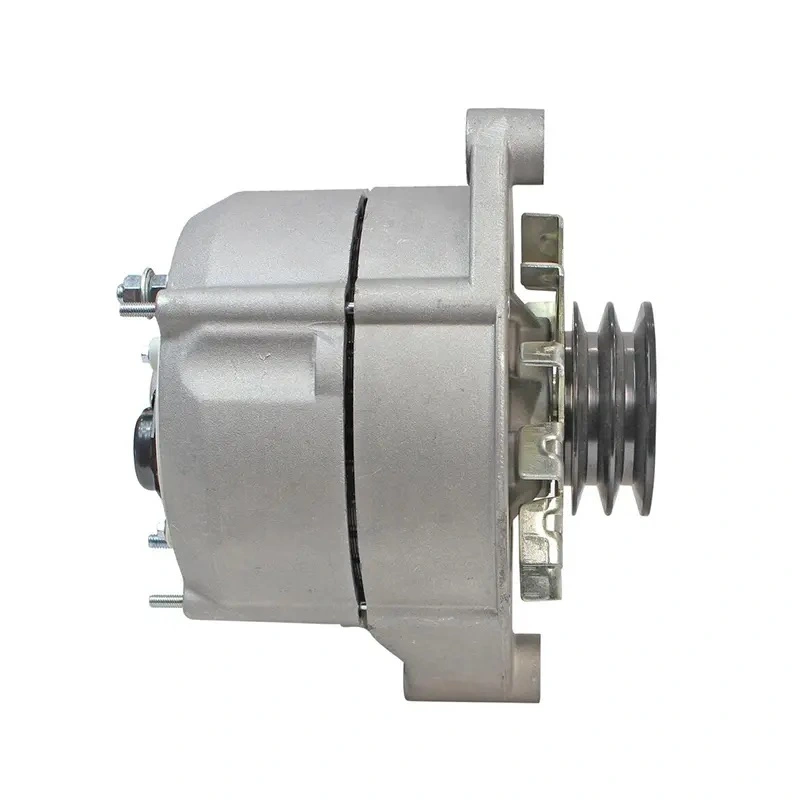
If your vehicle runs heavy electrical loads at idle — think emergency lighting, refrigeration units, or communication systems — you already know what a weak alternator feels like. Aproducts"> high power output alternator is designed specifically to solve that problem. This guide covers everything from how these devices work to how to buy the right one, with a close look at XITU's 12V 110A solution built for CASE IH 7000 and 8000 series vehicles and compatible with Bosch OEM numbers 120468028, 0120468055, 0986043480, CA1381IR, 12162N, 125849A1, 202360T91, and 91448C2.
Understanding High Output Alternators
What They Are and How They Work
A high power output alternator is a charging device that turns the spinning of the engine into electrical power. A standard unit is only rated for 60–90A, but a heavy-duty alternator can give 110A to 400A or more. This is made possible by high-density copper windings, a better rotor-stator geometry, and stronger rectifier bridges that keep the voltage steady even when the engine isn't turning at all.
Key Performance Metrics to Know
The idle-to-peak ratio, which shows how much power the unit makes at low RPM compared to its stated maximum, tells you the most. At just 800 RPM, a good unit gives off 60–70% of its rated power. Across the whole load range, the voltage should stay between 13.8V and 14.8V. To protect the electronics and CAN bus systems on board, ripple voltage must be less than 100mV.
Early Warning Signs of Alternator Failure
Keep an eye out for lights that dim when the car is under a lot of stress, battery warning lights, voltage drops below 13.5V when the car is not being used, or strange electrical noise in the sound and communication systems. In fleet settings, one broken unit can keep a car from moving during a key shift. A good habit for any fleet repair team to get into is scheduling temperature and load checks every 500 service hours.
High Output Alternator vs Standard Alternator – A Comparative Analysis
Power Output and Load Tolerance
A standard OEM alternator is made to handle a vehicle's normal electrical load, which is usually less than 100A. That baseline quickly goes away when you add things like upfitter equipment, refrigeration fans, or extra battery charge. A high-output unit is designed to give a steady current, not just a peak burst. This means that it doesn't slow down when things get hot.
We have two types of alternators: standard and high power output alternator. The rated output is 60–90A and the idle output ratio is 60–70% of the rated output. The basic heat sink and the large-fin heat sink are both fully sealed. The winding material is either mixed or standard copper or high-purity copper. The best use case is for passenger vehicles, but it can also be used for emergency, fleet, marine, and agricultural purposes.
Aftermarket vs OEM Options
OEM units are guarantyd to fit, but they usually cost more and don't come with as many amperage options. When made to IATF 16949 and ISO 9000 standards, high-quality aftermarket alternators look like OEM parts and offer current values that the original design didn't have. It is important to make sure that the aftermarket provider does more than just eye review. They should also use dynamometer tests and written quality control.
Cost-Benefit Perspective
The initial cost of a high-amperage alternator is higher, but it is clear that it is the better choice for any leasing business. The difference in price between a standard and a heavy-duty unit doesn't last long when you consider the costs of replacing batteries that aren't charged enough, tow fees for vehicles that get stuck, and lost time in cold-chain logistics.
Top High Output Alternators on the Market
Established Brands Worth Knowing
A number of manufacturers have built strong names in this field. Leece-Neville makes truck-duty units that are often used by fire trucks. A lot of people in the performance and audio upfit business know Mechman. Powermaster is aimed at the racing and hot-rod markets. Delco Remy is still used as a standard for big commercial cars. Every brand has its own strengths, and procurement teams should look at more than just the brand name to find the right product for the job.
Where XITU Fits
The 12V 110A alternator from XITU is designed to work with eight Bosch OEM cross-reference numbers and is made for CASE IH building and farming trucks. For custom orders, the same manufacturing platform can handle 200A to 400A. This is useful for fleet purchasing managers who need a reliable supplier for a variety of vehicle configurations. There is no need to worry about batch accuracy because the 20,000-square-meter factory can make 500,000 units a year.
Selecting the Right Unit for Your Fleet
There are three things that are needed to match an alternator to a job: the total steady electrical load in amps, the lowest idle RPM the engine hits during operation, and the working environment (temperature range, moisture exposure, and vibration level). 90% of fitting and speed problems can be avoided by making sure these three numbers are correct before placing an order.
Procurement and Buying Guide for High Output Alternators
Sourcing Channels and What to Verify
Having a direct relationship with a manufacturer gives you the best access to pricing and customization. Online business-to-business (B2B) platforms can help with the initial screening of suppliers, but they need to see proof of certifications. Suppliers must provide ISO or IATF paperwork, test results, and batch traceability records for public safety and government fleet purchases. This is something that cannot be negotiated during the bidding stage.
Before agreeing to a seller, the following table lists the most important things to check:
| Verification Item | Why It Matters |
|---|---|
| ISO 9000 / IATF 16949 Certification | Confirms production process discipline |
| Dynamometer Test Reports | Verifies rated output at defined RPM points |
| Thermal Screening Records | Confirms performance at 80°C+ operating temp |
| Cross-Reference Compatibility Data | Ensures direct fitment without modification |
| Warranty Terms | Defines risk coverage post-delivery |
Custom Orders and Lead Times
For non-standard amperage ratings or pulley configurations, expect a 30–60 day lead time from a manufacturer with in-house R&D. XITU allows for custom voltage regulator settings (including LiFePO4 battery profiles), changes to the diameter of the pulleys, and changes to the mounting brackets. The minimum order quantity (MOQ) for custom configurations can be negotiated based on annual volume commitments.
After-Sales Support as a Procurement Criterion
Any serious supplier should offer a quality warranty that lasts for six months. In addition, check to see if the seller offers installation instructions, a response time of 48 hours for troubleshooting, and a quick repair plan for units that break down in the field. For emergency vehicle fleets where downtime could put lives at risk, these support terms should be written into the purchase agreement, not just promised orally.
Wiring and Testing of High Output Alternators
The "Big 3" Wiring Upgrade
A normal factory wiring harness isn't made to handle sustained output of 110A or more. Before installing, you need to improve the three core conductors: the positive battery wire to the generator output, the engine block ground to the chassis ground, and the negative battery wire to the chassis. For applications requiring 200A or more, the cable should be 1/0 AWG or larger, and an inline fuse should be placed within 18 inches of the battery.
Alignment, Tension, and Belt Load
The alternator-to-crank speed ratio goes up when the drive pulley is smaller. This makes the idle output go up. But the wrong belt tension leads to early bearing wear. The belt should not bend more than what the maker says, and the pulleys should be lined up within 1 mm. One of the most common reasons why upgraded alternators fail early is that they are not lined up correctly. This is an easy mistake that can be fixed for free during installation.
Testing After Installation
After setting up, check the output voltage with a digital voltmeter to make sure it's between 13.8V and 14.8V at 1,500 RPM. Next, use a carbon pile or an electronic load tester to do a full load test. Use an oscilloscope to look at the ripple voltage. Values above 150mV mean that a diode in the rectifier bridge is failing. Write down the standard numbers; they will help you with every service check after that.
Conclusion
A high power output alternator is not an extra for most fleet owners; it is a must-have. Standard units just can't handle the electricity loads that emergency cars, refrigerated trucks, and farm equipment put on them when they're not in use. The XITU 12V 110A alternator works with the CASE IH 7000/8000 series and eight Bosch OEM references. It is designed to keep the voltage steady under long-term load, and it can be easily customized to fit your needs. This is the first step to take if your vehicles can't handle a power drop.
FAQ
1. Why does a high output alternator need a smaller pulley?
A smaller pulley increases the rotational speed ratio between the crankshaft and the alternator. This allows the alternator to spin faster at idle, which directly raises the current output at low engine RPM — exactly the condition where emergency vehicles and cold-chain trucks need power most.
2. Is a "Big 3" wiring upgrade always required?
Yes. Factory wiring is sized for the original alternator's output. Running 110A or more through undersized cables creates heat, voltage drop, and a fire risk. Upgrading the battery-to-alternator, ground-to-chassis, and engine-to-chassis conductors is a safety requirement, not an optional upgrade.
3. Can this alternator work with a lithium battery bank?
It can, provided the internal or external regulator is set to the correct charging profile for LiFePO4 chemistry. Standard lead-acid profiles overcharge lithium cells over time. XITU supports custom regulator calibration for lithium applications on request.
Get Your Custom High Output Alternator from XITU
The high power output alternator supplier team at XITU is ready to help you with your fleet, OEM, or bulk purchasing needs. Our 12V 110A units come with full test documentation, ISO 9000 certification, and a six-month warranty. Our engineers can also set up 200A–400A units to your exact load requirements. You can get a price or example right now by emailing arisa@xitu-auto.com or going to xitu-auto.com.
References
1. Society of Automotive Engineers. SAE J56: Alternators for Land Vehicles. SAE International, 2019.
2. Bosch Automotive Handbook. Electrical Systems and Components. Robert Bosch GmbH, 10th Edition, 2022.
3. ISO. ISO 9000:2015 Quality Management Systems – Fundamentals and Vocabulary. International Organization for Standardization, 2015.
4. IATF. IATF 16949:2016 – Quality Management System Requirements for Automotive Production. International Automotive Task Force, 2016.
5. Denton, Tom. Automobile Electrical and Electronic Systems. Routledge, 5th Edition, 2017.
6. Heisler, Heinz. Advanced Vehicle Technology. Butterworth-Heinemann, 2nd Edition, 2002.