




Truck Alternators: Quick Checks You Can Run at the Yard
A failing alternator rarely announces itself with a dramatic breakdown. More often, it gives subtle warnings that trained eyes can catch before a truck ever leaves the yard. For any fleet running products">heavy duty truck alternator units on CASE IH, John Deere, or Scania equipment, knowing what to look for during a yard-level inspection is the difference between a five-minute fix and a costly roadside event. This guide walks through practical checks any technician can run with basic tools, no dynamometer required.
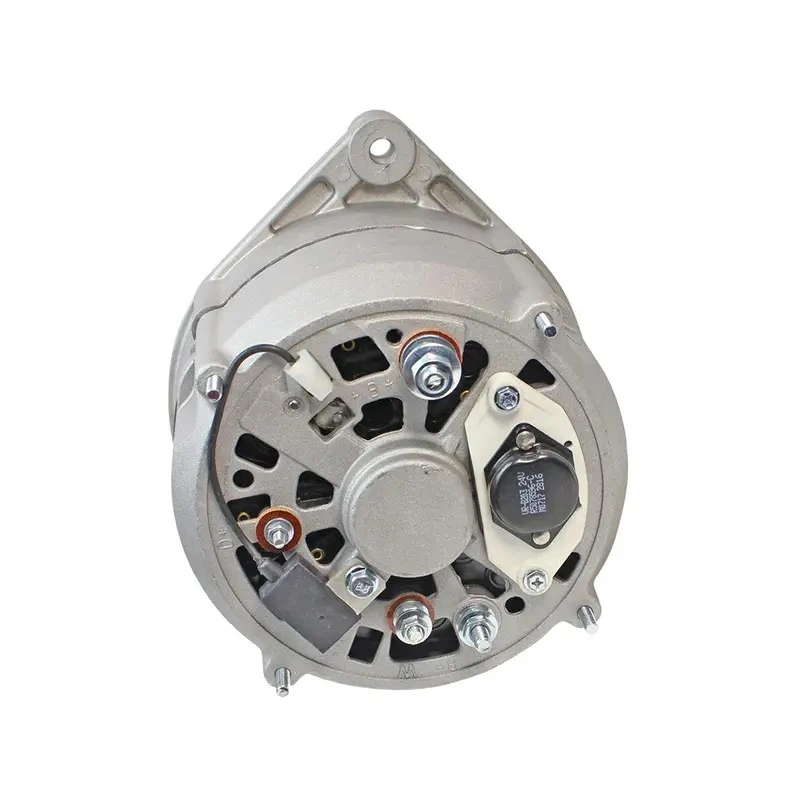
Understanding Heavy Duty Truck Alternators: Key Basics for Quick Checks
How the Alternator Converts Power
The alternator takes the mechanical energy from the engine belt and changes it into alternating current (4 AC). After that, the converter bridge turns the AC to DC for the car's electrical system. All the time, this process is done on industrial trucks with big loads. It includes tools for controlling the temperature, lighting, sensors, and the sleeping cab.
Common Failure Points to Know
It's most likely to fail in three places: the brush wear in brushed designs, the diode rectifier breakdown from heat stress, and the bearing wear from shaking. When assessing at the yard, it saves a lot of time to figure out which signs are linked to which failure point.
Why Brushless Design Changes the Picture
A heavy duty truck alternator that is brushless doesn't have any places of touch like a brush alternator does. Because there is no friction between the carbon and the slip ring, there is no failure due to wear. Heavy-duty bikes can last up to 100,000 miles longer because of this change in design. Total cost of ownership is what fleet procurement teams use to decide which units to buy and why brushless units are getting more attention.
Essential Quick Checks for Heavy Duty Truck Alternators at the Yard
To do these checks, you will need a multimeter, an eye exam light, and about 15 minutes per unit. Most problems are easy to find without any special tools.
At the yard level, these are the main steps that must be taken during a check:
- Visual belt inspection: Check the serpentine belt for cracking, glazing, or missing ribs. A worn belt on an 8PK configuration slips under load, causing voltage drop even when the alternator itself is healthy. Replace any belt showing surface cracks deeper than 1mm.
- Connector and wiring integrity: Pull the main output terminal and B+ cable. Look for corrosion, heat discoloration, or frayed insulation. A loose B+ connection is one of the top causes of intermittent charging faults and is often misdiagnosed as alternator failure.
- Voltage output test: With the engine running at idle, place a multimeter across the battery terminals. A healthy charging system reads between 13.8V and 14.8V on a 12V system. Readings below 13.5V at idle suggest the alternator is underperforming. At high idle (1,800–2,000 RPM), output should climb toward the rated amperage.
These three steps can help you solve most problems in the field. The yard is a quick place to catch a loose end or a shiny belt. Do it now, or you might get stuck on the side of the road for hours and lose your stuff.
| Check Type | Tool Needed | Expected Result |
|---|---|---|
| Belt condition | Visual / flex test | No cracking, proper tension |
| Battery voltage at idle | Multimeter | 13.8V – 14.8V (12V system) |
| B+ terminal connection | Visual / torque check | No corrosion, tight connection |
Troubleshooting Common Alternator Issues: Step-by-Step Approach
No-Charge Condition
A "no-charge" state for a heavy duty truck alternator means that the battery voltage is at or below 12.6V while the engine is going. First, check to see what voltage the activation wire has. Beginning circuit should give it 12V. In this case, the unit is probably broken because the start signal is there but the output is not. This could be because the regulator is broken or the stator wire is open.
Intermittent or Low Output
It's likely that the temperature is to blame if the power goes out and then comes back on. When diodes get hot in the engine bay (up to 125°C), they might not work at all. If the voltage drops after 20 to 30 minutes of use, run the engine until it's hot enough to work, and then check the output. Brush alternators often have this kind of diode failure, but brushless ones don't happen as often.
Unusual Noise Diagnosis
Most of the time, a high-pitched whine that changes with engine speed means that the diode rectifier is broken. Ripple voltage is made when a diode is shorted. This voltage can be heard through accessories and can mess up audio systems. If you hear a grinding or rumbling sound near the generator, on the other hand, it means that one of the bearings is breaking. They both need to be fixed right away. In this case, a stuck bearing can hurt a belt and get a truck stuck.
Maintenance Tips to Prolong Alternator Lifespan and Performance
It costs a lot more to fix things after the fact than to do regular checks. The numbers back this up: the American Trucking Associations say that fleets lose $448 an hour in productivity because of breakdowns that aren't planned. That math changes when you do normal upkeep.
Cleaning and Inspection Schedule
Generator housings get dirty with dust, oil mist, and water over time. It's better for a fully sealed unit to do this, but buildup from the outside can still stop airflow and raise the temperature inside. A blowout with compressed air should be done every 50,000 miles. Every time the hardware is serviced, make sure the torque is checked so that it doesn't come loose from vibrations.
Belt Replacement Intervals
A big business platform like the CASE IH 850 series or a John Deere 4.5L engine should have its heavy duty truck alternator belt changed every 100,000 to 150,000 miles. The alternator pulley could get broken if you don't change your 8PK belt at these times. The voltage control could also become unstable. To do this, use compressed air to clean the housing every 50,000 miles. This will make the wind routes clear. Every 50,000 miles, check the belt, and every 100,000 to 150,000 miles, change it. Always check the torque at the terminals before a major service to avoid faults that happen from time to time. Do a full bench test of the alternator every 200,000 miles to see how well it meets the rated specs.
| Maintenance Task | Recommended Interval | Notes |
|---|---|---|
| Housing compressed air clean | Every 50,000 miles | Clear airflow paths |
| Belt inspection | Every 50,000 miles | Replace at 100,000–150,000 miles |
| Terminal torque check | Every major service | Prevents intermittent faults |
| Full alternator bench test | Every 200,000 miles | Compare output to rated spec |
Considering an Upgrade to Brushless
It's more than just a matter of parts if your business drives a lot of miles every year. You should switch to a brushless charging unit. Plus, it saves money on repairs. In the long run, it costs less to work on an alternator if the brushes don't have to be changed as often.
Selecting and Procuring Heavy Duty Truck Alternators: What Buyers Need to Know
Procurement decisions for commercial charging systems come down to four factors: cross-reference coverage, design architecture, certification, and supplier stability.
OEM Cross-Reference Coverage Matters
A single alternator SKU that covers CASE IH A187623/AH137883, John Deere AT175194/AT229394/RE36267/RE53563/TY244485, and Bosch 0120484011/0120484018/0120484026/0120484050/0120484205/0986040280 eliminates the need to stock separate part numbers for each platform. For a distributor managing mixed fleets across CASE IH 450–1594 series, Maxxum 5120–5150, and Scania G460, this kind of coverage directly reduces inventory carrying costs and the risk of mis-shipment.
Brushless vs. Brushed: The Procurement Angle
Brushed units carry a lower purchase price but generate more warranty claims and replacement cycles over time. A 12V 95A brushless unit built to SAE J180 mounting standards and rated for 1,000,000+ miles in heavy load conditions delivers a lower total cost per mile when retirement and warranty claim frequency are factored in. Buyers managing return rates above 3% will typically find that the per-unit savings of a cheaper brushed design are offset by warranty processing costs within the first year.
What Certification Actually Tells You
IATF 16949 certification means the manufacturing process meets automotive quality management standards at every production stage, from raw material intake through final electrical output testing. ISO 9000 addresses the broader quality system. Together, they give procurement teams a verifiable baseline rather than a marketing claim.
Conclusion
Taking the cars to the yard to check the heavy duty truck alternator is one of the best ways to keep them in good shape. You can look at a voltmeter and figure out most charging problems in 15 minutes. There is enough time to avoid a traffic jam. For companies that use CASE IH, John Deere, or Scania platforms, maintenance can become a benefit when paired with the right replacement unit. This unit should be brushless, properly rated, and cross-referenced to your exact OEM numbers.
FAQ
1. What voltage should a truck alternator produce at idle?
For 12V systems with standard loads hooked up, a healthy alternator makes between 13.8V and 14.8V when it's not in use. More tests need to be done on the unit because if the reading is less than 13.5V, it means it's not meeting the needs of the system.
2. How do I know if the alternator or the battery is the problem?
A charger from the outside should be used to fully charge the battery. After that, you should start the engine to see what the voltage is at the battery wires. If it stays below 13.5V, the alternator isn't doing its job right. If the voltage is fine but the battery dies overnight, it's likely that the battery can't hold as much power.
3. Why does my alternator whine?
Most of the time, a tone that changes with the engine's RPM shows that a rectifier diode is broken. If you connect a multimeter to the battery connections and set it to AC voltage, you can hear and see the AC ripple in the DC output.
4. Is a brushless alternator worth the price difference for a fleet?
When each unit in a fleet drives more than 100,000 miles a year, brushless designs make it easier to change the brushes and reduce the number of guarantee claims. Most of the time, the overall amount saved over three to five years is more than the price difference at first.
5. What does SAE J180 mean for installation?
When it comes to mounting pads and bolts, heavy-duty alternators must follow the rules set out in SAE J180. A unit that meets this standard can be put right into the base of a CASE IH, John Deere, or Scania machine without any changes. This means that it takes less than 30 minutes to fit each unit.
Get a Quote from XITU — Trusted Heavy Duty Truck Alternator Supplier
In a 20,000 m2 IATF 16949-certified facility with an annual capacity of more than 500,000 units, XITU makes heavy duty truck alternators for CASE IH, John Deere, and Scania platforms. There are designs without brushes, mounting in SAE J180, a 6-month protection, and 30 to 60 days of wait time for each order. Please email or call our team at arisa@xitu-auto.com or xitu-auto.com to get bulk prices, cross-reference checking, and to set up sample orders.
References
1. Society of Automotive Engineers. SAE J180: Electrical Generating System (Alternator Type) Performance Curve and Test Procedure. SAE International, 2019.
2. American Trucking Associations. Cost of Unplanned Truck Downtime and Fleet Maintenance Benchmarking Report. ATA, 2022.
3. Bosch Automotive Handbook. Electrical Systems for Commercial Vehicles: Alternators and Charging Systems. 10th ed. Robert Bosch GmbH, 2022.
4. Fleet Maintenance Magazine. Charging System Diagnostics: Field Guide for Commercial Truck Technicians. Endeavor Business Media, 2023.
5. ISO. ISO 9001:2015 Quality Management Systems — Requirements. International Organization for Standardization, 2015.
6. IATF. IATF 16949:2016 Quality Management System Requirements for Automotive Production. International Automotive Task Force, 2016.