




How to Choose the Right 24V 100 Amp Alternator for Heavy-Duty Equipment
Choosing the rightalternators&type=products"> 24V alternator 100 amp for heavy-duty equipment is not a decision you make lightly. The wrong unit can trigger battery drain, ECU faults, or complete machine shutdown on a job site with zero tolerance for downtime. A properly matched 24V 100A unit delivers 2.4–2.8kW of continuous power, keeping onboard electronics, hydraulic cooling fans, and telematics systems running without interruption. This guide walks procurement managers, fleet engineers, and OEM buyers through every factor that matters—from part number compatibility to thermal endurance—so you can source with confidence.
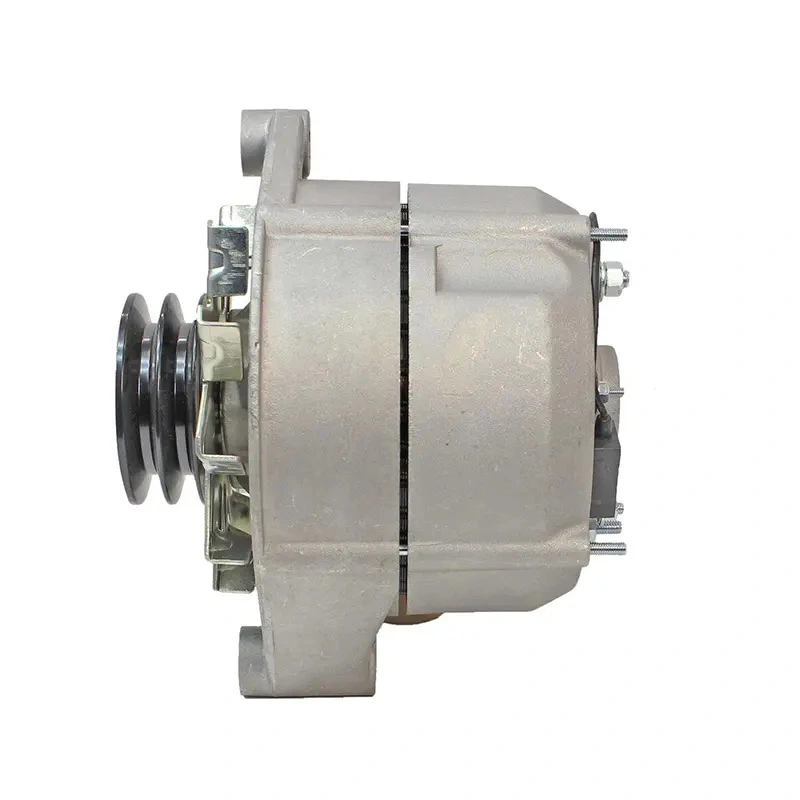
Understanding the Basics of a 24V 100 Amp Alternator
How Output Voltage and Amperage Work Together
A 12V platform has twice as much electricity as a 24V platform of the same type. This means the same gage of wire can carry twice as much power at half the current. At 100A, the unit always puts out about 2,400W, which is enough power for battery banks, temperature control, and data devices all at the same time. Most off-grid power systems, Class 7 and Class 8 trucks, and John Deere tractors need 24V design because of this.
Voltage Regulation: The Detail Most Buyers Overlook
Power stays the same even when the engine speed and temperature change because the 24V alternator 100 amp has an Electronic Voltage Regulator (EVR) built in that can be set to a different temperature. Spikes in voltage can damage ECUs or give false trouble codes when they don't need to. In high-quality units, Class H insulation that can handle 180°C is used. This is what makes heavy-duty alternators different from general-use ones.
Where These Units Are Typically Deployed
| Industry Segment | Typical Application | Key Demand |
|---|---|---|
| Construction & Mining | Excavators, loaders, earthmovers | Dust sealing, vibration resistance |
| Long-Haul Trucking | Class 7–8 sleeper cabs | Continuous idle charging |
| Agricultural Machinery | John Deere 700–900 series | Broad part number coverage |
| Off-Grid / Marine | Battery banks, vessels | Corrosion protection, sustained output |
Critical Factors to Consider When Choosing a 24V 100 Amp Alternator
They often get a unit that works well in the lab but not in the field after three months if they don't use a structured screening process. Here is a good framework for F-1 factors that buyers with a lot of experience use.
Power Load Matching and Cut-In Speed
The generator has to hit its full power first, before the engine can run at full RPM. The unit charges even when it's not being used if the cut-in speed is between 1,200 and 1,500 rotor RPM. This is important for machines that work in mines or on construction sites at low speeds for a long time. The unit should be able to keep 100A at 5,000 to 6,000 RPM without losing power because of heat.
Bearing and Sealing Standards for Harsh Environments
The main reason why dusty environments cause 24V alternator 100 amp to break down early is that they carry pollution. Bearings in the heavy-duty 6305 range are double-sealed to keep water and silica dust out. For wholesalers who work with mining teams in Africa and the Middle East, units with only single-sealed bearings have been known to have high return rates, often above 5%.
Thermal Management and Insulation Class
It is rated at 180°C and is class H insulation. It can be used for a long time in engine bays that are hotter than 105°C.
- Class H insulation (180°C rated): Handles prolonged operation in engine bays exceeding 105°C ambient temperature.
- Aluminum alloy housing: Dissipates heat passively without relying on a separate cooling fan.
- Precision-balanced rotor: Reduces harmonic vibration that accelerates winding fatigue in high-cycle applications.
- SAE J1455 vibration testing: Confirms structural integrity of internal lead frames and solder joints under G-force loads typical of off-road equipment.
These specs tell you how long a unit will last before it needs to be serviced. Check them out before you place a big order to keep your customer relationships and return rate safe.
Comparing Popular Alternator Options for Heavy-Duty Use
24V 100A vs. 12V 100A: When Voltage Architecture Determines Your Choice
Up to 1,200W can be used with a 12V 100A unit. A 24V 100It puts out 2,400W, which is twice as much power through the same-sized line. A machine that runs on 24V electricity can't be switched to one that runs on 12V. The part numbers RE538241, RE558676, and SE502563 all have to do with 24V construction because that's what John Deere's 700- and 900-series loaders and excavators are designed to work with.
OEM Reference Numbers and Cross-Compatibility
| OEM Part Number | Compatible John Deere Models |
|---|---|
| RE538241 / SE502563 | 724K, 744K, 755K, 850K |
| RE558676 | 903K, 903KH, 909K, 909KH |
| Bosch 0124655081 / 0124655189 / 0124655190 | 470G LC, 670G, 670GP, 672G, 672GP, 953K, 959K |
It is much easier for regional wholesalers to keep track of their stock when 15 or more machine types are grouped together under a single SKU. Suppliers who can't write down that their cross-references are right are a buying risk.
What Separates Aftermarket Suppliers Worth Trusting
Bosch and Leece-Neville are the best brands to buy a heavy-duty charging system. Those standards are met by a trustworthy aftermarket supplier that is IATF 16949 certified, has written performance curves that are confirmed, and tests to ASTM B117 for salt spray (at least 96–240 hours). When samples are being evaluated, suppliers who can't give these test results usually don't get better after a buy order is signed.
Troubleshooting and Maintenance Tips for Prolonged Alternator Life
Early Warning Signs That Your Alternator Is Struggling
You should look into these right away if you see voltage values below 27.2V at working RPM, battery warning lights on the panel while the car is running properly, or ECU problem codes that you can't figure out. At 5,000 RPM, connect a carbon pile load tester to the B+ terminal and run the engine. This will give you a direct reading of the amperage. More than 10% less current than expected should mean that the unit needs to be checked out before it breaks down in the field.
Routine Maintenance Practices That Extend Service Life
The belt strain is the most common repair item that people forget to do. Too much rotational load is put on the front bearing when the 8PK serpentine belt is too tight. Even if the unit has double-sealed 6305 bearings, this makes it wear out faster. Check how tight it is every 500 hours of use. Every three months, use compressed air to clean the entrance vents in dusty areas. Check the ground lines every time you have a service visit. Voltage ripple, which is bad for electronics further down the line, is often caused by a ground with a high resistance.
Handling Cold-Start Performance in Sub-Zero Climates
If you live somewhere where it gets below -40°C, you need a 24V alternator 100 amp with an EVR that can adapt to changes in temperature. In order for the battery to still be able to accept a charge when the temperature drops, the regulator has to raise the charging voltage. If the unit doesn't have this feature, it will charge at a fixed voltage. This can leave batteries chronically undercharged in the winter in Russia or Northern Canada, and customers will call you because their cars won't start and say the alternator is to blame.
Where and How to Procure Quality 24V 100 Amp Alternators
What to Verify During Supplier Qualification
Request documented evidence of performance curve validation, thermal endurance test results (1,000+ hours at peak load in 100°C+ conditions), and voltage ripple analysis before committing to a sample order. Suppliers with ISO 9000 and IATF 16949 certifications have third-party verification of their quality management systems—this is a baseline, not a differentiator.
Logistics and MOQ Considerations for B2B Buyers
A standard procurement cycle for a first order runs 8–12 weeks from supplier qualification to delivered stock. Production lead times of 30–60 days are typical for quality manufacturers. Batch sizes of 50–150 units match the practical inventory needs of most regional distributors without creating excess carrying costs. Confirm that the supplier's annual capacity—500,000+ units is a reasonable benchmark—can absorb your volume without pushing your order to the back of the queue.
ODM and Private Label Options
For aftermarket brands building their own product lines, ODM solutions allow custom nameplates, packaging, and certification documentation without requiring independent tooling investment. This path works well for distributors in North America or Europe who want OEM-grade product quality under their own brand identity.
Conclusion
If you want to get the best heavy-duty generator, make sure the 24V alternator 100 amp has the right part numbers, a clean voltage output that keeps electronics safe, and testing records to back up all claims. It is always better to use a 24V 100A unit with double-sealed bearings, Class H insulation standards, and a temperature-compensating EVR in mining and construction sites than a generic one. Check the specifications, ask for test reports, and run a supervised sample validation before committing to a large order. This process keeps the number of returns low and the ties with customers strong.
FAQ
1. Why choose a 24V system over 12V for heavy equipment?
A 24V system delivers twice the power at the same current rating, reducing resistive losses in long cable runs common in large machines. For equipment with battery banks, telematics, and hydraulic cooling loads running simultaneously, 24V architecture is the only practical choice.
2. What does cut-in speed mean, and why does it matter?
Cut-in speed is the minimum rotor RPM at which the alternator begins producing charging current. A cut-in speed of 1,200–1,500 RPM means the unit charges at engine idle—critical for excavators and loaders that spend hours at low throttle.
3. How do I verify an alternator's output before installation?
Use a carbon pile load tester at the B+ terminal with a calibrated inductive clamp meter at 5,000 engine RPM. Output should reach rated amperage within 5% tolerance.
4. What causes premature bearing failure in dusty environments?
Single-sealed or lightly sealed bearings allow fine silica particles to enter the bearing race. Double-sealed 6305 series bearings physically block contamination and are the correct specification for mining and construction applications.
5. Can this alternator charge LiFePO4 battery banks?
Yes, provided the integrated EVR is programmed to the correct absorption voltage for lithium chemistry, or an external DC-DC charger manages the lithium-specific charge curve between the alternator output and the battery bank.
Partner With XITU for Your Next 24V Alternator 100 Amp Order
Heavy-duty charging solutions made by XITU are made to meet the needs of your equipment in the real world. Our company is a real 24V alternator 100 amp maker that has the ability and papers that B2B buyers need. Our 20,000 m² plant makes more than 500,000 units a year. We've been in business for 28 years and are IATF 16949 certified. All of our 8PK 62mm units come with a six-month guarantee that covers more than 15 John Deere types. They also have full test reports. Send us an email at arisa@xitu-auto.com or visit xitu-auto.com to find out how much something costs or what kinds of things we have.
References
1. SAE International. SAE J1455: Joint SAE/TMC Recommended Environmental Practices for Electronic Equipment Design in Heavy-Duty Truck Applications. SAE International, 2017.
2. ASTM International. ASTM B117: Standard Practice for Operating Salt Spray (Fog) Apparatus. ASTM International, 2019.
3. Bosch Automotive Handbook. Bosch Automotive Handbook, 10th Edition. Robert Bosch GmbH, 2018.
4. SAE International. SAE J180: Alternators and Regulators for Heavy-Duty Vehicles. SAE International, 2015.
5. Denton, Tom. Automobile Electrical and Electronic Systems, 5th Edition. Routledge, 2017.
6. John Deere Parts & Service. John Deere Construction & Forestry Parts Catalog: Electrical Components. Deere & Company, 2022.