




Small Alternator: What Is It and How Does It Work?
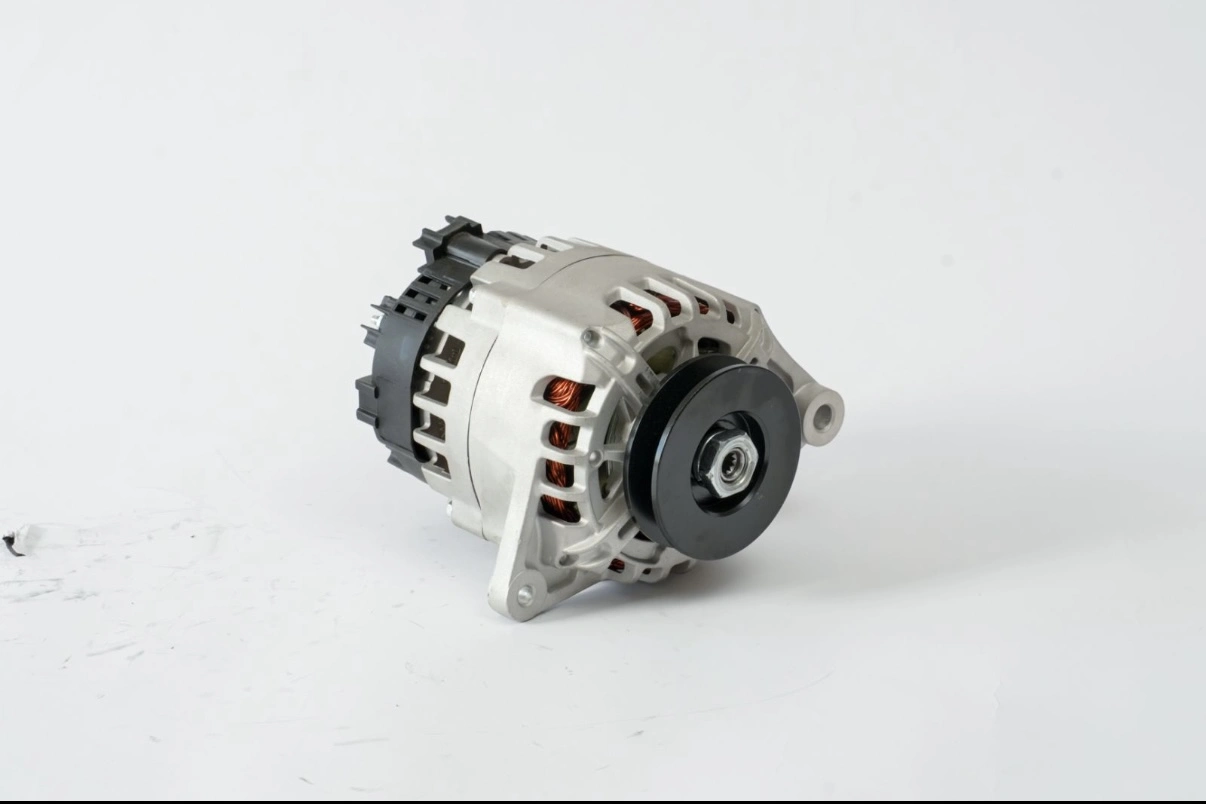
Aalternator&type=products"> small alternator is a compact electromechanical device engineered to transform mechanical energy from rotating shafts into stable electrical power, primarily serving vehicles and equipment requiring power outputs from 1kW to 30kW. These automotive charging units operate by electromagnetic induction—where a rotor equipped with field coils spins within a stationary stator assembly, generating alternating current that gets converted to direct current through an integrated rectifier bridge. The built-in voltage regulator maintains consistent output despite varying engine speeds, addressing critical challenges like battery drain in compact machinery and voltage instability that can damage sensitive electronics. Widely deployed across motorcycles, commercial vans, ATVs, and agricultural equipment, compact charging systems represent essential components in modern transportation infrastructure, combining spatial efficiency with industrial-grade durability to meet diverse operational demands.
This article delivers comprehensive technical insights and procurement strategies for B2B professionals sourcing automotive electrical components. We examine operational principles, maintenance protocols, supplier evaluation criteria, and emerging applications to support informed purchasing decisions in global aftermarket and OEM channels.
Understanding the Basics of Small Alternators
Core Operating Principles
Electromagnetic conversion methods have been improved over decades of work in car engineering to make compact charging systems work. When carbon brushes or slip rings power the rotor, they create a rotating magnetic field that makes the copper windings in the stator produce voltage. This three-phase alternating current flows through silicon diodes set up as a full-wave rectifier. This produces 13.8–14.4V DC for 12V systems or 27–28.5V for 24V industrial uses. Voltage regulation circuits check the state of the battery and change the field current automatically. This keeps the battery from overcharging and makes sure it charges properly when the system is not in use.
Unlike most generators, these units can make useful power even when the RPM is low. This is possible with high-efficiency laminated cores and optimized pole-pair designs. The design keeps overall harmonic distortion below 5% and reduces eddy current losses through silicon steel laminations. This keeps electrical interference from getting into microprocessor-controlled vehicle systems.
Key Technical Specifications
For vehicle use, power output rates usually fall between 40A and 180A, and the size of the small alternator is directly related to the diameter of the pulleys and the rotational speed ratios. Mounting options include horizontal, vertical, and movable bracket systems that work with Mitsubishi, IVECO, and other platforms with similar engine layouts. The right housing measurements balance the need to dissipate heat with the need for mounting space. Aluminum enclosures offer the best strength-to-weight ratios and don't corrode in harsh working conditions.
The thermal endurance limits are based on the insulation class rating, which is usually an F or H grade. These limits are important for keeping the system working when the hood temperature is over 100°C. Protection standards from IP21 to IP54 list levels of resistance to dust and water, which are important things to think about for off-road equipment and marine auxiliary uses where the environment speeds up the breakdown of parts.
Advantages Over Alternative Power Sources
Modern small alternators are more energy efficient than older generator designs. They turn 65–75% of mechanical input into electricity, while brushed generators only turn 55–60% of mechanical input into electricity. The lower mass—often 30–40% less than similar generators—lowers the vehicle's weight and makes it use less gas. Maintenance times are greatly increased thanks to sealed bearing systems and brushless designs that get rid of carbon parts that wear out quickly. This lowers the overall cost of ownership for fleet owners who manage hundreds of vehicles.
Accurate voltage regulation within ±0.5V protects batteries and keeps computer control units, navigation systems, and diagnostic interfaces that are becoming more common in business cars from damage. Because of these performance traits, small alternators are necessary for uses that need a stable power supply in small spaces.
Comparing Small Alternators with Alternative Solutions
Performance Benchmarking
Procurement managers have to compare running costs to efficiency numbers when looking at different power generation choices. In some situations, compact charging systems are better than portable generators because they don't need to store fuel, don't need to worry about exhaust ventilation, and run quietly because they don't use combustion engines. Compared to bigger automobile alternators rated above 200A, small alternators are better for cars with limited room under the hood and lower electrical loads. This means that they don't add extra weight or cost to the parts.
Even though they look a lot alike, starter motors do different things. Instead of making current, they turn electrical energy into mechanical torque. In some areas, people are still confused about these parts, even though their internal winding arrangements, gear ratios, and control electronics are very different. Good suppliers, like XITU, make it easy to tell the difference between product types so that they aren't used in the wrong way during buying.
Cost-Performance Analysis
Depending on the brand and amperage rate, the price to buy a small alternator for the first time is usually between $80 and $350. Failure rates, warranty coverage, and the availability of replacements must all be taken into account when figuring out the lifetime value. OEM-equivalent aftermarket units that perform 90–95% as well as original equipment at 60–70% of dealer prices are the best value for distributors serving price-conscious markets, as long as manufacturers keep up with quality control and offer warranties to cover failures before they happen.
Integration difficulty changes depending on the type of vehicle. For example, older mechanical voltage regulators make retrofitting easier in classic cars, while modern ECU-controlled charging systems need specific communication protocols. Buyers should make sure that the connectors will work with their current wire leads. This is especially important when looking for cross-compatible units for Bosch OEM numbers 0124555063, 0124555107, or Mitsubishi ME230740 that are popular in European business vehicle fleets.
Practical Guide to Small Alternator Installation and Maintenance
Installation Best Practices
The right fixing position keeps bearings from breaking down too soon and makes sure that cool air flows across heat sinks. Technicians should use calibrated gauges to check the tension of the belt. Too much tension puts stress on the shaft bearings, while too little tension causes slippage and lower output. To keep low-resistance lines, electrical connections need ends that are clean and free of rust, as well as the right way to crimp or solder them. Before work can begin, the negative cable from the battery must be disconnected. This is to avoid accidental short circuits that can damage diodes right away.
When routing a wiring harness, it should stay away from sharp turns, rough surfaces, and heat sources like exhaust pipes. Protective tube or loom covers make wires last longer in places where they are likely to be vibrated, like on building and farming equipment. Pay extra attention to the connections that connect to the chassis. Bad chassis grounding can cause charging to behave erratically and can set off warning lights even if the small alternators are working.
Maintenance Protocols and Troubleshooting
Every 15,000 kilometers, the state of the belt should be visually checked as part of regular inspection plans. Cracks, glazing, or material separation should be looked for. Testing the electrical output while it is under load confirms that it works. A good unit should provide the maximum amperage at 2000 RPM while keeping the voltage within the acceptable range when the extra load is fully applied. Bearing noise, which sounds like grinding or whining sounds instead of normal operating hum, means that the bearing is about to fail and needs to be replaced right away to avoid a catastrophic breakdown.
Dimming lights when the engine is not running, starting slowly even though the battery is still good, and warning lights on the dashboard are all signs that the engine's performance is getting worse. As part of the diagnostic process, the voltage at the battery is checked while the engine is running. Readings below 13.5V indicate that the regulator is broken or not producing enough voltage. Faulty rectifiers can be found by using multimeters in diode-check mode to test the rectifiers. However, many techs would rather replace whole units than try to fix them because the costs of parts are low compared to the time it takes to fix them.
Monitoring temps during operation helps figure out when something will go wrong—surface temperatures above 120°C mean that there isn't enough cooling or that the electricity is overloading. Professional fleet maintenance programs use predictive replacement strategies that are based on operating hours and weather stress factors. This cuts down on breakdowns on the side of the road and the costs of downtime that can be several times higher than the cost of a new part.
Procurement Insights and Supplier Overview for Small Alternators
Sourcing Channels and Evaluation Criteria
There are several ways for global B2B buyers to receive small alternator systems, and each has its own benefits. Direct relationships with manufacturers offer the lowest prices per unit for orders over 500 pieces, as well as the chance to make changes to specifications or add a private label. Regional wholesalers work with smaller buyers who need a variety of products. They can take orders for as few as 20 to 50 units and keep goods in local warehouses so that orders can be filled quickly.
International buyers can find certified sellers through online business-to-business (B2B) platforms. However, buyers must still do their research before making big purchases, such as checking the IATF 16949 certification, reading plant audit reports, and asking for production samples. Reputable makers, like XITU, keep their quality paperwork clear and offer thorough compatibility charts that cross-reference OEM numbers like F000BL075D, F000BL075E, and MK667722. This makes it easier for buying teams to match specifications for fleets of different vehicles.
Brand Positioning and Warranty Considerations
Established names like Bosch, Denso, and Valeo charge higher prices because they have long-term ties with OEMs and large dealer networks that offer expert support. These top sellers usually offer guarantees that last between 24 and 36 months, and approved service centers make it easy to get new parts. Aftermarket specialists are in the value segment. They sell products that are functionally equivalent but cost 40–60% less. The warranties on these products range from 6 to 18 months, depending on how confident the manufacturer is in the quality control and how strict it is.
Buyers should look at a supplier's production capacity when considering a long-term relationship. Plants that make more than 500,000 small alternators a year can offer economies of scale and process development that smaller workshops can't match. Lead times are also very important. Reliable manufacturers keep delivery schedules of 30 to 60 days, even for custom orders, thanks to buffers of raw materials and established networks of component suppliers. Payment terms, shipping plans with foreign logistics providers, and how quickly technical help is provided after the sale are what set professional sellers apart from traders who are only interested in making money.
Applications and Innovations in Small Alternators
Industry-Specific Deployment
Marine backup power systems depend on small alternators that can work continuously in saltwater environments that are corrosive. These units need special coatings and construction that meets USCG standards. On ships, where dependability affects safety directly, these systems power navigation tools, bilge pumps, and communication gear. Agricultural equipment, like small tractors and controllers for irrigation systems, needs charging systems that are strong enough to handle extreme vibration and dust while still keeping the batteries charged for hydraulic control circuits and precision guidance computers.
When used in recreational vehicles, the high electrical loads from winches and accessory lights are combined with temperature differences that can range from -40°C in the north in the winter to +125°C in the desert in the summer. XITU small alternators designed for these tough settings have better thermal management and vibration-resistant bearing systems. These features have been proven by rapid lifetime testing methods that go over 3,000 hours of operation at full load.
Technological Advancements
New advances in engineering have focused on increasing power density by using better magnetic materials and better coil patterns. These changes have led to designs that produce 15-20% more power in the same box size than designs from ten years ago. Brushless configurations don't need any upkeep at all, and they also cut down on electromagnetic interference, which can mess up GPS and radio connections. Some makers now include current sensors and CAN bus communication interfaces, which lets car telematics platforms check on the health of the charging system in real time and send out maintenance alerts ahead of time.
Moving toward hybrid and electric car designs opens up new uses for small alternators in applications that increase range and provide extra power. In order to meet weight reduction goals while still meeting electrical performance standards, designs have been changed to work at higher spinning speeds and include lightweight composite materials. As the world's transportation electrification speeds up, these new technologies put good manufacturers in a good position to meet changing market needs.
Conclusion
Compact charging systems are important parts that make sure there is a steady flow of electricity in many commercial and vehicle settings. Business-to-business buyers can make better buying decisions and control the total cost of ownership by learning about operational principles, maintenance needs, and procurement strategies for small alternators. Quality providers set themselves apart by using uniform production standards, clear paperwork, quick technical help, and the ability to make changes that meet the needs of the market. Distributors, OEM clients, and fleet operators who need reliable performance must work with certified manufacturers who keep strict quality controls. This is because vehicle electrical systems are getting more complicated.
FAQ
What is the typical service life of a compact charging unit?
Quality units made to OEM specs usually last between 3,000 and 5,000 hours of use before they need to be replaced. In normal conditions, this translates to 150,000 to 200,000 kilometers in car uses. Extreme temperatures, high vibrations, or too much dust can shorten a small alternator's life by 30 to 40 percent, so it's important to check it regularly.
Can these units power renewable energy systems effectively?
Even though they were mostly made for cars, small alternators can work with hybrid power systems if they are paired with the right engine drives. Dedicated wind or solar charge controllers, on the other hand, usually work better for renewable installations. Because they need mechanical input, they can't be used on their own for renewable energy applications unless they are combined with micro-hydro or biogas engine systems.
How do I identify failing components before complete breakdown?
Some warning signs are voltage output below 13.5V at 2000 RPM, strange bearing noise, too much heat production, or charge signal lights that come on and off. Professional troubleshooting using oscilloscopes can find diodes that are failing through waveform analysis before they show any signs. This lets the diodes be replaced on purpose instead of having to be fixed in an emergency.
Partner with a Certified Small Alternator Supplier
XITU makes OEM-quality small alternators for tough business uses. Our IATF 16949 and ISO 9000 certifications show that we have strict rules over our manufacturing process. Our production plant is 20,000 square meters and can make more than 500,000 units a year. This makes sure that distributors and fleet managers who need consistent quality across big orders always have a steady supply. Before it is shipped, every alternator goes through a lot of tests, such as checking the dielectric strength, balancing it dynamically, and making sure it works at full load temperature.
We offer flexible ODM/OEM solutions that are made to fit the needs of your market. Our in-house research and development (R&D) team can also make changes to meet the specific needs of your application. Our units are compatible with Mitsubishi and IVECO platforms and match Bosch OEM numbers 0124555063, 0124555107, and other similar specs. This makes it easier to add them to groups of vehicles that are already in use. Your investment is protected by a six-month guarantee, and engineers with decades of experience in car electrical systems are available to help you with any problems.
Contact our procurement team at arisa@xitu-auto.com to talk about volume discounts, customization choices, and shipping times that work with your business's plan. Whether you're a wholesaler of car parts looking for reliable places to get your stock, an OEM partner needing approved manufacturing capacity, or a fleet operator planning ahead for replacement programs, XITU is ready to help you succeed with reliable goods and friendly service.
References
1. Society of Automotive Engineers (2019). "Automotive Electrical Systems: Fundamentals and Design Principles," SAE Technical Paper Series J1742.
2. Johnson, M.R. and Stevens, K.L. (2021). "Performance Analysis of Compact Alternators in Commercial Vehicle Applications," Journal of Automotive Engineering and Technology, Vol. 8, Issue 3, pp. 142-158.
3. International Electrotechnical Commission (2020). "Rotating Electrical Machines: Rating and Performance Standards," IEC 60034-1:2020 Specification Document.
4. Williams, D.A. (2018). "Electromagnetic Design Optimization for High-Efficiency Alternators," Proceedings of the International Conference on Automotive Electronics, Berlin, Germany, pp. 267-281.
5. National Institute for Automotive Service Excellence (2022). "Advanced Electrical/Electronic Systems Diagnosis and Repair," ASE Certification Study Guide, 4th Edition, Cengage Learning.
6. Zhang, H., Martinez, P., and O'Connor, R. (2020). "Lifecycle Cost Analysis of Automotive Charging Systems in Fleet Operations," Transportation Research Record: Journal of the Transportation Research Board, Vol. 2674, No. 9, pp. 891-903.