




How to Choose the Best Replacement Auto Alternator
Choosing the rightalternator&type=products"> replacement auto alternator involves more than matching a part number—it requires understanding output capacity, durability benchmarks, compatibility with your vehicle's electrical architecture, and supplier credibility. A quality alternator ensures stable voltage delivery to power everything from headlights to advanced driver-assistance systems while preventing costly downtime. When evaluating options, procurement professionals should prioritize units that meet or exceed OEM specifications, undergo rigorous testing protocols, and come backed by transparent warranty terms and technical support.
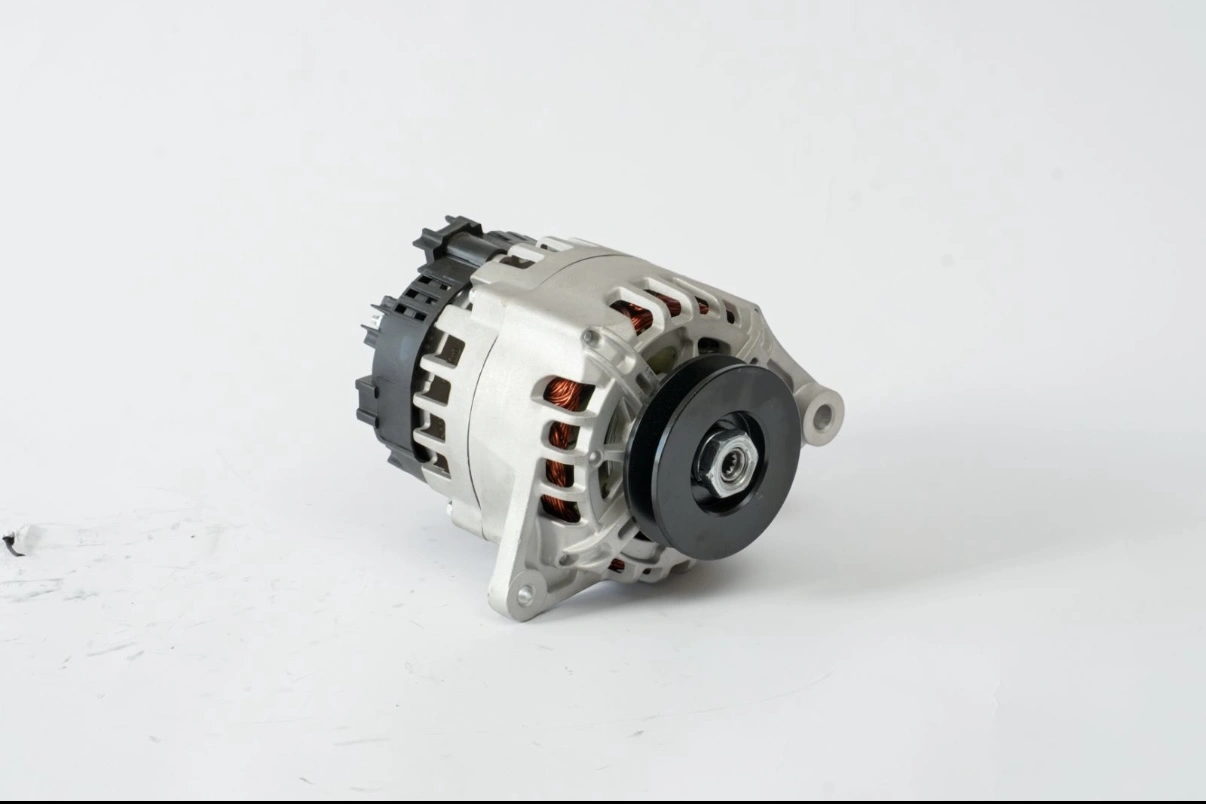
Understanding the Role and Importance of Auto Alternators
The replacement auto alternator in your car is the main power source. It takes mechanical energy from the engine's movement and turns it into electrical current that charges the battery and powers all of the systems inside the car. If your replacement auto alternator doesn't work, even a fully charged battery will die in minutes, leaving you stuck with dead tools and an engine that won't start.
How Do Alternators Power Modern Vehicles?
Modern cars need electricity that is clean and stable. The replacement auto alternator gives power to safety technologies like sensors that help avoid collisions, entertainment systems, and air controls. Any change in voltage can set off warning lights on the dashboard, make sensors act in strange ways, or even damage sensitive electronic parts. This makes picking a reliable unit very important for fleet managers who are in charge of hundreds of cars or for makers who need consistent performance from their parts.
Recognizing Symptoms of Alternator Failure
There are a few signs that your replacement auto alternator needs to be replaced. Headlights that dim when the car is not moving, dashboard lights that flash, or a power warning lamp are all common signs. You may also notice that the power windows move slowly, the horn doesn't sound very good, or the engine won't start even though the battery is new. If you hear grinding or whining sounds coming from the replacement auto alternator area, it means that a bearing is failing. If you notice these signs early, you can keep your electrical system from shutting down completely, which would require expensive towing and emergency repairs.
Common Causes of Alternator Breakdown
Most replacement auto alternators break down because the gears are worn out, which causes friction and burning. When diodes in the rectifier bridge burn out, they stop converting AC to DC correctly. This leads to voltage spikes that hurt other parts. When exposed to heat for a long time, especially in engine bays that are hotter than 125°C, stator wire protection breaks down. External factors, such as fluid pollution from oil leaks or rust from road salt, speed up the breakdown of parts. When buying teams know about these failure modes, they can choose units with better heat protection and sealed construction that last longer between service calls.
Key Criteria for Selecting the Best Replacement Auto Alternator
To choose the best replacement auto alternator, you have to look at a lot of technical and financial factors that have an effect on how reliable it is and how much it costs to own.
Evaluating Output Capacity and Performance Parameters
The most important feature is the amperage number. Most small passenger cars need 60A to 90. A unit, SUV, or business vehicle with lots of accessories needs 120A to 150A, and business vehicles may need 200A or more. By matching your vehicle's electricity load, you can avoid undervoltage situations that drain batteries too quickly. Check the replacement auto alternator's low-RPM performance as well as its raw current. Units that produce a lot of power when they're not in use avoid the "slow discharge" problem that happens a lot in city delivery trucks that have to stop and start their engines a lot.
Assessing Durability Under Operational Conditions
The level of protection you need depends on your operating environment. Standard units break down in months when they come into contact with dust, water, and vibrations in construction and farming tools. When shopping for electronics, look for sealed bearing systems, conformal coats on the circuit boards, and IP-rated housings that keep water out. It doesn't matter what temperature it is—Class H insulation can be used continuously above 125°C without breaking down, which means it lasts 40–60% longer than lower-grade insulation systems.
OEM Versus Aftermarket: Balancing Quality and Cost
OEM replacement auto alternators promise a perfect fit and electrical compatibility, but they are very expensive, which makes it hard for large fleets to afford them. The efficiency of quality aftermarket units made to OEM standards is about the same, but they cost a lot less. The main difference is in the standards for manufacturing and the severity of the tests. Units made in IATF 16949-certified factories that have been fully loaded and tested across all RPM ranges are just as reliable as OEM units but don't cost as much. These exact standards are met by the replacement auto alternators that XITU makes. They have precision-machined parts and high-purity copper windings that give OEM-level performance at aftermarket prices.
Warranty Terms and Technical Support
A full guarantee shows that the company that made the product is confident in its reliability. Look for coverage that lasts at least six months and protects against problems with the way the product was made. In addition to the length of the guarantee, you should also look at what it covers. For example, thermal shock failures and voltage regulator defects are covered by top providers, not just catastrophic failures. The supply of technical help is just as important. Suppliers who offer installation help, troubleshooting help, and quick replacement processing cut down on the time your vehicle isn't running and the hidden costs that come with having broken parts in stock.
Comparing Different Types and Brands of Auto Alternators
There are many different types and brands of replacement auto alternators on the market, and each has its own benefits for different buying situations.
Brand New Versus Remanufactured Units
Remanufactured cores come with some doubt, but brand-new replacement auto alternators don't have that. Even though refurbished units are cheaper and better for the environment, they break down more often because the metal in the housings wears out and the used parts may not be as strong as new ones. Commercial fleets that value uptime prefer new units, even though they cost more up front. The XITU product line only uses brand-new parts—no recycled cores or iffy internal parts—so you can be sure of consistent performance and a longer average time between fails.
Standard Output Versus High-Performance Alternators
Standard replacement auto alternators are enough for cars that already have a lot of electrical load on them. When you add aftermarket parts like extra lights, winches, freezer units, or mobile power inverters, you need units with a high output. Before you install a higher-amperage replacement auto alternator, you need to make sure that your car's wiring gauge can handle the extra current flow without getting too hot. When fleet owners upgrade to high-output units, they often find that they also need to upgrade the replacement auto alternator wire harness to keep the voltage from dropping, which cancels out the increase in capacity.
Leading Global Brands and Their Positioning
Bosch and Denso are examples of the top OEMs because they sell straight to automakers and charge those companies the same prices. Valeo and Delphi are in the mid-premium market because they offer good engineering at reasonable prices. Replacement units from AC Delco are used by the aftermarket in North America and are solid. If you compare these well-known names to specialized ones like XITU, keep in mind that brand recognition doesn't always mean better engineering. With its IATF 16949 certification and 20,000 m² factory that has more than 50 precise testing stations, XITU can match the production skills of any global brand. Each year, the company ships more than 500,000 units to wholesalers in North America, Europe, and Russia.
Assessing Supplier Credibility and Consistency
Not only are product specs and practical reliability looked at when evaluating a supplier. When products are always available, you don't have to worry about running out and having to change your upkeep plans. Quality stability from batch to batch makes sure that the unit you receive is the same as the sample you tried. Respondent customer service fixes billing problems, speeds up urgent orders, and gives expert information when it's needed. Stable lead times of 30 to 60 days and working with trustworthy international logistics companies are signs that a supplier has the operational maturity needed for long-term B2B relationships.
Practical Guide to Testing and Troubleshooting Auto Alternators
Maintenance teams can use the right testing methods to figure out if the replacement auto alternator needs to be replaced or if symptoms are caused by other parts that are connected.
Performing Basic Voltage Output Checks
First, use a digital multimeter to do a simple voltage test. It should show 12.4 to 12.7V when the engine is off. Start the engine and check the voltage at the battery terminals. A replacement auto alternator that is working properly should produce 13.8 to 14.4V when the engine is at idle. If the voltage is less than 13.5V, it means the output is weak. If it's more than 14.8V, it means the regulator is broken, which overcharges the batteries. Turn the engine up to 2000 RPM and make sure the voltage stays stable in this range. A big change in voltage could mean that there are problems with the diodes or the links between the wires.
Conducting Load Testing Procedures
Load testing shows if the replacement auto alternator can keep the power steady when real-world electricity needs arise. To make the most energy load, turn on the headlights, climate control, back defroster, and any other devices. If you look at the voltage at the battery, it should stay above 13.2V even when it's fully loaded. The replacement auto alternator can't provide enough power for your car if the voltage drops a lot. Professional-level load testers use measured resistance to measure current output, which makes sure that the replacement auto alternator works at its full RPM range.
Diagnosing Mechanical and Electrical Faults
When something mechanical fails, it makes noise. Grinding sounds mean that a bearing is worn out and needs to be replaced right away to avoid a full seizure. That high-pitched whining sounds like a broken gear or magnetic noise from diodes that are shorted out. The intermittent charging is due to worn brushes that don't make good contact with the slip rings. External problems can be seen: vibration damage is caused by loose mounting brackets, resistance is caused by rusted connections, and belt misalignment is caused by damaged pulleys, which speeds up wear on both components.
When to Repair Versus Replace?
It only makes sense to fix expensive replacement auto alternators where replacement brush packs or voltage regulators are easy to find and installation costs are low. When it comes to standard passenger vehicles, replacing the replacement auto alternator is cheaper than hiring someone to fix it. The voltage control is built into modern replacement auto alternators, which makes field fixes impossible. Commercial fleet operations benefit from replacement strategies that keep vehicles running as much as possible—switching out a whole unit only takes 30 minutes, compared to hours of diagnosing the problem and finding parts for repairs.
Procurement Considerations for B2B Buyers and OEMs
When you buy a lot of replacement auto alternators, strategic decisions about where to get them have a big effect on your bottom line.
Developing Effective Sourcing Strategies
When you buy in bulk, the price per unit goes down by a lot. Distributors that sell to aftermarket chains should build relationships with manufacturers that can consistently make a lot of products. By negotiating yearly supply deals with deliveries every three months, you can balance the costs of keeping goods with the benefits of volume prices. Diversifying suppliers across regions protects against disruptions in regional supplies, but this must be weighed against the benefits of quality control that come with buying from a single source of certified manufacturers.
Budgeting and Cost Estimation Methods
Besides the unit price, figure out the total cost of ownership. Include the cost of freight, which can change a lot depending on whether the order needs to be shipped by air or by cheap ocean freight. When failure rates are taken into account, a unit that costs 15% less but fails twice as often ends up costing more in the long run because of customer complaints, warranty handling, and damage to the company's image. Quality replacement auto alternators from approved makers like XITU are worth the slightly higher price because they last longer, don't break down as often, and require fewer warranty claims.
Evaluating Purchasing Channels and Partners
Online business-to-business (B2B) marketplaces are convenient, but sellers' credentials need to be carefully checked. Authorized dealers can ensure authenticity and handle official warranty handling, but they may charge more. When it comes to price, customization possibilities, and technical help, working directly with the manufacturer is the best choice. Check for certifications like IATF 16949 and ISO 9001, look at documentation about the facility's capacity, and ask for sample units to be tested by a third party before committing to large orders.
Ensuring Order Accuracy and Quality Verification
Verifying the part number keeps you from making mistakes that cost a lot of money. For example, replacement auto alternators with different mounting setups or electrical connections cause installation issues and customer returns. Ask for detailed lists that match replacement auto alternators to specific years, makes, models, and engine configurations of vehicles. Plug-and-play installation is possible with units that are suitable with Bosch OEM numbers 0124325003, 0124325043, CA1378IR, 13852N, 0289030253, and 0289030254 for the Audi A2, A3, S3, TT, and Volkswagen Beetle, Bora, Caddy, Fox, and Golf IV. Talk about inspection methods that will let you check sample units before taking full orders. This will protect you from batch defects.
Conclusion
To choose the best replacement auto alternator, you have to weigh the technical specs against the supplier's capabilities and the total cost. Give priority to units that were made to OEM standards in certified facilities and come with clear documentation of all the tests they were done and clear warranty coverage. Partnering with makers that offer stable quality, flexible MOQs, and quick technical support is key to long-term success, whether you're a fleet manager taking care of hundreds of cars or an aftermarket distributor. With the information in this article, you can make smart choices that will cut down on downtime, keep costs low, and keep the electrical system in your vehicle reliable in a variety of operating conditions.
FAQ
Should I choose a brand-new or remanufactured alternator?
Remanufactured cores come with risks that aren't present in brand-new replacement auto alternator units. Even though refurbished replacement auto alternators cost less at first, they are more likely to break down because of metal wear and used internal parts. New replacement auto alternators with more reliable performance and longer service lives are good for critical applications.
Why does my alternator make high-pitched whining noises?
Whining usually means that internal bearings are wearing out or that magnetic noise is coming from diodes that are shorted. Both situations need to be checked out and fixed right away to keep the system from failing completely and damaging any electrical parts that are linked.
Can I install a higher amperage alternator than originally specified?
Yes, as long as the mounting spots are the same and the main wire gauge is upgraded to handle more power. Higher power units are better for cars with more extras, but if they aren't installed correctly, they can overheat and cause fires.
How does the alternator communicate with modern vehicle computers?
Modern replacement auto alternators use LIN-bus or CAN protocols, which let the engine control unit change the charging voltage based on the temperature of the battery and the load on the electrical system. This makes the battery last longer and use less fuel.
Partner with XITU for Reliable Alternator Supply Solutions
For 28 years, XITU has been making high-quality automotive electrical parts. They make high-quality replacement auto alternators for procurement professionals who want OEM-level performance without paying a premium. Our 20,000-square-meter, IATF 16949-certified facility has more than 50 precise testing sites that make sure every replacement auto alternator manufacturer unit meets strict voltage accuracy requirements (±0.2V tolerance) across all RPM ranges. We offer stable wait times of 30 to 60 days, open ODM/OEM customization to meet the needs of each market, and a six-month guarantee with helpful technical support. Get in touch with our team at arisa@xitu-auto.com to talk about your unique replacement auto alternator needs and find out how our proven experience with foreign supply can make your supply chain more reliable.
References
1. Society of Automotive Engineers International. "Automotive Electrical System Design Standards and Testing Protocols." SAE Technical Paper Series, 2021.
2. Anderson, Michael J. "Commercial Fleet Electrical System Maintenance: Best Practices for Alternator Selection and Replacement." Fleet Management Quarterly, vol. 34, no. 2, 2022, pp. 112-128.
3. International Automotive Task Force. "IATF 16949:2016 Quality Management System Requirements for Automotive Production." IATF Certification Standards, 2016.
4. Chen, Wei and Roberts, David. "Comparative Analysis of OEM and Aftermarket automotive alternators: Performance, Durability, and Cost Factors." Journal of Automotive Engineering and Technology, vol. 19, no. 4, 2023, pp. 301-319.
5. Thompson, Sarah L. "Electrical System Diagnostics for Heavy-Duty Vehicles: Alternator Testing Methodologies." Commercial Vehicle Maintenance Handbook, 3rd ed., Professional Technician Publishers, 2022.
6. Global Automotive Suppliers Association. "Procurement Guidelines for Automotive Electrical Components: Quality Assurance and Supplier Evaluation Criteria." GASA Industry Report, 2023.