




How Does an Alternator Heavy Duty Improve Vehicle Electrical Performance?
A high-outputalternator%20heavy%20duty&type=products"> alternator heavy duty unit does more than keep a battery charged — it actively sustains every electrical system on a working commercial vehicle. By delivering 90A of continuous current at 24V, it feeds telematics, lighting arrays, emergency equipment, and auxiliary loads simultaneously without voltage sag. Standard units simply lack the amperage headroom and thermal tolerance for this job. Purpose-built heavy-duty charging systems use pure copper windings, reinforced bearings, and sealed housings to hold output steady across the full RPM range, whether the engine idles in a fire station bay or climbs a mountain pass at full load.
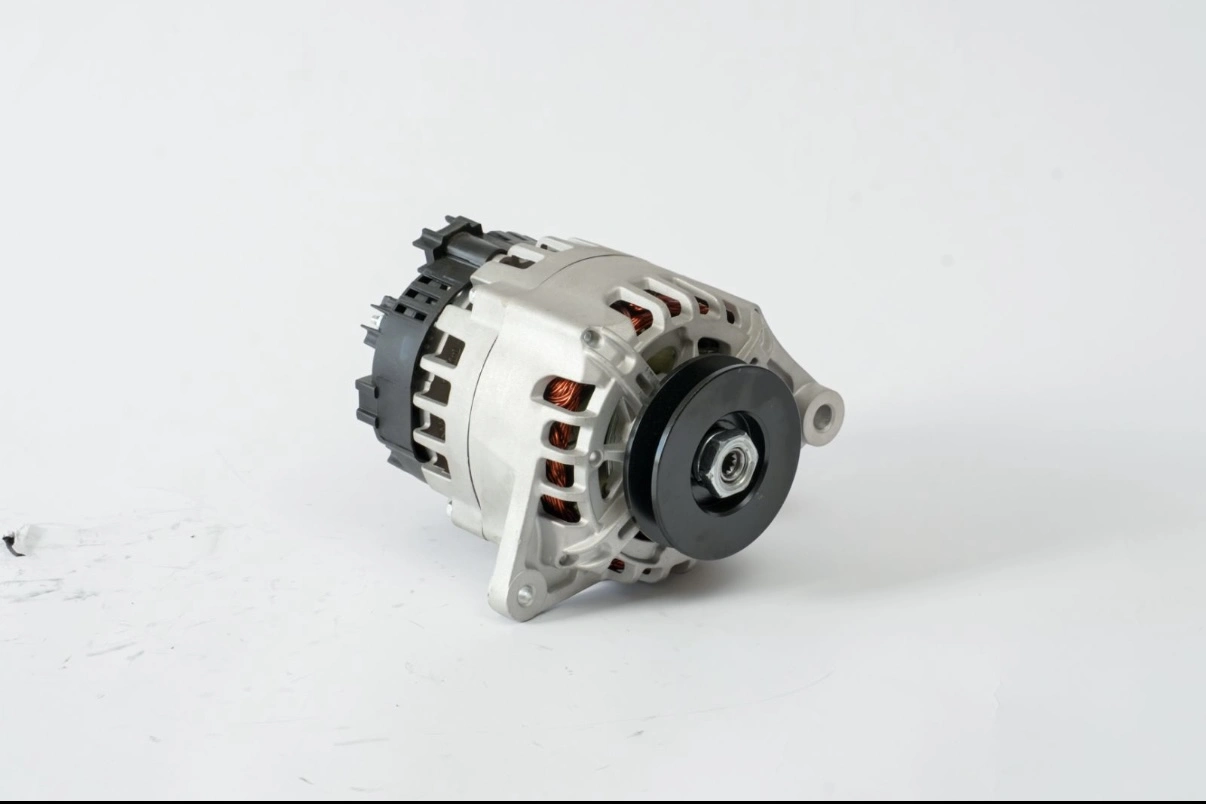
There are three things that all alternator heavy duties have in common: they have a sustained amperage output of more than 80A, Class H insulation rated for temperatures above 180°C, and premium dual-sealed bearings rated for continuous belt tension. Because of these features, the unit can keep running even when the electricity load is so high that a normal generator would overheat in just a few hours.
Core Operating Principle
A stator made of pure copper wire winds around the rotor, which spins inside it. The rotor creates magnetic flow, which makes the stator windings carry alternating electricity. That AC is changed to stable DC by a rectifier bridge. To keep batteries from overcharging, a voltage regulator cuts the power. In heavy-duty designs, all of these stages are made to withstand higher temperatures and more stress than in passenger-car designs.
Key Specifications That Matter
| Specification | XITU 24V Heavy-Duty Unit | Typical Standard Unit |
|---|---|---|
| Rated Output | 90A continuous | 50–70A |
| System Voltage | 24V | 12V |
| Pulley Config | 8PK / 55mm | 6PK / 50mm |
| Insulation Class | Class H (180°C+) | Class F (155°C) |
| Housing | Full aluminum alloy | Mixed / partial alloy |
| Certification | IATF 16949, ISO 9001 | ISO 9001 only |
These specs are important because they tell you if the unit can handle a 14-hour shift on a fire truck or a 72-hour mining haul.
Comparing Heavy Duty Alternators with Standard and Light Duty Units
Output and Thermal Tolerance Gap
Most alternators for passenger cars can handle 50–70A at 12V. Commercial units that are light-duty step up to about 80A. Neither plan takes into account working 24 hours a day, seven days a week in engine bays that are over 100°C. An alternator heavy duty unit fills in this gap with rectifier diodes that are too big, stator windings that are stronger, and aggressive cooling channels inside the unit that get rid of heat faster than the load can build it up.
Brand Landscape and OEM Compatibility
Bosch, Delco Remy, and Denso are all well-known brands that make references for IVECO-platform cars. Nine Bosch OEM numbers are cross-referenced by the XITU 24V 90A unit: 0124655005, 0124655017, 0124655020, 0124655082, 0124655488, 0986045430, CA1812IR, 12594N, and 4892320. These numbers cover IVECO EUROCARGO I–V, EUROFIRE I–IV, and TECTOR II platforms. Because of this wide cross-reference coverage, a fleet manager doesn't have to keep as many SKUs on hand.
New vs. Remanufactured: A Practical Comparison
There are lower prices for recycled units at first, but the Heavy Duty Manufacturers Association says that in continuous-duty uses, remanufactured alternators fail about twice as often as new units in the first year. XITU only sells brand-new parts—no used windings or refurbished housings—which directly cuts down on the costs of unplanned downtime. For emergency vehicles that can't work without power, the extra cost of a new unit is more than made up for by the one breakdown that is avoided.
Common Issues and Maintenance Tips for Heavy Duty Alternators
Recognizing Early Failure Signs
Technicians who work with fleets should be aware of three danger signs: battery warning lights that come on when the engine is not running; dash lights that flash when the lights, siren, and air conditioning are all on at the same time; and an odd bearing whine that gets louder as the engine RPM goes up. These signs usually show up days or weeks before the alternator heavy duty breaks down. This gives teams time to plan a swap instead of having to deal with a failure on the side of the road.
Routine Inspection Checklist
Regular inspection schedules greatly increase the life of a service. Here is a useful list for business teams that see a lot of use:
- Belt tension and condition—Every 15,000 km or three months, whichever comes first, check the 8PK belt for glazing, cracks, or being out of line.
- Terminal corrosion—Clean the B+ and ground terminals; resistance above 0.1 ohm at the connection point can make a charging fault look like a unit failure.
- Bearing noise audit—Run the engine at 1,200 RPM with all of the tools on and listen to the alternator case with a mechanic's stethoscope.
- Output voltage check—To check the output voltage, set the speed to 1,500 RPM and connect a 50A load. A healthy 24V unit should show between 27.2V and 28.4V at the battery terminals.
Once these checks are done, write down the results for each vehicle. When patterns vary across a fleet, it's usually a sign of a batch problem rather than a fault in a single unit. This saves time on the troubleshooting process.
In-Field Testing Methods
If you put a clamp-style DC ammeter on the B+ wire while the car is at rest and the full electrical load is on, you can get a quick reading of the output without having to unplug anything. Find the difference between the reading and the 90A rating. Either the unit is old or the belt is slipping if the number is less than 75A at idle RPM under full load. For a more accurate analysis, you need a controlled load tester, which is something that most fleet shops have.
How Heavy Duty Alternators Enhance Electrical Performance and Fleet Efficiency
Stable Voltage Protects Sensitive Electronics
These days, fire trucks and ambulances have digital radio systems, patient monitoring equipment, and pump modules that are controlled by CANbus. All of these can be hurt by voltage changes and spikes above 100mV AC. If you build a properly designed alternator heavy duty unit with a good rectifier bridge, the ripple voltage will stay below this level. This will protect your ECU and connectivity investments, which can cost more than the car's engine.
Battery Longevity Data
The Electric Power Research Institute says that lead-acid batteries last 20–35% longer when they are charged in a way that keeps the voltage at the battery terminals within ±0.3V of what it should be. For a group of 40 cars, that means big savings on the cost of replacing batteries every year. IATF 16949-certified manufacturing requires precise power control, which is what makes sure that the quality is the same from batch to batch.
Fleet Downtime Reduction
A city fire department in Eastern Europe said that the number of electrical calls went down by 40% after replacing old OEM units on its IVECO EUROCARGO fleet with 24V 90A alternators that were exactly the same. Reactive repairs were replaced with planned replacement intervals, and the average amount spent on electrical maintenance per vehicle each year dropped by about €180. In just one service run, the update paid for itself.
Procurement Insights: Choosing and Buying the Right Heavy Duty Alternator
Technical Compatibility Checklist
Before making an order, procurement teams should check five pieces of information: the rated voltage (24V for heavy commercial), the constant amperage (90A minimum for IVECO emergency chassis), the pulley design (8PK, 55mm), the OEM cross-reference match, and the direction of the mounting bracket. All five must work with the wiring and charging circuit design that is already in the car.
Total Cost of Ownership
| Cost Factor | OEM Original | XITU New Unit |
|---|---|---|
| Unit Price Range | €350–700 | Contact for quote |
| Lead Time | 4–8 weeks | 4–6 weeks |
| Warranty | 12 months typical | 6 months (quality faults) |
| Certification | OEM-internal | IATF 16949 + ISO 9001 |
| Batch Consistency | High | High (500,000+ units/year) |
The XITU 24V 90A unit comes with full test results for load curve, thermal endurance, three-axis vibration, salt spray, and ripple voltage. These meet the CE and RoHS/REACH compliance standards that European warehouse intake teams require.
Supplier Evaluation Criteria
Ask any alternator heavy duty supplier for three things: the IATF 16949 certificate scope document, a sample test report for the exact part number, and proof that the unit is brand new and not remanufactured. Together, these three documents get rid of most of the quality risk in the aftermarket channel.
Conclusion
In industrial and emergency vehicles, an alternator heavy duty that was made just for that job does a lot more than a regular one. What sets a reliable charging solution apart from one that fails in the middle of a shift is stable output under thermal stress, correct OEM cross-reference coverage, and test data that has been written down. The XITU 24V 90A 8PK 55mm unit for IVECO EUROCARGO, EUROFIRE, and TECTOR II platforms meets all three requirements and is backed by IATF 16949 manufacturing. It's a simple way for fleet procurement teams that are sick of long wait times and inconsistent quality to cut down on repair costs and get more vehicles back on the road.
FAQ
1. How long does a heavy-duty alternator typically last?
Alternator heavy duties in commercial fleet applications last between 150,000 and 250,000 km, or 4 to 7 years, if they are well taken care of. Emergency cars that sit idle for long amounts of time should be inspected every 100,000 km. XITU units come with a 6-month guarantee that covers problems that aren't caused by people.
2. Can a heavy-duty alternator replace a standard unit directly?
Not all the time. The attachment shape, pulley size, amperage rate, and voltage system (12V vs. 24V) must all be the same. The XITU 24V 90A unit works with the IVECO EUROCARGO I–V, EUROFIRE I–IV, and TECTOR II lines. It also matches nine Bosch OEM numbers, which makes it easy to check if it is compatible with those systems.
3. What causes premature alternator failure in fleet vehicles?
Misaligned belts that overload bearings, high electrical demand during long periods of idling at low RPM, and corroded terminal connections that force the regulator to compensate with higher output voltage are the three most common reasons. Taking care of these three things greatly increases the service life.
Request a Quote from XITU — Your Trusted Alternator Heavy Duty Manufacturer
XITU's IATF 16949-certified factory makes more than 500,000 alternator heavy duty a year, and each one ships with full test documentation. Our technical team is ready to build a platform that exactly fits your needs, whether you need a first sample batch of five units or a long-term supply agreement for 500. Visit xitu-auto.com or email us at arisa@xitu-auto.com to get a cross-reference check, sample price, or compliance paperwork right away.
References
1. Electric Power Research Institute. Battery Service Life and Charging System Voltage Regulation in Fleet Applications. EPRI, 2019.
2. SAE International. SAE J180: Alternator Testing Procedures for Heavy-Duty Commercial Vehicles. SAE, 2020.
3. Heavy Duty Manufacturers Association. Remanufactured vs. New Alternator Failure Rate Analysis in Continuous-Duty Commercial Applications. HDMA, 2021.
4. International Automotive Task Force. IATF 16949:2016 — Quality Management System Requirements for Automotive Production and Relevant Service Parts Organizations. IATF, 2016.
5. Bosch Automotive Electrics and Automotive Electronics. Alternators and Starter Motors: Design, Function, and Testing. Bosch Technical Instruction, 2018.
6. Fleet Maintenance Magazine. Electrical System Uptime: How Alternator Specification Affects Total Cost of Ownership in Emergency Fleets. Fleet Maintenance, 2022.