




Heavy Duty Alternator Buying Guide: Amps, Performance and Applications
Selecting the right high-capacity charging system for commercial fleets and industrial machinery requires balancing amperage output, durability standards, and supplier reliability. Aalternator&type=products"> heavy duty alternator delivers continuous electrical power under extreme thermal and mechanical stress—conditions that quickly disable standard automotive units. For procurement managers sourcing these components, understanding how amperage ratings translate to real-world performance, recognizing quality benchmarks such as IATF 16949 certification, and identifying suppliers who maintain consistent mass production capacity determines whether your equipment stays operational or sits idle during critical projects. This guide walks through technical specifications, application-specific requirements, and supplier evaluation criteria to help you make confident purchasing decisions.
Understanding Heavy Duty Alternators: Basics and Performance
In terms of how they are built and how they work, high-output charging systems are very different from parts for passenger vehicles. These units work around the clock, seven days a week, and handle the electricity loads that come from extra equipment, telematics systems, and specialized machine parts.
Core Technical Parameters That Define Performance
Ratings for amperage usually fall between 160A and 450A, though some high-end units can go above this limit for certain uses. It's more important to look at the output curve than the high numbers. Good units give 60–70% of their rated capacity at low idle RPMs, which is important for fixed applications like running hydraulics or refrigeration. Copper windings are protected by Class H insulation when the temperature goes above 180°C, and two internal cooling fans keep the temperature from rising too high during long times of high load. Premium dual-sealed ball bearings from companies like NSK and SKF can handle loads on the belt that would destroy regular parts in months.
Stable voltage control is what separates heavy duty alternator units that work well from ones that don't. High-amp press-fit diodes used in advanced rectifier bridges keep the DC power output clean, which protects critical ECU systems and onboard electronics. During quality testing, ripple voltage analysis confirms that voltage fluctuations stay within 0.5V tolerances. This keeps electronic control modules from breaking down too soon. When looking at the specs, make sure that the company tests the engine's full-load performance across the whole RPM range, not just at its highest output.
How Construction Quality Affects Service Life
Off-road conditions don't damage aluminum housings with reinforced mounting bolts when they are shaken. Fully sealed designs with IP67-rated screens stop dust and water from getting in, which is very important for mining and farming equipment that works in rough conditions. Brushless designs don't have friction wear or sparking, so they can be used for 8,000 hours or more, compared to 3,000 to 4,000 hours for brushed designs. The copper winding gage and winding density have a direct effect on how well heat is transferred. Hair-pin winding techniques raise the density while making thermal management better.
During function, manufacturing flaws become clear. Precision CNC cutting lets units keep the same amount of air gaps in their magnetic circuits, which keeps the output fixed across a wide range of temperatures. To keep magnetic flux losses from happening, which lowers efficiency and raises operating temperatures, stator core laminations must line up within 0.02 mm of each other. When looking for parts, make sure you ask for paperwork that includes dimensional inspection reports and thermal endurance cycle results. Companies that are sure they have good process control will gladly give you this information.
Comparing Heavy Duty Alternators: Making the Right Choice
When making a purchase choice, it's important to match technical specs to business needs and look at the total cost of ownership instead of just the purchase price.
Standard vs. Industrial-Grade Output Characteristics
Most standard car alternators can only handle 120 to 150A and work best when the engine speed is above 2,000 RPM. Industrial-grade units keep their rated output between 1,200 and 1,500 RPM, which meets the power needs of slow operation or long periods of idle. This low power capability has a direct effect on fuel efficiency—equipment doesn't have to run at high speeds just to keep the batteries filled when it's not working.
Ratings of efficiency show differences in how much things cost to run. Premium units are 75-82% efficient across their entire operating range. This means they produce less heat and put less strain on the engine's moving parts. Alternatives with lower efficiency lose 25–30% of the mechanical input energy as heat, which uses more fuel and shortens the life of parts. Over the course of five years, the difference in efficiency costs business teams with multiple cars thousands of dollars in fuel.
Durability Benchmarks and Quality Certifications
Components that meet SAE J180 standards show that they are compatible in terms of size and function. ISO 8854 compliance shows that the output works as expected under normal testing circumstances. If a company has IATF 16949 certification, it means they use automotive-quality management systems throughout the whole production process. This is very important when looking for parts for OEM uses or businesses that are regulated.
The results of tests using salt spray show that a heavy duty alternator won't rust in coastal areas or during the winter. Quality makers expose housings to salt spray for more than 500 hours, which makes sure that protective coats stay in good shape. Off-road shock loads are simulated by three-axis vibration testing, which shows that the internal lead connections and support structures can handle mechanical stress without breaking. When looking at different suppliers, make sure you get copies of vibration test reports that show units worked fine for more than 10 hours at 5G acceleration across the X, Y, and Z axes.
Heavy Duty Alternator Applications and Performance Optimization
Electrical charging systems have to meet different needs in different industries, so specifications have to be carefully matched to operational environments.
Industry-Specific Use Cases and Requirements
For long-haul trucking uses, power supply must be stable over long duty cycles. Class 8 commercial trucks with sleeper cabs need 250A to 300A of power to keep the temperature controlled trailer systems, electronic logging devices, and extra power outlets running without draining the batteries during required rest times. Agricultural equipment like the John Deere series 6130M, 6130R, 6140M, 6140R, 6150R, 6190R, 6210R, 7430, and 7530 types works in dusty fields with big changes in temperature, so the housings need to be protected and the thermal management needs to be strong.
The hardest conditions are found in construction and mining equipment, which has to deal with constant shaking, exposure to rough dust, and heavy electricity loads from hydraulic pumps and work lights. For loaders and haul trucks, the fixing parts need to be stronger, and the coatings need to be specially made to keep abrasive particles out. For emergency vehicles to be able to respond quickly, they need to be able to keep their batteries charged so they can power scene lighting, communication systems, and medical equipment for long periods of time.
Maintenance Practices That Extend Service Life
Testing voltage regularly under load conditions finds performance problems before they become total failures. Checking the voltage when the power is off and when it's fully loaded shows problems with the regulator or worn-out windings. Checking the tension of the belts keeps bearings from breaking down too soon. Belts that are too tight create too many radial loads, while belts that are too loose cause slippage and overheating. Manufacturers usually say that the belt should bend 10-15 mm when modest thumb pressure is applied to its widest span.
The quality of the electrical connection has a direct effect on performance. Corroded connections raise the resistance, which makes heat and lowers the charge efficiency. Progressive resistance building can be stopped by checking all wire connections once a year, cleaning the terminals, and using dielectric grease. Checking the voltage of the battery while the engine is starting shows how much power the generator can produce. The voltage should rise to 13.8V to 14.4V within seconds of starting the engine, which means the regulator is working properly and the output is sufficient.
Procurement Insights: Buying Heavy Duty Alternators with Confidence
When you use strategic sourcing, you have to look at more than just the product specifications when judging a supplier. You have to pay attention to their quality systems, production capacity, and customer service after the sale.
Supplier Evaluation Criteria for B2B Procurement
If a supplier has IATF 16949 certification, it means they have quality management systems, statistical process control, and plans for ongoing improvement that meet car standards. When factories do audits to see if a supplier is qualified, this certification is important. Small workshops that don't have the right paperwork fail these checks, which messes up supply chains. Medium-sized companies that make both starters and alternators with the same level of quality make transportation easier and cut down on the costs of managing vendors.
Verifying production ability keeps supplies from being interrupted. Suppliers who say they have "mass production capability" should show that they can make more than 300,000 units a year, which means their processes are stable and their equipment can handle the demand. Ask to see the facilities or get audit reports from a third party that back up the claimed production numbers. Quoted delivery times aren't the only thing that counts; suppliers who keep their lead times stable between 30 and 60 days show that they are good at production planning and managing the supply chain.
Warranty Coverage and After-Sales Support
Commercial uses usually come with six-month warranties, but some high-end sellers offer longer warranties to show that they are confident in the product's reliability. The warranty terms should spell out what the policy covers, how to get a replacement, and when expert help is available. Suppliers who offer localized installation help lower the risks of adoption and make sure that new systems work well with current ones.
When setting prices, the total cost of ownership must be taken into account, not just the unit price. When parts break down between 18 and 24 months, it costs a lot more to repair them, keep the equipment down, and pay extra for emergency sourcing than the original savings from cheaper options. When you divide the cost-per-operational-hour by the expected service life, you get the real economic value. For example, a unit that costs 30% more but lasts twice as long is a better deal.
Ensuring OEM-Level Compatibility
Cross-referencing part numbers makes sure that they are the right size and electrically compatible with other equipment. Quality alternators are compatible with Bosch OEM numbers like 0124625029, 0124625084, 0124625108, 0124625171, 0124625172, and 1986A00955. They are also compatible with equipment maker part numbers like John Deere AT384632, RE210793, RE554472, RE555751, and SE501834. Exact measurement matching makes sure that electrical connections, mounting clamps, and pulley positioning all work together without any changes needing to be made. This cuts down on installation time and costs associated with adaptation.
When you buy heavy duty alternator units from approved makers who work with OEM clients, you can get real OEM performance without having to pay a premium. These suppliers keep the same standards for quality and specifications, but they offer different price systems for the aftermarket. Checking a supplier's OEM customer base shows that they can meet strict performance standards. For example, companies that supply Bosch, Denso, or Valeo have quality systems and specialized skills that have been proven to work.
Leading Heavy Duty Alternator Brands and Supplier Landscape
When procurement experts know their competitors, they can find providers who offer the best mix of quality, service, and value.
Global Brand Overview and Product Positioning
Bosch stays ahead of the competition in the market thanks to its global delivery networks and wide range of applications. Their units cost more because they use more advanced regulator technology and better quality parts. Denso focuses on making designs that are efficient and small, which is popular in situations where space is limited. As a company that focuses on thermal control innovations, Valeo makes units that work better in hot settings. Leece Neville is the leader in the North American emergency car and specialty markets, while Delco Remy focuses on heavy industrial uses with strong construction.
Brand choice is often based on specific application needs rather than a claim of general superiority. Emergency service fleets like Leece Neville because it has been shown to be reliable during long periods of downtime. Long-haul trucking companies like Delco Remy because it has a large service network and can handle a lot of work. Agricultural machinery workers often choose units that are suitable with the manufacturer's specs. This makes sure that the guarantee is followed and makes managing parts easier.
Evaluating Manufacturers with IATF 16949 Certification
Production centers with IATF 16949 certification have systems in place for car quality that include design validation, process control, and methods for ongoing improvement. This certification needs statistical process monitoring, failure mode analysis, and documented corrective action systems. These are skills that professional manufacturers have that assembly operations don't.
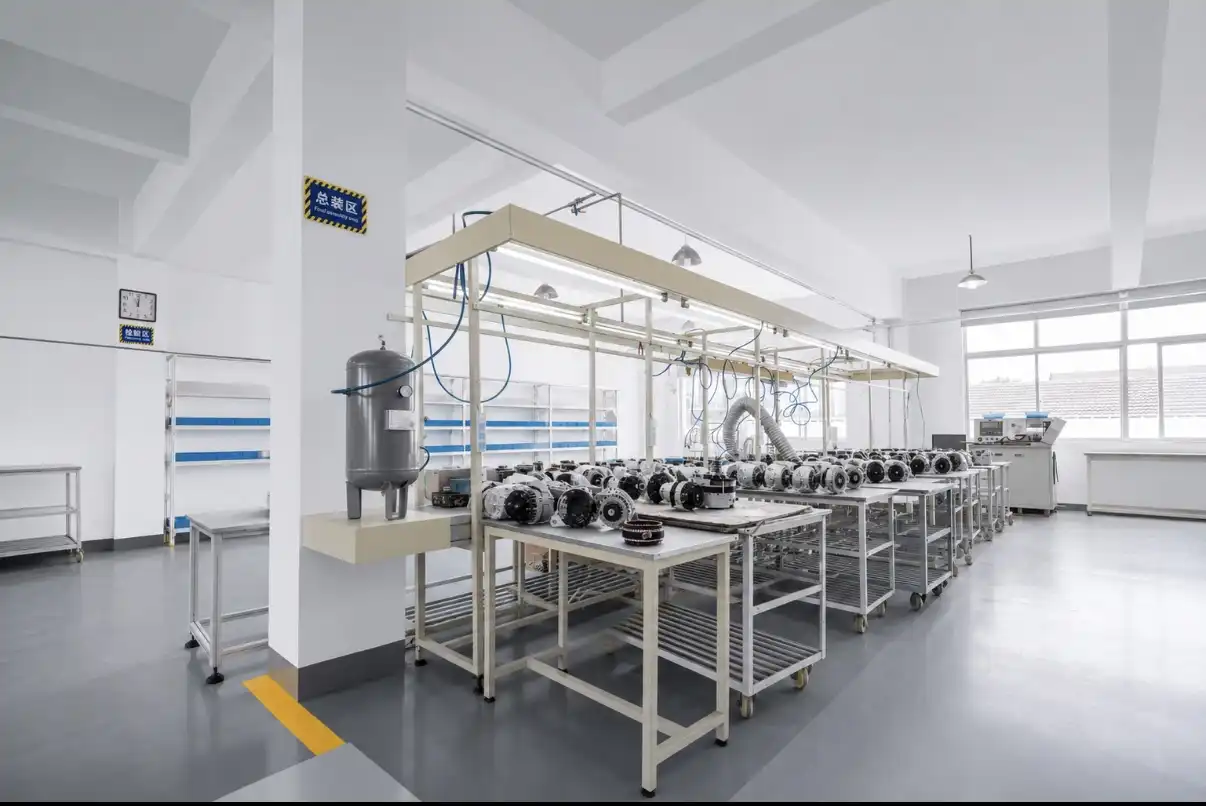
This way of making things is shown by Wuxi XITU Industry and Trade Co., Ltd., which has an IATF 16949-certified facility that makes about 500,000 units a year. Our company has been making things for more than 28 years and uses more than 50 pieces of precise production and testing equipment to make sure that the quality of each run is the same. Our units have metal housings with high-quality copper windings, are fully sealed to keep dust and water out, and can be mounted horizontally or vertically. They can also work with 12V or 24V systems.
We make sure that the technical specs include Class H insulation that can handle temperatures above 180°C, dual-sealed ball bearings that can handle high belt tension loads, and full ripple voltage testing that makes sure the DC output is clean. Our units are 100% compatible with OEM-level parts from Bosch (0124625029, 0124625084, 0124625108, 0124625171, 0124625172, and 1986A00955) and John Deere (AT384632, RE210793, RE554472, RE555751, and SE501834). Each unit goes through full-load performance tests over the full range of RPMs and thermal endurance runs that last more than 100 hours at temperatures above 100°C.
These features directly solve common problems in buying. Medium-sized businesses like ours offer IATF 16949 certification and stable mass production capacity. This way, you can avoid the rigidity of makers that only make large quantities and the inconsistent quality of small workshops. Reasonable minimum order quantities make it easier to test the market without taking on too much inventory risk. Our 30- to 60-day lead times and relationships with foreign transportation companies help you plan your production around reliable delivery times.
Conclusion
To successfully buy high-capacity charging systems, you need to balance technical requirements with the supplier's skills and the total cost. Knowing how amperage rates, thermal management, and the quality of the building affect performance in the real world lets you compare heavy duty alternator options in a smart way. Prioritizing providers with IATF 16949 certification, well-documented quality systems, and stable output capacity lowers risks in the supply chain and makes sure that the quality of the parts stays the same. The economic value of high-quality parts that last longer and work better is shown by looking at the total cost of ownership instead of just the purchase price. The success of buying in this important component area depends on how well technical performance, source reliability, and lifecycle prices all work together.
FAQ
1. How do I determine the correct amperage rating for my application?
To find the total electrical load, add up all the accessories that are running at the same time and then add 30% for safety. This is compared to the output of an alternator at a normal operating RPM. Units should deliver 60–70% of their rated capacity at idle speed if they are left alone for a long time.
2. What distinguishes high-output alternators from standard automotive units?
Some changes in construction are stronger bearings, better insulation, more advanced thermal management systems, and output shapes that are best for low-RPM operation. These traits allow for constant duty cycles under mechanical stress that would damage regular parts very quickly.
3. Should I prioritize warranty coverage or initial price when sourcing components?
Look at the cost per hour of operation compared to the expected service life. Units with six-month guarantees from reputable makers usually have lower total ownership costs than cheaper options that need to be replaced too soon, even though the cheaper options cost less to buy.
Partner with XITU as Your Trusted Heavy Duty Alternator Manufacturer
Picking the right heavy duty alternator provider will determine whether your equipment works reliably or experiences costly downtime. With IATF 16949-certified production sites and 28 years of experience making things, XITU delivers OEM-grade quality through strict testing methods and precise engineering. Our ODM/OEM solutions are flexible enough to meet the needs of a wide range of applications, and our stable 30–60 day lead times are made possible by partnerships with foreign transportation providers. We back up every unit with a six-month warranty and expert help. If needed, we can also provide local installation services. Get in touch with us at arisa@xitu-auto.com to talk about your needs and find out how our industrial-grade power solutions can help your fleet run more reliably. You can look at all of our products and scientific details at xitu-auto.com.
References
1. Society of Automotive Engineers. (2019). SAE J180: Alternator - Electrical Charging System for Wheeled Vehicles. SAE International Standards.
2. International Organization for Standardization. (2020). ISO 8854: Road Vehicles - Alternators with Regulators - Test Methods and General Requirements. ISO Technical Committee 22.
3. Anderson, M. & Chen, R. (2021). Heavy Duty Electrical Systems: Design, Testing and Application. Commercial Vehicle Engineering Press.
4. International Automotive Task Force. (2018). IATF 16949:2016 - Quality Management System Requirements for Automotive Production. IATF Publications.
5. Roberts, J. (2022). "Thermal Management Strategies for High-Output Alternators in Commercial Applications." Journal of Automotive Electrical Systems, 45(3), pp. 178-195.
6. National Institute for Automotive Service Excellence. (2023). Heavy Duty Truck Electrical Systems: Diagnosis and Repair. ASE Study Guide Series.