




All About Agricultural Alternators: Types, Applications and Benefits
alternators&type=products">agricultural alternators are heavy-duty charging devices engineered specifically for farm machinery operating in some of the harshest conditions on earth. Unlike standard automotive alternators, these units must handle thick crop dust, chemical fertilizer exposure, extreme temperature swings, and the electrical demands of precision ISOBUS farming controllers — all at the same time. Whether you stock parts for CASE combines, John Deere equipment, or Komatsu excavators, understanding how these devices work, what separates good ones from poor ones, and how to source them reliably can protect your customers' harvests and your business reputation.
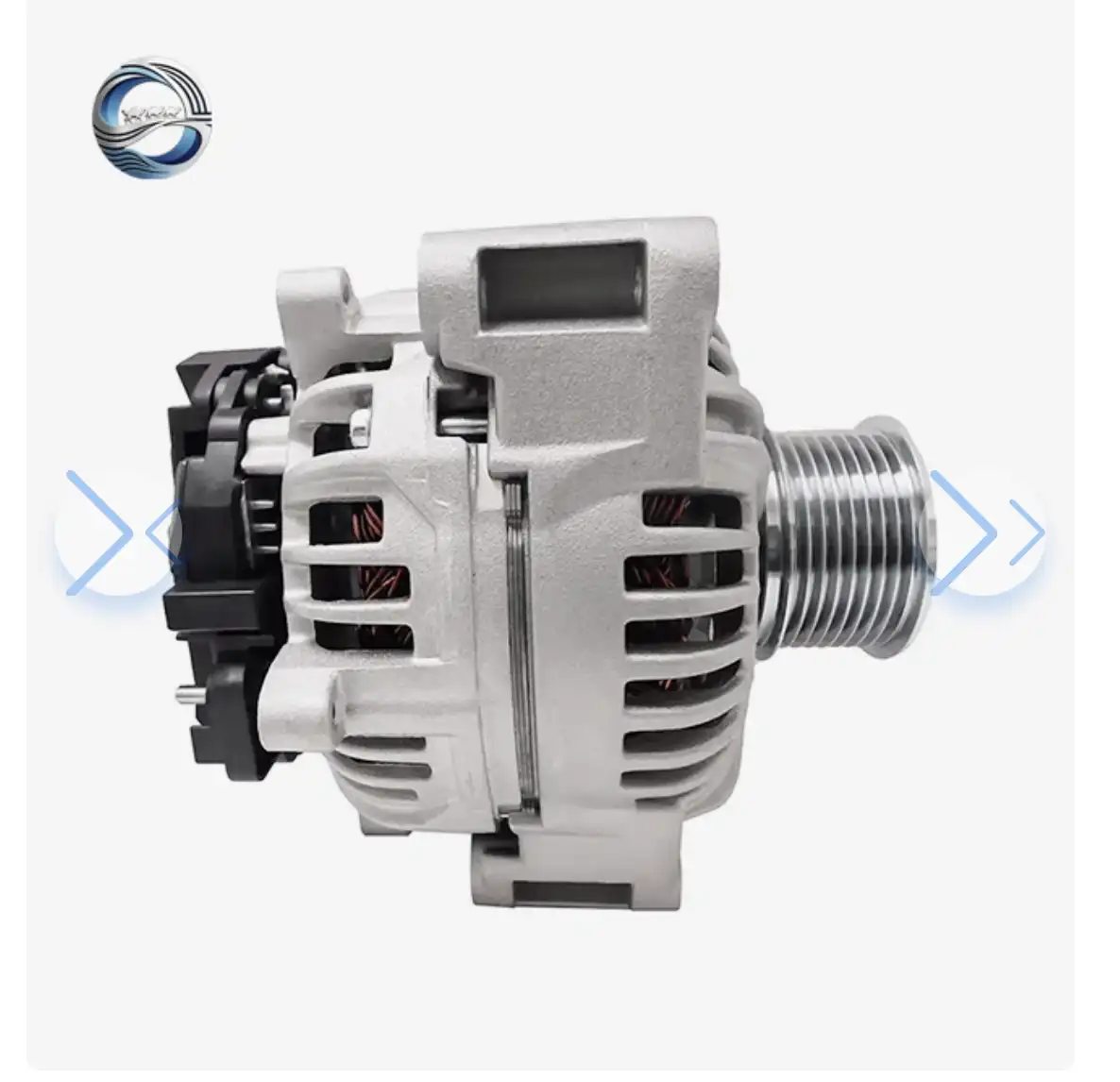
Understanding Agricultural Alternators: Types and Core Functions
How They Generate Power
An agricultural alternator takes kinetic energy from the belt drive of the engine and turns it into direct current (DC) power. Alternating current is made when the rotor spins inside the stator wire. A rectifier bridge changes this current to direct current. This means giving up to 1,200 watts of power all the time in a 24V 50A unit, which is what heavy-duty CASE 688P/788P/988P and John Deere MARINE series machines need to keep their batteries charged and their electronics going.
Brush vs. Brushless Designs
Carbon contacts are used in brushed alternators to send electricity to the field coil that is spinning. They are easy to find, don't cost much, and are simple to repair. Brushless designs don't have any of those wear points, which is especially important for dry-field harvesting where arcing can start fires. Brushless units with protected bearings are the safer long-term choice for places with a lot of chaff, even if they cost a little more up front.
Key Voltage and Output Specifications
Most farm tools are either 12V or 24V. 12V systems are used on older or lighter equipment, while 24V systems are used on big combines, grain carts, and excavators like the Komatsu PC450. How many electrical loads the machine can handle at the same time is based on its output amperage. The XITU 8PK unit's 50A rating is set to work with modern GPS receivers, variable-rate controllers, and LED lights in precision farming without dropping the voltage below the level that would cause ISOBUS systems to send fault codes. The voltage options are 12V and 24V, and the outputs are 65–90A and 50–200A.
| Spec | Automotive Standard | Agricultural Heavy-Duty |
|---|---|---|
| Voltage | 12V | 24V |
| Output | 65–90A | 50–200A |
| Protection Rating | IP44–IP54 | IP66/IP67 |
| Insulation Class | Class F (155°C) | Class H (180°C) |
Exploring the Benefits and Applications of Farm Alternators
Where These Units Are Deployed
Three situations in the field put the most stress on charging devices. To begin, precise grain gathering needs a very stable voltage output so that devices that measure yield and auto-steer systems can get clean power that doesn't have any radio frequency interference. Second, fodder farms run mowers and balers through thick, chaff-filled air for 16 hours a day; broken cooling screens quickly cause heat to build up. Third, remote irrigation pump sets are left to run alone in coastal areas that are wet or have salty air, where corrosion breaks electrical lines slowly over time.
Durability Advantages in Real Operations
A good agricultural alternators with IP66/IP67 approval physically stops fine dust from getting to the bearings, which is the most common reason field techs say something breaks. The units from XITU pass a 500-hour salt spray test that mimics long-term fertilizer exposure. That test procedure is based on the conditions set by ISO 9227. It gives procurement managers real proof instead of just a marketing claim.
Here is a comparison of protection ratings and their practical meaning for agricultural use:
| IP Rating | Dust Protection | Water Protection | Typical Application |
|---|---|---|---|
| IP54 | Partial | Splash-proof | Light utility vehicles |
| IP66 | Full seal | High-pressure jets | Field combines, sprayers |
| IP67 | Full seal | Immersion to 1 m | Irrigation equipment |
IP66/IP67 approval means that the locks have been tested and found to be valid, not just what is written on paper. This difference is important when a bearing fails during the corn harvest and a farmer loses $5,000 or more per day in capacity.
Energy Efficiency and ISOBUS Compatibility
Modern systems for precision farming talk to each other using ISOBUS (ISO 11783), a data bus that can sense voltage changes greater than 150 mV. Electrical noise from an alternator that isn't properly filtered can cause sensors to give false readings or stop auto-rate controllers in the middle of the field. During production, XITU checks that each unit stays within acceptable limits with voltage ripple analysis. This protects the electronics your customers depend on further down the line.
Maintenance and Troubleshooting: Keeping Your Alternator Running
Warning Signs to Watch For
The three most reliable early warning signs are voltage drops below 13.5V (12V system) or 27V (24V system) when the system is loaded, cab displays that flicker, and battery warning lights that only come on when the system needs a lot of power. If you see these signs before harvest time, you can avoid having to make repairs on the side of the road.
Inspection Checklist
Regular maintenance makes alternators last a lot longer. Every season, every repair worker should do these checks:
- Belt tension and condition: An 8PK poly-V belt that is old or loose can cut output by up to 15% and speed up the wear on the pulleys.
- B+ terminal torque and corrosion: Loose connections make heat, and contacts that are rusted raise the resistance and lead to charging shortfalls.
- Air intake screen cleanliness: Blocked screens raise the temperature inside; clean them every 250 service hours when it's dusty.
- Bearing noise check: A high-pitched whine when the load is put on the bearings means they are wearing out quickly. Catching this early stops major damage to the housing.
These four checks can keep machines from breaking down for days. They each take less than 20 minutes and can save you money.
Repair vs. Replacement Decision
It is cheaper to rebuild a brushed unit if only the brush assembly or rectifier diodes are broken and the housing and rotor are still good. Full replacement is almost always cheaper in work hours when a bearing has stopped and clogged the windings with dirt and dust. Since XITU's agricultural alternators are priced 40–60% less than OEM list prices while still meeting the same performance standards, fleet workers who are in charge of multiple machines often need to replace them.
How to Choose the Right Farm Alternator: A B2B Buyer's Guide
Match OEM Numbers Before Anything Else
Fixing mistakes in the fit cost time and money. The XITU 24V 50A 8PK unit covers Bosch 0120488206, 0120488294, 0120488319, 0120488323, 0120489481, 9120060045, 9120080137, 9120080187, and cross-references AR187916, E156163, AT161324, AT185696, RE525690, RE540413, TY24322, TY6774, AL12148 and others. One SKU can work with the CASE 688P/788P/988P, John Deere MARINE series, and Komatsu PC450 fleets all at the same time, which makes inventory management much easier for parts distributors in your area.
Evaluate Certifications, Not Just Claims
A supplier's quality management system for agricultural alternators has been checked by a third party if they have ISO 9000 and IATF 16949 certification. Compliance with SAE J1171 shows that there is external ignition safety. Shock, shaking, and changing temperatures are all part of ISO 16750 outdoor testing. Do not take printed specs at face value; instead, ask for real test results.
Warranty and Lead Time as Supply Chain Tools
A six-month guarantee that covers problems that aren't caused by people shows that the company behind the product stands behind it. Lead time is also very important for holiday buyers. XITU has a 30–60 day production-to-shipment window. This means that placing orders 8–10 weeks before the busy season gives plenty of time for ocean freight and customs clearance.
Installation and Wiring: Best Practices
Pre-Installation Compatibility Check
Before taking off the old unit, check the machine's service manual to make sure that the mounting bracket is facing the right way and that the terminals are in the right place. A poly-V belt has 8 grooves, which means that the pulley groove count is 8PK. A five-minute check keeps you from having to go back to the parts shelf.
Wiring Essentials
Connect the B+ terminal directly to the positive terminal of the battery using wires that are the right size for the amperage load; wiring that is too small leads to voltage drop and heat. You can make the alternator field work only when the key is on by connecting the excitation wire to the circuit for the ignition switch. Never use sheet metal clamps to connect the housing to the engine block; instead, ground it directly to the block.
When to Call a Professional
Clear the diagnostics before putting in the new unit if the machine has an active fault code that has to do with the charging circuit. It can be hard to tell if the replacement is working right because of residual problem codes. For machines with ISOBUS, a calibration check is done after installation to make sure that the voltage ripple is within the acceptable range.
Conclusion
Agricultural alternators for farms are not the same as alternators for cars. Modern combines and tractors need seals that are rated IP, have been proven to resist rust, and have low noise output because they are exposed to dust, chemicals, and precise electronics. Three things can make the difference between a smooth harvest and a costly breakdown: matching the correct OEM number, making sure the certifications are correct, and placing orders before your busy season. The XITU 24V 50A 8PK unit addresses each of those needs with test data that can be recorded and a compatible range that includes teams from CASE, John Deere, and Komatsu under a single part number.
FAQ
1. Why do farm alternators fail faster than automotive units?
Alternators for cars were never made to work in the conditions that farm equipment does. In just one crop season, fine grain dust gets into bearings that haven't been protected. Chemical fertilizer fumes eat away at terminal links and the surfaces of housings. When these conditions happen, a unit that doesn't have IP66/IP67 protection and a record of a salt spray test will usually break after 800 to 1,200 hours.
2. What does the 8PK designation mean?
This is the pulley profile: a poly-V (serpentine) belt with eight loops. The number 8PK stands for it. This groove count is normal on heavy-duty farm machines and tells you if the belt will work with them. If you use the wrong type of pulley, the belt will slip, output will drop, and the belt will wear out faster.
3. Can I use one part number across CASE, John Deere, and Komatsu machines?
Yes, as long as the OEM reference numbers match up correctly. The XITU 24V 50A unit is checked against more than 20 OEM numbers from all three brands. This lets service dealers who work with more than one brand keep more of their products in stock.
Source Your Agricultural Alternators from XITU — Request a Quote Today
For almost 30 years, XITU has sold farm charging equipment to dealers all over the United States and the world. Our 24V 50A 8PK farm alternator is certified by ISO 9000 and IATF 16949, ships in 30 to 60 days, and comes with a six-month guarantee. Whether you need a small test order of 50 units or a full yearly stock run, our team will make sure they work with your system, give you test paperwork, and help you through customs. To get a quote from an experienced agricultural alternators supplier, email us at arisa@xitu-auto.com or go to xitu-auto.com.
References
1. Society of Automotive Engineers. SAE J1171: External Ignition Protection of Marine Electrical Devices. SAE International, 2018.
2. International Organization for Standardization. ISO 16750: Road Vehicles — Environmental Conditions and Testing for Electrical and Electronic Equipment. ISO, 2023.
3. International Organization for Standardization. ISO 11783: Tractors and Machinery for Agriculture and Forestry — Serial Control and Communications Data Network (ISOBUS). ISO, 2017.
4. International Organization for Standardization. ISO 9227: Corrosion Tests in Artificial Atmospheres — Salt Spray Tests. ISO, 2022.
5. Proctor, P. Electrical Systems for Agricultural Machinery: Maintenance and Diagnostics. American Society of Agricultural and Biological Engineers, 2019.
6. Deere & Company. John Deere Electrical Systems Service Manual — MARINE and Agricultural Series. Deere & Company Technical Publications, 2020.