




Aftermarket Car Alternator vs OEM: Key Differences
When sourcing charging system replacements for your fleet or production line, understanding the distinction between alternator/aftermarket-car-alternator">aftermarket car alternator options and OEM units becomes essential for strategic procurement. Aftermarket alternators are independently manufactured by third-party suppliers, engineered to match or exceed original specifications, while OEM alternators originate directly from the vehicle's original maker. This fundamental difference impacts cost structures, availability timelines, quality consistency, and long-term operational performance. Recognizing these distinctions helps procurement professionals, wholesalers, and manufacturing partners make informed decisions that balance budget constraints with reliability requirements across diverse automotive applications.
Understanding Aftermarket and OEM Car Alternators
What Defines an OEM Alternator?
OEM alternators represent the exact components installed during vehicle assembly. These units come directly from manufacturers contracted by automakers, adhering strictly to original design specifications and factory calibration standards. Because they maintain identical engineering blueprints, OEM parts guarantee seamless integration with existing vehicle systems, including ECU communication protocols and mounting configurations. The traceability and documentation accompanying these units meet stringent automotive industry standards, making them the default choice for warranty-sensitive applications and brand-conscious fleet managers.
The Aftermarket Alternative Explained
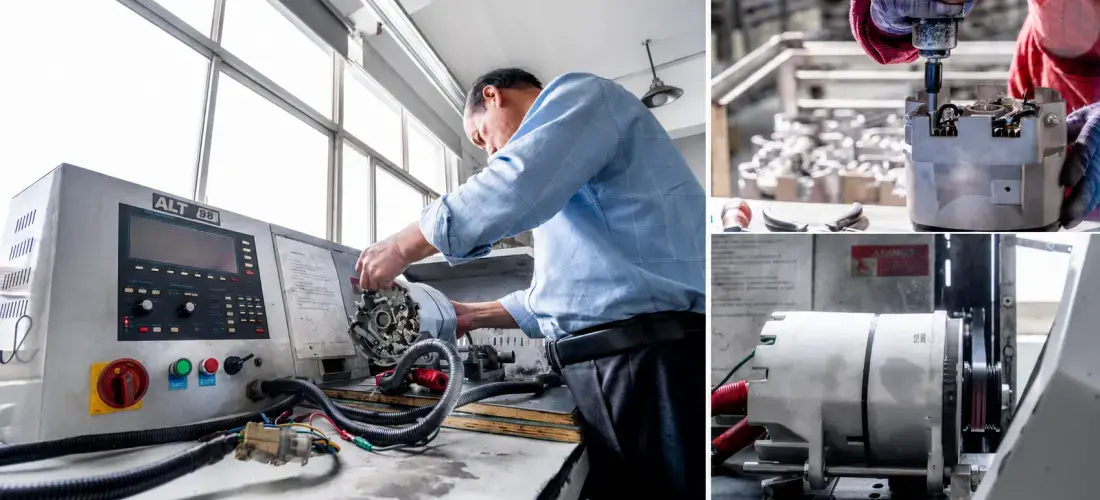
Aftermarket charging solutions are made by separate companies that reverse-engineer original ideas or make them better. At XITU, we've spent more than 20 years improving this aftermarket car alternator in our IATF 16949-certified plant. We've fixed common problems with OEM units while keeping or even improving performance. Our aftermarket products have voltage outputs ranging from 12V to 24V and current ratings from 60A to 300A+. They can be used in a wide range of vehicles, from small cars to heavy-duty commercial trucks. These units go through full-load performance mapping across RPM ranges of 800 to 6,000 and thermal endurance testing up to 125°C to make sure they will work reliably in tough conditions.
Manufacturing Process Distinctions
The ways that these two groups are made are very different from one another. When an OEM makes a car, they usually use very specific tools that are only used on one platform for that vehicle. This creates economies of scale within small model ranges. Our 20,000-square-meter center for aftermarket production uses flexible manufacturing systems that let us make more than 500,000 units a year while still being able to meet unique customer needs. This method lets us use new materials, like die-cast aluminum housings that better dissipate heat and Class H insulation copper windings, that fix thermal management problems that are often missed in older OEM designs. The end result is a product that fits just like the original, but with better performance learned from analyzing field data for decades.

Aftermarket vs OEM Alternator: Key Differences Explained
Quality and Performance Benchmarks
Performance stability is an important factor for B2B buyers to consider when making decisions. OEM units are very careful to follow the original specifications, which can be good and bad. Vehicles that are used outside of their original design parameters, like those with extra power needs or that are used in harsh climates, often use more power than the OEM alternator can handle. This problem is fixed by our aftermarket car alternator solutions, which have higher amperage output and better voltage regulation, calibrated to set points between 14.2V and 14.8V with ripple current suppression below 0.5V AC at full load. This accuracy saves delicate electronic parts and keeps batteries from getting damaged by charging processes that aren't regular. Heavy-duty rectifiers with 6–12 silicon diodes make sure that the DC output is clean enough to meet the needs of modern CAN-bus and LIN-bus communication systems found in fleets of commercial vehicles.
Cost-Effectiveness Analysis
Pricing systems show big benefits for buying things. OEM alternators usually cost 40–70% more than equivalent aftermarket units because of how the brand is positioned and how much the dealer network makes. When replacing a big fleet of vehicles or setting up inventory for delivery networks, this price difference becomes very important. Aside from the initial buy price, other costs that come with owning something include warranty coverage, availability during important downtime, and making sure that it works with repair plans. Our six-month warranty on manufacturing flaws, along with our expert help and quick replacement processes, makes it easier to plan your budget because you can be sure of the costs. Our ISO 9000 certification makes sure that manufacturing tolerances are always the same across production runs, so large buyers can save money without lowering quality standards.
Availability and Supply Chain Considerations
Managing lead time has a direct effect on the stability of operations. OEM parts for older types of vehicles often stop being made, which forces fleet managers to either buy new vehicles, which can be expensive, or do time-consuming cross-reference searches. Aftermarket sources keep a wider range of parts in stock across model years, and our production system can get parts to you in 30 to 60 days, even for custom designs. This dependability is very helpful for cross-border sourcing agents that work with a wide range of markets. Our export experience in North America, Europe, South America, and Russia means we know the different voltage standards and mounting styles used in each area. When you can get both starters and alternators from the same IATF 16949-certified supplier, like XITU, there are no longer any quality differences between suppliers of parts, and managing and auditing vendors is easier.
Common Considerations and Challenges with Aftermarket Alternators
Quality Inconsistency Risks
There is a wide range of quality in the aftermarket car alternator segment, from high-end makers to low-quality shops that don't have process standards. It can be hard for procurement teams to tell which suppliers they can trust and which ones are likely to fail early. Some warning signs are not enough output power at rest, too much noise from unbalanced rotors, and fast bearing wear that causes the shaft to move. These failures happen because of attempts to save money, like using thinner copper wire, not designing the heat well enough, or missing important testing procedures. These risks are taken away by our dedication to full-load performance mapping and thermal endurance validation. This makes sure that every unit that leaves our facility meets the same durability standards as original equipment.
Warranty and Support Variations
Warranty terms are very different between replacement sellers, which makes it hard to decide what to buy. OEM warranties are usually part of a vehicle's service contract. Aftermarket coverage, on the other hand, runs from limited protection for 90 days to full coverage for multiple years. We offer a clear six-month warranty that covers all production flaws. The claim process is simple, and your working staff won't have to deal with a lot of complicated paperwork. Professional suppliers are different from basic suppliers because they offer technical support. For example, our engineering team helps with installation, diagnostics, and failure analysis to make sure the same problems don't happen again. This focus on service changes the relationship between the buyer and the supplier from one of buying things to one of forming a strategic partnership.
Reliability and Lifespan Expectations
Service life estimates help buying teams plan when to replace things and how much inventory they will need. OEM alternators usually last between 100,000 and 150,000 miles in regular conditions, but this can change a lot depending on how hard the job is. When properly stated, high-quality aftermarket units meet or beat these standards. We use high-quality Japanese and European ball bearings instead of cheap bronze bushings, which cuts down on friction and makes the bearings last 20 to 30 percent longer than cheaper options. Commercial fleet owners who use delivery trucks that stop and start a lot say that our aftermarket units last as long as OEM replacements, which supports the way we do engineering. It's important to match the alternator's specs to the actual electrical loads instead of just replacing it with a similar one. Our technical support team can help you with this.
Decision-Making Framework for B2B Procurement Managers
Evaluating Performance Specifications
Instead of brand loyalty, technical specifications for an aftermarket car alternator should be used to make decisions. The output current at idle RPM tells us if the alternator can keep the battery charged during long periods of low-speed operation. This is important for delivery routes in cities or construction equipment. The accuracy of voltage regulation affects how long batteries and electrical units last. Tight regulation puts less stress on these expensive parts. Our alternators work with Renault 440.18, 440.24, 440.26, 480.18, 480.24, and 480.26 series vehicles and are designed to fit Bosch OEM numbers 0124555009, 0124555017, CA1853IR, 12599N, and 5001866291. They also let you change the output characteristics to fit local needs or electrical systems that have been changed.
Supplier Qualification Criteria
A supplier evaluation should look at more than just marketing claims to see how well the supplier can make things. IATF 16949 certification shows that the process control and traceability systems are mature enough to be used for automotive-grade parts. Size of the facility is important. Medium-sized manufacturers like XITU offer the process rigor of large companies while still having the flexibility and responsiveness of smaller businesses. Our annual capacity of 500,000 units and more than 50 installations of precision equipment show that we can produce large quantities without having high minimum order quantities that make it hard for new distributors to get into the market. Our commitment to continuous improvement is shown by our in-house research and development capabilities, which let us optimize product structure and add performance improvements as field data shows us improvement opportunities.
Procurement Options and Service Capabilities
Different business models can work with flexible purchasing. Wholesale buyers require consistent quality across high-volume orders, while OEM/ODM manufacturing partners need customization capabilities for private label programs. Our production systems support both scenarios, with flexible minimum order quantities that allow distributors to test new markets without excessive inventory risk. Custom specification services include voltage adjustment, mounting bracket modifications, and pulley ratio changes to match specific engine speeds. Installation support—including technical documentation and on-site commissioning when required—reduces your customers' integration challenges and supports your value-added service positioning.
Aftermarket Alternator Market Trends and Future Outlook
Innovation in Materials and Manufacturing
The quality of aftermarket car alternators is getting better thanks to new ways of making them. Hairpin stator technology increases copper slot fill density, improving power output without enlarging housing dimensions—particularly valuable for space-constrained engine bays in modern vehicles. Thermal management innovations using advanced aluminum alloys and improved airflow designs address the heat challenges created by underhood packaging density. Regulatory pressures around electromagnetic interference (EMI) are driving better shielding designs and filtering, ensuring aftermarket units don't disrupt vehicle electronic systems. These technical improvements benefit from our R&D investment, where engineering teams analyze field failures and warranty returns to implement design refinements in subsequent production generations.
Digital Supply Chain Evolution
Procurement strategies are shifting toward data-driven supplier selection and digital platform integration. Online marketplaces and specification databases enable rapid cross-referencing and competitive pricing analysis, increasing transparency in supplier capabilities and performance records. We've adapted by maintaining comprehensive technical documentation accessible to procurement teams evaluating supplier qualifications. The ability to provide detailed compliance certificates, test reports, and traceability data electronically accelerates the qualification process for cross-border sourcing agents working with overseas clients. Integration with global logistics partners ensures shipment tracking and documentation flow meets the expectations of professional buyers accustomed to enterprise-grade supply chain visibility.
Market Demand Drivers Through 2024 and Beyond
Several factors are expanding demand for the aftermarket car alternator. The aging global vehicle fleet creates growing replacement needs, particularly in markets where economic conditions extend vehicle service life beyond original OEM part availability. Electrification of auxiliary systems—from electrically driven air conditioning compressors to advanced driver assistance features—increases electrical loads beyond original alternator specifications, driving retrofits with higher-capacity units. Commercial vehicle operators are increasingly specifying performance upgrades during routine maintenance to reduce roadside failures and improve fleet uptime. These trends favor suppliers who combine OEM-equivalent quality with the flexibility to provide upgraded specifications, a market positioning that XITU has cultivated through decades of serving diverse international markets.
Conclusion
The choice between an aftermarket car alternator and OEM units hinges on balancing cost efficiency with performance reliability and supplier capability. While OEM units offer guaranteed compatibility, aftermarket solutions from qualified manufacturers provide comparable quality with enhanced availability, superior pricing, and application-specific improvements. The key lies in partnering with IATF 16949-certified suppliers who demonstrate manufacturing scale, rigorous testing protocols, and responsive technical support. Our 28 years of manufacturing experience and extensive global export footprint confirm that professional-grade replacement alternators deliver the operational reliability procurement managers require while offering the procurement flexibility and cost advantages that strengthen competitive positioning in demanding markets.
FAQ
How does alternator amperage sizing affect overall system reliability?
Proper amperage matching prevents chronic undercharging that shortens battery life and causes voltage-sensitive electronic failures. Undersized units run continuously at maximum output, generating excessive heat that degrades internal components and leads to premature failure. Our engineering team assists with load calculations accounting for all electrical accessories plus a 20% safety margin, ensuring adequate capacity under real-world operating conditions.
Can aftermarket units interfere with vehicle computer systems?
Low-quality aftermarket car alternators with poor voltage regulation and excessive ripple current can disrupt ECU communication and trigger fault codes. Professional-grade aftermarket units—like those made at XITU with heavy-duty rectifiers and precision voltage regulators—maintain the clean power flow needed for CAN-bus and LIN-bus protocols. Our testing confirms compatibility with Powertrain Control Modules across different car models before production release.
What distinguishes new from remanufactured alternator options?
New alternators eliminate fatigue stress present in remanufactured cores, offering 20-30% longer service life in high-vibration commercial applications. Remanufactured units rely heavily on core quality and rebuilder skill, causing outcome variability. Our 100% brand-new components with virgin materials provide performance uniformity important for fleet standards and predictable repair schedules.
Partner with XITU for Reliable Aftermarket Car Alternator Supply
Procurement managers and automotive wholesalers wanting a reliable aftermarket car alternator source will find XITU offers the manufacturing trustworthiness and service timeliness your business demands. Our IATF 16949 and ISO 9000-certified production facility delivers OEM-equivalent quality with flexible customization for private label programs and market-specific requirements. With stable 30-60 day lead times, complete six-month warranties, and technical support from engineers with decades of car electrical system knowledge, we remove the common pain points associated with foreign sourcing. Contact our team at arisa@xitu-auto.com to discuss your unique application needs, request technical specs, or arrange plant checks that show our commitment to manufacturing excellence and supply chain reliability.
References
1. Society of Automotive Engineers. (2021). Automotive Electrical Systems: Design, Analysis and Component Selection. SAE International Publications.
2. Johnson, M.R. & Williams, P.T. (2022). "Comparative Analysis of OEM and Aftermarket Component Performance in Commercial Vehicle Applications." Journal of Automotive Engineering and Technology, Vol. 34, No. 2, pp. 145-167.
3. International Automotive Task Force. (2023). IATF 16949:2016 Quality Management System Requirements for Automotive Production and Relevant Service Parts Organizations. 3rd Edition.
4. Chen, L. & Rodriguez, A. (2023). "Supply Chain Optimization for Automotive Aftermarket Distribution Networks." International Journal of Production Economics, Vol. 251, pp. 108-124.
5. Automotive Aftermarket Suppliers Association. (2024). 2024 Aftermarket Industry Trends Report: Market Analysis and Future Outlook. AASA Research Foundation.
6. Miller, D.K. (2022). Alternator Design and Performance Testing: Engineering Standards for Automotive Charging Systems. Technical Press Publishing.