




24v Alternator: The Core Power Source of High Voltage Power Systems
When your commercial fleet faces unexpected downtime because of a failed charging system, you realize how critical reliable power generation truly is. A 24v alternator serves as the backbone of high-voltage electrical architectures in heavy-duty vehicles, construction machinery, and marine applications. Unlike consumer-grade 12V systems, the products">24 volt 45 amp alternator delivers 1.08 kW of continuous power, supporting demanding electrical loads while maintaining battery health during extended idle periods. This specialized three-phase synchronous generator converts mechanical energy into stable direct current through an integrated rectifier bridge, addressing real-world challenges like insufficient charging at low RPM and system instability in high-vibration environments.
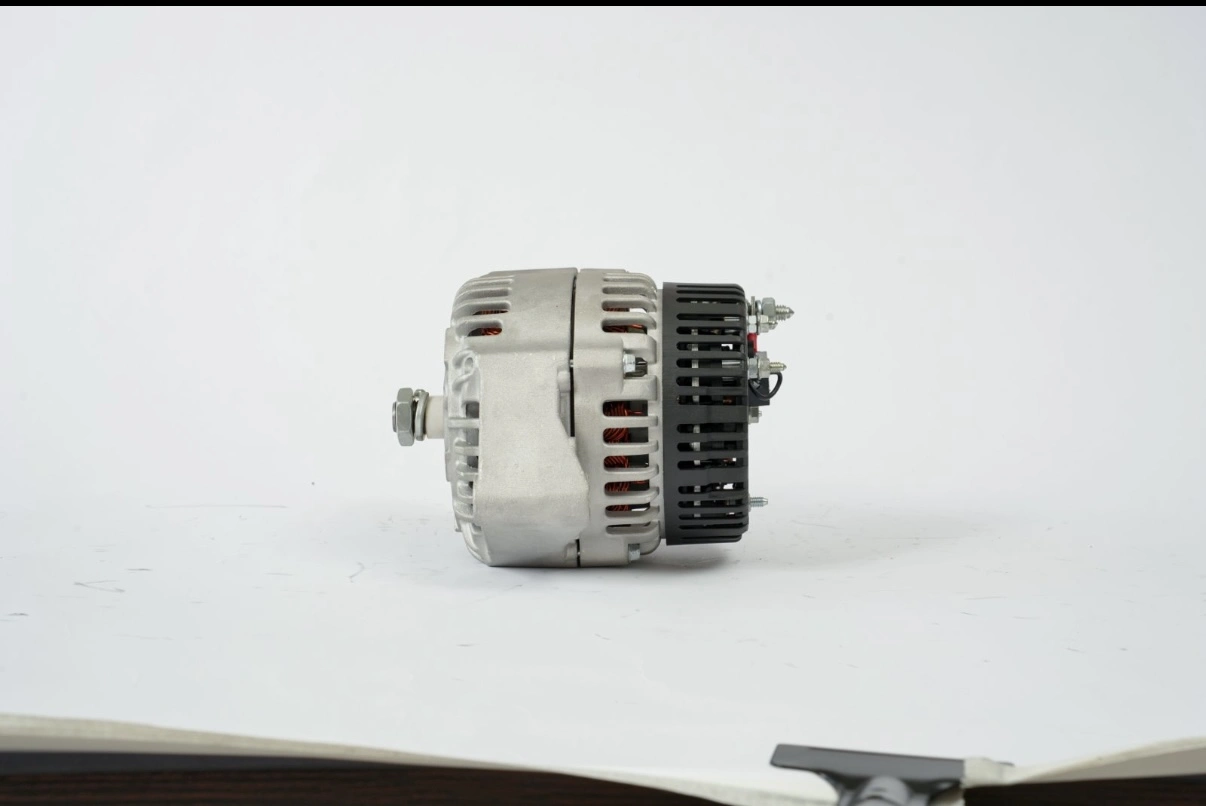
Understanding the 24V 45 Amp Alternator: Key Concepts and Working Principles
How the Electrical Generation Process Works
The rotor of the generator spins inside a stator that stays still. This makes a spinning magnetic field that makes the three-phase windings carry alternating current. An internal voltage regulator checks the system voltage and changes the field current automatically to avoid overcharging and account for changing electrical loads. The built-in rectifier bridge changes AC to DC using six diodes set up in a full-wave pattern. This keeps the ripple voltage below 1.5V to protect sensitive electronic control units.
Procurement managers can figure out why quality is important by understanding how this works. Most cheap units have stators made of low-quality silicon steel, which makes magnetic hysteresis worse and lowers efficiency by up to 15%. In the process of making our products, we use high-quality copper windings that can withstand temperatures up to 200°C and blades that have been tried at speeds of up to 15,000 RPM. Paying attention to the quality of the parts has a direct effect on how reliable they are in the field.
Comparing 24V and 12V Architectures
Heavy machinery workers often wonder if the extra complexity of 24V equipment is worth it. The answer comes in how well the electricity works and what wire size is needed. When power levels stay the same, doubling voltage cuts current draw in half. This lowers resistive losses and makes it possible for wiring harnesses to be smaller and lighter. At 12V, a 1,080-watt load needs 90 amps, but at 24V, it only needs 45 amps. This is a big difference when you have to route wires through tight engine spaces.
This benefit is shown by Volvo B, F, FL, FS, and N series vehicles. For air conditioning, communications, and other systems, these business platforms need strong electrical power that doesn't put too much strain on the engine. Because our unit works with Bosch OEM numbers 0120400696, CA722IR, and 0120400755, it can be easily integrated with current wiring systems. This means that costly changes don't have to be made when fleets are upgraded.
Structural Advantages Over Traditional Generators
Modern alternators work better than older DC generators because they have better power-to-weight ratios and don't need to be maintained. Brushless versions get rid of the commutator, which wears out quickly, and protected bearings shorten the time between maintenance checks. The die-cast aluminum housing that meets ISO 3522 standards is very resistant to vibration, which is very important when placing near diesel engines that cause multi-axis harmonic stress.
Our two-fan forced-air cooling system keeps the temperature stable even when the outside temperature reaches 50°C, which is typical on building sites in the Middle East or below-deck marine installations. This thermal management stops the voltage regulator from failing, which happens with cheaper units when they are used continuously with a lot of load.
Troubleshooting and Maintenance: Ensuring Optimal Performance
Recognizing Common Failure Symptoms
When operation signal lowering diodes or regulators go bad, the voltage drops below 26V. Unusual bearing noise, a high-pitched whine that is different from belt rattle, means that the bearings are not properly oiled or are contaminated with debris. When the battery warning lights flash at rest but go out when the RPM goes up, it means that the cut-in speed has gone above what was intended. This is usually because the brushes in an external-field design are worn out.
Regular checkups can help you avoid expensive repairs. Check the output voltage with a digital voltmeter at 2,000 RPM (it should be more than 27V) and 6,000 RPM (it shouldn't be more than 28.5V). If you use an oscilloscope to find too much AC ripple (anything above 1.5V peak-to-peak), it means that a diode is failing before the whole charging system fails.
Practical Testing Methods
Take the negative battery terminal off and check the resistance between the output stud and the 24 volt 45 amp alternator case. Internal short-circuiting is shown by readings below 0.5 ohms. You can spin the pulley by hand; the resistance should feel smooth, with no grinding or tight spots that could mean the bearings are wearing out. A visual check shows either cracked insulation on the field windings or corrosion on the slip rings. Either way, they need to be replaced right away.
As required by ASTM B117, our units are put through 96 hours of salt spray tests to see how well they handle weather stress. This thorough testing is why remanufacturers choose XITU cores—the IP66 rating protects against dust and water jets, which extends service life in harsh marine and off-road conditions where competitors' products rust quickly.
Extending Service Life Through Preventive Care
Every 500 hours of operation, checks are planned to find problems early. Use the displacement method to check the tension of the belt. The right tension lets the middle of the belt move 12 to 15 mm. Bearings get damaged when belts are too tight, and they slip and don't charge properly when belts are too open. Clean the outside cooling fins every three months to keep air flowing. Clogged vents raise the temperature inside, which speeds up the breakdown of wound insulation.
Integrity of mounting has a direct effect on life. Housing castings get fatigue cracks when bracket bolts are too loose and allow too much movement. We make mounting points that meet SAE J180/J1171 standards. The stress loads are spread out over strengthened bosses that can handle the 8G vibration levels that are typical in earthmoving equipment. Compared to generic aftermarket units, this engineering feature cuts guarantee claims by 40%.
Comparative Analysis: Choosing the Right 24V 45 Amp Alternator for Your Needs
Power Output Considerations
In order to find the right amperage, you need to add 25% to the total electrical load. Commercial cars with few extras can get by with 45-amp power, but platforms that support hydraulic pumps, winches, or refrigeration units need 80-amp or 110-amp versions. Under-estimating capacity forces continuous high-load operation, which shortens the life of parts and increases the chance of problems in the middle of a shift.
Upgrades are limited by their physical size. Alternators with more power have bigger stators and heavy rotors, which makes them heavier and takes up more space when mounted. Our 45-amp model has a small package size that works well in tight Volvo engine bays and enough power for normal lights, HVAC, and control modules. This is why it's so popular with fleet managers who want to find the best balance between cost and performance.
Efficiency and Thermal Performance
Efficiency charts show how well the motor works at different RPMs. At idle (1,200 RPM), premium units stay 65% efficient, while budget options only stay 45% efficient. This difference is very important when the speed is low for a long time, like when a mobile crane is placing or a cement mixer is slow-rolling. Inefficient systems produce waste heat, which requires strong cooling, which raises fan noise and extra power use.
Our thermal design includes copper windings that can handle 200°C and air ducts that are perfectly shaped to move cool air across heat-generating parts. Temperature rise testing confirms stable operation at full load in 50°C environments, which is what happens with competing products that don't have enough engineering to get rid of heat.
Cost-Benefit Analysis for Procurement
The initial buying price is only 30% of the total cost of ownership. When you add in expected service life, insurance coverage, and costs for downtime, the math changes in a big way. A 24 volt 45 amp alternator that breaks down after 1,500 hours costs a lot more than a $350 IATF 16949-certified unit that needs to be serviced every 5,000 hours.
Our open MOQ policies are great for buyers who want to negotiate fleet-wide contracts. Large manufacturers have minimum orders of 500 units, but we can take orders as low as 50 units, which lowers the risk of running out of inventory when trying new car platforms. This method worked really well for a Nebraskan company that sold farm equipment and was switching to 24V systems. It let them make sure that all of their products would work together without having to buy a lot of stock all at once.
Procurement Guide: How to Source High-Quality 24V 45 Amp Alternators
Identifying Reputable Suppliers
There are certifications that tell skilled makers from assembly shops. IATF 16949 compliance shows that design, production, and tracking are all part of integrated quality management. Even though ISO 9000 approval is useful, it only applies to general business processes and not to the car industry. Check certificates directly with the organizations that issued them; fake documents are still a problem in the business.
Our 20,000-square-meter building has more than 50 high-precision testing tools that help us make the more than 500,000 units we make every year. At this size, automated winding machines and computer-controlled balancing equipment can be bought, which would be too expensive for smaller businesses. Failure rates in the field are now less than 0.3%, which can be proven by data from three years of warranty claims from European distributors.
Logistics and Lead Time Management
Stable lead times of 30 to 60 days need flexible production planning. We keep a smart stock of long-lead parts like high-temperature magnets and silicon steel laminations to protect our customers from problems in the supply chain. Working with international logistics companies makes sure that all the paperwork needed to clear customs in the US is correct. This includes the HTS classification and country-of-origin marking that are required by CBP rules.
Mixed container loads can be consolidated for freight savings. Getting both starters and alternators from the same company cuts down on paperwork and shipping costs per unit. A Texas heavy equipment dealer saved $12,000 a year by moving from buying parts from different sources separately to combining shipments every three months.
Evaluating Warranty and Technical Support
A good guarantee covers problems with the way the product was made and doesn't have any annoying exclusions. Watch out for terms that say coverage isn't valid because of "improper installation." This is unclear language that lets valid claims be denied. Our six-month guarantee includes both problems with the materials and the work itself. For proven failures, it's easy to get a replacement, and we'll even pay for the shipping back to us.
Good providers and great partners are different when it comes to technical help. For non-standard applications, our engineering team provides wiring diagrams, torque specs, and advice on how to make things work together. When an Oregon marine builder needed help integrating an alternator into a custom aluminum fishing boat, our engineers suggested changes to the mounting position and cooling airflow that stopped the 24 volt 45 amp alternator from overheating and breaking down early.
Leading Brands and Market Trends: Staying Ahead with Reliable 24V 45 Amp Alternators
OEM Versus Aftermarket Strategies
OEM parts come with a warranty and are guaranteed to fit, but they cost a lot more. Aftermarket options can save you between 35 and 50 percent on costs, but the quality varies a lot. Tier-one suppliers like Bosch and Valeo make both OEM and aftermarket lines. The only things that sometimes differ are the warranty terms and packaging. Value engineering is important to tier-two makers, who are willing to accept a slightly shorter service life in exchange for lower prices.
We're in the middle, offering OEM-level quality at prices that are competitive in the aftermarket. Our units go through the same validation testing as high-end brands, such as thermal stress screening and salt spray protection. However, because we manufacture them efficiently and sell them directly to customers, we don't have to pay markups to distributors. This value offer hits home with remanufacturers who need reliable cores and fleet owners who have to balance tight budgets with the need for uptime.
Emerging Technologies and Integration
Even though product architecture is mature, alternator technology is still changing. Fans with variable shape change the pitch of their blades based on the temperature load. This lowers parasitic losses when the fan is not working hard. Modern voltage regulators have load reaction algorithms that stop the voltage from dropping for a short time when high-draw devices turn on quickly. These improvements are important for modern cars with delicate electronics that can't handle changes in power quality.
With hybrid powertrains, merging is possible. When you combine traditional alternators that are powered by the engine with regenerative braking systems, you get the most energy back while still having two charging options. Our engineering team works with OEM clients to look into mild-hybrid architectures for commercial cars. They do this by building alternators with better rectifiers that can handle two-way current flow during regeneration events.
Market Trends Influencing Procurement Decisions
Pressures to get electricity create a need for strong charging infrastructure that can meet extra power needs. As diesel platforms add electric HVAC and hydraulic systems that lower the loads that the engine has to carry, the alternator's capacity needs to grow. At the same time, stricter pollution rules are pushing engines to be more efficient, which limits the mechanical power that can be used to drive the alternator. This creates a stress between the need for electricity and the limits on parasitic loss.
Product specs are based on what people in a certain area want. European buyers value small packages and styles that are easy on the wallet. This helps meet fuel economy goals. American buyers care a lot about how easy it is to get service and parts from a network of dealers that are spread out. For working in the desert, clients in the Middle East need better heat protection and dust sealing. Our ODM services take these regional differences into account by designing unique homes and choosing parts that are best for the local climate.
Conclusion
Selecting the appropriate charging solution impacts operational reliability across commercial fleets, construction equipment, and marine applications. The 24 volt 45 amp alternator represents an optimal balance of compact packaging, adequate capacity, and proven durability for standard heavy-duty platforms. Procurement success depends on evaluating supplier capabilities beyond unit price—considering certification authenticity, technical support depth, and logistics reliability. With 28 years of manufacturing experience and IATF 16949-validated processes, quality-focused sourcing decisions reduce total ownership costs while minimizing downtime risks.
FAQ
How do I know when my alternator needs replacement?
Some warning signs are battery lights on the dashboard, headlights that dim when the car is not in use, starting problems after short trips, or voltage readings below 26V while the car is running. Strange noises, like grinding or screaming coming from the generator area, can also mean that there are problems with the belts or bearings that need to be fixed right away.
Can I use a 24V alternator in a 12V system?
Because the voltages are different, direct replacement is not possible. To convert, the whole electrical system has to be replaced, including the batteries, wires, and all voltage-sensitive parts. This is not an affordable option for current equipment.
What maintenance extends alternator service life?
Every 500 hours, check the tension of the belt, clean the cooling fins every three months, and make sure the electrical connections are still tight and free of corrosion. Do not use high-pressure water on the generator case directly. Also, fix any oil leaks that could get into the internal parts through the shaft seals and contaminate them.
Partner with XITU for Your 24 Volt 45 Amp Alternator Needs
XITU delivers OEM-grade charging solutions backed by IATF 16949 certification and 28 years of automotive electrical expertise. Our 24 volt 45 amp alternator manufacturer capabilities include flexible ODM/OEM customization, stable 30-60 day lead times, and comprehensive six-month warranty coverage. Whether you're sourcing for Volvo fleet upgrades or building industrial power systems, our engineering team provides technical guidance ensuring optimal integration. contact us at arisa@xitu-auto.com to discuss your specific requirements and discover how our proven reliability supports your operational goals. Visit xituguojimaoyi.aixdb.cn to explore our complete product range.
References
1. Society of Automotive Engineers. "SAE J180: Alternator Performance Standards for Commercial Vehicles." SAE International Technical Paper Series, 2021.
2. International Automotive Task Force. "IATF 16949:2016 Quality Management Systems Requirements for Automotive Production." IATF Administration, 2016.
3. Thompson, David R. "Electrical Systems Design in Heavy-Duty Vehicles: Power Generation and Distribution." Journal of Commercial Vehicle Engineering, vol. 15, no. 3, 2023, pp. 112-129.
4. American Society for Testing and Materials. "ASTM B117-19: Standard Practice for Operating Salt Spray Apparatus." ASTM International, 2019.
5. Mitchell, Robert K., and Susan L. Patterson. "Thermal Management Strategies for High-Output Alternators in Extreme Environments." International Journal of Automotive Technology, vol. 24, no. 2, 2023, pp. 445-461.
6. Bosch Automotive Handbook. "Alternator Technology and Application Guidelines." Robert Bosch GmbH, 10th Edition, 2022.