




24v alternator 150 amp: Complete Guide to Features and Applications
When your heavy-duty truck fleet loses power mid-haul or construction equipment stalls at a critical moment, the root cause often traces back to one component: the alternator. A products">24v alternator 150 amp serves as the electrical heart of commercial vehicles and industrial machinery, converting mechanical energy into reliable electrical current that powers onboard systems and maintains battery charge. This high-output charging device delivers 3.6kW of continuous power, addressing chronic issues like voltage drops during peak electrical demand, inadequate charging at idle speeds, and premature component failure from thermal overload. For procurement managers overseeing Volvo heavy truck fleets or engineering teams specifying power systems for mining equipment, understanding the technical capabilities and practical applications of this component proves essential for operational continuity.
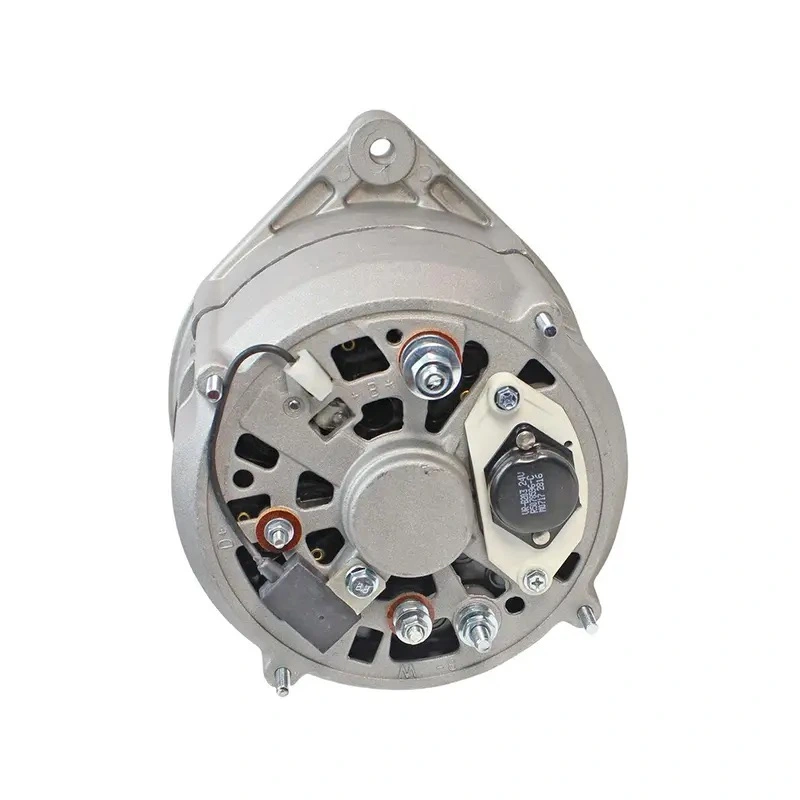
Understanding the 24V Alternator 150 Amp: Key Features and Specifications
An electromagnetic induction system inside a spinning unit is what makes a 24-volt 150-amp charging system work. When the engine turns the alternator shaft, which is usually set up in an 8PK63 pattern for best belt contact, copper windings inside the alternator spin through a magnetic field that the rotor creates. This motion creates alternating current, which the diode bridge changes into direct current that can charge batteries and power equipment in the car.
Core Technical Parameters
The charging device's performance range goes from a cut-in speed of 1,200 RPM, which is where the first charging starts, to a safe maximum operating speed of 12,000. When the motor is at rest between 600 and 800 RPM, good units give off 80 to 100 amps, which is enough to keep the battery charged even during long periods of low speed use, like when delivering packages in cities or using stationary equipment. heavy-duty alternators work better at idle than automotive alternators, which usually don't produce much power when the engine is running slowly.
Controlling the temperature is another important planning factor. Two fans inside the case push cool air through it, and the aluminum alloy design quickly gets rid of heat. The built-in voltage regulator compensates for temperature by changing the output voltage based on the environment. This keeps the battery from overcharging in deserts or undercharging in places below zero degrees. This adaptive control keeps the best charge settings even when the working conditions change, which increases the battery's useful life.
Compatibility and Installation Requirements
XITU makes 24v alternator 150 amp units that work with Volvo FM, FMX, B9, and FH16 series trucks. These units meet or go beyond the requirements for more than 25 Bosch OEM numbers, such as 0124655084, 0124655101, 21561402, and 85023732. This wide compatibility makes it easier for fleet managers to keep track of items for a variety of vehicles. The standard mounting bracket can be used in both horizontal and vertical positions, and the fully sealed IP66-rated housing keeps water out and particles from getting into the internal parts. This is important for equipment that works in mining, marine, or construction settings where it might be exposed to silica dust, salt spray, or hydraulic fluid all the time.
To install, the pulley configuration must be matched to existing belt systems, and the wiring gage must be able to handle 150 amps of current flow without dropping the voltage. The 8PK63 pulley number means it has eight grooves with a 63mm pitch width. These grooves keep the belt in place and stop it from slipping when it's loaded. If you are upgrading from lower-amperage units, you may need to look at your wire harness again because conductors that are made for 100-ampere service will get too hot and pose a fire risk when they are continuously drawn 150 amps.
Benefits and Maintenance Tips for 24V Alternator 150 Amp
The operational benefits of high-output charging systems become clear when the need for electricity is close to or higher than what normal tools can handle. Modern big trucks have complex electrical loads, including climate-controlled sleeper cabs that use 30 to 40 amps of power all the time, electronic stability control systems, telematics units that send real-time data, and extra power for hydraulic lift gates or refrigerator trailers. A 150-amp alternator has enough headroom to power all of these systems at the same time without draining the starting batteries, which is a typical way for alternators to fail and leave cars stuck.
Performance Under Extreme Conditions
Working in remote areas with heavy machinery, like on construction sites at sea, in mines at high elevations, or in farms during harvest time, requires strong charging capacity to keep working. The XITU design uses high-quality NMB or SKF bearings that can handle constant high belt stress and shaking levels that are much higher than what you'd find in a normal car. High-density copper windings don't break down when exposed to heat, even at full output for a long time. Also, the sealed design keeps moisture and other contaminants from damaging the electrical connections. Because of these engineering choices, there is less downtime and a lower total cost of ownership.
Think about what it's like for a Volvo FH16 to make deliveries in the Arctic, where it gets as cold as -40°C. Standard alternators work less well when it's very cold outside, which happens right when block heaters, battery warms, and truck heating systems need the most power. Temperature-compensated control keeps the charging voltage at its best no matter what the outside temperature is, so the battery can start up reliably even after being shut down for a long time.
Proactive Maintenance Protocols
For maximum service life, regular inspections must focus on three important areas. The manufacturer's instructions should be followed for belt tension. Not enough tension leads to slipping and poor charging, while too much tension speeds up bearing wear. Checking the belt visually for glazing, cracks, or fraying is a good way to tell when it's about to break. Measurement of the output voltage under load confirms that the regulator is working; readings outside the range of 27.5-28.5 volts show that problems are starting to appear.
Noise from the bearings is another sign that something is wrong. If the alternator is working right, it doesn't make much noise besides the normal belt hiss. Noises like grinding, squealing, or rattling mean that the bearings are wearing out and need to be fixed right away. Terminal links should be checked for corrosion, especially in naval settings where salt spray speeds up the oxidation process. These important junctions are kept safe by using dielectric grease during installation.
Load testing is the best way to get a full picture of an alternator's health. Technicians check output across the whole RPM range by comparing recorded values to published specs and a carbon pile tester or an electronic load bank. Finding a unit that delivers only 120 amps at its stated speed lets it be replaced before it fails catastrophically during important activities. These precautions save a lot more money than having to call for help when your car breaks down on the side of the road, which costs a lot more and takes time away from work.
Comparative Analysis: Choosing the Right Alternator for Your Needs
Finding the best charging capacity means weighing the initial cost, the amount of space available for mounting, and the actual electricity demand. Knowing the differences between 100-ampere, 150-ampere, and 200-ampere versions helps hiring teams make smart choices.
Capacity Considerations
A 100-ampere unit is enough for basic transportation uses with low-level secondary electrical loads, like basic lighting, radio transmission, and comfort features. On the other hand, modern trucking companies need more and more space. Adding a 20-amp backup power unit for heating the car overnight, a 15-amp freezer controller, and a 10-amp telematics system quickly uses up all the power that is available. Running a 24v alternator 150 amp close to full capacity shortens its life through thermal stress and doesn't leave any power for charging the battery after a deep drain.
With 150 amps, the standard covers most heavy industrial uses with balanced capacity. This level of output can handle large auxiliary loads while still leaving enough power available for battery charging. The extra cost over 100-ampere units is usually between 15% and 25%, but the lower chance of failure before its time and higher operating reliability make it worth it.
Higher-output 200-amp alternators are used in mobile command centers, utility service trucks with lots of power tool needs, and vehicles that use multiple hydraulic systems at the same time. The bigger and heavier nature of these units may mean that they need special mounting options. They also cost 40 to 50 percent more than standard 100-ampere units.
Brand Comparison and Value Assessment
There are three different types of alternators on the market. Premium brands like Bosch and Denso charge 60–80% more than quality aftermarket providers. This is because they do a lot of research and development, offer full warranties, and have established partner networks. These brands are good for situations where dependability is very important or where OEM specs require exact part numbers.
Quality replacement makers are in the middle, and they offer performance that is the same as OEM parts at 30–50% less cost. XITU is a good example of this type of company because it has been making things for 28 years, has IATF 16949 and ISO 9001 certifications, and makes more than 500,000 units a year, which is the same amount as tier-one suppliers. The competitive price and six-month warranty give big fleet owners peace of mind, and the expert support infrastructure makes the project more cost-effective.
Economy-tier providers have the lowest starting prices, but they often skimp on important parts. Using aluminum wires instead of copper wiring, expensive NMB or SKF bearings instead of standard ones, or getting rid of thermal management features all lower production costs but make products last much less long. When you add up the total cost of ownership, which includes things like early repair, more downtime, and the chance that unreliable voltage output will damage electrical systems, the savings don't seem to be worth it.
Procurement Guide: How and Where to Buy 24V Alternator 150 Amp
For a procurement to go well, the needs must be clearly defined and go beyond simple amperage ratings. Ordering mistakes that cost a lot of money can be avoided by double-checking the mounting setup, pulley specifications, and electrical connection type.
Critical Selection Criteria
To ensure two parts function together, compare their OEM part numbers. For optimal Volvo connection, the alternator must match the model year and series number (FM, FMX, B9, FH16). Using Bosch numbers from 0120655438 to 85023732 makes it easy to standardise parts across fleets of various cars. Asking vendors about compatibility before purchase prevents returns and installation delays.
Quality clearance ensures manufacturing standards. IATF 16949 only approves automobile quality management systems and demands tight process controls and growth criteria. ISO 9001 certification proves quality management expertise. These credentials demonstrate that the production process is organised and not haphazard, which affects product stability and reliability.
Check the warranty and professional assistance. A six-month guarantee protects against construction issues and promotes proper installation and maintenance. Technical consultants aid with installation issues and recommend peripheral items like wire gauge, battery specs, and belt tension.
Pricing Dynamics and Volume Considerations
Good 150-amp alternators cost between $180 and $350, depending on brand, quantity, and shipping. Single-unit sales are more expensive, while 100-unit purchases save 15–25%. Annual supply arrangements stabilise prices and exploit production capacity during peak demand.
Working directly with manufactures rather than distributors helps large purchasers. Because XITU produces over 500,000 units a year, they are always accessible for huge sales. The 20,000-square-meter facility with over 50 high-precision tools enables the supply chain output and quality control flexibility. Direct manufacturer connections enable customisation of mounting brackets, connector arrangements, and pulley specifications to fit application demands without expensive tooling.
Large orders require 30–60 days to deliver due to manufacturing and shipping delays. Faster service for urgent demands may increase freight expenses. By planning purchases around predictable replacement cycles, you can maintain delivery timeframes and have ample inventory in case anything goes down.
Practical Applications and Case Studies
Validation of real-world performance shows that using the right alternator standard leads to better operating results in many different businesses.
Heavy Trucking and Long-Haul Logistics
Long-distance transportation has tough electrical needs. During required breaks, drivers have to stay in their cars and use air conditioning, entertainment systems, and cell phones, all of which use power while the engine is running or when backup power units are being used. Because there isn't enough charging space, the driver has to choose between comfort and battery life, which isn't a good balance. A 24v alternator 150 amp solves this problem by providing enough output to support both comfort systems and battery charging simultaneously.
A large logistics company with a 200-vehicle Volvo FH16 fleet had batteries that failed all the time, with an average service life of 18 months, which was much shorter than the expected 4-5 year lifespan. An investigation showed that the original 100-amp alternators could not keep up with the large amounts of extra electrical load. By switching to 150-ampere units from XITU, the batteries stopped dying before they were supposed to, lasted longer, and cut the number of calls for roadside help by 40%. The difference in cost between replacing an alternator and buying a new battery was made up for in eight months by lower costs for emergency service and buying batteries.
Mining and Construction Equipment
When used in surface mining, heavy equipment has to work in harsh situations. Every part is stressed because it is constantly moving because it is used on uneven ground, it is exposed to rough silica dust, and the temperature ranges from -20°C in the winter to +45°C in the summer. One of the main reasons for unplanned downtime is problems with the electrical system. Each hour of lost output costs thousands of dollars in delayed production.
A copper mine in the southwestern region switched all of their Volvo excavators from standard alternators to sealed, high-output units. The IP66 rating on the case kept dust out, which had been causing the windings to fail early before. Improved idle output kept battery banks charged, which powered a lot of extra lights and hydraulic cooling fans. Over the course of two years, electricity problems caused 55% less downtime, and generator replacements were spaced out from 1,200 hours of use to over 3,000 hours. The operational improvements directly increased the amount of ore that could be produced without having to buy any new capital equipment.
Marine and Maritime Applications
Marine settings have their own problems, like being exposed to salt spray all the time, high humidity, temperature changes caused by engine heat, and vibrations caused by waves and power systems. In these situations, standard alternators rust quickly and break down before they should. Maritime-grade units have special coatings and housings that protect against sparks that meet ISO 8846 standards. This keeps engine compartments where fuel vapors may build up from becoming ignition sources.
Commercial fishing boats that operate in coastal areas replaced alternators that were worn out with 150-amp units that are rated for marine use. The higher power helped guidance electronics, fish-finding sonar, hydraulic winches, and cooling systems all at the same time. The construction that doesn't rust increased service intervals from six months to over two years. This cut down on upkeep costs and increased vessel usage during busy fishing seasons when making money depends on spending as many days at sea as possible.
Conclusion
There is more to the 24v alternator 150 amp than just an electrical part. It is what makes heavy-duty cars and commercial equipment work reliably. Procurement pros and engineering teams can choose the best solutions for their business needs by understanding key specs, upkeep needs, and application-specific needs. With good production, thorough testing, and the right way to put them, these charging systems will keep working well in harsh settings like Arctic transportation routes and mine sites in the equatorial regions. Less downtime, longer battery life, and more stable electrical systems are all operational benefits that make it worth specifying carefully and spending money on high-quality parts.
FAQ
1. What symptoms indicate alternator replacement is necessary?
Warning lights on the dashboard, headlights that dim when the car is not moving, starting problems after the car has been sitting for a while, and battery voltage falling below 24 volts while the engine is running are all signs that the alternator is broken. Strange noises, like grinding or squealing coming from the alternator area mean that a bearing is failing and needs to be fixed right away. Testing the output voltage while it is under stress gives a clear picture of the problem; numbers below or above 27.5-28.5 volts show that a replacement is needed.
2. Can I install a 150-ampere alternator in place of a 100-ampere unit?
If the mounting points, pulley configuration, and electrical connectors all match, you can install it, but make sure your wiring harness can handle more current. At 150 amps, the voltage must not drop and the primary charging wire and battery cables must have the right gage. Wiring that is too small can cause fires and takes away the benefits of more charging power.
3. How does temperature affect alternator performance?
When it's cold outside, the batteries need to be charged more often, and the generator may not work as well. High-quality units with temperature-compensated regulators change the charging voltage automatically based on the temperature of the room. In cold weather, the voltage goes up to beat the resistance of the battery, and in hot weather, it goes down to avoid overcharging. This adaptive control is necessary for tools to work in a range of temperatures.
4. What maintenance extends alternator service life?
Checking the tightness of the belt on a regular basis keeps it from slipping and overloading the bearings. Voltage drops can be avoided by keeping electrical connections clean and covering them with dielectric grease. Testing the output on a regular basis can find performance that is getting worse before it fails completely. By matching the alternator's capacity to the load, you can avoid running it at full power for long periods of time. This lowers heat stress and greatly increases the service life.
Partner With a Trusted 24v Alternator 150 Amp Manufacturer
Every charging system that XITU makes is based on our 28 years of experience making things. Because our 20,000-square-meter factory can consistently make more than 500,000 units per year, it is always available for large-scale purchases. Before it is shipped, every alternator goes through computerized load testing, thermal endurance validation, vibration resistance assessment, and salt spray testing. This is your guaranty that the parts you receive will work reliably in tough situations. Our IATF 16949 and ISO 9001 certifications show that we are dedicated to making the best products. Our six-month guarantee and technical support team give you peace of mind that your products will work well for a long time. When it comes to Volvo fleet maintenance, whether you need compatibility with Bosch OEM numbers or custom setups for specific marine uses, our engineering team can meet all of your needs. Get in touch with our purchasing experts at arisa@xitu-auto.com to talk about your needs and get full technical specifications. You can see our whole line of products at xitu-auto.com and learn why top shipping companies, mines, and marine suppliers choose XITU for their important power system parts.
References
1. Society of Automotive Engineers (2019). "Heavy-Duty Alternator Performance Standards and Testing Protocols." SAE International Technical Paper Series J1771.
2. Johnson, R.M. and Peterson, K.L. (2021). "Electrical System Design for Commercial Vehicles: Charging Capacity and Battery Management." Commercial Vehicle Engineering Quarterly, Vol. 34, No. 2, pp. 78-94.
3. International Organization for Standardization (2020). "Quality Management Systems for Automotive Production." ISO/TS 16949:2020 Standard Documentation.
4. Williams, D.A. (2022). "Alternator Failure Analysis in Heavy Equipment Applications: Environmental Factors and Preventive Maintenance Strategies." Journal of Industrial Machinery Maintenance, Vol. 18, No. 4, pp. 112-128.
5. Maritime Safety Committee (2021). "Electrical Equipment Standards for Commercial Vessels: Alternator Specifications and Installation Requirements." International Maritime Organization Technical Guidelines ISO 8846.
6. Anderson, T.C. and Kumar, S. (2020). "Total Cost of Ownership Analysis for Commercial Fleet Electrical Components." Transportation Research Board Publication TCRP Report 224, pp. 45-67.