




How to Choose a 24 Volt Truck Alternator for Heavy-Duty Vehicles
Choosing the rightalternator%20&type=products"> 24 volt truck alternator for a heavy-duty fleet is not just a technical decision — it directly affects uptime, operating costs, and driver safety. The right unit must deliver a stable 28V nominal charging output to keep dual-battery systems fully charged under continuous load. Key factors include amperage rating, OEM compatibility, heat resistance, and supplier certification. This guide walks purchasing managers, distributors, and OEM clients through every step of that decision, so you can source with confidence.
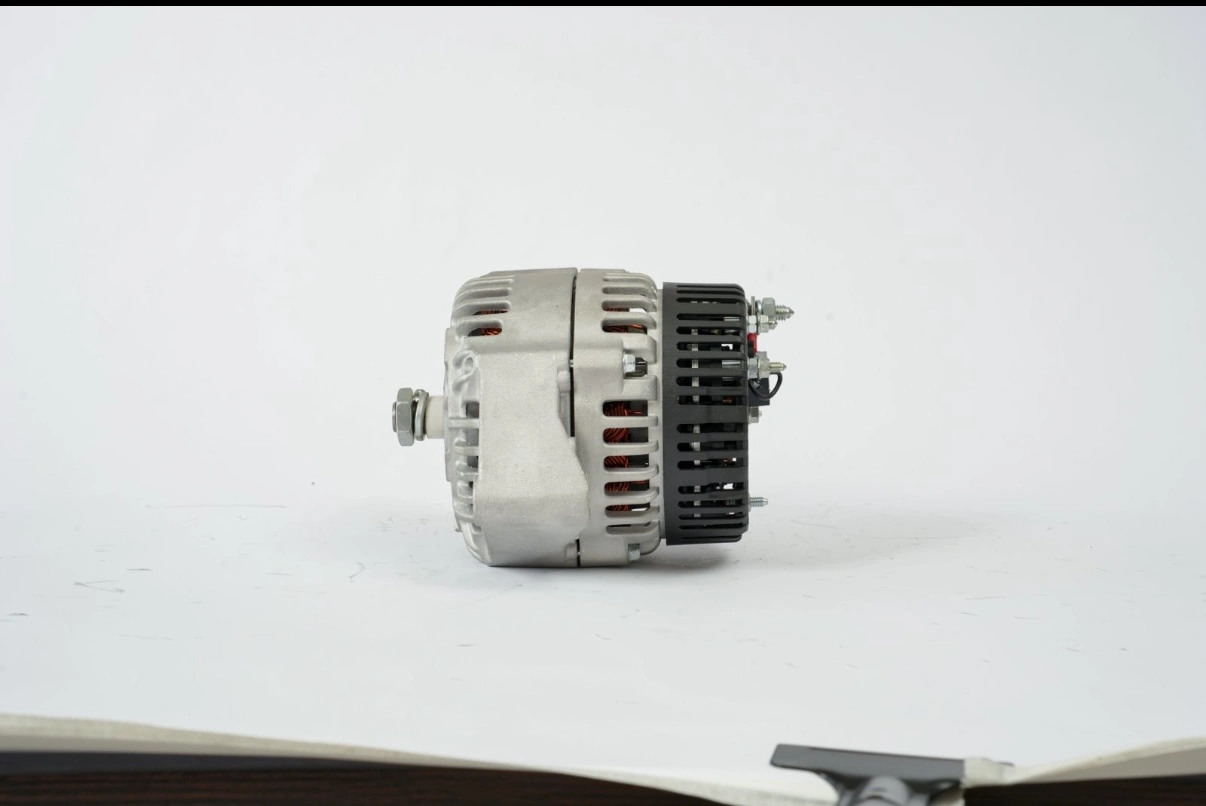
Understanding 24 Volt Truck Alternators: Basics and Benefits
A heavy-duty 24 volt truck alternator takes mechanical energy from the engine and turns it into electricity. This keeps all of the systems on board running while the engine is running. To get the right one, you must first understand how this works at the 24V level.
How 24V Systems Differ from 12V Systems
Commercial trucks have two 12V batteries connected in series to make a 24V bank. The 24 volt truck alternator charges this bank at 28–28.5V. Long chassis wiring runs can be hard to wire because of resistance, but this higher voltage gets around that. This is a big problem for Class 8 trucks where cable lengths can be over 10 meters.
Key Electrical Advantages
When you run something at 24V, it uses less current for the same amount of power. In this case, a 1,400W load needs 116A at 12V but only 58A at 24V. When the current is lower, the wire gages are smaller, less heat is made, and less energy is lost. All of these things save money in fleet operations.
Common Fault Symptoms to Watch
Early warning signs include battery warning lights on the dashboard, headlights that dim when the car is not in use, voltage readings below 26V when the engine is not working, and whining sounds coming from the 24 volt truck alternator belt area. AC ripple interference that mess up ECU and CAN bus data is often caused by a rectifier diode that is shorted.
Core Decision Criteria When Choosing a 24 Volt Truck Alternator
Breakdowns are expensive when you choose the wrong 24 volt truck alternator. These are the most important technical and business criteria.
Amperage Rating and Load Profile
Match the power of the 24 volt truck alternator to the total electrical load of the car. Most of the time, a 70A unit is enough for a Mitsubishi Fuso 8.5T or 11T truck with a 6D16 or 6D22 engine. The XITU 24V 70A 2PK alternator was made to work with this system. It keeps its output stable even when lighting, telematics, and refrigeration are all using a lot of power.
OEM Compatibility and Cross-Reference Numbers
Always check to see if it works before you buy. The following table shows real OEM cross-references for the XITU 24V alternator:
| OEM Brand | Part Number(s) |
|---|---|
| Hyundai | 3730093000 / 3730093501 / 3730093C00 / AC270542 |
| MANDO | TA000A31001 / TA000A53401 |
| Mitsubishi | A6T75586 |
| MOTORHERZ | ALA0239WA / ALA3505WA / ALM0239WA |
| VALEO | 600253 / 600297 / 600817 / 600851 |
Checking your OEM number against this list lowers the chance of getting an incompatible unit and extends the time it takes to buy something.
Build Durability and Quality Standards
Look for units that have been checked for corrosion, temperature cycles, and vibration. The best 24 volt truck alternators are put through 96+ hours of full-load thermal bench testing at 100% duty cycle and salt spray testing according to ASTM B117. Dynamic rotor balancing at speeds of up to 10,000 RPM stops bearing fatigue, which is a major reason why machines break down early in mining and construction settings.
Comparing 24 Volt Truck Alternators: Making Informed Choices
Knowing the changes in performance and price between the choices helps buyers avoid paying too much or not getting enough for their 24 volt truck alternator needs.
24V vs. 12V: Performance Trade-offs
A 24V system is not just "bigger"; it has a completely different structure. The actual differences for buying a fleet are shown in the table below:
| Parameter | 12V System | 24V System |
|---|---|---|
| Nominal charge voltage | 14.4V | 28–28.5V |
| Typical amperage for 1,400W load | ~116A | ~58A |
| Wiring gauge requirement | Heavy | Lighter |
| Suitability for long-chassis trucks | Limited | Standard |
It is normal for commercial cars that use constant electrical loads to have a 24V charging device.
OEM vs. Aftermarket Quality
An easy-to-use middle ground is OEM-grade replacement units from approved makers such as XITU. Every 24 volt truck alternator made by XITU is made with 100% brand-new parts, and each one is tested to make sure it meets or exceeds the original requirements. Over 500,000 pieces are made every year in a 20,000 m² factory that is IATF 16949 certified. Quality control is built into the production process, not added at the end.
Total Cost of Ownership
When you add up the costs of labor, towing, and shipping delays, a cheap unit that breaks down after 60,000 miles is much more expensive than a good unit that lasts 150,000 miles. Before committing to a supplier, buyers who need to buy a lot of something should ask for information on the failure rate, the terms of the warranty, and references.
How to Test, Troubleshoot, and Replace a 24 Volt Truck Alternator
Even a well-made 24 volt truck alternator needs to be checked every so often. Knowing the steps saves time and keeps you from making the wrong diagnosis.
Step-by-Step Voltage Testing
A digital multimeter should be put across the battery terminals while the engine is running at 1,500 RPM and all of the accessories are turned on. If the number is between 27.5V and 28.8V, it means the charging is going well. Readings less than 26V point to a broken regulator or worn-out brushes. If the reading is more than 29.5V, it means the voltage regulator is broken.
Identifying Common Failures
When a rectifier diode fails, it usually causes an AC ripple of more than 50mV, which can damage sensitive electronics. When a bearing fails, the engine makes a whining sound that gets louder as it speeds up. Both can be found with simple troubleshooting tools before they completely break down.
Safe Replacement Practices
Before taking the 24 volt truck alternator off, disconnect the negative battery terminal. Before installing, make sure you know the shape of the mounting brackets and the size of the pulleys (2PK for the XITU unit). Tighten the fixing bolts to the manufacturer's recommended level to keep them from coming loose from vibrations in places with a lot of shocks, like building sites.
Procurement and Ordering Guide: Sourcing Quality 24 Volt Truck Alternators
When buying a heavy-duty 24 volt truck alternator around the world, it's important to look at more than just price.
Evaluating Supplier Credentials
IATF 16949 certification is the quality standard for manufacturing in the auto industry. It needs systems for documented process control, traceability, and corrective action. Suppliers who don't have this approval often don't have the tools to make sure that each batch of production is the same, which is a real risk when buying thousands of units for a distribution network.
Lead Times and Logistics
XITU keeps a stable production schedule and a standard lead time of 30 to 60 days. For safe shipping around the world, the business works with transportation partners that are known all over the world. For business-to-business buyers who place large orders, this predictability is important for managing inventory cycles.
Flexible OEM/ODM Options
Brand owners and sellers often need private-label packages or configurations that are made just for their needs. Customization options from XITU include ODM and OEM, meeting the needs of a wide range of markets in North America, Europe, and beyond. Minimum order amounts are set so that they can be used for both checking the market orders and full-volume buying runs.
Conclusion
Three things are important when choosing a heavy-duty 24 volt truck alternator: how well it works with other parts, how well it's built, and how reliable the supplier is. For Mitsubishi Fuso and similar systems, the XITU 24V 70A 2PK unit offers tested OEM-level performance at a price that is easy to afford. Fleet managers and distributors can feel better about managing total cost of ownership and lowering the risk of downtime if they have clear cross-reference data, good testing methods, and a certified production partner.
FAQ
1. When should I replace a heavy-duty alternator?
It needs to be replaced when the voltage output falls below 26V when it's loaded, when the warning lights keep coming on, or when you can hear bearing noise. Replacements that are planned ahead of time, like every 150,000 miles for high-quality units, cut down on unplanned downtime.
2. Can I upgrade from a 12V to a 24V charging system?
It is technically possible, but the batteries, starter, and wire cables would have to be replaced along with the whole electrical system. Most fleet owners find it more cost-effective to buy all new vehicles on 24V platforms instead of making changes to old ones.
3. What is the difference between OEM and aftermarket alternators?
OEM parts are made by a supplier approved by the car maker. The quality of aftermarket parts varies a lot. Certified aftermarket companies like XITU test their products to OEM standards and use brand-new internal parts. This means that their products perform just as well but cost less per unit, which is a big deal for distributors who buy a lot of them.
Partner with XITU for Your 24 Volt Truck Alternator Supply
Alternators from XITU are made for ships that can't afford to be without power. XITU is a reliable 24 volt truck alternator supplier for distributors, OEM brand owners, and sourcing agents around the world. They have IATF 16949 certification, have been making products for 28 years, and offer a six-month warranty on all of their products. Visit xitu-auto.com or email arisa@xitu-auto.com to get a price, cross-reference check, or product sample right away.
References
1. SAE International. SAE J180: Alternator and Generator Test Specifications for Automotive Applications. SAE International, 2019.
2. ISO. ISO 8854: Road Vehicles — Alternators with Regulators — Test Methods and General Requirements. International Organization for Standardization, 2012.
3. ASTM International. ASTM B117: Standard Practice for Operating Salt Spray (Fog) Apparatus. ASTM International, 2019.
4. Heavy Duty Trucking. "Fleet Electrical Systems: Managing Power Demand in Modern Class 8 Trucks." Randall-Reilly Publishing, 2022.
5. IATF. IATF 16949:2016 — Automotive Quality Management System Requirements. International Automotive Task Force, 2016.
6. Commercial Carrier Journal. "Alternator and Charging System Maintenance for Long-Haul Fleets." Randall-Reilly Publishing, 2021.