




How to Check a 12 Volt Car Alternator: Step-by-Step Guide
If your vehicle's battery warning light flickers or your electronics behave erratically, the charging system is likely the culprit. A alternator&type=products">12 volt car alternator is the heart of your vehicle's electrical system — it converts engine-driven mechanical energy into DC power, keeping the battery charged and all onboard electronics running. This guide walks procurement professionals, fleet managers, and distributors through a practical testing procedure, helping you make smarter sourcing decisions backed by real diagnostic knowledge.
Understanding the Basics of a 12 Volt Car Alternator
How It Works
A serpentine belt connected to the engine's flywheel turns the alternator. When the rotor is inside the stator windings, it creates an AC magnetic field that spins. A rectifier changes the AC to DC, and an internal voltage regulator keeps the output voltage between 13.8V and 14.4V. This is the safest range for charging a typical lead-acid battery without making it too full.
Key Internal Components
| Component | Function |
|---|---|
| Rotor | Generates rotating magnetic field |
| Stator | Converts movement of the rotor into AC electricity |
| Rectifier (Diode Bridge) | Changes AC to DC |
| Voltage Regulator | Keeps output voltage steady |
| Bearings | Allow shaft to turn and reduce friction noise |
How long something lasts depends on how well each part is made. More heat is lost by units like the 12 volt car alternator from XITU that have pure copper windings and aluminum metal housings. This means that these units last longer.
Common Failure Symptoms
Before the whole thing breaks, keep an eye out for these early danger signs:
- Headlights that dim or dashboard lights that flicker
- A battery that dies overnight even though every cell is fine
- A sound like scratching or whining coming from the engine bay
- The battery warning light stays on while the engine is running.
Step-by-Step Procedure to Check a 12 Volt Car Alternator
Step 1 — Safety First and Tool Preparation
Use the parking brake to put the car in park on a flat surface. Then wait 10 minutes for the engine to cool down. You will need safety glasses, insulated gloves, a digital voltmeter, and a wire layout for your car. Do not put your tool near moving belts while the engine is going.
Step 2 — Static Battery Voltage Test
Set your tester to 20V DC. Put the red probe on the positive end of the battery and the black probe on the negative end. A good, fully charged battery should show a number between 12.4V and 12.7V when the car is off. If it's less than 12.0V, the battery is dead, which could make the readings from the
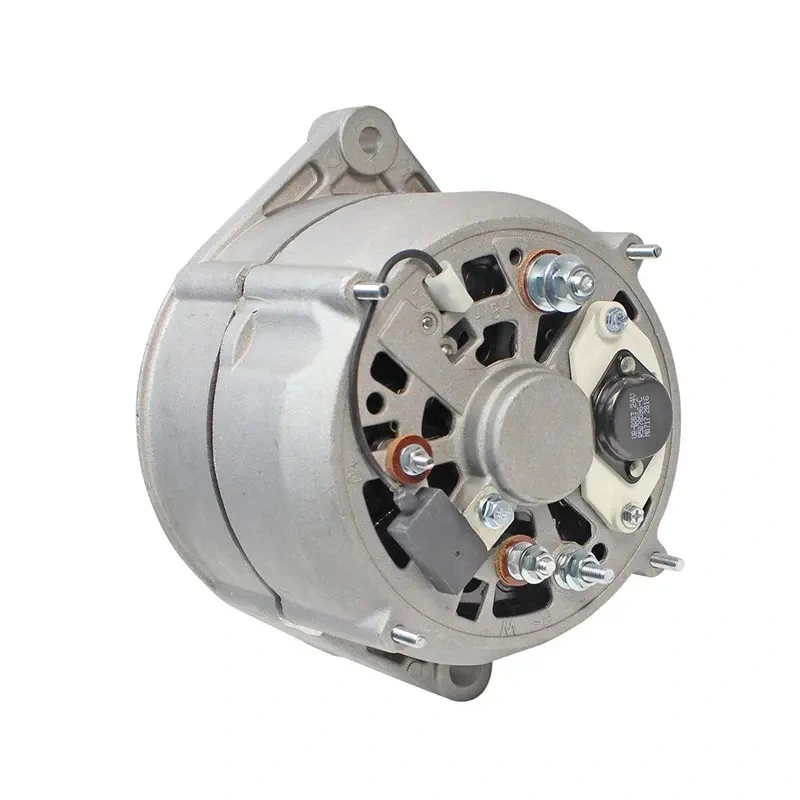
look off.
Step 3 — Running Voltage Output Test
Turn on the engine and keep it going slowly (700–900 RPM). You can take another reading with the multimeter across the battery terminals. Now it should show a number between 13.8V and 14.4V. If the voltage number is less than 13.5V, the battery isn't getting enough power. If it's more than 14.8V, the voltage regulator is broken. After that, speed up the engine to 1,500 to 2,000 RPM. The voltage shouldn't go down; it should stay the same or go up a little.
Step 4 — Load Test
The lighting, air conditioning, back defroster, and blower fan should all be turned on at the same time. There should be no drop in voltage below 13.2V with all of these loads. A drop below 12.8V at full load means the unit can't provide enough electricity for the car. This is one of the most important things to look for in a new unit.
Step 5 — Ripple Voltage Check
While the engine is going, it is best to set your voltmeter to AC voltage mode. If you connect the battery and see a number above 0.5V AC, the rectifier diodes are broken. A failed diode is an internal fault that happens a lot. It can lead to radio interference or ECU errors before any battery symptoms appear.
Comparison and Selection Criteria for 12 Volt Alternators
OEM vs. Aftermarket
OEM alternators are fully approved and made by the factory to work with a certain platform. Aftermarket units are very different from one another. A quality-certified 12 volt car alternator and a generic workshop part can make the difference between a unit that lasts two years and one that breaks down after only six months. Always make sure your source has IATF 16949 approval.
Standard Output vs. High Output
| Fleet Type | Recommended Output | Reason |
|---|---|---|
| Passenger car | 65A–90A | Power light gadgets and a normal load |
| Delivery van / Light commercial vehicle | 90A–120A | Stop-start cycles, GPS and telematics |
| Construction / Farming equipment | 120A–160A | Hydraulics, LED panels, and high shaking |
| Heavy-duty truck | 150A–250A+ | Winches, bunker systems, and freezers |
The XITU unit can be used in place of Bosch OEM numbers 0120188290, 0120488205, CA1197IR, 12161N, and A186125 in models of the CASE 1155 E, 1845 C, 760, 560, and Caterpillar T50E, 426B, and 428. It doesn't need any changes to the brackets.
12V vs. 24V
Most passenger cars and light business vehicles use 12V systems. A lot of big trucks, busses, and construction equipment use 24V systems because they use less power over longer cable runs. Know what your car's system voltage is before you place your order. ECUs that are susceptible will get hurt by voltage that isn't right.
Maintenance Tips and Troubleshooting to Extend Alternator Life
Routine Inspection Schedule
Once a year, or every 30,000 miles, make sure the drive belt is in good shape and tight. It is less effective to charge when the belt is cracked or loose, and the bearings wear out faster. Check the wire links at the 12 volt car alternator's output end for corrosion, which makes the voltage lower and the resistance go up.
Cleaning and Protection
When the unit needs to be serviced, blow out the ventilation ports with compressed air to get rid of any dust that has gathered there. Machines that work on farms or construction sites, where there is a lot of mud and water, must have a housing that is fully sealed and approved for dust and water entering. XITU's alternators have a level of security that is fully protected and doesn't let dust or water in.
Repair vs. Replace Decision
If the unit passes the ripple voltage test but fails the load test, it's most likely because the stator or rotor wire is worn out. Please remember this simple rule. It is less expensive to get a new unit than to fix the old one. Change the voltage regulator if the problem is only with the regulator and not the core. For fleet operations that use a lot of units, having replacement units on hand that have already been tested cuts down on unplanned downtime by a large amount.
How to Source the Right Automotive Charging Unit for Your Fleet
You don't just choose sources based on price. A provider has to show that they can keep up with their production of the 12 volt car alternator, make sure that the quality of each batch is the same, and deliver on time. A lot of the time, big manufacturers have minimum order amounts that make it hard to test the market. Because small workshops don't have written process controls, there are differences between batches that cause a lot of guaranty claims.
They have an IATF 16949-certified 20,000 m² building where they work and use more than 50 precise machines to make more than 500,000 units a year. Since XITU has been making things for 28 years, they offer both starters and alternators in one place, so you don't have to deal with two different companies.
Because they are certified and can handle large orders, these things make a supplier stand out:
- Matched quality across product lines: Failure rates at the system level are lower when starters and alternators are built to the same written process standards.
- Flexible MOQ: XITU can handle smaller test orders than large-scale manufacturers, which lowers the risk of entering a new product category.
- Direct OEM cross-reference: Products have Bosch and other OEM numbers, which makes it easy to tell them what you need and place your order.
- Six-month warranty with technical support: There is a warranty for six months and expert support after the sale. This means that buying managers don't have to worry as much about inventory risk.
Agents and wholesalers who buy things have the most trouble with suppliers whose paperwork doesn't pass audits, quality that isn't regular, and order sizes that can't be changed.
Conclusion
There is a set way to check a 12 volt car alternator. Checking the running voltage, putting the car under load, and checking the ripple voltage are all parts of the static battery check. Before setting up a new order, each step helps your team narrow down the failure mode and learn useful things. When you buy a lot of something, the seller's process rules are just as important as the quality of the goods. Because it has IATF 16949 certification, stable annual output, and the ability to make two types of products, XITU is a good partner for distributors, OEM brand owners, and remanufacturers who work in both the U.S. and global markets.
FAQ
1. How often should I test alternators in a commercial fleet?
It is common for the alternator to need service every 30,000 miles or 12 months. The output is checked at those times. You might want to test the 12 volt car alternators every 15,000 miles if the vehicles have a lot of electrical loads, like a service truck or a van that keeps things cool.
2. Can a failing alternator affect fuel economy?
Yes. Once in a while, the engine management system might change the idle speed or fuel trim to see if that makes the generator work better. This can make the car use about 1% to 3% more gas when it's carrying a lot of weight.
3. What is the difference between ISO 9047 and IATF 16949 certification?
ISO 9001 is a general quality management standard that applies to any industry. IATF 16949 is the automotive industry-specific standard built on top of ISO 9001. It adds stricter requirements for process control, traceability, error prevention, and supplier monitoring. When OEMs evaluate suppliers, IATF 16949 certification carries more weight because it directly addresses automotive production risks.
4. Why does output voltage drop under heavy electrical load?
This means that the unit is not far from its maximum amperage cap. Voltage sag doesn't happen when you choose a unit with a higher amperage rating. You can handle peak demand that way.
5. Are remanufactured alternators acceptable for fleet use?
Good refurbished units can last as long as OEM units if they are made from approved core parts. It's important to buy from suppliers whose rules for remanufacturing have been written down and whose output specifications have been checked.
Partner with XITU for Your 12 Volt Car Alternator Supply
XITU is a reliable 12 volt car alternator manufacturer for OEM brand owners and distributors. They have been making products for 28 years, are IATF 16949 certified, and can make 500,000 units per year. Get in touch with us right away if you need a direct replacement that works with Bosch or a custom ODM solution. Send an email to arisa@xitu-auto.com or visit xitu-auto.com to get rates, details, or a factory audit package.
References
1. Bosch Automotive Handbook, 10th Edition — Robert Bosch GmbH, 2018.
2. SAE International Journal of Passenger Cars — Mechanical Systems, SAE International, 2021.
3. Automotive Electrical and Electronic Systems — Tom Denton, Routledge, 2017.
4. IATF 16949:2016 — Automotive Quality Management System Standard, International Automotive Task Force, 2016.
5. ISO 8854:2012 — Road Vehicles: Alternators with Regulators, International Organization for Standardization, 2012.
6. Motor Age Magazine: Charging System Diagnostics and Testing Procedures — Endeavor Business Media, 2020.